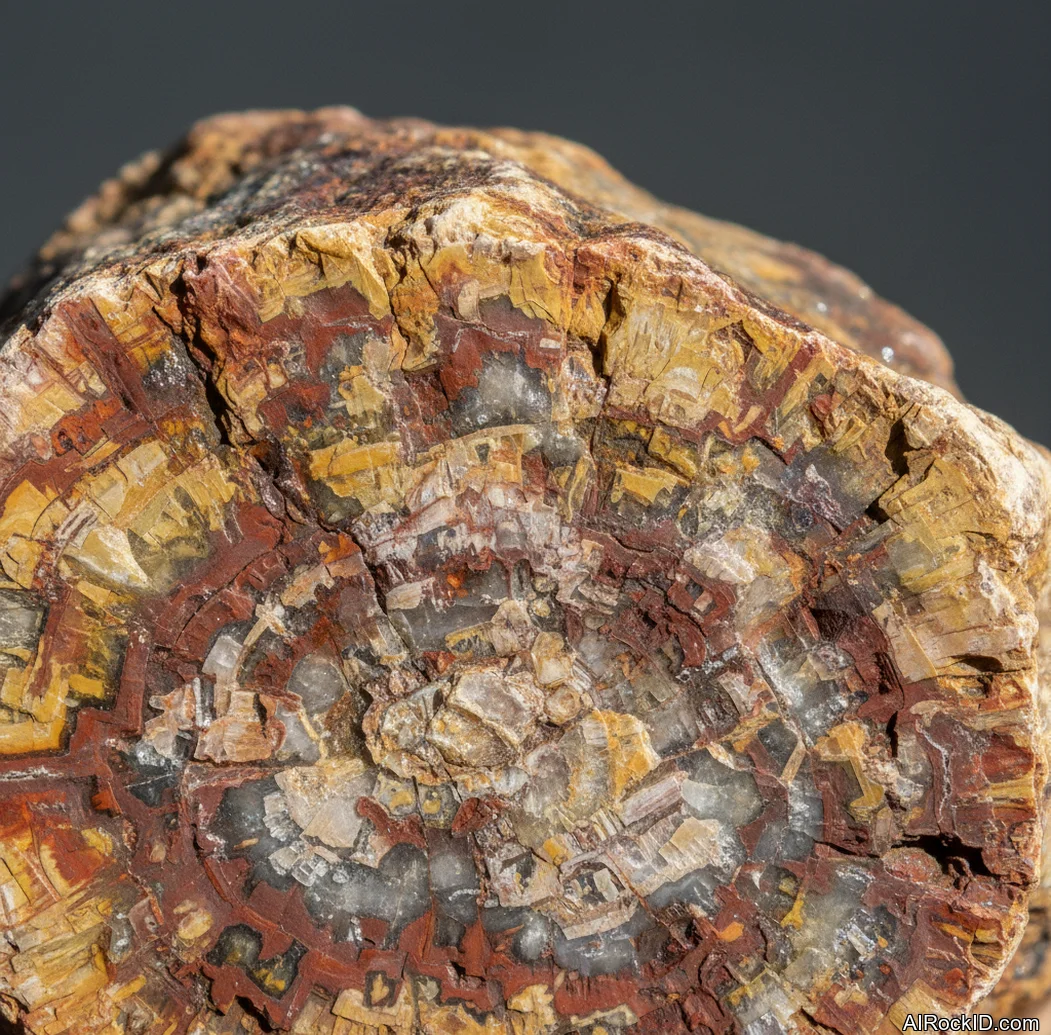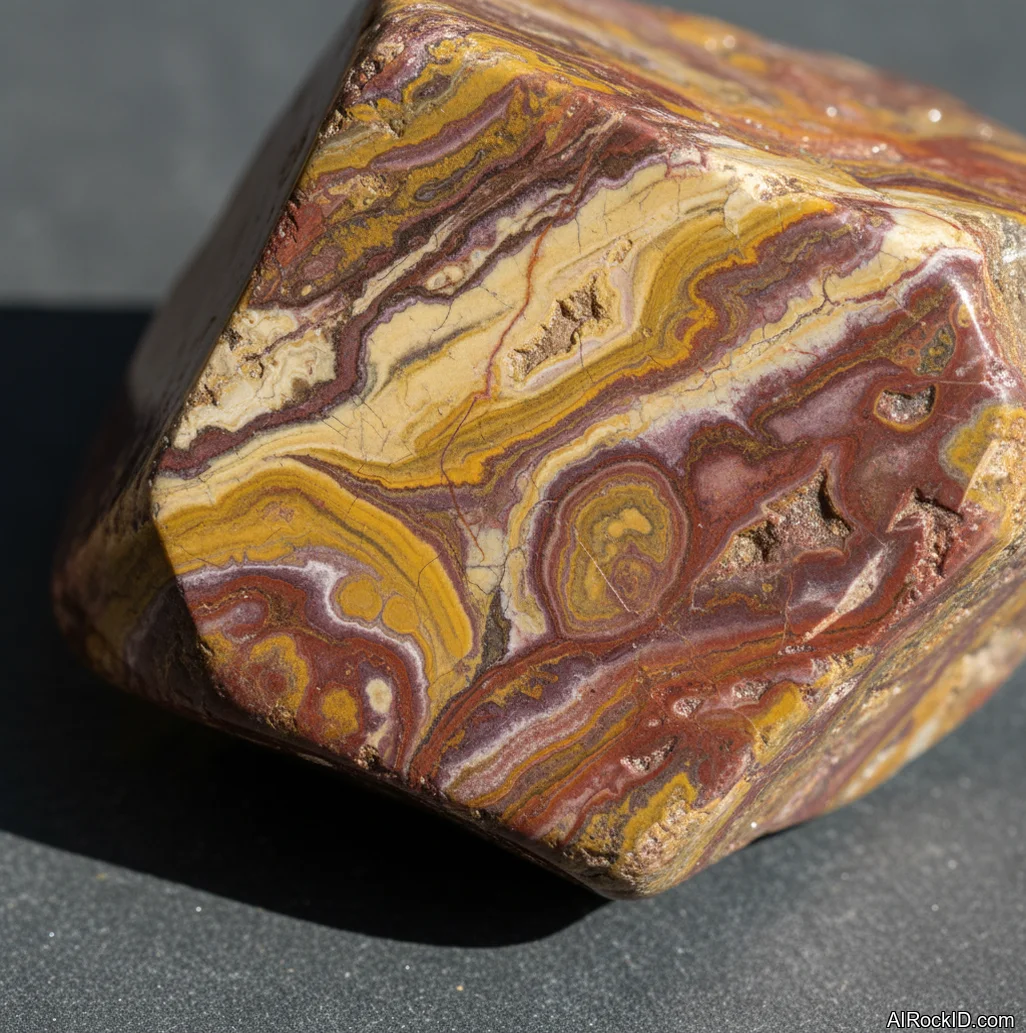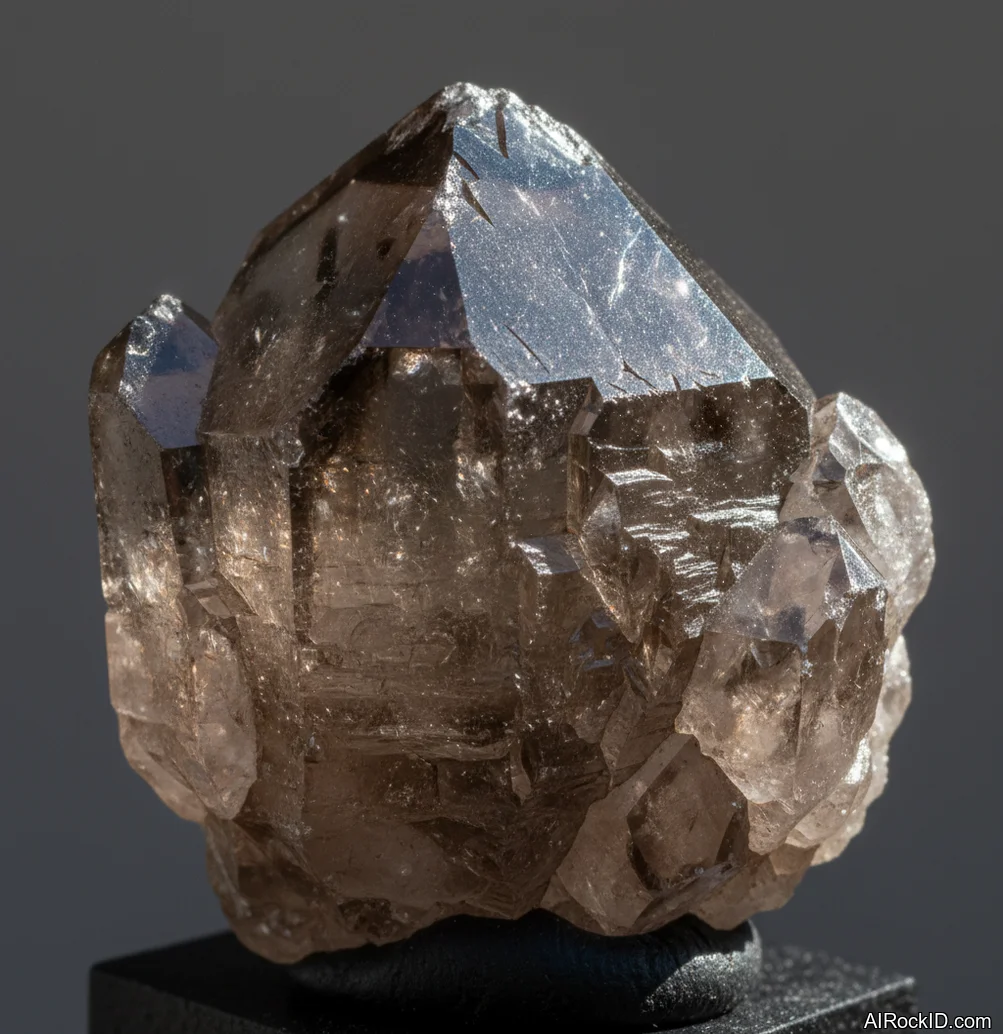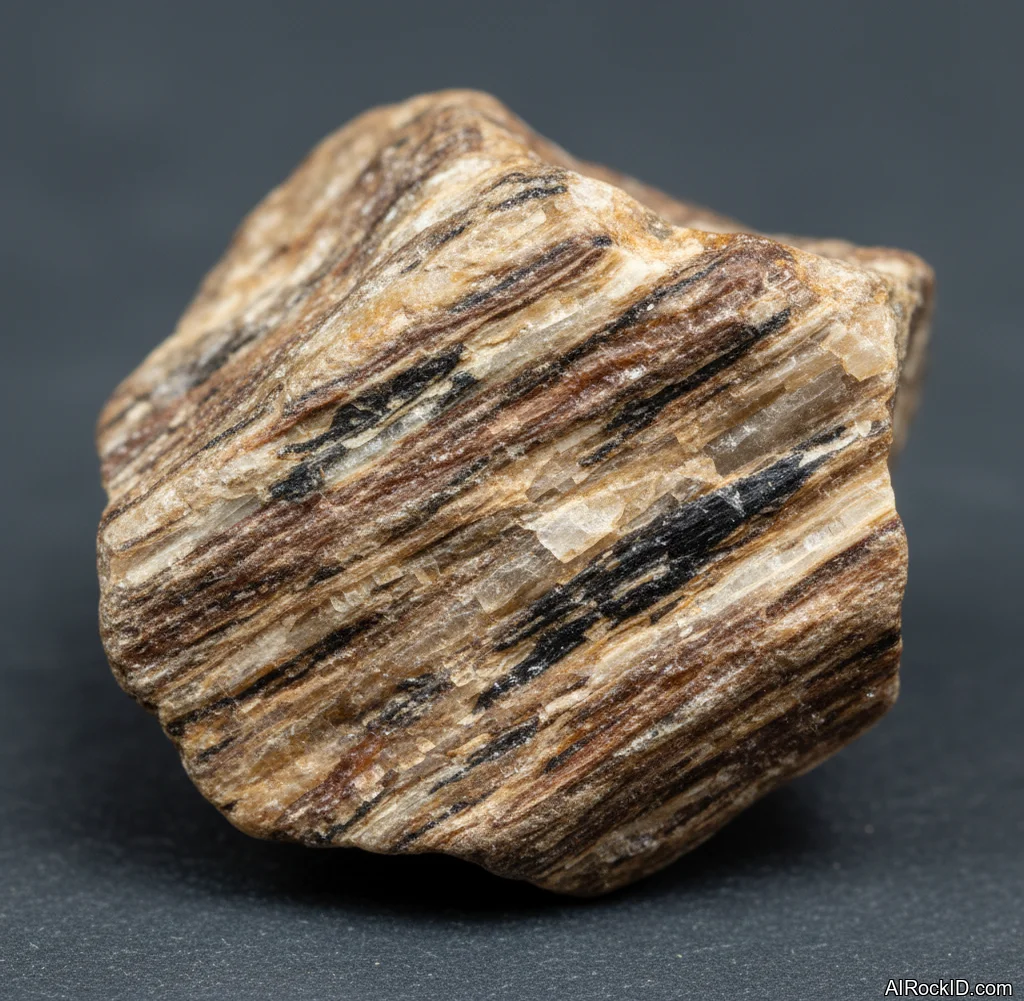
Indonesia Palm Wood


Quick answer: Indonesia Palm Wood is fossil palm material that has been replaced or filled by silica, commonly quartz, chalcedony, or opal. It is often recognized by brown, tan, gray, or black colors with dotted or rod-like palm vascular patterns rather than tree-ring grain.
AI Rock ID can help compare Indonesia Palm Wood against lookalikes by checking pattern, color, luster, and surface texture from a clear photo. RockIdentifier.io provides crystal and rock reference information for visual identification, buying checks, and terminology.
Good fit
- Collectors who like fossils with visible plant structure
- Buyers looking for patterned cabochons, palm stones, beads, or display slabs
- Beginners who want a durable fossil material with quartz-like hardness
- People comparing petrified wood varieties by pattern and origin
Not a good fit
- Anyone expecting visible annual growth rings like many petrified woods
- Buyers who need a verified locality without seller documentation
- Collectors avoiding polished, stabilized, dyed, or resin-filled fossil material
- People looking for a soft, lightweight organic wood texture
Why people search for this
People often search for Indonesia Palm Wood to confirm whether a dotted brown or black polished stone is fossil palm rather than ordinary petrified wood, jasper, or agate. Searchers may also want to know if the palm-like pattern is natural or enhanced.
Most commonly confused with
- Petrified Wood: Often shows wood grain or ring-like structure, while palm wood usually shows dotted or rod-like vascular bundles.
- Agate: Agate commonly has banding or translucent zones rather than repeated palm vascular dots.
- Jasper: Jasper can be opaque and brown or red, but it usually lacks organized fossil palm dot patterns.
- Black Palm Wood: Modern black palm wood is organic and lightweight compared with silicified fossil palm wood.
Indonesia Palm Wood vs. Common Lookalikes
| Material | Typical Pattern | Key ID Clue | Common Form |
|---|---|---|---|
| Indonesia Palm Wood | Dots, rods, or speckled palm vascular bundles | Fossil plant pattern without annual tree rings | Cabochons, slabs, palm stones |
| Petrified Wood | Wood grain, bark texture, or ring-like growth lines | Looks more like trunk wood than palm tissue | Slices, logs, tumbled stones |
| Agate | Bands, translucent layers, or fortification patterns | Often more translucent at thin edges | Spheres, slabs, cabochons |
| Jasper | Opaque patches, streaks, or landscape-like color zones | No consistent fossil vascular structure | Tumbles, beads, carvings |
| Modern Palm Wood | Fibrous natural wood grain | Lower hardness and organic feel | Furniture, inlay, decor |
AI identification confidence
AI identification confidence is usually moderate to high when the photo shows a polished surface with clear dotted or rod-like palm structure. Confidence is lower for rough pieces, very dark specimens, dyed material, or close-up photos without scale and multiple angles.
When AI gets it wrong
- A highly polished jasper or agate has spots that resemble fossil palm vascular bundles.
- The photo is too dark, overexposed, or taken from only one angle.
- The specimen is a composite, resin-filled, dyed, or heavily stabilized product.
- The piece is labeled by trade name only, with no locality or material details.
Final recommendation
Choose Indonesia Palm Wood when the specimen shows a natural-looking palm vascular pattern, good polish, and clear seller labeling. For higher confidence, compare the pattern with petrified wood, agate, and jasper, and ask whether the piece has been dyed, stabilized, or resin-filled.
How to Spot Authentic Indonesia Palm Wood
Authentic Indonesia Palm Wood should show fossil palm structure, commonly seen as scattered dots, ovals, or short rods across the polished face. The pattern should look embedded within the stone rather than printed, painted, or only sitting on the surface. Natural pieces can vary widely in color and contrast, so a perfectly uniform pattern may deserve closer inspection.
Buying Tips for Indonesia Palm Wood
Ask sellers whether the piece is natural, dyed, stabilized, or resin-filled, especially for very glossy carvings and beads. A reliable listing should identify the material as fossil palm wood or silicified palm wood rather than only using decorative names. For collectible pieces, locality information and clear photos of multiple sides are more useful than color alone.
Best Photos for Identification
Use bright, indirect light and photograph the stone dry so the pattern is not hidden by glare or water. Include one close-up of the dotted structure, one full-piece image, and one photo with a ruler or coin for scale. If the piece is rough, photograph both broken and outer surfaces because fossil pattern may only be visible on a cut or polished face.
What Is Indonesia Palm Wood?
Indonesia Palm Wood is fossilized palm wood from Indonesia. Over time, the original material got swapped out for silica, usually chalcedony and microcrystalline quartz, and sometimes there’s a little opal mixed in.
Pick up a polished slice and the first thing you notice is the feel. It’s slick, almost like glass, but your fingers still catch that “wood” look in the surface, like someone paused a palm trunk mid-growth and then it hardened into stone. The pattern is why people bother with it. Instead of straight tree rings, palm wood gives you dotty clusters and spaghetti-like bundles that can read as leopard spots, tight pixels, or tiny fireworks depending on how it was cut.
Most of what you’ll see for sale is palm root or trunk material that’s been sliced into slabs, made into cabs, or tumbled. Raw chunks are out there too, but honestly they can look kind of bland until you put a saw through them and hit a fresh face. And when the cut is right? It’s ridiculous. I’ve had pieces where the dot clusters line up so cleanly you can literally trace the vascular bundles with a fingernail (you feel those tiny ridges as you drag across).
Origin & History
Fossil “palm wood” has been on paleobotanists’ radar for ages. And it makes sense, because palms don’t grow like regular trees, so once the stuff gets silicified, the internal structure is an instant tell. The Indonesian pieces show up for sale under all sorts of trade names, but it’s the same basic material every time: fossil palm tissue where silica slowly moved in and replaced the original plant material.
You’re not going to find one clean “first described by” moment like you would with a new mineral species. But that’s because this isn’t a mineral species at all. It’s fossil material. Dealers really started leaning into Indonesian palmwood once the lapidary crowd noticed how nicely it takes a polish, and how repeatable the pattern can be, especially in the darker brown and black chunks that look sharp in jewelry under normal indoor light (the kind that usually washes details out).
Where Is Indonesia Palm Wood Found?
It’s sourced in Indonesia, with market material commonly reported from islands like Java, Sumatra, and Kalimantan, depending on the parcel and exporter.
Formation
Picture it like a slow trade. The palm dies, gets buried, and then groundwater with dissolved silica starts seeping right through the tissue. It takes ages, but the original organic structure gets replaced molecule by molecule with silica, usually chalcedony and microcrystalline quartz, and sometimes you’ll see minor opal in a few spots.
And if you hold a slice up and really stare at it, you can basically see the palm’s plumbing still sitting there. Those little dot clusters? Vascular bundles. When the silica replacement is clean and tight, the surface takes a crisp polish (you can feel it under your fingers) and the pattern pops. But when the replacement was messy, you end up with softer-looking zones, tiny pits, or that chalkier feel on one side of the slab. Kind of obvious once you’ve run your thumb across it, right?
How to Identify Indonesia Palm Wood
Color: Most Indonesia Palm Wood is brown, tan, caramel, gray, or nearly black, usually with darker dot clusters or streaky bundle patterns. Some pieces show cream and coffee tones together, especially in cross-sections.
Luster: Polished surfaces are usually waxy to vitreous, depending on how quartz-rich the replacement is.
Pick up a piece and run your thumb across the pattern. Real palmwood feels like solid chalcedony, cool at first touch, with the dots locked inside the stone instead of sitting on the surface like ink. If you scratch it with a steel nail, it generally won’t take a mark, but a quartz point will scratch it. The real test is the end-grain cut: palms show those tight, repeating vascular bundles, not the classic concentric rings you see in petrified conifer wood.
Common Look-Alikes
Indonesia Palm Wood is sometimes confused with these materials:
- Petrified wood (conifer/hardwood) sold as generic "petrified wood" slabs
- Agatized wood from Java/Madagascar (often marketed as "agatized wood" without saying palm)
- Picture jasper or wood jasper (especially tan-brown landscape patterns cut as slabs)
- Banded chalcedony/agate with fortification lines (when the palm pattern is subtle)
- Dyed fossil wood slices (black, teal, or too-even chocolate brown dye jobs)
- Resin or glass "wood" cabochons (cast pattern, too glossy, too uniform)
Market Cautions & Treatments
When AI Can Get This Wrong
At first glance, phone photos mix Indonesia Palm Wood up with regular petrified wood, picture jasper, or even plain agate because the palm “dot and bundle” pattern can get lost after heavy polish and studio lighting. The real test is in the texture and structure: a loupe will show those palm vascular bundles as tight peppery dots or little ovals, not the long straight grain you see in most conifer petrified wood. If you scratch it with steel, it won’t budge, but glass fakes will show faint scuffs and feel warmer the second you pick them up.
Properties of Indonesia Palm Wood
Physical Properties
| Crystal System | Amorphous |
| Hardness (Mohs) | 6.5-7 (Hard (6-7.5)) |
| Density | 2.55-2.65 g/cm3 |
| Luster | Waxy |
| Diaphaneity | Opaque |
| Fracture | Conchoidal |
| Streak | White |
| Magnetism | Non-magnetic |
| Colors | brown, tan, cream, gray, black, caramel |
Chemical Properties
| Classification | Silicates |
| Formula | SiO2 |
| Elements | Si, O |
| Common Impurities | Fe, Mn, C |
Optical Properties
| Refractive Index | 1.54-1.55 |
| Birefringence | None |
| Pleochroism | None |
| Optical Character | Isotropic |
Indonesia Palm Wood Health & Safety
It’s fine to handle, and it won’t freak out around water in normal use. But it’s still a silica-based stone, so if you’re cutting or grinding it, don’t breathe the dust (you’ll feel that dry, gritty stuff in your nose right away).
Safety Tips
If you’re doing lapidary work, keep water running for cooling, and don’t skip the right respirator, the kind rated for fine silica dust. You really want that seal snug on your face.
Indonesia Palm Wood Value & Price
Price Range
Rough/Tumbled: $5 - $60 per palm-sized tumbled stone or small slab
Cut/Polished: $2 - $12 per carat (cabochon material, pattern-dependent)
Price follows two things: how the stone was cut and how clean the pattern reads. If you’ve got tight, high-contrast dot bundles and slabs with no cracks (the kind that feel solid and smooth under your fingers), you’ll pay more. But if it’s muddy, porous, or riddled with fractures, it’s going to be cheaper.
Durability
Durable — Scratch resistance: Good, Toughness: Good
It’s generally stable like other chalcedony-based materials, but it can chip on thin edges and doesn’t love hard knocks on corners.
How to Care for Indonesia Palm Wood
Use & Storage
Keep it in a pouch or a divided box if it’s polished, because quartz-level hardness will let it scuff softer stones. Slabs should be stored flat so corners don’t get dinged.
Cleaning
1) Rinse with lukewarm water and a drop of mild soap. 2) Gently scrub with a soft toothbrush around pits or natural texture. 3) Rinse well and pat dry; don’t bake it in direct sun to “speed dry.”
Cleanse & Charge
For a simple reset, rinse and dry it, or set it on a piece of selenite for a few hours. If you use smoke, keep it quick so soot doesn’t cling to micro-pits.
Placement
On a desk or shelf, it reads best under side light since the dot bundles cast tiny shadows and the pattern sharpens. I like palmwood next to other fossils so you can see how different the structures are.
Caution
Skip harsh acids and strong bleach cleaners. And go easy on ultrasonic cleaners too if the piece has fractures or any porous spots, because that buzzing can work its way into those weak areas.
Works Well With
Indonesia Palm Wood Meaning & Healing Properties
Grounding is the thing people chase with palmwood, and yeah, I get it. It sits in your hand with this calm, steady weight. Not flashy. When I’m at a show sorting through trays and my brain’s cooked from price tags, overhead lights, and nonstop chatter, palmwood is one of the few materials that pulls me back to plain texture and pattern.
If you’re into metaphysical stuff, people link it to patience, pacing yourself, and sticking to routines that actually hold up. But I keep it in the “supportive tool” lane, not a stand-in for anything medical. The feeling is more like a little reminder you can physically hold. Like a worry stone, basically. Except with palmwood, the pattern gives your eyes something to grab onto when you’re trying to settle down (and sometimes that’s half the battle, right?).
But look, here’s the collector reality check: sellers will sometimes slap “rare” on it just because it’s a fossil. It’s not rare in the trade, and the feel is basically chalcedony. What really changes the experience is the cut. A clean cross-section with crisp vascular bundles just hits different than some bland brown tumble that, from a couple feet away, you’d swear was any random jasper.
Common mistakes
- Assuming every brown fossil-looking stone is Indonesia Palm Wood.
- Confusing palm vascular dots with agate spots, jasper patches, or dendritic inclusions.
- Judging authenticity only by color instead of pattern and material texture.
- Overlooking dyed or resin-filled material in beads, carvings, and glossy decor pieces.
- Expecting true wood grain or annual rings, which are not typical identifiers for palm material.
- Treating a trade name as proof of Indonesian origin without seller documentation.
Identify Indonesia Palm Wood from a photo
Compare Indonesia Palm Wood traits, care tips, value clues, and common lookalikes with a clear photo.