Jeremejevite
What Is Jeremejevite?
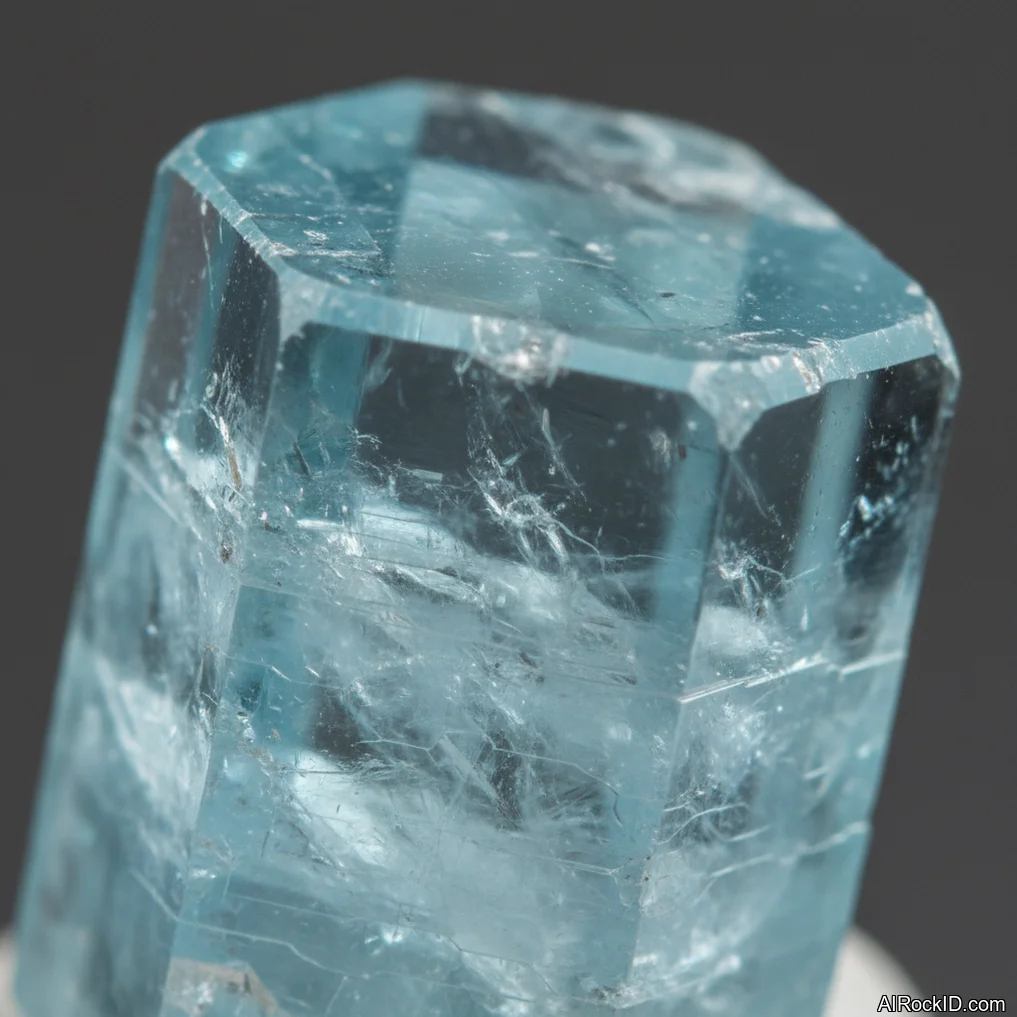
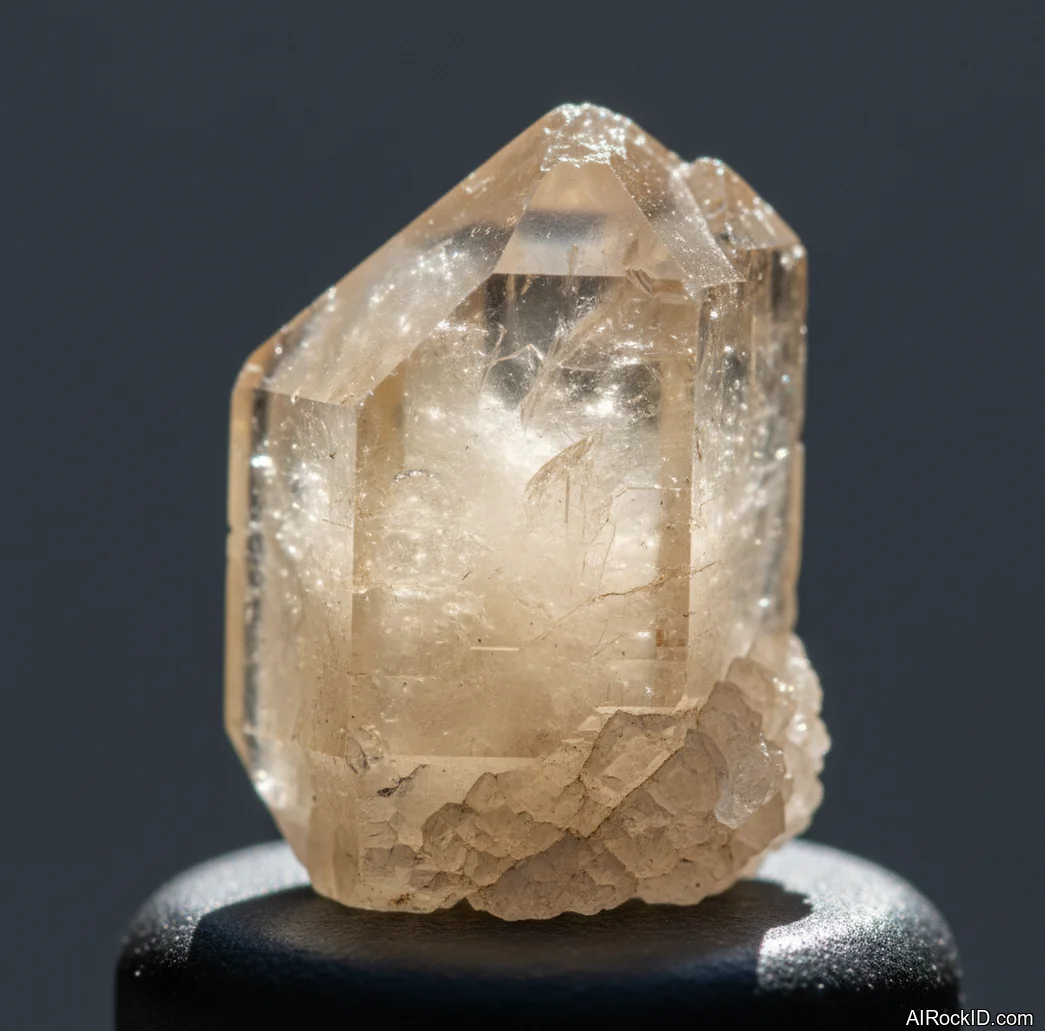
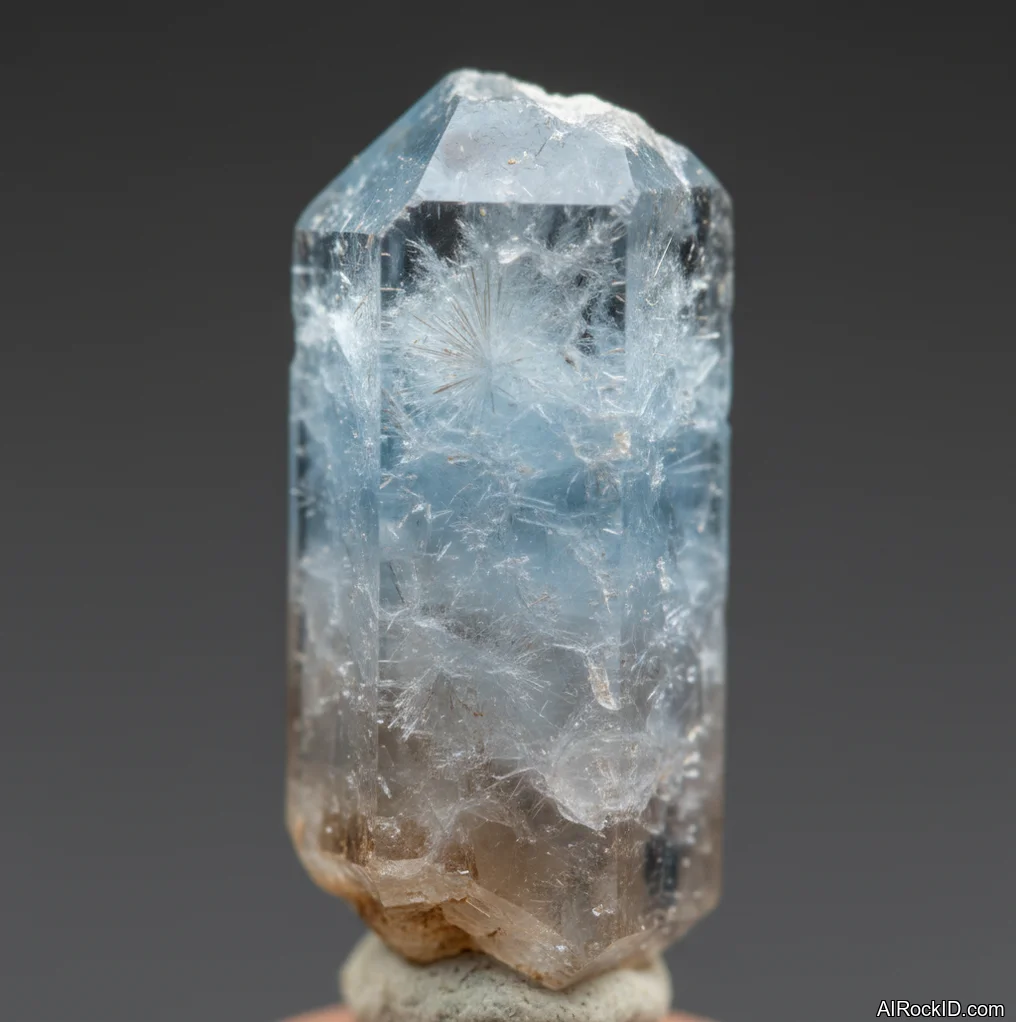
Jeremejevite is an extremely rare borosilicate mineral (aluminum borate silicate) that grows in prismatic crystals, usually colorless to pale blue, and sometimes yellow.
Hold a clean crystal in your fingers and the first thing that hits you is the glassy look, but not the cheap kind. The faces are often crisp, the luster is bright, and if you rock it under a single overhead light you get those sharp flashes off the prism sides that blink on and off fast. Some pieces read like watered-down aquamarine at a glance, but it’s not quite the same, you know? The color in jeremejevite tends to be lighter, more like a foggy sky blue.
But here’s the reality: most jeremejevite you’ll actually come across isn’t some big, perfect museum wand. It’s often small. Or the terminations are chipped. Or it shows up as broken bits out of pocket mining. After you’ve handled a few, you start to recognize that hard, clean, brittle feel (almost like it wants to snap if you get careless). It’s not the kind of stone that forgives a drop on a tile floor.
Origin & History
Russia’s where the name comes from. Jeremejevite was first described in 1883 by Pavel Eremenko, working with material found in the Adun-Chilon Mountains in Siberia, and he named it for the Russian mineralogist Pavel Vladimirovich Jeremejev.
Thing is, older books sometimes spell it jeremejeffite, and you’ll still spot that spelling on old show labels. I’ve even bought a specimen with a handwritten tag that said “jeremejeffite” in slightly faded ink (the kind that’s gone brown at the edges), and it took me a second to realize it was the same mineral, not some mystery species I’d somehow missed.
Where Is Jeremejevite Found?
Most collector and gem jeremejevite comes from pegmatites, especially Namibia and Madagascar, with the original classic locality in Siberia, Russia.
Formation
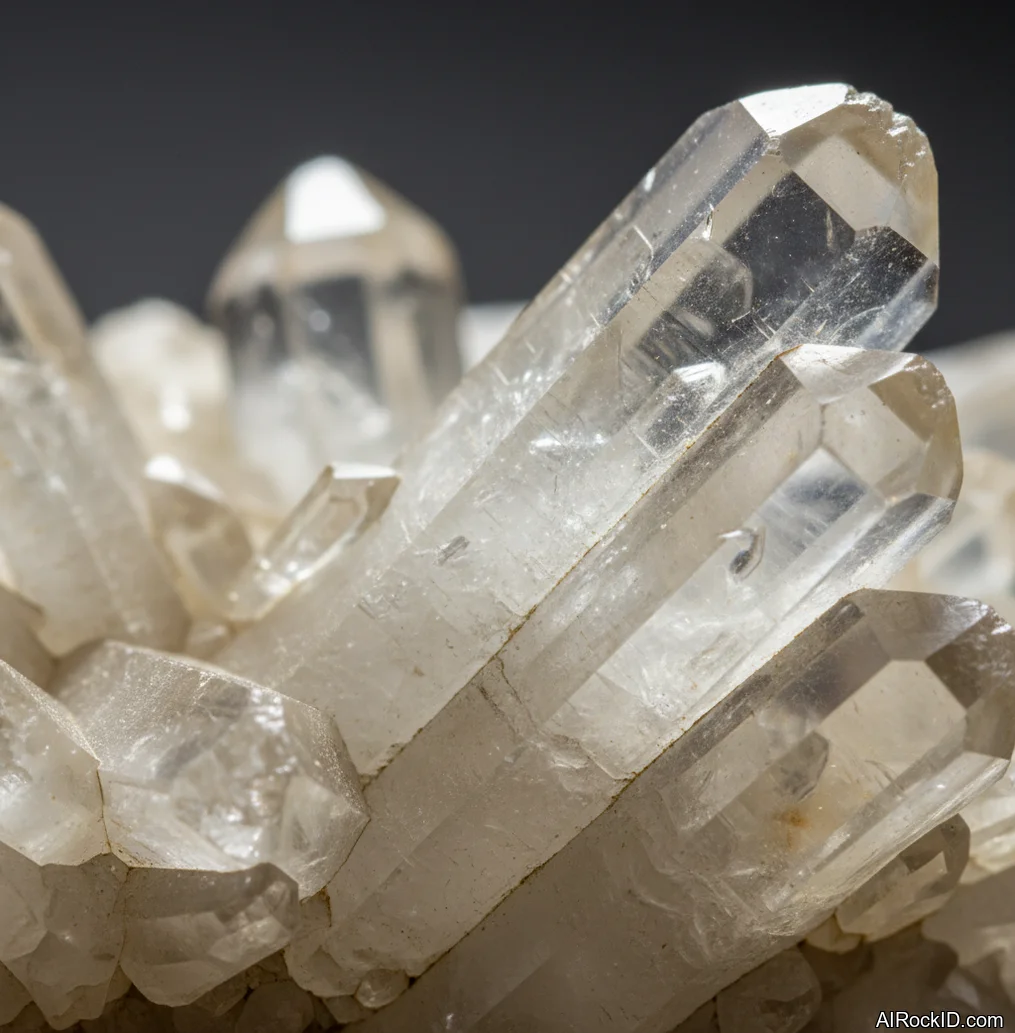
Most jeremejevite shows up in granitic pegmatites and other boron-rich spots where the chemistry gets strange enough to spit out borosilicates. You’ll usually find it hanging out with the usual pegmatite crew, and it can appear as prismatic crystals growing in cavity pockets where fluids actually had room to do their thing.
Compared to quartz, it reads like a late-stage mineral just based on how it turns up. The crystals can be razor-sharp and clean, like they formed in open space instead of getting crushed in the rock. But those same pockets that give you crisp faces also make for delicate terminations, so a lot of pieces come out with tiny bruises, chipped edges, and those annoying little dings you notice the second you tilt the crystal under a light.
How to Identify Jeremejevite
Color: Most jeremejevite is colorless to pale blue, with some material showing light yellow tones. The blue is usually soft and airy rather than saturated.
Luster: Vitreous, like clean window glass.
Look closely at the crystal shape first. Jeremejevite commonly forms slender prismatic crystals, and the faces can look very orderly and “engineered” when you rotate it in light. If you scratch it with a steel blade, it shouldn’t mark easily, but it will scratch glass without drama. And if someone is trying to sell it as aquamarine, the real test is the overall habit and the price story, because true gem jeremejevite is usually priced like a rarity, not like everyday beryl.
Properties of Jeremejevite
Physical Properties
| Crystal System | Hexagonal |
| Hardness (Mohs) | 6.5-7.5 (Hard (6-7.5)) |
| Density | 3.27-3.32 g/cm3 |
| Luster | Vitreous |
| Diaphaneity | Transparent to translucent |
| Fracture | Conchoidal |
| Streak | White |
| Magnetism | Non-magnetic |
| Colors | Colorless, Pale blue, Light yellow |
Chemical Properties
| Classification | Silicates (borosilicate) |
| Formula | Al6B5Si3O18(F,OH)3 |
| Elements | Al, B, Si, O, F, H |
| Common Impurities | Fe |
Optical Properties
| Refractive Index | 1.639-1.651 |
| Birefringence | 0.012 |
| Pleochroism | Weak |
| Optical Character | Uniaxial |
Jeremejevite Health & Safety
Jeremejevite’s usually safe to handle, and it doesn’t come with the typical toxicity worries some minerals do. But use basic common sense if you’re cutting or grinding it. You know the drill: the fine dust gets everywhere, sticks to your fingertips, and you really don’t want to breathe that in.
Safety Tips
If you end up lapping or polishing it, put on a real respirator (not one of those flimsy paper masks) and stick to wet methods so you’re not kicking dust up into the air.
Jeremejevite Value & Price
Price Range
Rough/Tumbled: $80 - $1500 per specimen
Cut/Polished: $300 - $2500 per carat
Prices climb fast when a stone is genuinely transparent, has clean terminations you can run a fingernail along without catching on chips, and shows a true blue instead of that almost-clear, washed-out look. And provenance matters, too, because people will pay more when the label is trustworthy and the piece actually lines up with the stated locality.
Durability
Moderate — Scratch resistance: Good, Toughness: Fair
Jeremejevite is stable in normal conditions, but it can chip along edges and corners if it’s knocked around.
How to Care for Jeremejevite
Use & Storage
Store it in a perky box or a padded flat, not loose in a bowl with harder stones. The terminations chip easier than you’d guess from the hardness.
Cleaning
1) Rinse quickly in lukewarm water with a drop of mild soap. 2) Use a soft brush to lift dust out of grooves and crystal edges. 3) Pat dry and let it air dry fully before putting it back in a box.
Cleanse & Charge
If you do energy-style cleansing, stick to gentle options like smoke, sound, or a brief moonlight sit. Skip harsh salt soaks since they’re more about the container and residue than the mineral itself.
Placement
I keep jeremejevite where it won’t get bumped, like a back shelf or a closed display case. Direct sun isn’t a big issue for most pieces, but heat plus dust plus handling adds up over time.
Caution
Don’t ultrasonic clean it. And don’t just drop it in your pocket with keys or quartz points either. If it’s a sharp crystal, those crisp edges will get little bruises, and the tiny chips pop out right away when you hit it with bright light.
Works Well With
Jeremejevite Meaning & Healing Properties
People who go looking for jeremejevite for the metaphysical stuff usually want one thing: a clear head. And honestly, I get why. It has that “clean” feel the second you pick it up. A good, clear piece sits cold in your palm, sharp and steady, like holding a little chip of ice that never turns slick or wet.
On my paperwork-heavy days, I’ve left one right next to the keyboard. Not tucked away. Right there where I can see it. And I’ll catch myself grabbing it for two seconds, rolling it between my fingers, then putting it back down like I just hit a reset button (sounds dramatic, but you know what I mean). Quick pause. Back to it.
Compared to the stones people call “loud,” jeremejevite is quiet. That’s kind of the whole deal. But some folks get let down because they’re expecting fireworks, especially if they’ve been reading that over-the-top sales writing. Thing is, the material is rare, and what people usually report is more subtle: mental tidying, less mental noise, and a gentle nudge toward speaking plainly. None of that is medical. It’s not a replacement for therapy or actual treatment.
There’s also a practical side nobody wants to admit at first. Jeremejevite is expensive, so people handle it differently. You don’t absentmindedly fidget with a $900 crystal the way you do with a tumbled quartz. So if it ends up in your daily routine, it’s often because you’re choosing it on purpose, slowly, with attention. And that kind of attention, by itself, can feel calming. Why wouldn’t it?
Identify Any Crystal Instantly
Snap a photo and get properties, value, care instructions, and healing meanings in seconds.