Larimar
What Is Larimar?
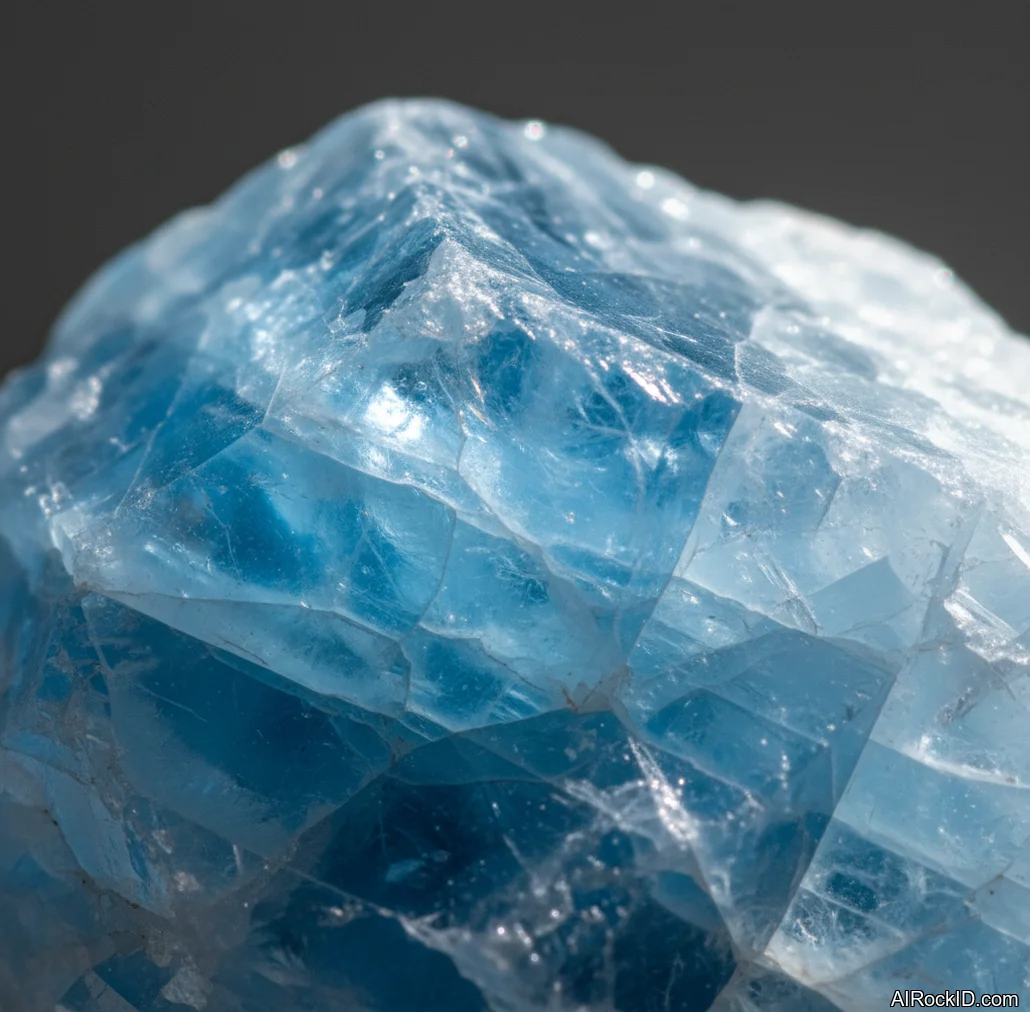
Larimar’s a rare blue form of pectolite, and that blue comes from copper. And yeah, it’s found almost exclusively in the Dominican Republic.
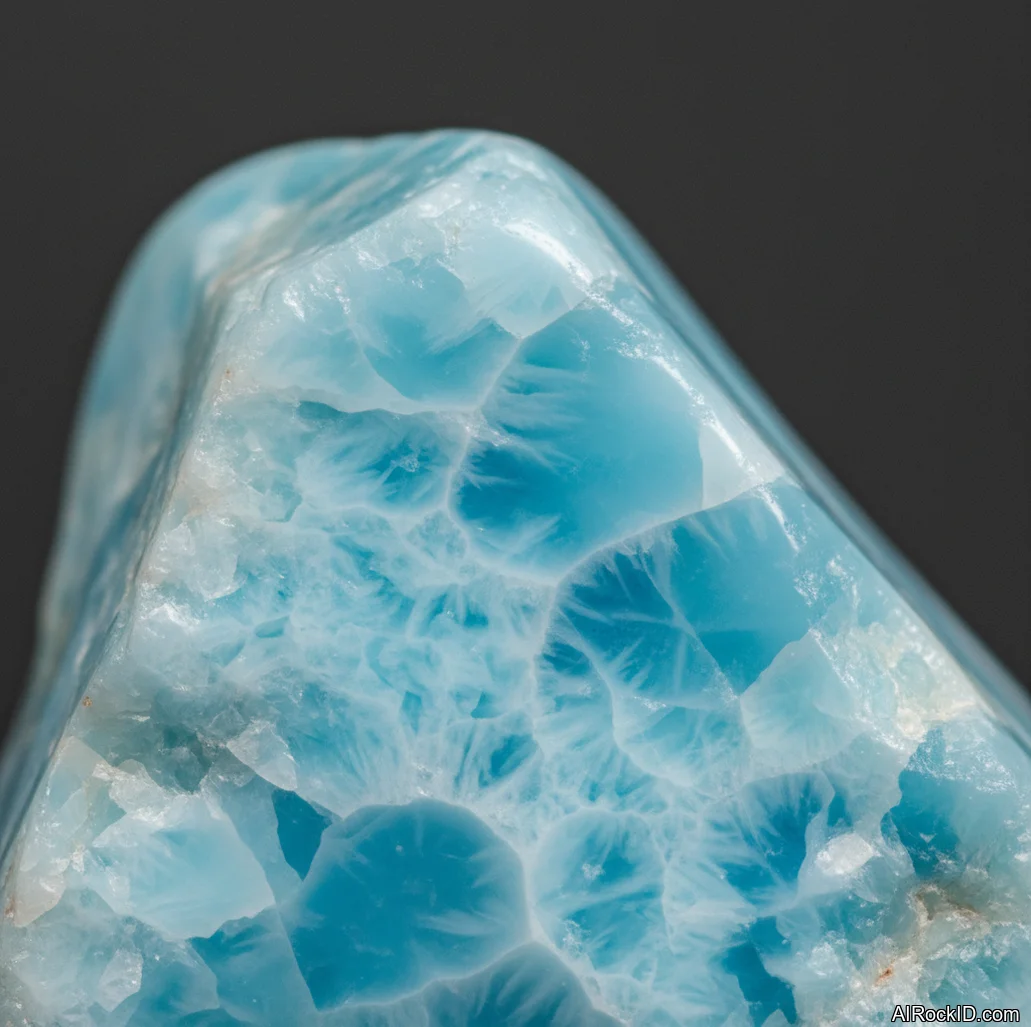
Pick up a well-cut cab and you’ll notice it instantly. It’s not that dense, dead-weight feel you get from hematite, but it still has this solid, ceramic-ish heft that sits right in your palm (you can almost feel the polish grabbing your skin for a second). The best material looks like shallow tropical water, with cloud-white streaks plus those tiny “wave” swirls that only show up when the polishing’s actually done right. Tip it under harsh shop lights and the surface flips from glassy to a slightly waxy look, depending on how tight the polish is and how much micro-texture is still hanging on.
But here’s the catch: don’t treat larimar like a pocket stone. I’ve literally watched someone at the counter tap it against other stones and put little chips on the edge of a cab without even noticing. It’s a jewelry stone. Not a worry-stone you beat up.
Origin & History
Dominican locals had been picking up that blue stone from river cobbles forever. But the modern story really kicks off in 1974, when Miguel Méndez and Peace Corps volunteer Norman Rilling brought it back onto people’s radar and started figuring out where it was actually coming from. Méndez came up with the name “Larimar” by mashing together “Larissa” (his daughter’s name) and “mar,” the Spanish word for sea.
And yeah, most dealers will toss in the Atlantis story in the same breath. It’s a fun pitch, sure. Thing is, the real point is way simpler: this is one of the few gemstones that’s basically tied to one small mountain area, so the supply chain has always been a little bumpy because of it.
Where Is Larimar Found?
Gem larimar comes from the Barahona area in the southwest Dominican Republic, mined from hydrothermally altered volcanic rocks and collected from nearby drainages.
Formation
Larimar grows basically the way pectolite does in a lot of basalt areas. Hot, mineral-rich fluids push through cracks and little pockets, then as they cool down they leave behind fibrous pectolite. In the Dominican deposits, copper sneaks into the system too, and that’s what shifts the color into those blues and blue-greens.
Look at rough material and you’ll usually find it sitting in veins or chunky nodules inside dark host rock. And when I’ve had uncut pieces in my hand with the matrix still stuck on, the difference jumps out fast: run your thumb across it and the pectolite feels smoother, almost a tiny bit soapy, while the basalt next to it is gritty and kind of dead-looking. The best “ocean” patterning, in my experience, tends to come from pieces that formed in tight little spaces, where the fibers had to stack up and fold over themselves instead of settling into one flat, boring band.
How to Identify Larimar
Color: Larimar runs from pale sky blue to turquoise-blue with white marbling; greenish tones and brown or black matrix are common in lower grades. The most valued look is a clean light-to-medium blue with strong white “wave” patterns.
Luster: Polished larimar shows a vitreous to slightly waxy luster.
Pick up a piece and check the temperature. Real larimar stays cool in the hand at first, while a lot of plastic “Caribbean blue” fakes feel warmer and lighter. Look closely for fibrous, cloudy internal texture and natural white marbling that isn’t printed or too perfectly repeated. The real test is hardness: it should scratch easily with quartz (Mohs 7), but it shouldn’t gouge like chalk when you touch it with a steel point.
Properties of Larimar
Physical Properties
| Crystal System | Triclinic |
| Hardness (Mohs) | 4.5-5 (Medium (4-6)) |
| Density | 2.70-2.90 g/cm3 |
| Luster | Vitreous |
| Diaphaneity | Translucent to opaque |
| Fracture | Uneven |
| Streak | White |
| Magnetism | Non-magnetic |
| Colors | Sky blue, Blue, Blue-green, White, Gray, Brown, Black |
Chemical Properties
| Classification | Silicates |
| Formula | NaCa2Si3O8(OH) |
| Elements | Na, Ca, Si, O, H |
| Common Impurities | Cu, Fe, Mn |
Optical Properties
| Refractive Index | 1.59-1.64 |
| Birefringence | 0.010-0.015 |
| Pleochroism | Weak |
| Optical Character | Biaxial |
Larimar Health & Safety
Larimar’s generally safe to handle and wear. But if you’re cutting it or sanding it, treat it like any other stone in the shop: basic lapidary hygiene. Dust control, a mask, decent ventilation, and washing your hands after (especially before you eat).
Safety Tips
If you need to shape it or smooth it out, keep it wet and wear a respirator so you don’t end up breathing in that super-fine silica dust.
Larimar Value & Price
Price Range
Rough/Tumbled: $10 - $200 per piece
Cut/Polished: $3 - $30 per carat
Prices jump fast when the blue’s cleaner, the white patterning is strong, and there’s hardly any of that brown or black matrix muddying things up. And if it’s a calibrated cab with a tall dome and that sharp, glassy polish you can feel when you run a fingertip over it (no drag, no tiny pits), it’ll usually cost more than a freeform cut from the same grade of rough.
Durability
Moderate — Scratch resistance: Fair, Toughness: Fair
Larimar can chip on edges and can fade with long, direct sunlight exposure, so it’s better treated like opal than like quartz.
How to Care for Larimar
Use & Storage
Store larimar in a soft pouch or a lined box so harder stones don’t scratch it. And keep it out of long-term sun on a windowsill if you want the color to stay steady.
Cleaning
1) Rinse with lukewarm water and a drop of mild soap. 2) Use a soft toothbrush for crevices around settings. 3) Rinse well and pat dry; avoid ultrasonic and steam cleaners.
Cleanse & Charge
A quick rinse and a gentle wipe is usually enough for routine “resetting.” If you do moonlight, keep it indirect so it’s not baking on a ledge all night.
Placement
I keep larimar where I’ll actually see it, like a desk dish or a bedside shelf, but not where it can get knocked onto tile. It’s one of those stones that looks better in calm light than under harsh spotlights.
Caution
Skip ultrasonic cleaners, harsh chemicals, or anything that’ll rub it the wrong way and chip the edges. And when you put it away, don’t let it sit up against quartz, sapphire, or any other harder stones, because it can get scratched just from being in contact.
Works Well With
Larimar Meaning & Healing Properties
A lot of people grab larimar when they’re trying to take the volume down on their day, especially if they’re stuck in that tight chest, clenched jaw place. In my own little pile of stones, it’s the one I end up handing to the customer who’s been cycling through ten different blue pieces and finally says, “I just want something softer.” Larimar lands gentle. No fireworks. Just… easier.
Look, watch what happens at a show table. People will rub the polished face with their thumb without even realizing they’re doing it, kind of like how you test bathwater before you get in. That’s the general read in the metaphysical crowd: cooling, smoothing, taking the sharp edge off. But I’m going to say it straight: it’s not medical care. It’s not a stand-in for therapy, meds, or sleep.
If you’re working it into a practice, larimar sits really nicely next to breathwork, journaling, or anything that’s voice-related. And it can work as a “boundary stone” in a weird way, but not because it’s protective like black tourmaline. It’s more that it slows you down just enough to pick your words on purpose instead of blurting something out, then spending the rest of the day cleaning up the mess (you know the feeling, right?).
Identify Any Crystal Instantly
Snap a photo and get properties, value, care instructions, and healing meanings in seconds.