Leucitite
What Is Leucitite?
Leucitite is a volcanic igneous rock made mostly of the mineral leucite, usually sitting in a dark, fine-grained lava groundmass.
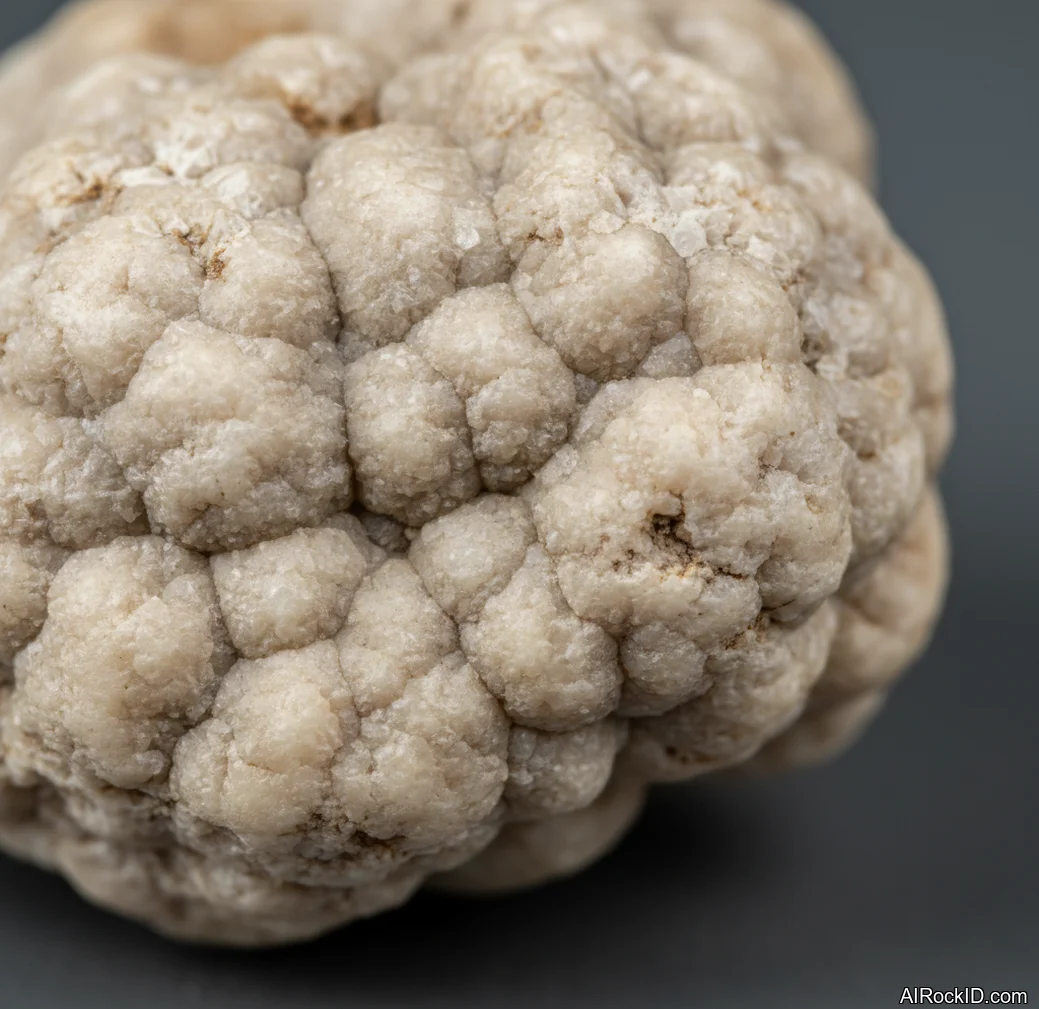
Grab a hand sample and it immediately feels like actual lava rock, not a “crystal” the jewelry aisle would sell you. It’s usually dense enough that it sits heavy in your palm. But the outside can feel a bit gritty, especially where weathering has chewed up the matrix and left that rough, sandpapery skim on the surface.
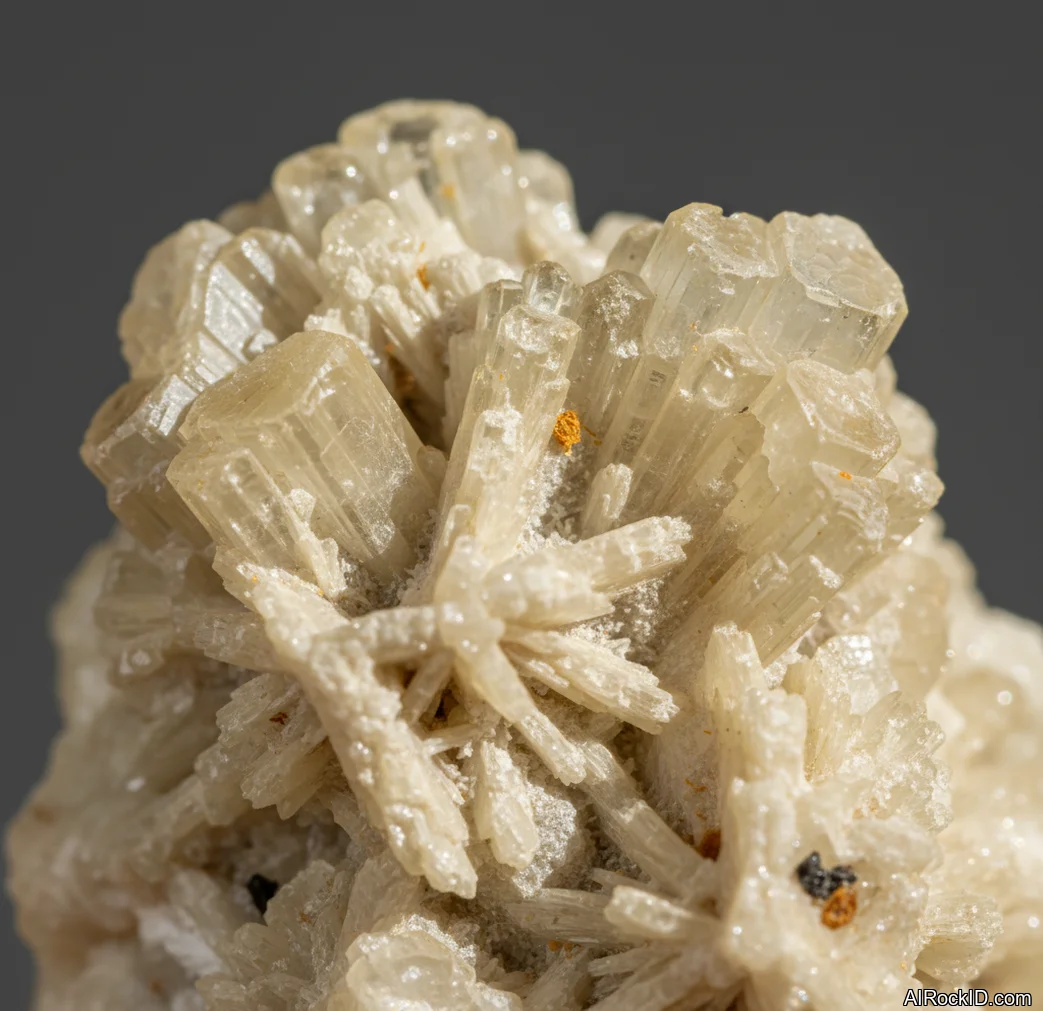
And then there’s the leucite. That’s the giveaway. Little pale, blocky grains, kind of like cream-colored sprinkles, except they’re more like tiny softened cubes stuck in place against the dark rock. Weirdly satisfying to look at. (And to rub with your thumb, honestly.)
At first glance, people mix it up with basalt or some random speckled andesite. So what tips it off? When the leucite phenocrysts are fresh, leucitite gets this very specific peppered look. Thing is, if the sample’s weathered, those light leucite spots can stick up just a hair above the darker groundmass because they don’t break down the same way. I’ve had pieces where you could literally trace the outline of a leucite grain with a fingernail. Who expects that from a lava rock?
Origin & History
The word “leucitite” is basically pulled straight off the mineral leucite. That name traces back to the Greek “leukos,” meaning white, which makes sense the moment you’ve seen those chalky, pale crystals popping out against dark lava like little flecks of sugar in burnt toast. Leucite itself got described in the late 1700s from Italian volcanic rocks, and “leucitite” came along later once petrologists started naming lavas by what actually takes up most of the rock’s volume.
Back in the day, leucite-bearing lavas got a lot of attention because they were a giveaway for odd, potassium-rich magma chemistry. Italy is the go-to classroom example, especially the Roman Province, so plenty of older sources lean heavily European. But leucitite isn’t just an Italy thing. It turns up in other volcanic fields too.
Where Is Leucitite Found?
Leucitite is best known from potassium-rich volcanic provinces, especially central Italy, the Eifel in Germany, and the Leucite Hills in Wyoming.
Formation
Most leucitite comes out of low-silica, potassium-rich magmas that cool fast enough to freeze leucite in place as visible grains. You’re basically looking at a lava that went down a chemical route where feldspar never really takes over, so leucite winds up running the show instead.
Compared to a plain basalt, the chemistry is the whole story. These magmas often trace back to odd mantle sources or melting conditions that shove potassium way up. In the field, leucitite can show up as flows, small cones, plus dikes. I’ve handled pieces where the groundmass is so fine it almost looks like spilled sugar (that dry, gritty look), but the leucite grains stay chunky and easy to pick out. Kinda hard to miss, honestly.
How to Identify Leucitite
Color: Most leucitite is dark gray to black with scattered white to pale gray leucite grains. Weathered surfaces can turn brownish or dusty, and the pale grains may look more buff than white.
Luster: Overall luster is dull to earthy on broken rock surfaces, with leucite grains showing a faint vitreous look when fresh.
Look closely for blocky, pale phenocrysts that read as little rounded cubes rather than sharp feldspar laths. If you’ve got a hand lens, the leucite grains often look more equant than plagioclase and don’t show obvious striations. The real test is comparing a fresh break to a weathered face: leucite spots usually stay visible, while the matrix dulls out and can feel slightly rough under a fingertip.
Properties of Leucitite
Physical Properties
| Crystal System | Cubic |
| Hardness (Mohs) | 5.5-6 (Medium (4-6)) |
| Density | 2.45-2.50 g/cm3 |
| Luster | Vitreous |
| Diaphaneity | Transparent to translucent |
| Fracture | Uneven |
| Streak | white |
| Magnetism | Non-magnetic |
| Colors | white, gray, colorless, pale cream |
Chemical Properties
| Classification | Silicates (tectosilicate, feldspathoid) |
| Formula | KAlSi2O6 |
| Elements | K, Al, Si, O |
| Common Impurities | Fe, Na, Ca |
Optical Properties
| Refractive Index | 1.508-1.509 |
| Birefringence | 0.000 |
| Pleochroism | None |
| Optical Character | Isotropic |
Leucitite Health & Safety
Leucitite isn’t considered toxic, so you can handle it without worrying. But if you’re sawing it, grinding it, or cracking it open, don’t breathe in the dust. Rock dust is still dust, and it gets everywhere (you’ll see it settle on your hands and along the edge of the cut), so a mask and a quick cleanup are smart.
Safety Tips
Wear a respirator if you’re cutting or sanding. And don’t do it dry, either: keep it wet with water or use local extraction right where the dust kicks up. Once you’re done handling dusty pieces, wash your hands (really wash them, not just a quick rinse).
Leucitite Value & Price
Price Range
Rough/Tumbled: $5 - $40 per hand sample
Price mostly comes down to the provenance tag and how clearly you can see the leucite phenocrysts on a fresh break. If you’ve got a clean piece with solid paperwork from a classic Italian site or the Leucite Hills, it tends to move fast. Anonymous, dark lava chunks? Those usually sit around.
Durability
Moderate — Scratch resistance: Fair, Toughness: Fair
It’s generally stable as a rock specimen, but edges can chip and weathered surfaces can shed grit if you handle it a lot.
How to Care for Leucitite
Use & Storage
Store it like you would other volcanic rocks: in a tray or box where it won’t bang corners with harder minerals. If it’s a crumbly weathered piece, wrap it so it doesn’t dust up your whole flat.
Cleaning
1) Rinse quickly under lukewarm water to float off loose grit. 2) Use a soft toothbrush with a drop of mild soap to clean around leucite grains. 3) Rinse well and air-dry completely before putting it back in a labeled box.
Cleanse & Charge
If you do energetic cleansing, stick to smoke, sound, or a quick rinse and dry. I wouldn’t leave it soaking just because the matrix can be more porous than it looks.
Placement
A shelf with side light works best so the pale leucite grains pop against the darker matrix. Keep it off windowsills if you’ve got a piece that’s already weathering and flaking.
Caution
Don’t hit it with harsh acids or vinegar. All that does is scuff the surface, and the matrix ends up looking kind of dull and worn. And if you’re cracking a sample to get a fresh face, put on eye protection. Seriously. Little chips pop off and they can zip out faster than you’d think.
Works Well With
Leucitite Meaning & Healing Properties
People don’t grab leucitite because it’s pretty. They grab it because it feels solid and useful, like holding a cooled-down decision in your palm. Pick up a piece and you notice that steady volcanic weight right away, and those pale leucite grains give your eyes something to latch onto when your brain’s pinballing.
In my own little stash, leucitite is my “get it done” stone. But not in a hype-you-up way. It’s more like: sit down. Write the list. Do the next step. When I’m sorting flats after a show, I’ll park a chunk of leucitite on the table, and somehow I’m less likely to spiral over every label and price tag (why do I suddenly care about one missing comma?).
Metaphysical stuff isn’t medical care, and it won’t replace it. But as a focus object, it does the job, especially if you’re into stones that feel gritty and earthy instead of polished and precious. The one real downside is practical: a lot of leucitite out there gets sold as “dark lava rock” unless the seller labels it clearly, so the meaning people pin on it can get kind of fuzzy if you don’t actually know what you’re holding.
Identify Any Crystal Instantly
Snap a photo and get properties, value, care instructions, and healing meanings in seconds.