Cancrinite
What Is Cancrinite?
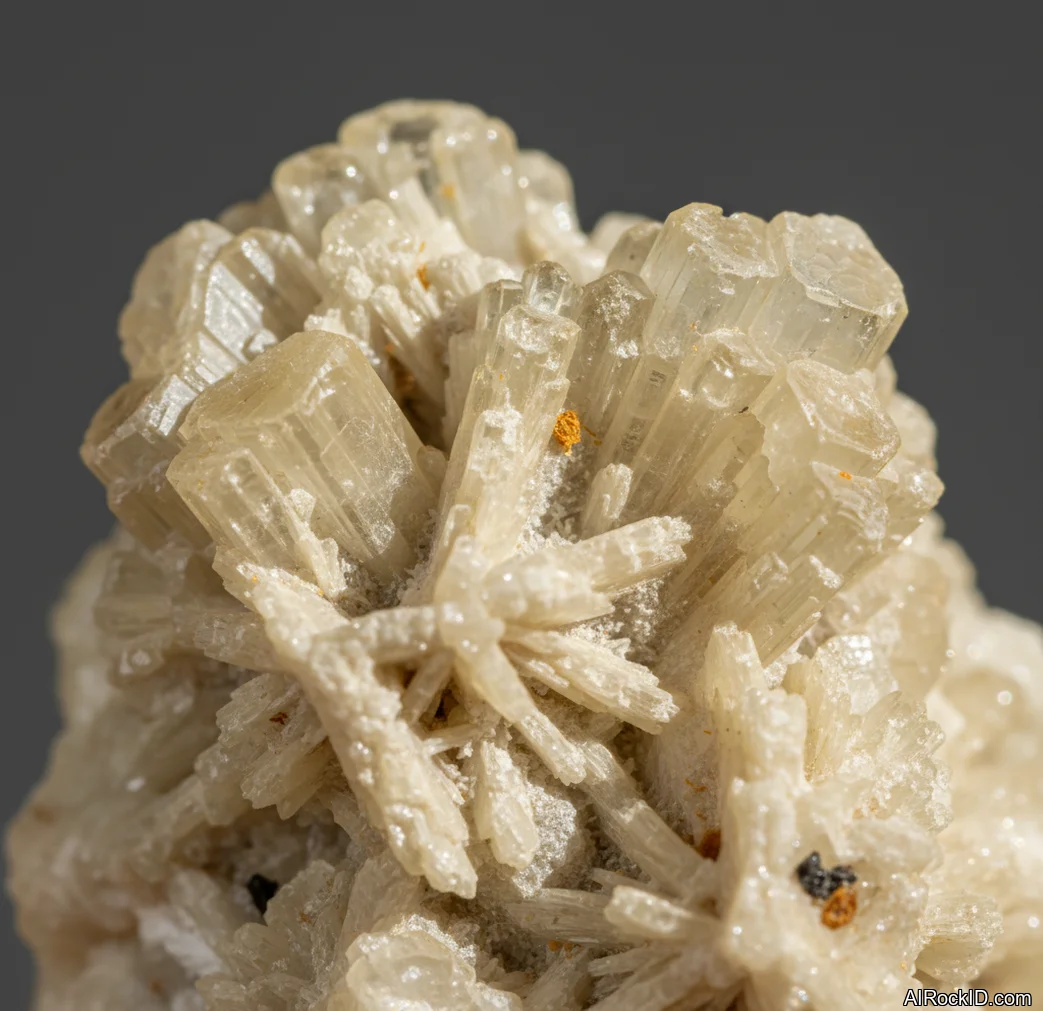
Cancrinite is a carbonate-bearing feldspathoid mineral in the cancrinite group, and you’ll usually see it as yellow to orange hexagonal crystals or as chunky, massive material in alkaline igneous rocks.
Pick up a piece and the first thing that hits you is that it doesn’t have that “glassy” quartz feel. It’s softer in the hand, more like a feldspathoid should be, and a lot of fragments have this slightly greasy-waxy look even right after you snap a fresh break (you can catch it along the sharp edges when the light hits).
Most of what turns up for sale is massive cancrinite sitting in nepheline syenite, sometimes mixed in with white calcite plus those dark little specks of aegirine or amphibole. The color runs from pale lemon all the way up to a honey-orange, and it’s often blotchy. That uneven color? Totally normal.
If you do score crystal material, it’s usually stubby hexagonal prisms, and the shine is quieter than you’d expect. And sure, it can scratch, but don’t treat it like a “throw it in your pocket with keys” stone. I’ve seen tumbled cancrinite come back after a couple months of daily handling with tiny bruises along the edges. Happens fast.
Origin & History
Russia’s where the name starts. Cancrinite got its first write-up in the early 1800s from specimens out of the Ilmen Mountains area in the Urals, and it was named after Count Georg von Cancrin (Yegor Frantsevich Kankrin), a Russian statesman and mineral patron.
As far as collectors go, it never had that old-school status tourmaline or beryl did. But it’s been one of those steady shop minerals forever, mostly because the color’s easy on the eyes and the host rock can look almost poster-like once it’s sliced, hit with a polishing wheel, and you can feel that slick, glassy surface under your thumb (you know the one?).
Where Is Cancrinite Found?
Cancrinite turns up in alkaline igneous complexes and related metamorphic rocks, especially nepheline syenites and carbonatite-influenced settings. Classic localities include Russian alkaline complexes and collector hotspots like Mont Saint-Hilaire.
Formation
Most cancrinite shows up in silica-undersaturated, sodium-rich settings. Think nepheline syenite, plus other alkaline intrusive rocks where there just isn’t enough silica around for feldspar and quartz to form the normal way. So under that chemistry, feldspathoids take over, and cancrinite starts growing as things shift and carbonate and chloride enter the mix.
Look, if you stare at a good matrix piece, you can sometimes read what happened. Cancrinite sitting right alongside nepheline, sodalite, and calcite, with dark pyroxenes threading through like little seams. I’ve split open rock that looked totally plain, even dusty, on the outside and found warm yellow cancrinite bands inside (the kind that almost look painted on). But it’s not magic. It’s the rock doing rock things: fluids moving through, pockets reacting, ions swapping places, and then everything locking in as the system cools off.
How to Identify Cancrinite
Color: Most pieces are pale yellow to orange, sometimes with white calcite and gray-beige nepheline mixed in. The color is often uneven or banded rather than perfectly uniform.
Luster: Vitreous to greasy on fresh surfaces; polished pieces can look waxy.
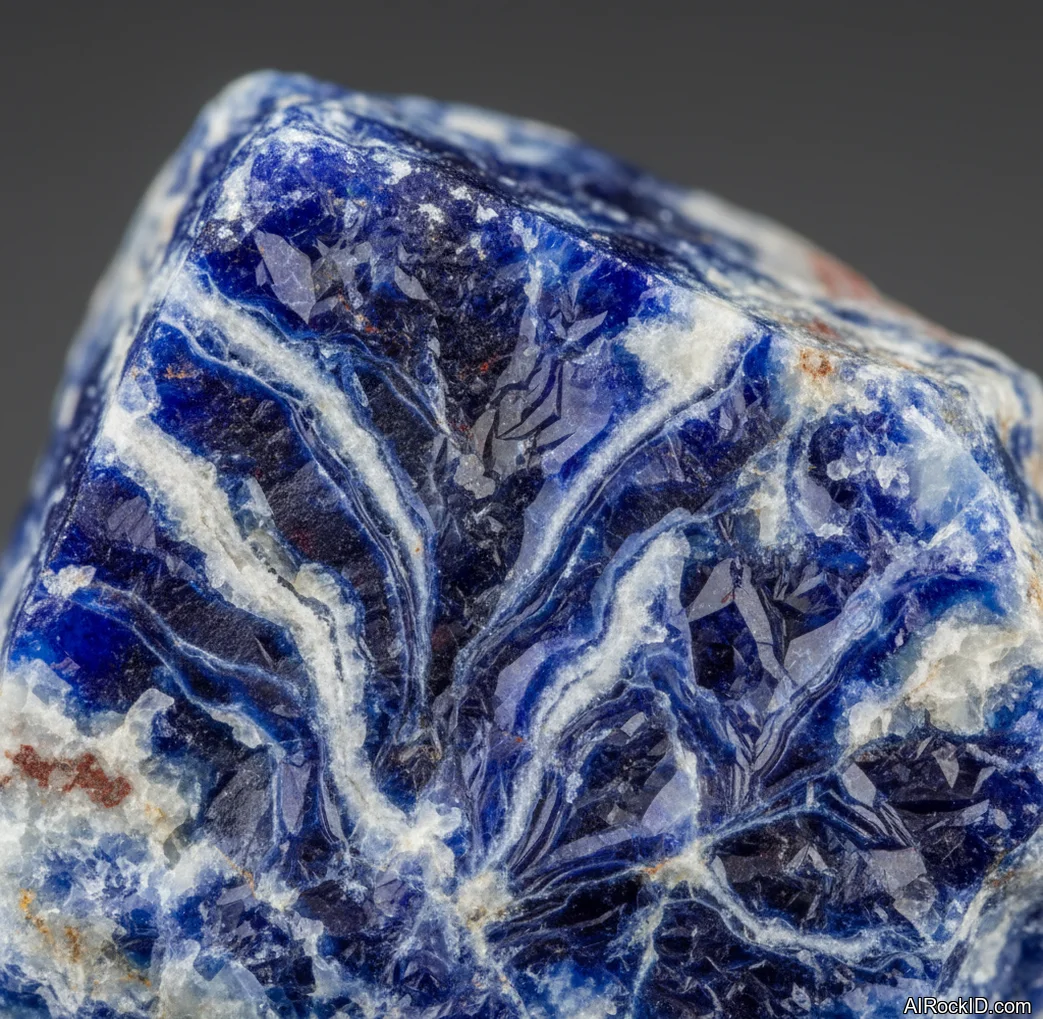
If you scratch it with a steel nail, some cancrinite will mark and some won’t, depending on the exact hardness of your specimen, but it generally won’t laugh off steel like quartz does. The real test is how it behaves next to quartz or feldspar in the same box: it tends to pick up tiny dings on edges faster than you expect. And if you’ve handled a lot of sodalite, cancrinite often feels a little lighter and less “inky” in color, with more of a honey tone than a true blue.
Properties of Cancrinite
Physical Properties
| Crystal System | Hexagonal |
| Hardness (Mohs) | 5-6 (Medium (4-6)) |
| Density | 2.42-2.50 g/cm3 |
| Luster | Vitreous |
| Diaphaneity | Translucent to opaque |
| Fracture | Uneven |
| Streak | White |
| Magnetism | Non-magnetic |
| Colors | Yellow, Orange, Colorless, White, Gray |
Chemical Properties
| Classification | Silicates (tectosilicate; feldspathoid) |
| Formula | Na6Ca2Al6Si6O24(CO3)2·2H2O |
| Elements | Na, Ca, Al, Si, O, C, H |
| Common Impurities | Fe, Mn, K |
Optical Properties
| Refractive Index | 1.490-1.505 |
| Birefringence | 0.010 |
| Pleochroism | None |
| Optical Character | Uniaxial |
Cancrinite Health & Safety
Cancrinite is safe to handle for normal collecting and display. If you’re cutting or grinding it, treat it like any other rock: that fine dust gets everywhere (you can feel it on your fingers), so use standard rock-dust precautions.
Safety Tips
If you’re going to cut or sand it, put on a respirator and keep things wet so the dust doesn’t go everywhere, the same way you’d handle any other lapidary job.
Cancrinite Value & Price
Price Range
Rough/Tumbled: $10 - $120 per specimen
Cut/Polished: $3 - $25 per carat
Price jumps when the orange is clean and really saturated, and when the polish looks tidy instead of kind of smeary under a light. And it climbs again if you’re paying for actual crystals, not just a big hunk of massive material. Matrix pieces with strong contrast, like white calcite or dark aegirine, usually move faster.
Durability
Moderate — Scratch resistance: Fair, Toughness: Fair
It’s generally stable on a shelf, but it can chip and bruise from knocks, especially along sharp edges on polished pieces.
How to Care for Cancrinite
Use & Storage
Store it in a box or on a padded shelf if it’s polished, because it’ll pick up edge chips easier than quartz. If it’s in matrix, keep it where it won’t get knocked around.
Cleaning
1) Rinse briefly with lukewarm water. 2) Use a soft toothbrush with a drop of mild soap to lift dirt from pits and seams. 3) Rinse again and pat dry; don’t bake it in direct sun to “dry faster.”
Cleanse & Charge
If you do energy-style cleansing, stick to smoke, sound, or a quick rinse and dry. I avoid long soaks mainly because many pieces have calcite or other softer stuff mixed in.
Placement
A shaded shelf is best if you want the color to stay steady, and a spot with side lighting makes the waxy polish look better. Keep it away from high-traffic edges where it can get bumped.
Caution
Skip the ultrasonic cleaner and stay away from strong acids. A lot of cancrinite pieces come mixed with calcite, and calcite will fizz on contact and can leave that dull, etched look you can feel with a fingernail. And don’t throw it in a tumbler unless you’re genuinely okay with softened, rounded edges plus a few little bruises and scuffed spots.
Works Well With
Cancrinite Meaning & Healing Properties
At first glance, cancrinite gets tossed into the “sunny yellow stone” bucket, and yeah, that’s the look a lot of folks are after. I’ve got a little pile of it in my own stash, and it’s what I grab when I want something bright that still feels like an actual rock, not some sparkly, glassy crystal. In the hand it’s got this grounded, chalky warmth. Not hot. Just sort of friendly (if that makes sense).
Most dealers on the metaphysical side pitch it for mood, motivation, and feeling less stuck. I get it. When I’m sorting flats after a show, having a cancrinite slab sitting on the table just looks clean and upbeat next to the darker material, and my brain reacts to that. But look, I’m going to say the quiet part out loud: none of this is medical care. If you like stones as reminders or little focus anchors, cancrinite does that job well.
Thing is, the name gets messy in the market. You’ll see “cancrinite” slapped on mixed feldspathoid rock where a bunch of other minerals are doing most of the visual work. That’s not automatically a bad thing, it just means you should buy what you actually like. Put two pieces side by side. The better ones tend to feel smoother, they’ll take a nicer polish, and the yellow-orange won’t look like a thin stain sitting on the surface.
Identify Any Crystal Instantly
Snap a photo and get properties, value, care instructions, and healing meanings in seconds.