Neptunite
What Is Neptunite?
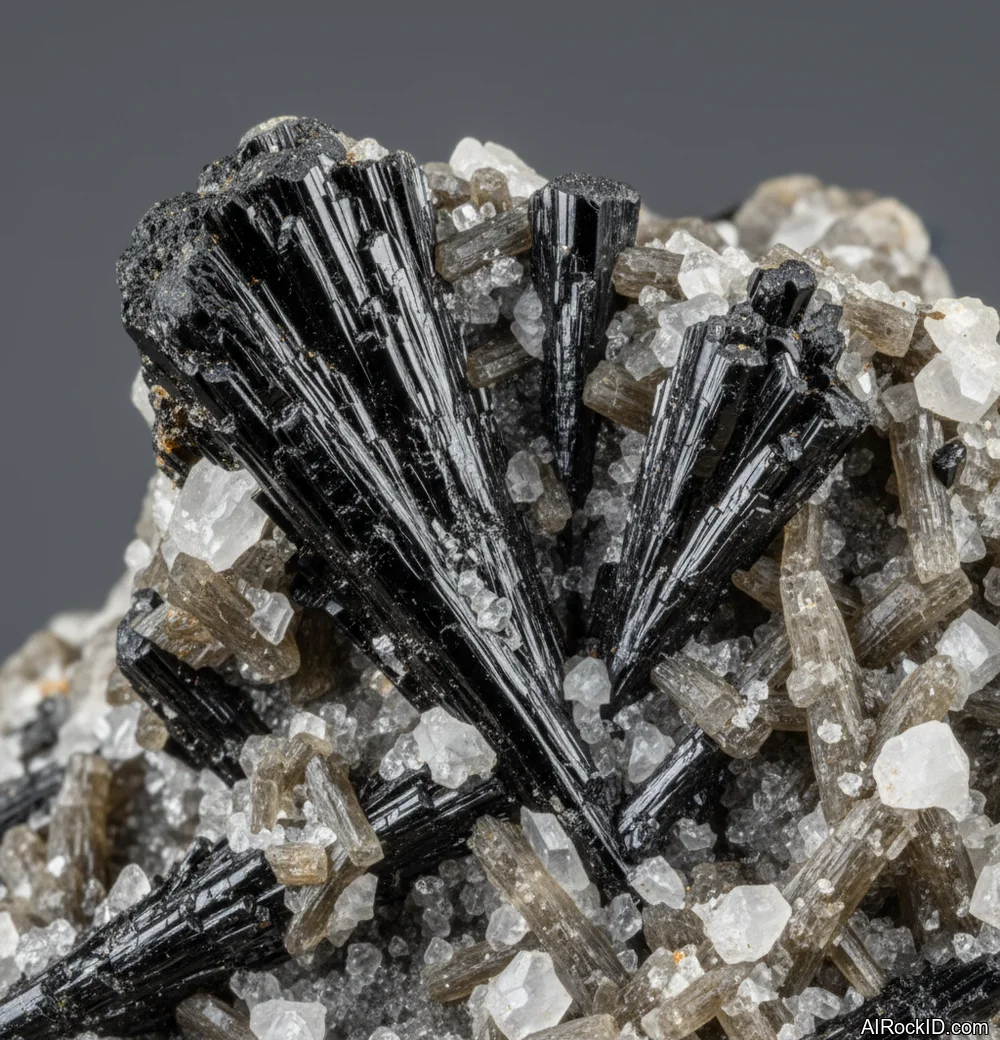
Neptunite is a rare titanosilicate mineral with the formula KNa2Li(Fe2+,Mn2+)2Ti2Si8O24. Most folks run into it as sharp, black crystals perched on snowy natrolite, and yeah, that stark contrast is at least half the reason people stop and stare.
Hold a decent specimen in your hand and two things hit you fast. One, it’s heavier than it looks for a little crystal sitting on a light zeolite matrix. Two, the shine is almost suspicious, like someone wiped it down with wax (they didn’t), but that’s just the naturally glassy luster when the crystal faces are clean.
At a quick glance, beginners will call it “black tourmaline” because it’s dark and prismatic. But neptunite tends to grow more blocky and crisp, and you’ll catch this brown to red-brown flash along thin edges when you tip it under a lamp. It’s not the kind of mineral that shows up in every shop case. And when it does, it’s usually a small cabinet piece with a lot of attitude.
Origin & History
Neptunite first got described in 1893 from Greenland, by Flink, who was working on material out of the Ilímaussaq area. He named it after Neptune, which tracks once you realize how often this stuff shows up in odd alkaline environments that feel like they’re from another planet compared to plain old granite pegmatites.
But for collectors, the part people actually care about came later. The Benitoite Gem Mine area in San Benito County, California, turned neptunite into a real trophy mineral. Dealers still haul out those classic California combos at shows like they’re pulling a good bottle from the back room, the one they’ve been saving.
Where Is Neptunite Found?
Neptunite shows up in alkaline igneous complexes and related veins, with the best-known collector material coming from San Benito County, California and the Kola Peninsula in Russia.
Formation
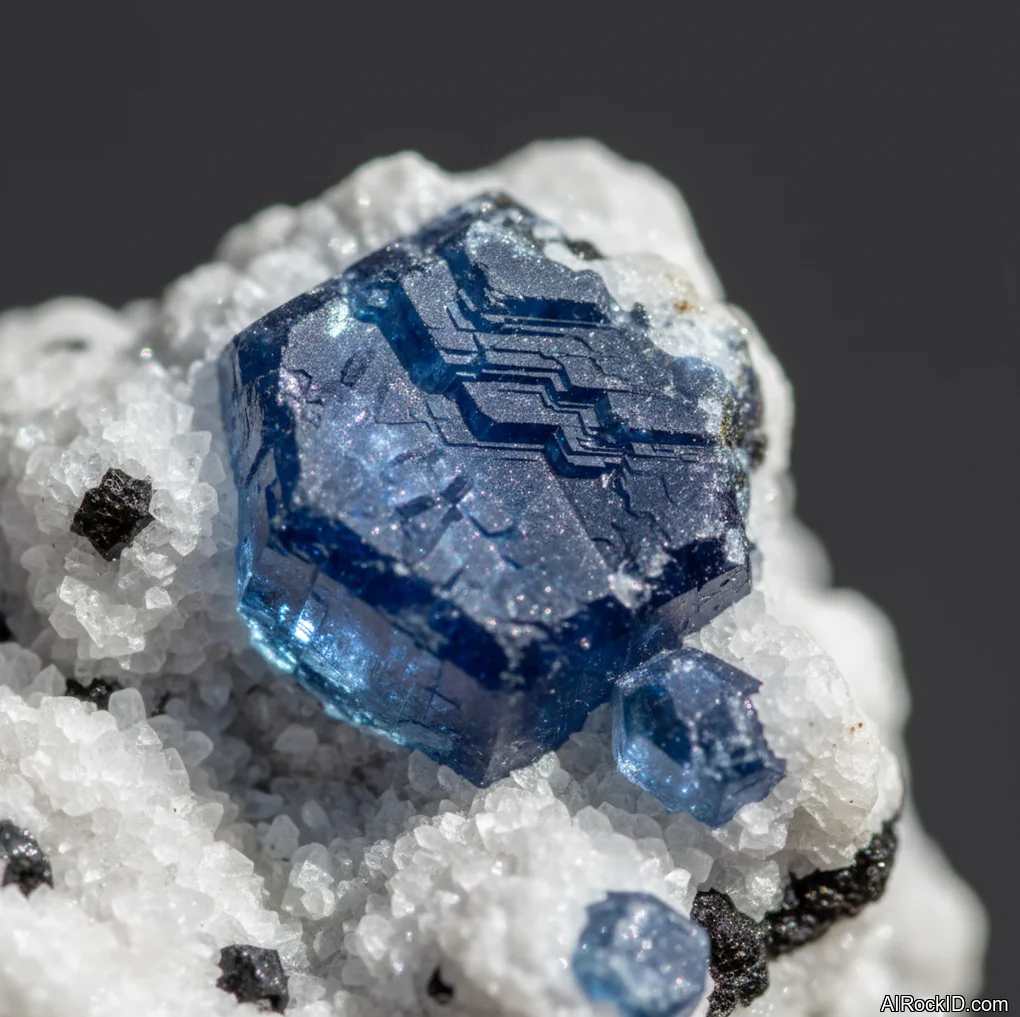
Raw pieces from San Benito County usually come out of natrolite veins that slice through serpentinized rock right near the benitoite-bearing zone. The look is pretty unmistakable once you’ve seen a few: neptunite and benitoite perched on that bright, chalky-white natrolite that almost looks like compacted sugar in spots, and sometimes you’ll spot joaquinite (or some other oddball mineral) tucked into the same little vug. And it really does have that “pocket mineral” vibe. One skinny seam can cough up a world-class specimen, and then, just like that, it’s done.
But in places like Lovozero on the Kola Peninsula, the whole setup is larger and way more igneous. Neptunite forms in peralkaline intrusive environments where sodium and potassium run high and titanium actually gets a chance to do something interesting. So yeah, it’s not a “find it anywhere” mineral. The chemistry has to land just right, and most rocks simply don’t cook that way. Why would they?
How to Identify Neptunite
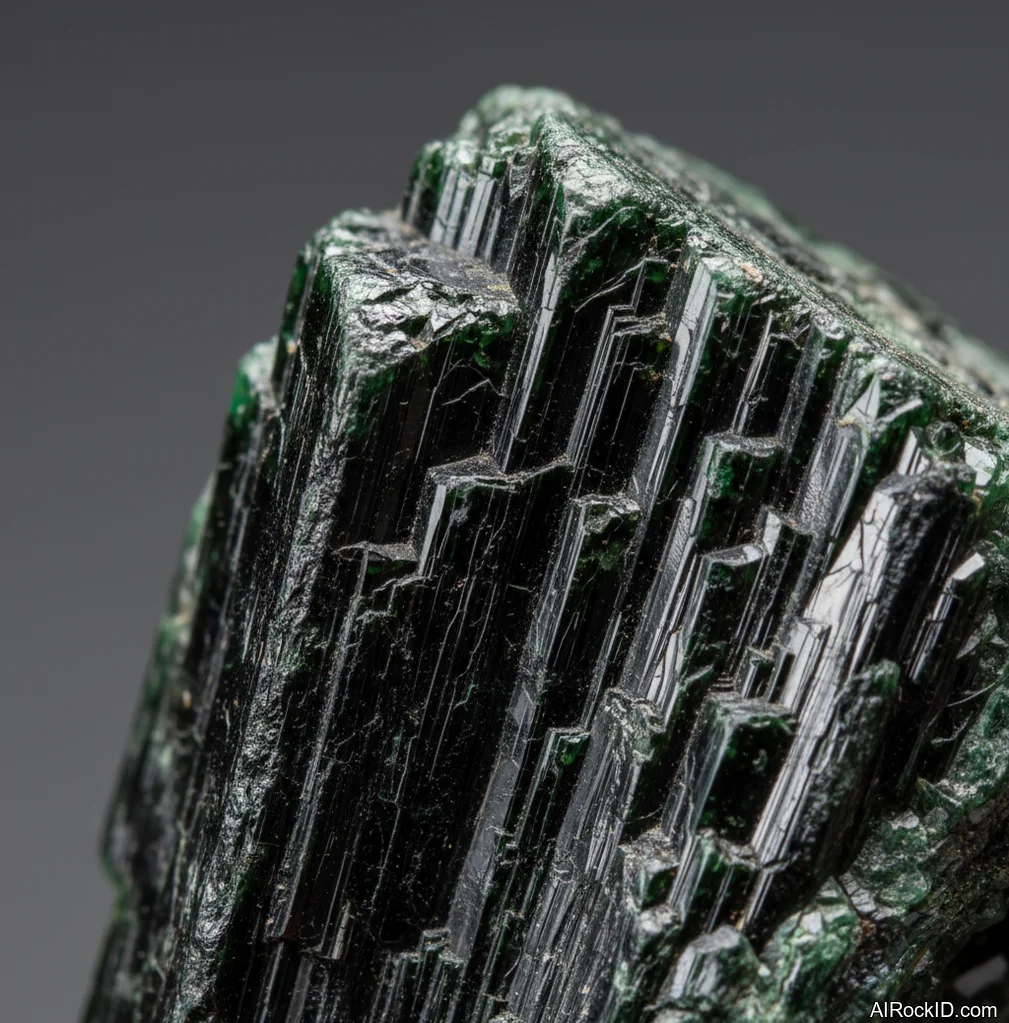
Color: Usually jet black in hand sample, but thin edges and backlit crystals can show reddish-brown to brown tones. On matrix, the contrast with white natrolite can make the black look even deeper.
Luster: Vitreous, sometimes almost resinous-looking on fresh crystal faces.
Look closely at the crystal shape: neptunite tends to form sharp, well-defined prismatic crystals with crisp edges rather than the striated “broomstick” look you get with a lot of tourmaline. The real test is a quick loupe check under strong light, because many pieces show brownish internal color along edges instead of staying dead black. And if you’ve handled a few, you’ll recognize the feel: those crystals have a solid, dense heft even when they’re only a couple centimeters long.
Properties of Neptunite
Physical Properties
| Crystal System | Monoclinic |
| Hardness (Mohs) | 5-6 (Medium (4-6)) |
| Density | 3.20-3.40 g/cm3 |
| Luster | Vitreous |
| Diaphaneity | Transparent to translucent |
| Fracture | Uneven |
| Streak | brown |
| Magnetism | Non-magnetic |
| Colors | black, reddish-brown, brown |
Chemical Properties
| Classification | Silicates |
| Formula | KNa2Li(Fe2+,Mn2+)2Ti2Si8O24 |
| Elements | K, Na, Li, Fe, Mn, Ti, Si, O |
| Common Impurities | Mn |
Optical Properties
| Refractive Index | 1.70-1.74 |
| Birefringence | 0.030 |
| Pleochroism | Strong |
| Optical Character | Biaxial |
Neptunite Health & Safety
Most people can handle this just fine, as long as you stick to basic mineral-collecting hygiene (wash your hands, don’t eat while you’re sorting rocks, that kind of thing). But if you’re cutting it, grinding it, or really going at it with a stiff brush, don’t breathe the dust. It gets in your nose and throat fast, and you’ll feel it.
Safety Tips
Wash your hands after you’ve handled it, and don’t mess with it anywhere near food or the kitchen counter. And if you’re going to cut, grind, or polish it, run water the whole time and use real respirator-level dust control, not just a flimsy paper mask.
Neptunite Value & Price
Price Range
Rough/Tumbled: $40 - $800 per specimen
Cut/Polished: $60 - $250 per carat
Prices shoot up fast when the crystals are clean and sharp, sitting on bright white natrolite, and they climb even more if there’s benitoite in the same piece. But if the tips are busted, the faces look kind of dull, or you can spot a crystal that’s been glued back on (that little shiny seam gives it away), the value drops hard.
Durability
Moderate — Scratch resistance: Fair, Toughness: Fair
It’s stable in normal indoor conditions, but the crystals can chip at edges and corners if they rattle around in a box.
How to Care for Neptunite
Use & Storage
Store it in a box with padding or a perky box so the crystal tips don’t smack into anything. If it’s on natrolite, treat the whole piece like a fragile display specimen.
Cleaning
1) Blow off loose dust with a bulb blower or canned air held at a distance. 2) Rinse quickly in lukewarm water with a drop of mild soap, then use a very soft brush around the matrix, not the crystal tips. 3) Pat dry and let it air-dry fully before putting it back in a closed case.
Cleanse & Charge
If you do energetic cleansing, keep it simple: smoke, sound, or a quick pass over selenite. Avoid salt soaks because they’re messy and don’t help the specimen.
Placement
A shelf with steady lighting works great because the faces throw little flashes when you move past. Keep it away from high-traffic spots where it can get knocked.
Caution
Don’t use ultrasonic or steam cleaners, and don’t toss it into a tumble pile. Look, the edges chip way easier than you’d think for a black, tough-looking crystal. I’ve seen little flakes come off right along the corners just from knocking it against other stones in a bowl (seriously, why is it so fragile there?).
Works Well With
Neptunite Meaning & Healing Properties
Next to those soft, dreamy stones, neptunite feels like the mineral equivalent of someone clearing off your desk and handing you a label maker. Seriously. When I’ve got a piece sitting by my keyboard and I pick it up, it flips me into that mode of sorting, naming things, and finally finishing the task I swore I’d get done. That’s my experience, not medicine. But the vibe is strong enough that I grab it when my thoughts are all over the place.
Look, if you tilt a neptunite crystal under a warm lamp, you can catch this brown-red glow right along the edges. It’s subtle, and it comes and goes as you move it, which is kind of the point. That little shift is why plenty of people connect it with insight work, shadow work, or journaling. It doesn’t feel like a hug. It feels like a straight answer.
But here’s the catch: as a daily pocket stone, neptunite can be a pain. A lot of pieces are on matrix, and the crystals chip, especially around those sharper corners (the ones that love snagging on fabric). So if you want the metaphysical association without risking a great specimen, keep it as a small display piece and carry something tougher in your pocket. And if anxiety or sleep issues are in the mix, treat crystals as support, not a replacement for real care.
Identify Any Crystal Instantly
Snap a photo and get properties, value, care instructions, and healing meanings in seconds.