Petrified Ironwood


Quick answer: Petrified Ironwood is fossil wood whose original structure has been replaced or filled by silica, often showing brown, black, reddish, or tan iron-oxide colors. It is usually durable enough for cabochons, beads, and display pieces, but identification is strongest when visible wood grain is confirmed with hardness, luster, and texture.
AI Rock ID can help screen Petrified Ironwood by comparing visible grain, color banding, polish, and fracture patterns from a clear photo. RockIdentifier.io provides educational identification support, but unusual specimens, valuable pieces, or unclear photos should be checked with hands-on tests or a qualified gemologist.
Good fit
- Collectors who want a fossil material with visible wood grain or bark-like texture
- Jewelry buyers looking for a hard, silica-rich stone with earthy brown and black colors
- Lapidary users who want stable cabochon or bead material when the piece is well silicified
- People comparing petrified wood varieties by color, density, and grain preservation
Not a good fit
- Buyers who need a lightweight stone, because silicified wood can feel dense for its size
- Anyone expecting every piece to show obvious tree rings; many specimens show subtle or distorted grain
- Collectors who want a rare gem species rather than a fossilized rock material
Most commonly confused with
- Petrified Wood: General petrified wood may have many colors and mineral replacements; Petrified Ironwood usually refers to dense, iron-stained brown to black material with a wood-like structure.
- Tiger Iron: Tiger Iron has banded tiger’s eye, hematite, and jasper layers rather than preserved fossil wood grain.
- Jasper: Jasper can share red, brown, or black colors, but it normally lacks cellular wood texture or growth-ring patterns.
- Black Petrified Wood: Black petrified wood is a color variety; Petrified Ironwood commonly includes iron-rich brown and black tones and may be described by trade or locality.
Petrified Ironwood Lookalike Comparison
| Material | Typical Clue | Key Difference |
|---|---|---|
| Petrified Ironwood | Dense, hard, brown to black, wood-like grain | Silicified fossil wood with iron-oxide staining |
| Petrified Wood | Wood grain, rings, or bark texture in many colors | Broader category; not always iron-rich or very dark |
| Tiger Iron | Metallic hematite bands with golden tiger’s eye | Banded rock mixture, not fossil wood |
| Jasper | Opaque red, brown, yellow, or black chalcedony | Usually lacks preserved wood anatomy |
| Bog Oak | Dark brown to black organic wood appearance | Wood, not quartz; much softer and less dense |
AI identification confidence
AI identification confidence is usually moderate when the photo shows clear wood grain, polished luster, and natural color variation. Confidence drops when the specimen is a plain dark cabochon, heavily polished bead, or small chip without visible fossil structure.
When AI gets it wrong
- A dark jasper cabochon is labeled as Petrified Ironwood because both can be opaque and brown-black.
- Tiger Iron is mistaken for fossil wood when banding is photographed without scale or texture detail.
- Dyed or resin-treated wood is misidentified as silicified wood when hardness and density are not tested.
- A close-up photo lacks context, making natural grain, saw marks, and polishing scratches hard to separate.
Final recommendation
Choose Petrified Ironwood when visible fossil wood structure, good polish, and a dense silica-rich feel are more important than bright color. For buying, request daylight photos of multiple angles and avoid pieces described only by color without evidence of grain or fossil texture.
How to Tell If Petrified Ironwood Is Real
Authentic Petrified Ironwood should feel stone-like rather than woody, with a hardness near quartz and enough density to feel substantial in the hand. Look for natural grain, ring-like structures, or cellular patterns that continue through the surface rather than sitting as a printed or painted layer. A steel knife should not easily scratch well-silicified material, but scratch testing should only be done on an inconspicuous area.
Buying Tips for Petrified Ironwood
Good listings should show both polished and edge views when possible, because edges can reveal fossil grain and natural fracture behavior. Be cautious with vague terms such as “ironwood stone” or “wood jasper” unless the seller explains whether the material is fossil wood, jasper, or another chalcedony. Locality information can add collector interest, but appearance, stability, and accurate disclosure matter more for jewelry use.
Photo Tips for Identifying Petrified Ironwood
Use bright indirect light and photograph the specimen from the polished face, side, and any broken or rough edge. Include a coin or ruler for scale, because grain size and density clues are easier to interpret with context. Avoid heavy filters or warm indoor lighting, which can make ordinary jasper or dyed material appear more iron-rich than it is.
What Is Petrified Ironwood?
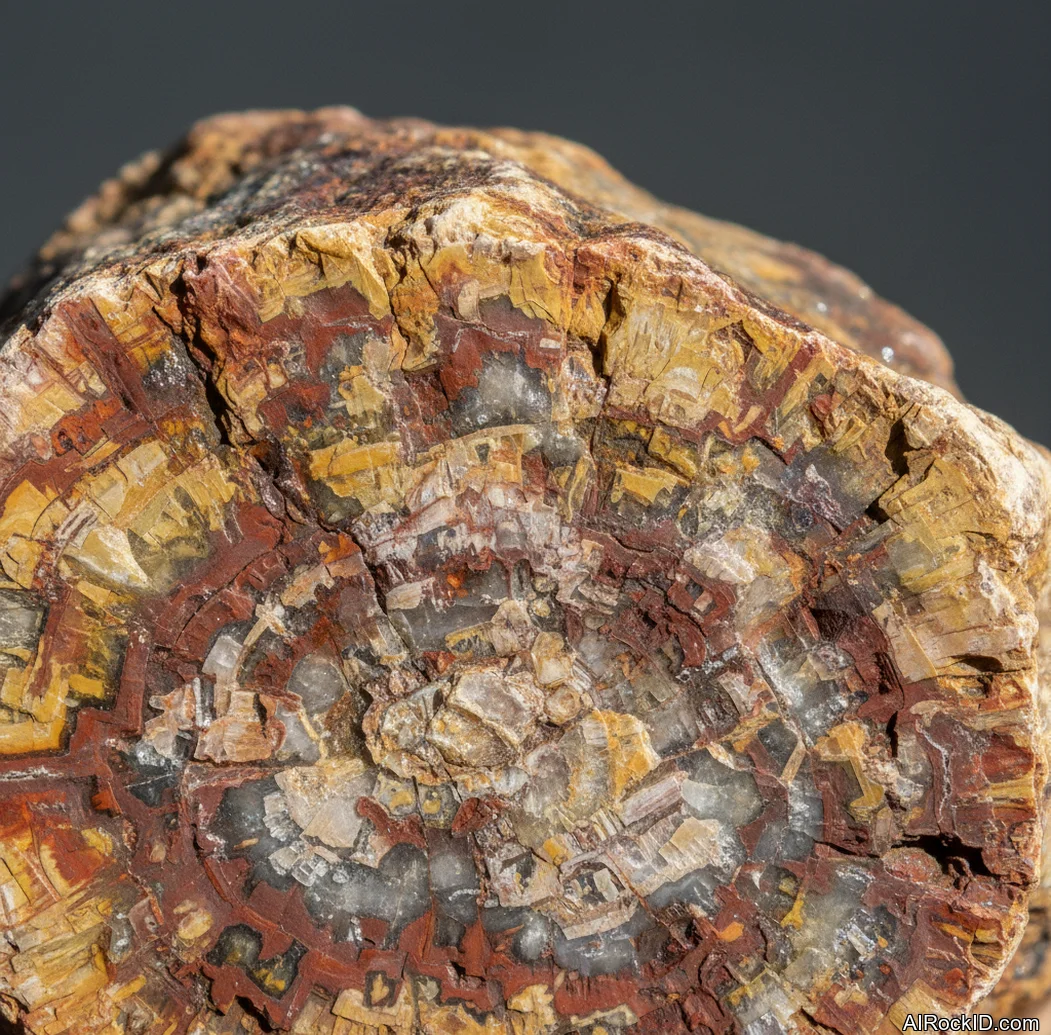
Petrified Ironwood is fossil wood where the original material got swapped out for silica, usually chalcedony, then iron minerals stained it into deep browns, tans, and near-black. First thing you notice? The weight. It drops into your hand like a river rock, not like dry wood, and if it’s been polished well the surface feels almost glassy, the kind that grabs your fingertip a little when you rub it.
At a quick glance, sure, it can pass for regular petrified wood. But the “ironwood” trade name tends to get slapped on the darker stuff that looks denser, with tight grain lines and high contrast. Look closer and the wood anatomy’s still there: growth rings, those little wavy fibers, and sometimes tiny checks that ended up packed with silica. And when somebody cuts it on the right angle, the pattern reads as wood from across the room, no squinting required.
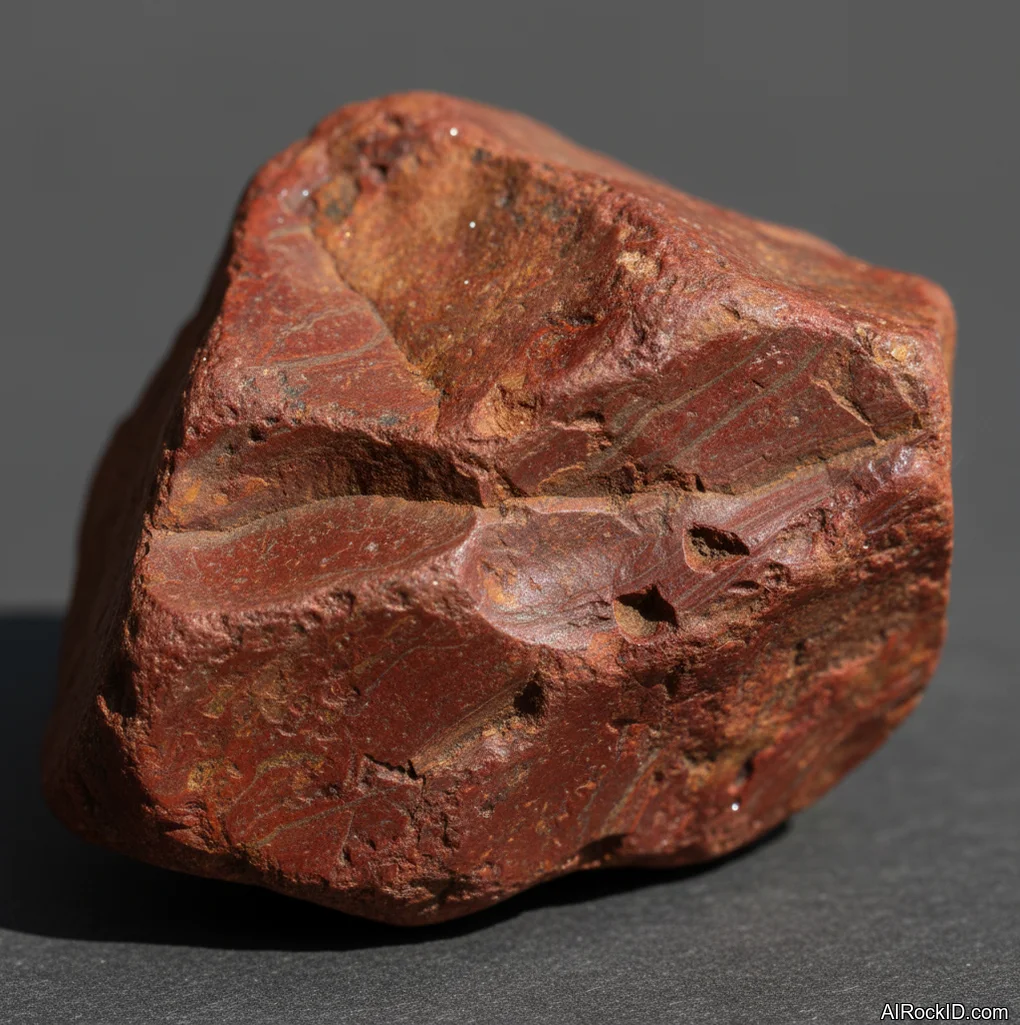
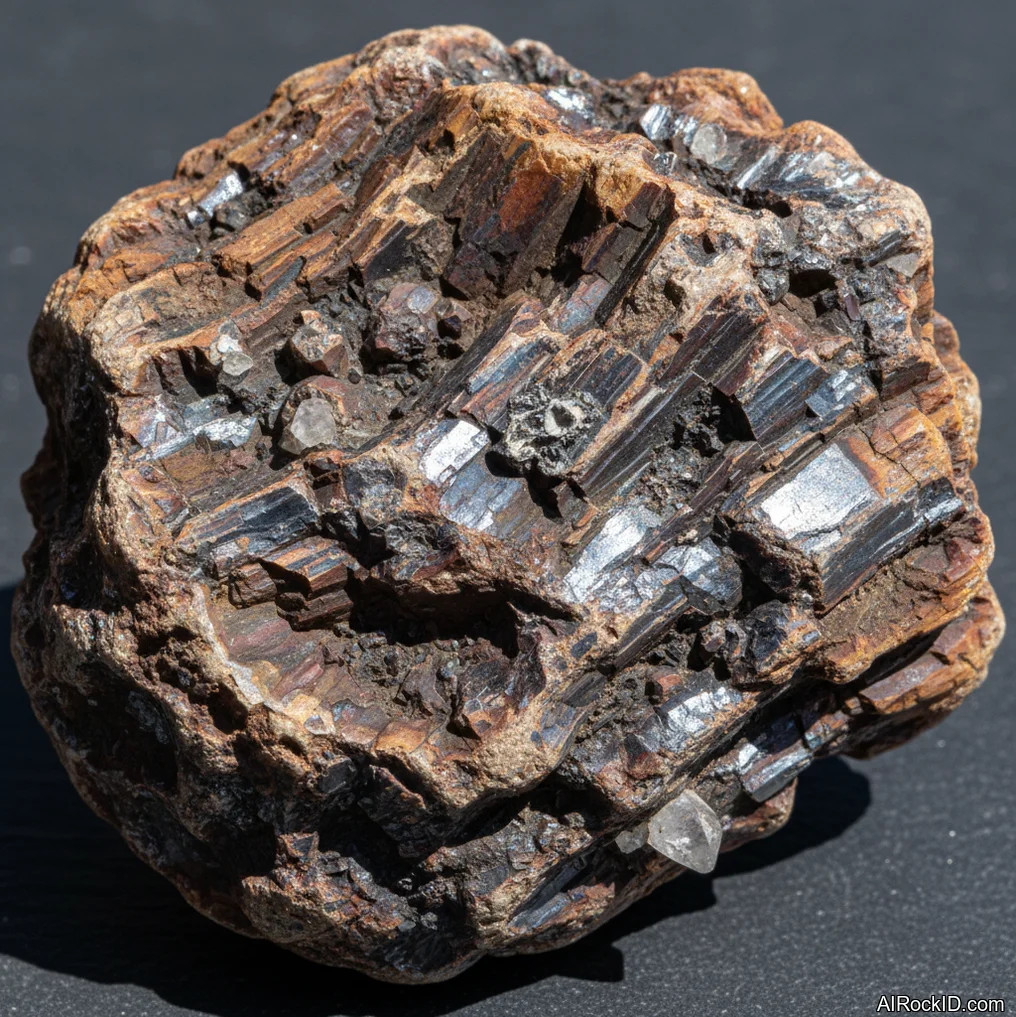
Most pieces you’ll run into are slabbed, cabbed, or tumbled, since that’s where it really shows off. Raw chunks are out there too, but the outside can be pretty rough-looking (kind of dull, sometimes a plain brown shell). I’ve split open rough that looked like a boring brown nodule, and the inside had crisp striping that was instant cab material.
Origin & History
“Ironwood” gets tossed around as a plant name for a bunch of hard, heavy woods all over the place, but here in the Southwest, most people mean desert ironwood (Olneya tesota). “Petrified ironwood,” though, is really a lapidary and rock-shop label, not some formal scientific term. You’ll spot it on those plastic bins at gem shows, usually with a strip of masking tape and Sharpie on the front, sitting right next to petrified palmwood, rainbow petrified wood, and a couple other petrified odds and ends.
Because it’s a trade name, there isn’t one clean “first described” moment like you’d get with a newly named mineral species. The word “petrified” comes from the whole turning-to-stone idea, and that’s basically what you’re holding in your hand. Wood texture, stone body. Old material, new chemistry. Kind of wild when you run your thumb over the grain and it feels like rock, right?
Where Is Petrified Ironwood Found?
On the market, most Petrified Ironwood is sold as Southwestern material, especially from Arizona-style trade sources and the broader Sonoran Desert region.
Formation
Silicified wood starts out pretty simply: a log gets buried fast enough that it doesn’t completely rot, and then silica-rich groundwater starts seeping through it. Little by little, that water drops silica into the wood, and over a long stretch of time the tiny cell spaces and tissues get replaced by microcrystalline quartz. It’s slow. Like, thousands to millions of years slow, not some quick “soak and done” situation.
And that ironwood look? That comes from iron oxides (plus a few other staining minerals) hitching a ride with the silica or showing up later as the material changes. That’s what gives you those chocolate browns, rusty reds, and the nearly black banding you see when you turn a piece in your hand and the stripes catch the light. But thing is, two pieces can both be genuine silicified wood and still look totally different. Why? Because the iron content can vary a lot, and the way the groundwater moved through the log wasn’t the same in every case.
How to Identify Petrified Ironwood
Color: Most pieces run tan to caramel brown with dark brown to black striping, sometimes with rusty red patches from iron staining. The grain pattern is usually tight and linear, like fine wood fibers, not blotchy like jasper.
Luster: Polished material takes a waxy-to-vitreous luster, depending on how fine the silica is and how well it’s finished.
Pick up a polished piece and rub your thumb across the grain. Real silicified wood feels smooth but you can still sense tiny texture changes where the pattern shifts. If you scratch it with a steel nail, it shouldn’t bite easily. The real test is the pattern continuity. On genuine material, the “wood” lines wrap and flow naturally through the stone, especially across corners of a tumble or along a cab edge. Cheap versions usually have printed or dyed-looking bands that stop abruptly or look too perfect.
Common Look-Alikes
Petrified Ironwood is sometimes confused with these materials:
- Regular petrified wood (lighter tan/red pieces sold as “ironwood” just for the name)
- Mahogany obsidian (especially when it’s polished and the brown patches look wood-grain-ish)
- Banded chert or jasper (brown/tan banding can mimic growth rings in photos)
- Dyed petrified wood or dyed agate/chalcedony (darkened to fake that near-black iron-stained look)
- Smoked or black glass sold as “petrified wood” (heavy-looking in pics, but the surface tells on it in hand)
Market Cautions & Treatments
When AI Can Get This Wrong
In photos, AI mixes Petrified Ironwood up with mahogany obsidian and brown jasper because all three can show brown-on-black patches and a shiny polish. The real test is texture and structure: ironwood often shows actual wood grain or ringy banding that isn’t perfectly even, plus tiny silica pores that don’t look like glass bubbles. If you can handle it, check heft and hardness: it should feel like a dense river rock and it’ll scratch glass cleanly, while many glassy look-alikes won’t have that same cool, “grabby” chalcedony feel.
Properties of Petrified Ironwood
Physical Properties
| Crystal System | Amorphous |
| Hardness (Mohs) | 6.5-7 (Hard (6-7.5)) |
| Density | 2.58-2.64 |
| Luster | Waxy |
| Diaphaneity | Opaque |
| Fracture | Conchoidal |
| Streak | White |
| Magnetism | Non-magnetic |
| Colors | tan, caramel brown, dark brown, black, rusty red |
Chemical Properties
| Classification | Silicates |
| Formula | SiO2 |
| Elements | Si, O |
| Common Impurities | Fe, Mn, Al |
Optical Properties
| Refractive Index | 1.530-1.540 |
| Birefringence | None |
| Pleochroism | None |
| Optical Character | Isotropic |
Petrified Ironwood Health & Safety
Solid pieces are fine to pick up and move around, no big deal. But the second you start cutting or grinding, you can kick up respirable silica dust, that super-fine stuff that hangs in the air and ends up in your lungs. So handle it the same way you would any quartz-based lapidary material.
Safety Tips
Use wet cutting or wet grinding, and if you’re going to kick up dust, wear a respirator that actually fits your face (tight seal, straps snug, no gaps by your nose). And when you’re done, leave the mess wet and wipe or scoop up the slurry while it’s still damp, not by sweeping it once it dries out. Why stir that stuff back into the air?
Petrified Ironwood Value & Price
Price Range
Rough/Tumbled: $5 - $40 per palm stone/tumble; $20 - $120 per slab (size/quality dependent)
Cut/Polished: $2 - $12 per carat (cabochon material, highly variable)
Prices shoot up when the grain’s tight and high-contrast, and when it’ll take a clean polish that comes up glassy with no pits staring back at you under the light. But the second you spot cracks, crumbly spots that flake off at the edge (you can feel it catch on a fingernail), or that dull brown tone, the value drops fast.
Durability
Durable — Scratch resistance: Good, Toughness: Good
It’s basically chalcedony, so it holds up well in normal wear, but fracture planes and old checks can still chip if you smack an edge.
How to Care for Petrified Ironwood
Use & Storage
Keep it in a pouch or a divided box if it’s polished, because it can scratch softer stones and can get edge chips from harder ones. And if you’ve got a slab, store it flat so it doesn’t flex and snap along an old fracture.
Cleaning
1) Rinse under lukewarm water to remove grit. 2) Wash with mild soap and a soft brush, especially in tiny pits. 3) Rinse well and dry with a soft cloth.
Cleanse & Charge
If you do energy-style cleansing, plain water rinse or a little time on dry soil works fine for most pieces. Skip saltwater if the specimen has porous or crumbly spots that trap residue.
Placement
Looks best under angled light, because the grain pops when you tilt it. I keep one palm stone on my desk and it’s the kind of piece you end up flipping over without thinking.
Caution
Skip harsh acids and heavy-duty chemical cleaners. They won’t actually dissolve quartz, but they can leave the surface looking a little hazy, or even mess up any fracture filling that’s in there. And keep an eye on the edges, especially on thin cabs. Those old wood cracks (the little hairline splits you can catch with a fingernail) love to turn into chip starters if you’re not careful.
Works Well With
Petrified Ironwood Meaning & Healing Properties
Next to the flashier stones, Petrified Ironwood just feels solid. Heavy. Not floaty at all. It’s the kind of piece I’ll put in someone’s hand if they fidget, because it has that grounded, dense weight and that slick polish that keeps your thumb busy (you can feel the cool surface warm up after a minute).
In crystal lore, it gets linked to grounding, patience, and the whole “slow growth” idea, which makes sense when you think about what you’re actually holding. It’s basically time, pressure, and water chemistry leaving a receipt. Still, it’s a rock, not a prescription. If you’re dealing with anxiety, sleep stuff, or anything medical, crystals can be a comfort object and a little cue to breathe, but they don’t replace real care.
Thing is, a lot of ironwood that gets sold is pitched like it’s some totally separate magical species. It isn’t. It’s silicified wood, and the feel people describe lines up with other earthy chalcedony and petrified wood: calming, stabilizing, good for routines. And I’ve noticed people latch onto it fast when the piece has clear grain you can literally trace with a fingertip. That texture. It matters, right?
Common mistakes
- Assuming every brown-black polished stone with streaks is Petrified Ironwood
- Relying on color alone instead of checking for preserved wood texture
- Confusing trade names such as wood jasper with confirmed fossil wood
- Overlooking resin-filled cracks or surface coatings on low-grade material
- Expecting all pieces to show perfect tree rings, even though many show irregular grain or cellular patterns
Identify Petrified Ironwood from a photo
Compare Petrified Ironwood traits, care tips, value clues, and common lookalikes with a clear photo.