Purpurite
What Is Purpurite?
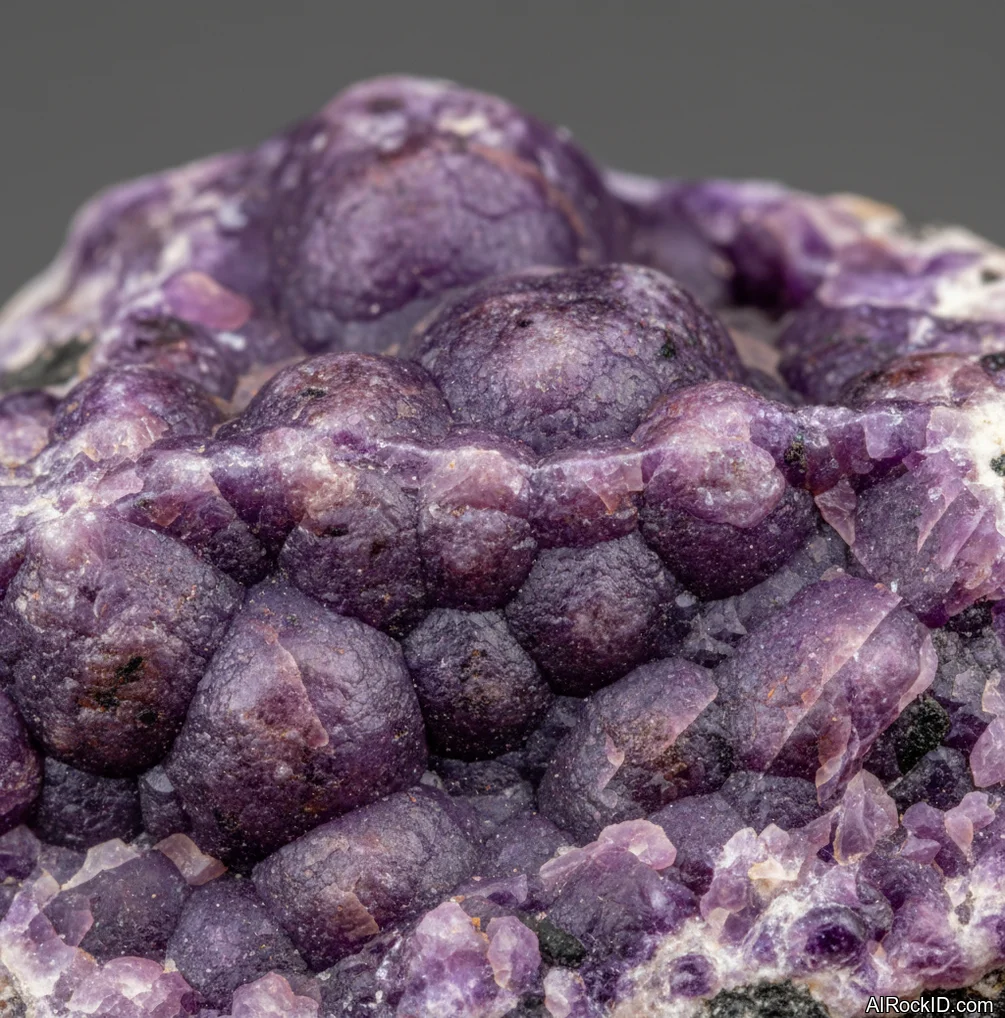
Purpurite is a purple manganese phosphate mineral in the purpurite–heterosite series, with the formula (Mn,Fe)PO4. And honestly, most of what you’ll ever handle isn’t some perfect crystal. It’s usually chunky, crumbly stuff with a dusty, lipstick-purple skin on the outside where it’s weathered.
Pick up a piece and the first thing you notice is how light it feels for a color that loud. Weird, right? Run your thumb over it and you can sometimes get a faint purple smear, like you just brushed chalk (or cheap pastel) with your fingertip. That’s a dead giveaway in person. But it’s also the problem: the same softness and powdery habit that makes it kind of charming in a display box makes it a lousy choice for rings or pocket stones.
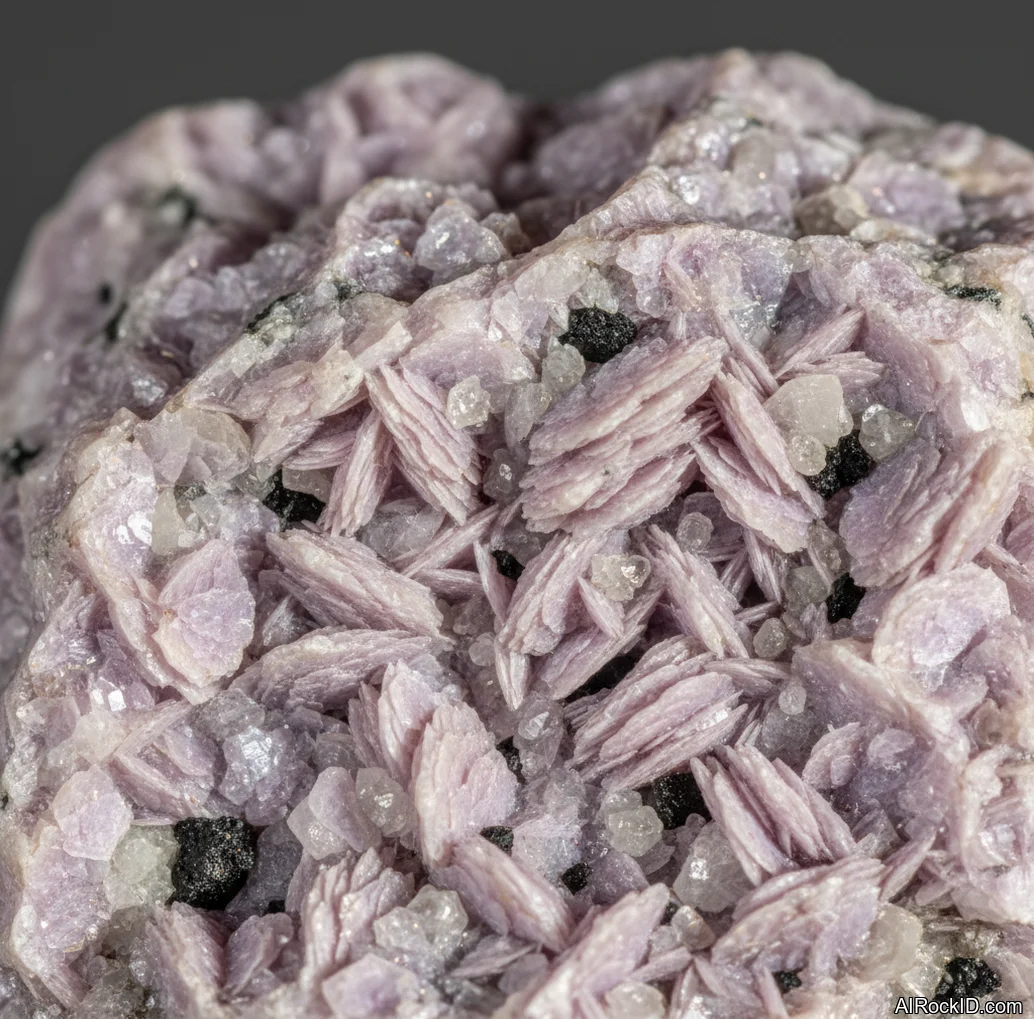
People mix it up with sugilite or lepidolite all the time because online, purple is just purple. In your hand, it’s not even close. Sugilite usually feels waxier and tougher. Lepidolite will flash those mica plates when you tilt it. Purpurite, though, tends to look dry and earthy, with little granular breaks on the fresh edges where it’s snapped.
Origin & History
1905 is the date tied to purpurite’s official write-up, and the credit goes to Louis C. Graton and W. T. Schaller after they studied material from North Carolina, USA. The name’s basically a direct lift from the Latin *purpura*, meaning “purple.” Subtle? Not really.
Collectors got interested for two reasons. One, that color can look downright unreal on a freshly broken face, especially where the surface still has that crisp, almost velvety look before it starts dulling out. And two, it turns up in lithium-cesium-tantalum type pegmatites, right alongside a bunch of other phosphate minerals people like to chase.
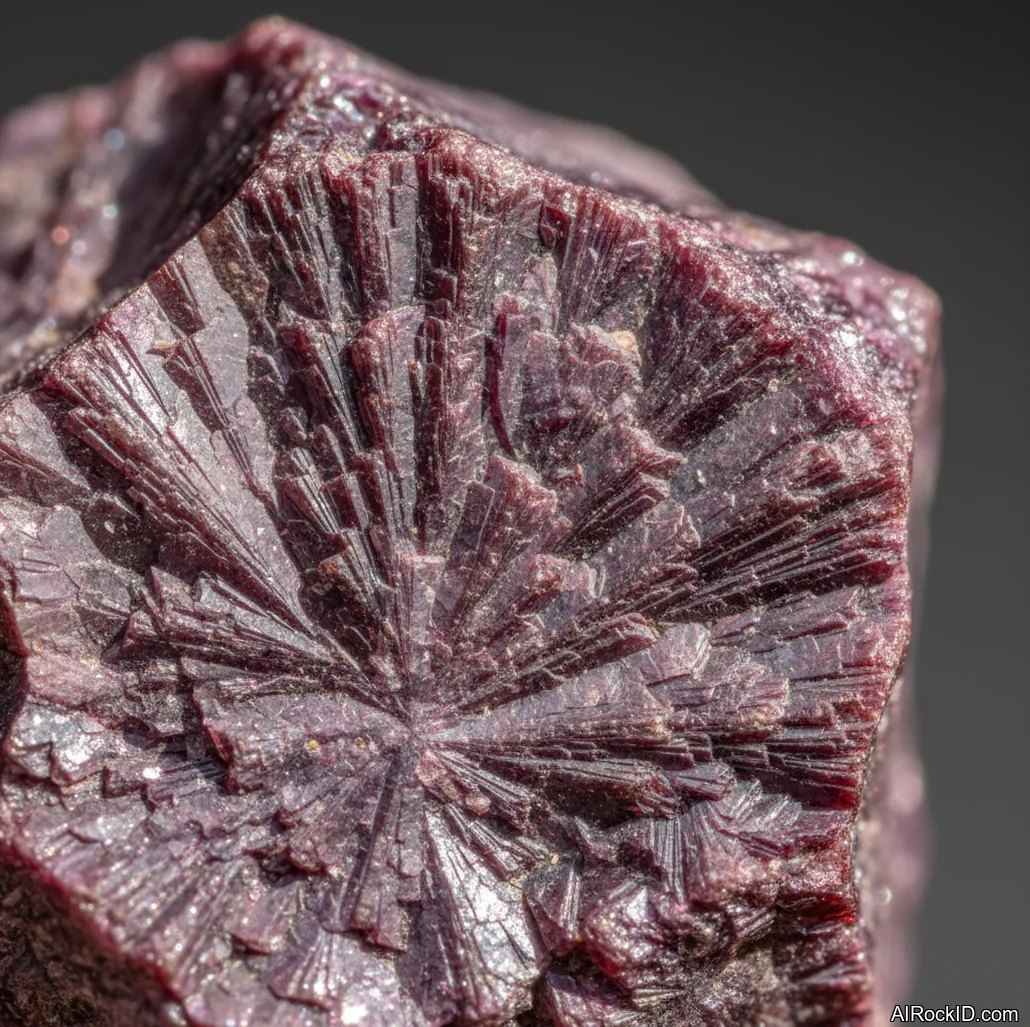
It also sits in a solid-solution series with heterosite, which is the iron-dominant end member. So you’ll run into specimens that slide from a redder purple into a browner purple, depending on the Mn:Fe ratio and how much oxidation has happened.
Where Is Purpurite Found?
It shows up in granite pegmatites and their weathered zones, often alongside other phosphates. Namibia and parts of the western USA are common sources for collector material.
Formation
Chunks coming out of pegmatites usually begin as primary phosphate minerals, most often triphylite-lithiophilite. But once those minerals start breaking down during alteration and oxidation, the manganese and iron get shuffled around into secondary phosphates, and purpurite shows up as coatings, seams, or thick, massive patches you can actually trace with a fingertip.
Crack a piece open and look at the fresh break. You’ll commonly get that brown-to-black interior, then a stronger purple rind right near the outside. That’s just weathering doing what it always does.
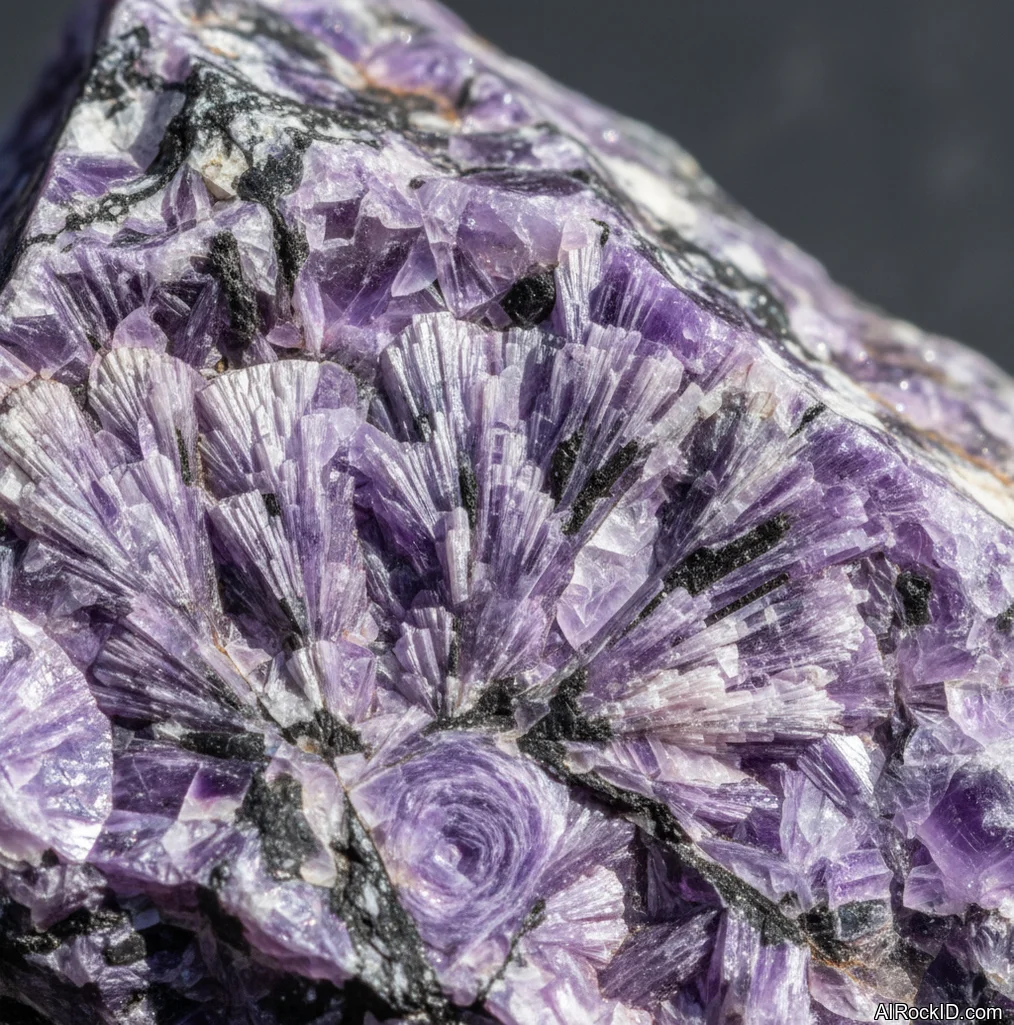
And in some pegmatites, purpurite hangs out with apatite, lepidolite, quartz, feldspar, plus a whole zoo of other late-stage minerals. So yeah, you’ll sometimes see it as purple stains streaking through a pale pegmatite matrix. Kinda hard to miss once you know what you’re looking at, right?
How to Identify Purpurite
Color: Usually deep purple to reddish purple, sometimes with brownish or black areas where it’s more iron-rich or less weathered. Color is often strongest on the outer oxidized surfaces.
Luster: Mostly dull to earthy, sometimes slightly sub-vitreous on fresher breaks.
If you scratch it with a steel nail, it’ll usually mark or powder instead of fighting back like quartz. The real test is the streak: on unglazed porcelain it gives a purple to reddish-purple streak that’s hard to fake with look-alikes. And if your fingertips come away faintly purple after handling a rough piece, you’re probably in purpurite territory.
Properties of Purpurite
Physical Properties
| Crystal System | Orthorhombic |
| Hardness (Mohs) | 4.5-5.5 (Medium (4-6)) |
| Density | 3.40-3.60 |
| Luster | Earthy |
| Diaphaneity | Opaque |
| Fracture | Uneven |
| Streak | Purple to reddish purple |
| Magnetism | Non-magnetic |
| Colors | Purple, Reddish purple, Brownish purple, Black |
Chemical Properties
| Classification | Phosphates |
| Formula | (Mn,Fe)PO4 |
| Elements | Mn, Fe, P, O |
| Common Impurities | Li, Ca, Mg |
Optical Properties
| Refractive Index | 1.74-1.78 |
| Birefringence | 0.030 |
| Pleochroism | Strong |
| Optical Character | Biaxial |
Purpurite Health & Safety
Normal handling is fine. But don’t breathe the dust if you’re cutting it, sanding it, or snapping off any crumbly bits because that fine powder hangs in the air longer than you’d think. If you end up with that purple residue on your fingers (it smears like chalk and loves getting under your nails), just wash your hands.
Safety Tips
Use wet methods for lapidary work and wear a respirator, because that fine purple dust gets everywhere fast. And when you’re done, wipe down the bench and nearby surfaces so it doesn’t track around or puff back up the next time you bump the table.
Purpurite Value & Price
Price Range
Rough/Tumbled: $10 - $120 per piece
Cut/Polished: $5 - $25 per carat
Price usually follows color (clean, saturated purple sells), stability (less crumbly material costs more), and whether you’re getting a solid chunk or just a thin coating smeared through matrix. Thing is, you can feel the difference fast. The solid pieces have that heavier, more “one-piece” heft in your palm, while the coated stuff tends to flake at the edges if you rub it with your thumb (especially near little pits in the host rock).
Durability
Nondurable — Scratch resistance: Fair, Toughness: Poor
It can powder, shed color, and bruise on edges, especially in dry, crumbly material.
How to Care for Purpurite
Use & Storage
Keep it in a specimen box or on a shelf where it won’t get bumped. Soft foam under the piece helps, because corners chip easier than you’d think.
Cleaning
1) Blow off loose dust with a bulb blower or soft brush. 2) Wipe gently with a barely damp microfiber cloth. 3) Dry right away and avoid soaking if the piece is crumbly or porous.
Cleanse & Charge
If you do energy-style cleansing, stick to smoke, sound, or a quick pass under cool running water, then dry it. Skip salt bowls since grit can scratch and salt can creep into cracks.
Placement
I keep purpurite away from sunny windows because the surface can look tired over time. A shaded display spot with stable humidity keeps it looking the way you bought it.
Caution
Skip ultrasonic and steam cleaners. Don’t tumble it either. And seriously, don’t just chuck it in your pocket with harder stones or keys, because it’ll pick up scuffs fast and you’ll see it start shedding.
Works Well With
Purpurite Meaning & Healing Properties
Next to a lot of “purple stones,” purpurite comes off way less polished. It’s got this raw, straight-to-the-point vibe in how people actually use it. People who do crystal work tend to lump it in with focus and insight, plus that whole “can I get my brain to shut up for five minutes?” feeling. I’ve watched customers grab a piece, tilt it under the light, pause on that deep purple for a beat, and then suddenly they’re talking about journaling or meditation, like the color flipped a switch.
But the hands-on reality is different. It’s soft. And the more powdery pieces will leave a little dust or residue on your fingers (you’ll notice it right away, that chalky smear), so I wouldn’t rub it on your skin or sleep with it under a pillow unless it’s sealed in a pouch. When I’m using mine, it just sits on my desk where I can glance at it. That’s it. The purple settles me down, and honestly, the little scuffs and imperfect spots keep it from turning into one of those “don’t touch it” objects.
And keep the line clear here. Any mood, focus, or “energy” talk is personal and tradition-based, not medical care. If you’re dealing with anxiety, sleep issues, or anything serious, purpurite belongs next to your notebook and your water bottle, not as a replacement for a professional.
Identify Any Crystal Instantly
Snap a photo and get properties, value, care instructions, and healing meanings in seconds.