Silk Fluorite
What Is Silk Fluorite?
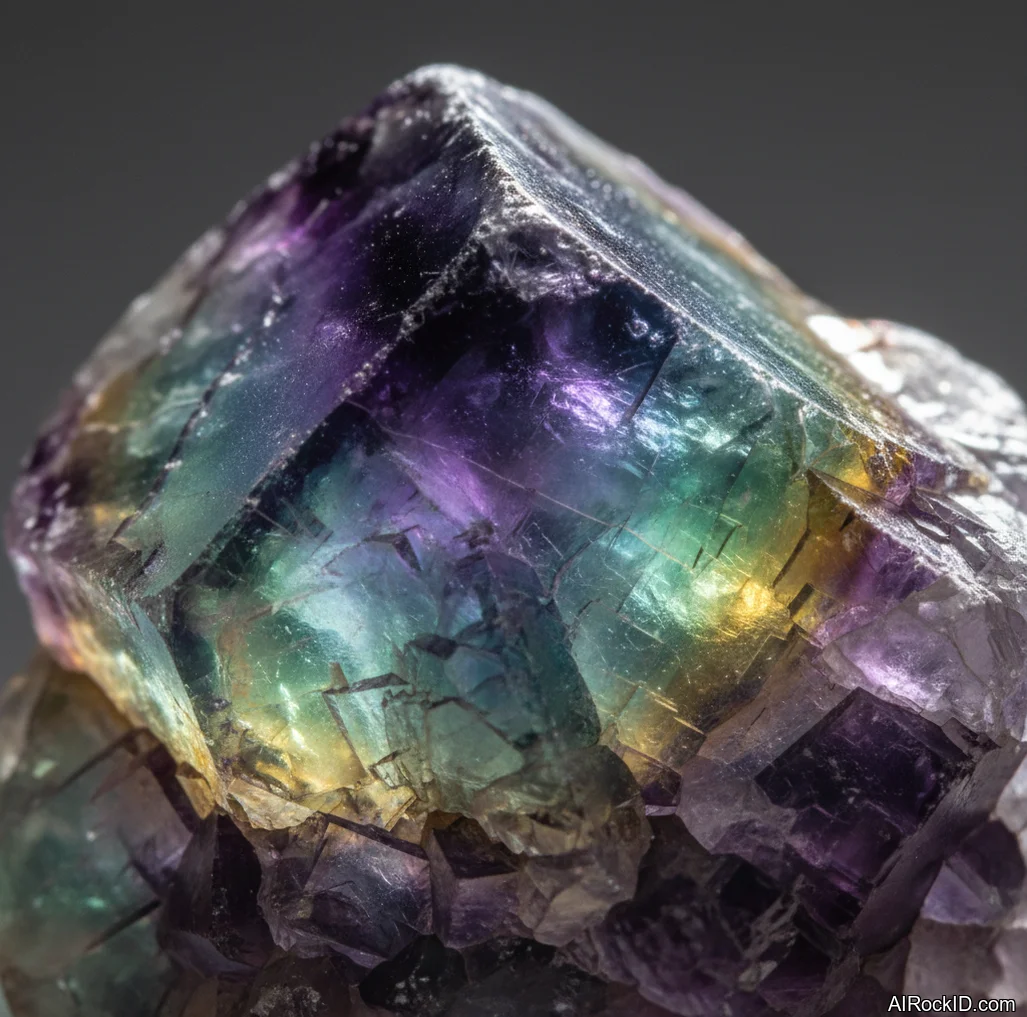
Silk Fluorite is just fluorite with a chatoyant, silky sheen, and it happens because there are fine internal fibers or aligned inclusions inside that scatter light.
Pick up a piece and, honestly, the first thing you notice is the temperature. Real fluorite stays cool in your palm longer than glass. And Silk Fluorite has this little glow that sort of skates across the face when you tip it under a lamp. The sheen isn’t glittery like mica. It’s more like a satin ribbon of light that shifts as you roll the stone (you can almost “catch” it at a certain angle).
People sometimes assume it’s a separate mineral at first glance, but it’s still fluorite doing fluorite things. You’ll see the usual color range: greens, purples, icy blues, sometimes creamy white. The “silk” look just makes even a plain color feel softer. But here’s the catch: a lot of pieces get cut and polished to really show that effect, and that kind of finish can hide fractures that would be obvious on a raw cube.
Origin & History
“Fluorite” got its name from the Latin *fluere*, meaning “to flow,” since people used it as a flux in smelting. Georgius Agricola brought the term into mineral writing back in the 1500s, and then it was locked in as “fluorite” in the late 1700s.
“Silk Fluorite” isn’t some old, official species name. It’s basically a trade tag collectors and dealers slap on fluorite that has that silky, cat’s-eye kind of sheen (the satiny stuff that catches light when you tilt it in your hand). You’ll hear it tossed around at shows when someone’s trying to separate that chatoyant material from the usual glassy fluorite cubes. But, yeah, people use the label pretty loosely sometimes.
Where Is Silk Fluorite Found?
Silk Fluorite turns up anywhere fluorite forms, but the silky, chatoyant look is most often seen in polished material from large fluorite-producing regions, especially China and Mexico.
Formation
Most fluorite shows up after hot, mineral-loaded fluids squeeze through cracks and little open pockets in rock. Then the fluid cools, and the crystals drop out. So you’ll usually find fluorite in veins, as cavity fillings, or hanging around ore deposits with minerals like quartz, calcite, barite, and sulfides.
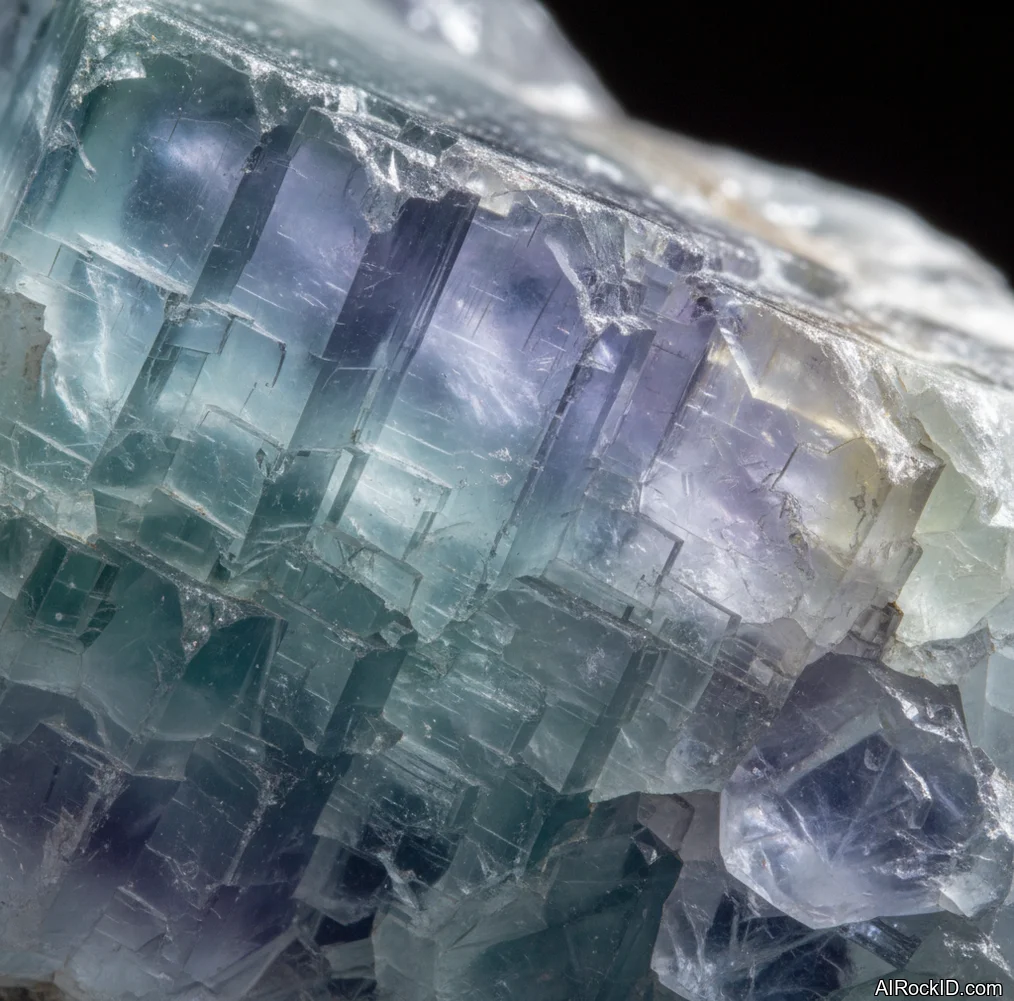
That “silk” look? It’s usually about what’s happening inside the crystal, not the outer shape. Tiny needle-like inclusions, micro-layering, or internal growth features that line up just right can behave like a bunch of miniature light channels. Hit it with a single point light source and you can get that shifting band that slides as you move things. But here’s the catch: plenty of pieces look kind of fibrous and still won’t show true chatoyancy, so you’ve got to actually test it with a flashlight and a tilt (seriously, that quick tilt tells you a lot).
How to Identify Silk Fluorite
Color: Typically pale to medium green, purple, blue, or colorless with a soft milky cast; banding is common in polished pieces. The key visual is a shifting silky band or glow when rotated.
Luster: Vitreous overall, with a silky chatoyant effect across certain directions on polished surfaces.
Look closely under a single overhead bulb or phone flashlight and rotate the stone slowly; the silky band should move as a coherent line, not sparkle in random points. If you scratch it with a steel nail, it’ll usually mark because fluorite is Mohs 4, so don’t do that on a display face. The real test is cleavage: a chipped corner often shows flat faces at right angles (octahedral cleavage), and you can feel those planes with a fingernail on broken edges.
Properties of Silk Fluorite
Physical Properties
| Crystal System | Cubic |
| Hardness (Mohs) | 4 (Soft (2-4)) |
| Density | 3.10-3.25 g/cm3 |
| Luster | Vitreous |
| Diaphaneity | Transparent to translucent |
| Fracture | Uneven |
| Streak | White |
| Magnetism | Non-magnetic |
| Colors | Green, Purple, Blue, Colorless, White, Yellow |
Chemical Properties
| Classification | Halides |
| Formula | CaF2 |
| Elements | Ca, F |
| Common Impurities | Y, Ce, Fe, Mn, Sm, Eu |
Optical Properties
| Refractive Index | 1.433-1.435 |
| Birefringence | None |
| Pleochroism | None |
| Optical Character | Isotropic |
Silk Fluorite Health & Safety
Handling it is pretty low risk. But once you start cutting or grinding, the lapidary dust can get into your lungs, and fluorite chips are surprisingly sharp (I’ve had little slivers catch a fingertip). So just treat it like you would any soft mineral when you’re working it.
Safety Tips
If you’re cutting or sanding, keep a little water on it, put on a real respirator (not just a paper mask), and wipe up the slurry while it’s still wet instead of letting it dry out and turn into dust.
Silk Fluorite Value & Price
Price Range
Rough/Tumbled: $15 - $120 per palm stone or small freeform
Cut/Polished: $2 - $15 per carat
Price shoots up when the silk band is clean and strong, the inside has fewer cracks, and the color zoning just looks better. You’ll see plenty of big chunks out there, sure, but the big ones that aren’t fractured to bits are the ones that cost real money.
Durability
Nondurable — Scratch resistance: Fair, Toughness: Poor
Fluorite cleaves easily and can chip from a short drop, and strong sunlight can fade some colors over time.
How to Care for Silk Fluorite
Use & Storage
Store it wrapped or in a compartmented box so it doesn’t rub against quartz or harder stones. And keep it off sunny windowsills if you care about the color staying put.
Cleaning
1) Rinse quickly with lukewarm water and a drop of mild soap. 2) Wipe with a soft microfiber cloth and don’t scrub edges. 3) Dry fully and avoid long soaks if the piece has fractures or glued repairs.
Cleanse & Charge
For a gentle reset, use smoke, sound, or a quick pass under running water, then let it rest in a dark spot. Avoid salt bowls and harsh sun.
Placement
Put it somewhere it won’t get knocked, like a shelf with a lip or a cabinet. Angled lighting makes the silk band show up way better than flat room light.
Caution
Fluorite sits at Mohs 4 and it has perfect cleavage. So yeah, it’ll chip fast if you bang it around (I’ve seen little corner dings show up from basically nothing). Skip ultrasonic cleaners, don’t use harsh chemicals, and don’t toss it loose in your pocket with keys or coins.
Works Well With
Silk Fluorite Meaning & Healing Properties
Next to plain fluorite, the “silk” stuff just feels quieter in your hand. It’s the light effect, really. That moving band makes you pause and actually watch what you’re holding instead of mindlessly grabbing the next piece. When I’m sorting trays at a show, I’ll catch myself rolling a silky one between my fingers, back and forth, just to see that sheen slide across the face under the overhead lights. It’s basically a fidget stone, but polite about it.
In today’s crystal scene, fluorite gets linked to mental organization, study habits, and clearing out mental noise. I lump it in with my “desk stones,” the things you reach for when your brain feels like it has too many tabs open and one of them is playing audio somewhere (you know?). But it’s not medicine. If you’re anxious or you can’t focus, a rock isn’t going to replace real help, sleep, food, and whatever tools actually work for you.
Thing is, fluorite isn’t tough. Folks buy it thinking it’ll be a daily carry piece, and then it comes back with a bright new chip on a corner after one rough day riding in a pocket with keys. So I treat Silk Fluorite like a stay at home stone. Set it by your notebook, pick it up for a quick breathing break, then put it down somewhere safe.
Identify Any Crystal Instantly
Snap a photo and get properties, value, care instructions, and healing meanings in seconds.