Lapis Lazuli
What Is Lapis Lazuli?
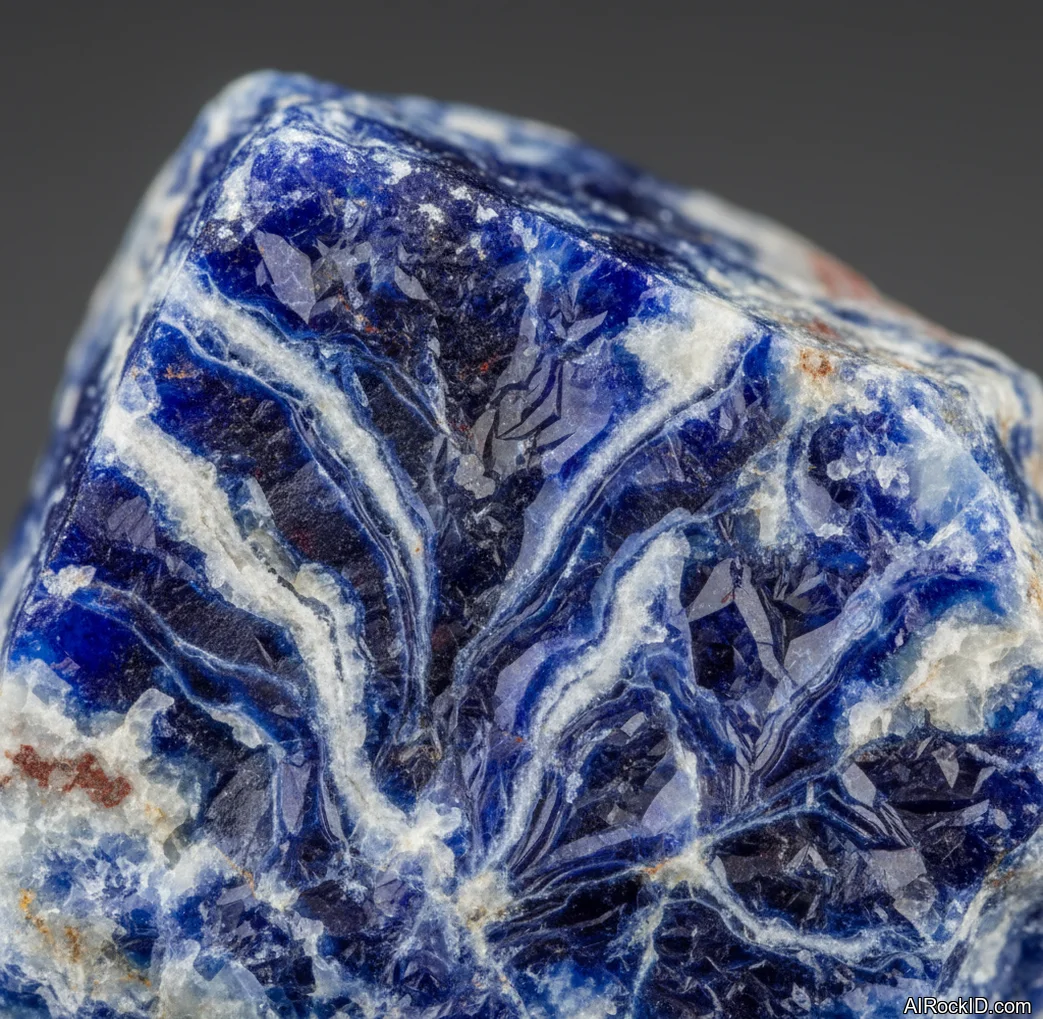
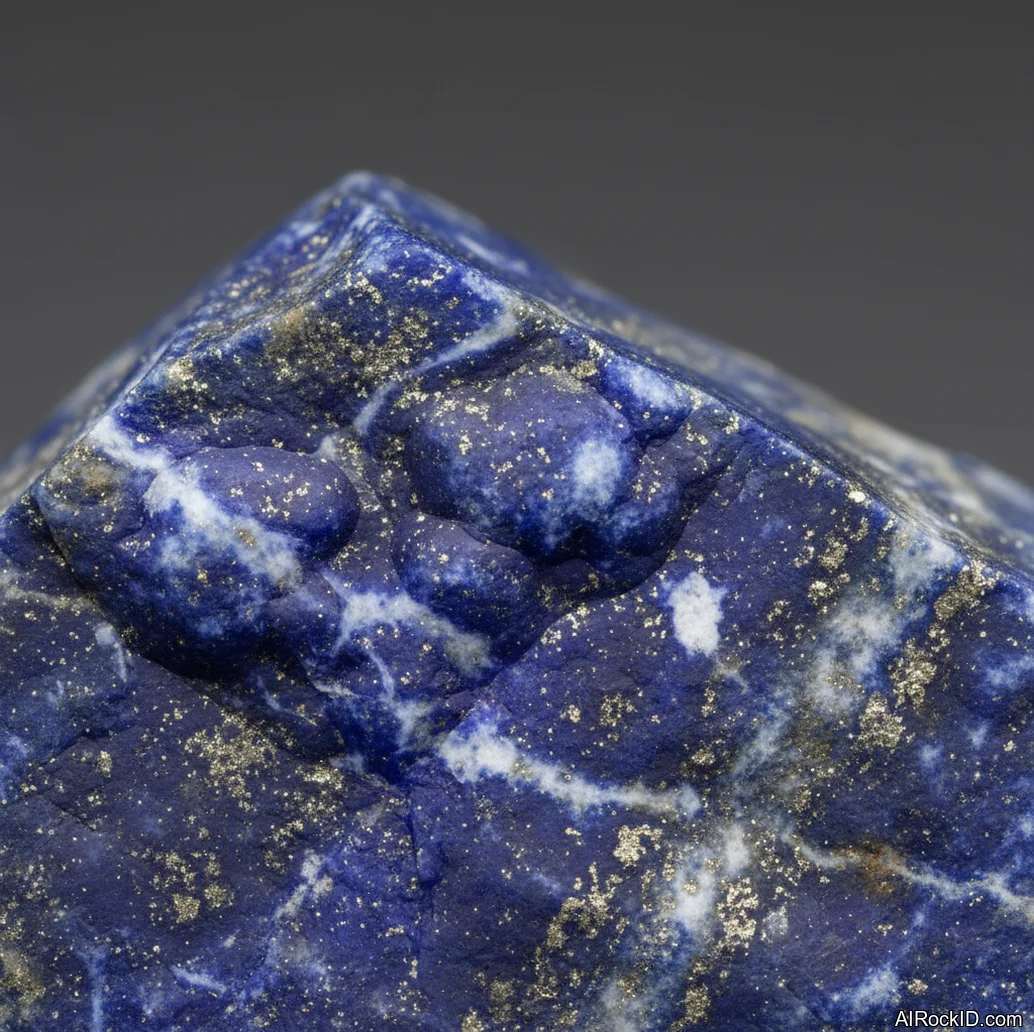
Lapis lazuli is an opaque, deep-blue metamorphic rock, and it’s mostly lazurite with calcite and pyrite mixed in. Grab a decent chunk and you notice the solid, slightly blocky weight right away. Then you tilt it under a shop light and there it is, that brassy pyrite sparkle that pops when you roll it in your fingers. The top-shelf pieces really can look like a night sky, but honestly most lapis has at least a few pale calcite threads sneaking through.
People see the color and assume it’s a single mineral, like quartz. It isn’t. It’s a rock, which explains why two pieces can act totally different on the wheel or in a tumbler. Some lapis takes a killer polish. Some stays kind of waxy, like it’s got tiny pores you can’t quite see but you can feel (ever had a cab just refuse to get glassy?).
And if you’ve handled enough of it, you learn the “feel” fast. Real lapis tends to stay cool to the touch longer than dyed howlite or those cheap resin blocks that warm up quick in your hand.
Compared to sodalite, lapis usually has that warmer ultramarine tone, plus the occasional pyrite flash. But you’ll also run into plenty of mid-grade stuff that’s more denim blue than royal blue. That’s still lapis. Just not the poster-child quality.
Origin & History
“Lapis” is just Latin for “stone,” and “lazuli” runs back through Arabic and Persian terms tied to “blue” or “sky.” People have been cutting and polishing the stuff for thousands of years, way before anyone was arguing about crystal systems or writing down chemical formulas. The place everyone in the trade still name-drops is Badakhshan in Afghanistan. The old carvings and inlay pieces from that area set the color bar collectors are still trying to match.
In Western mineralogy, lapis lazuli ends up treated more like a gem trade label than a proper species name, because at the end of the day it’s a rock. Lazurite, the main blue mineral in it, is the part scientists can describe cleanly. But out in the real world? Dealers price “lapis” by what you see in your hand: how deep the blue looks under a shop light, how much chalky calcite cuts through it, and if the pyrite shows up like a fine peppery dusting or as big, brassy chunks that wreck the look. (You know the kind.)
Where Is Lapis Lazuli Found?
Most high-grade lapis on the market traces back to Afghanistan, with major commercial production also from Chile and Russia. Smaller deposits pop up in places like the USA and Pakistan, usually as collector-grade rough rather than huge lapidary blocks.
Formation
After you’ve handled a few chunks from metamorphic zones, the clues start jumping out at you. Lapis shows up when limestone or dolostone gets baked and chemically reworked by contact metamorphism, usually right up against intrusive igneous bodies you can spot in the field by their sharp contact and that tougher, more “ringy” feel when you tap it with a hammer. So yeah, you’re basically staring at a skarn-type setup: fluids roll through, drag in sulfur and other ingredients, and lazurite pops up right alongside calcite, diopside, wollastonite, and friends.
Now, the white-to-blue edges are where it gets obvious. Look, if you angle it under a light and roll it a little, you can sometimes catch that patchwork texture from the chemical swapping. Pyrite’s common, but it’s a total lottery. Some rough has this fine, even peppering that looks clean in a cab, no drama. And then there’s the stuff with pyrite clots that turn into a headache, because they undercut during polishing and you end up with tiny pits you can feel with a fingernail. That’s the catch with buying rough online: you can’t tilt it in your hand and check if those gold bits are tight and clean or if they’re crumbly. Who wants that surprise after you’ve already cut into it?
How to Identify Lapis Lazuli
Color: Usually deep ultramarine to royal blue, often with white calcite streaks and brassy pyrite specks. Lower-grade material can lean gray-blue or greenish-blue depending on the mix of minerals.
Luster: Dull to waxy in rough form, turning vitreous to slightly greasy on a good polish.
Pick up a piece and check the temperature: real lapis and lazurite-rich rock tends to feel cool at first, while dyed howlite and resin fakes often feel oddly warm and “plasticky.” If you scratch it with a steel knife, lapis can show a faint mark because it’s only around Mohs 5 to 5.5, so don’t do that on a finished cab. The real test is the texture under magnification: lapis looks granular and natural, while dyed material often shows color pooling in cracks or around drilled holes.
Properties of Lapis Lazuli
Physical Properties
| Crystal System | Cubic |
| Hardness (Mohs) | 5-5.5 (Medium (4-6)) |
| Density | 2.70-2.90 |
| Luster | Waxy |
| Diaphaneity | Opaque |
| Fracture | Uneven |
| Streak | Light blue |
| Magnetism | Non-magnetic |
| Colors | Deep blue, Royal blue, Grayish blue, Blue with white, Blue with gold flecks |
Chemical Properties
| Classification | Silicates (feldspathoid group; lazurite-dominant rock) |
| Formula | (Na,Ca)8(AlSiO4)6(SO4,S,Cl)1-2 |
| Elements | Na, Ca, Al, Si, O, S, Cl |
| Common Impurities | Fe, Mg, K |
Optical Properties
| Refractive Index | 1.50 |
| Birefringence | None |
| Pleochroism | None |
| Optical Character | Isotropic |
Lapis Lazuli Health & Safety
Lapis lazuli is usually safe to pick up and keep on a shelf. But like any stone, if you’re cutting it or grinding it, don’t breathe in the dust.
Safety Tips
If you’re going to cut or grind it, do it wet, keep the air moving with good ventilation, and wash your hands before you eat anything. Once it’s set in finished jewelry, just handle it the way you’d handle a softer decorative stone.
Lapis Lazuli Value & Price
Price Range
Rough/Tumbled: $5 - $200 per piece
Cut/Polished: $1 - $20 per carat
Price bounces around depending on how deep the color looks, how much calcite is mixed in, and what the pyrite actually looks like in your hand. If it’s that fine, even “dusting” spread through the stone, you’ll pay differently than if it’s chunky or full of little pits and pores. And size matters too: big, clean blocks you can carve without hitting a bunch of cracks cost more than the same weight of rough that’s fractured and veiny (the kind that wants to split the second you put it on a saw).
Durability
Moderate — Scratch resistance: Fair, Toughness: Fair
It’s stable in normal wear, but it scratches easier than people expect and can lose polish if it’s knocked around with harder stones.
How to Care for Lapis Lazuli
Use & Storage
Keep lapis away from harder gems in a mixed bowl or pouch, because it’ll pick up scratches. I store cabochons in little paper packets or a divided box so the polish stays crisp.
Cleaning
1) Rinse quickly in lukewarm water with a drop of mild soap. 2) Wipe with a soft cloth or a soft toothbrush around crevices, then rinse again. 3) Pat dry and let it fully air-dry before putting it back in a box.
Cleanse & Charge
If you do energetic cleansing, stick to gentle methods like smoke, sound, or leaving it on a dry selenite plate. Skip salt soaks, since lapis often has calcite that doesn’t love harsh treatment.
Placement
Looks best where side light can catch the pyrite, like a shelf near a lamp but not in direct hot sun. For a desk stone, a palm-sized piece is nice, just don’t let it scrape against keys or metal tools.
Caution
Skip ultrasonic cleaners and anything harsh or chemical-heavy. And don’t just toss it in your pocket next to quartz or topaz (or any other harder stone) unless you want that Mohs 5 surface coming out scuffed up and dull. Why risk it?
Works Well With
Lapis Lazuli Meaning & Healing Properties
Pick up a piece of lapis and you feel it right away. It’s got that steady, heavy-in-the-hand feel that makes people pause, like they don’t want to rush what they’re about to say. In crystal circles, it’s linked with communication, study, and that plain “say what you mean” kind of energy. I’ve seen customers stand at the counter, turning a stone over and over with their thumb pressed into the smooth spot, trying to figure out how to have a tough conversation, and you can literally watch their shoulders drop.
But look, it’s still a rock. If someone’s dealing with anxiety, insomnia, or anything medical, lapis isn’t a substitute for real care. What it can be, if you’re into the metaphysical side, is a focus object. The deep blue sort of grabs your attention, and those tiny pyrite flecks catch the light (little gold flashes when you tilt it), which gives your brain something to lock onto when you’re meditating or journaling and your thoughts keep sprinting off.
And if you stare at the calcite veins long enough, it’s like a built-in reminder that “perfect” lapis doesn’t show up much in regular life. Honestly, I like a bit of white in there. Too uniform and too blue can be a warning sign anyway, because dyed stones are everywhere. So in real use, the stone you trust and actually like holding ends up getting used way more than the flawless one you’re afraid to touch. Why buy something you won’t even pick up?
Identify Any Crystal Instantly
Snap a photo and get properties, value, care instructions, and healing meanings in seconds.