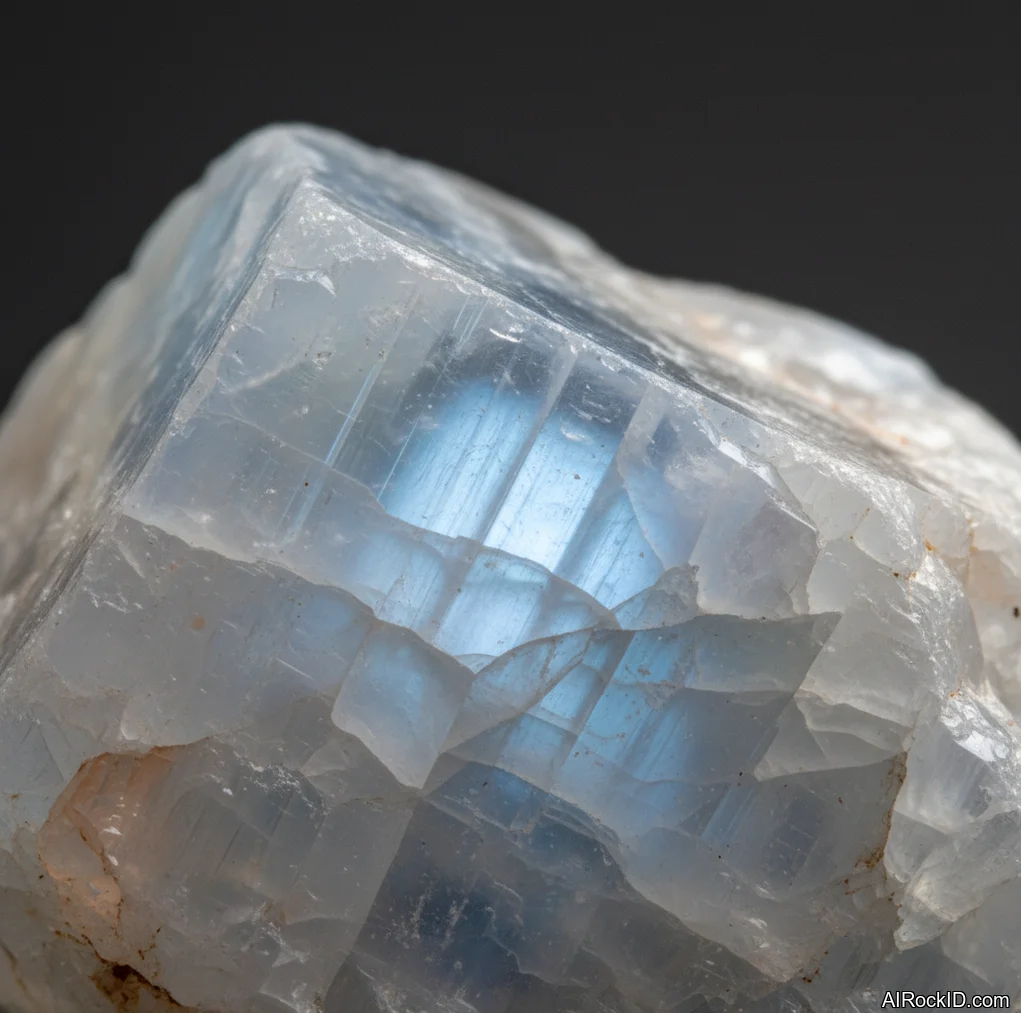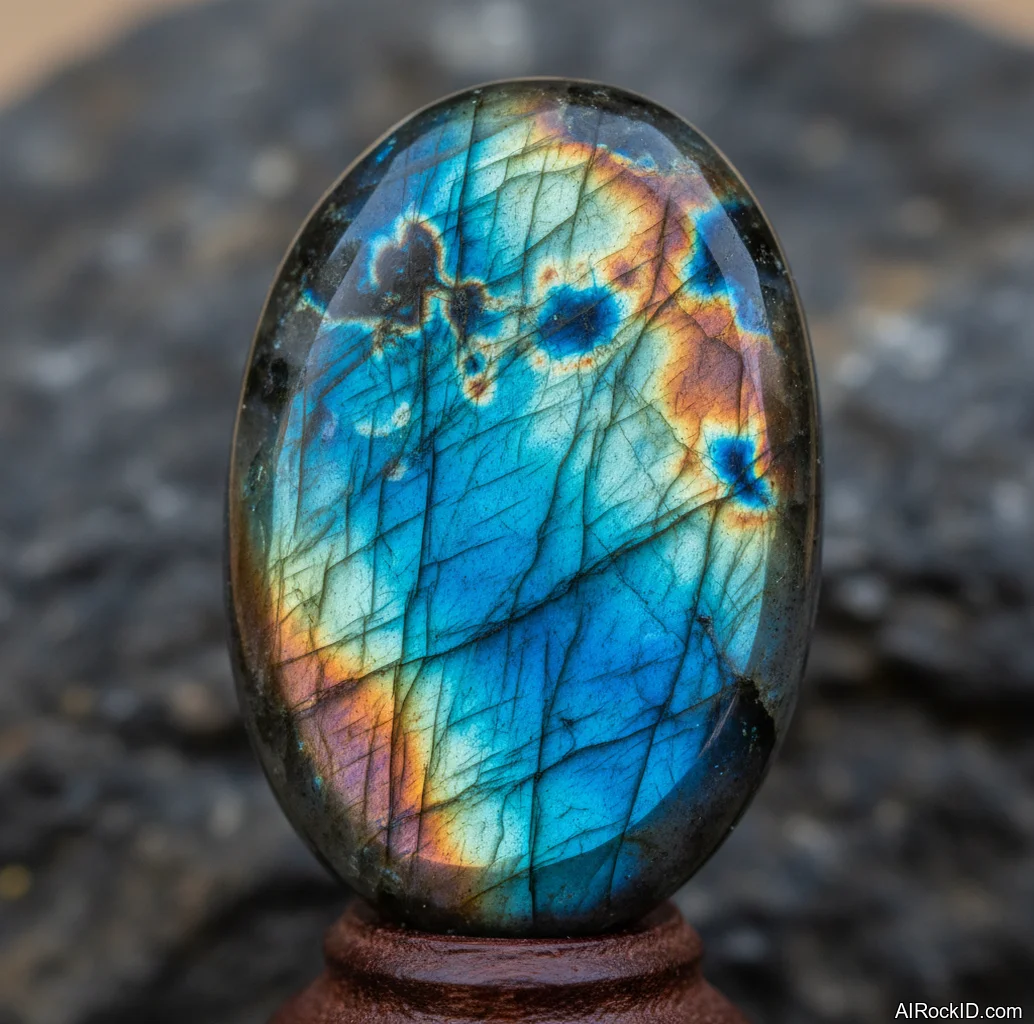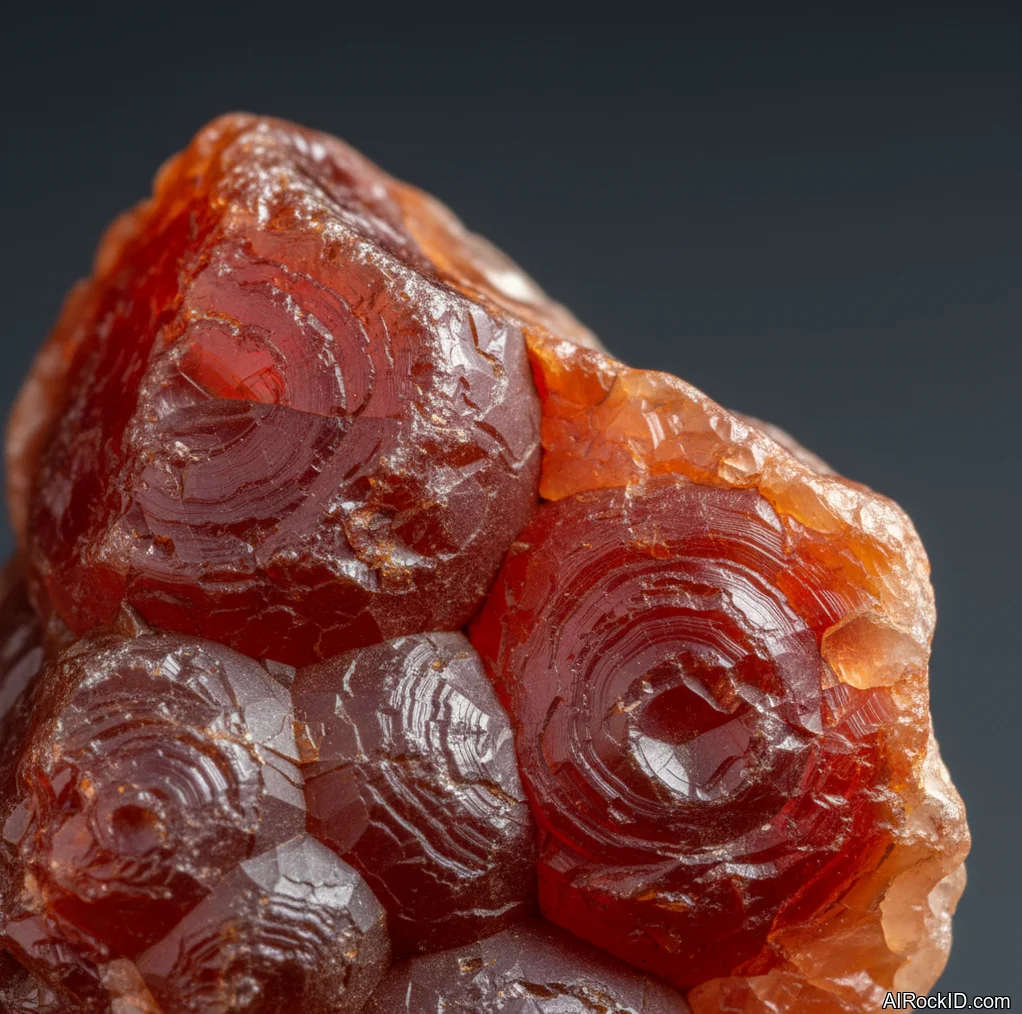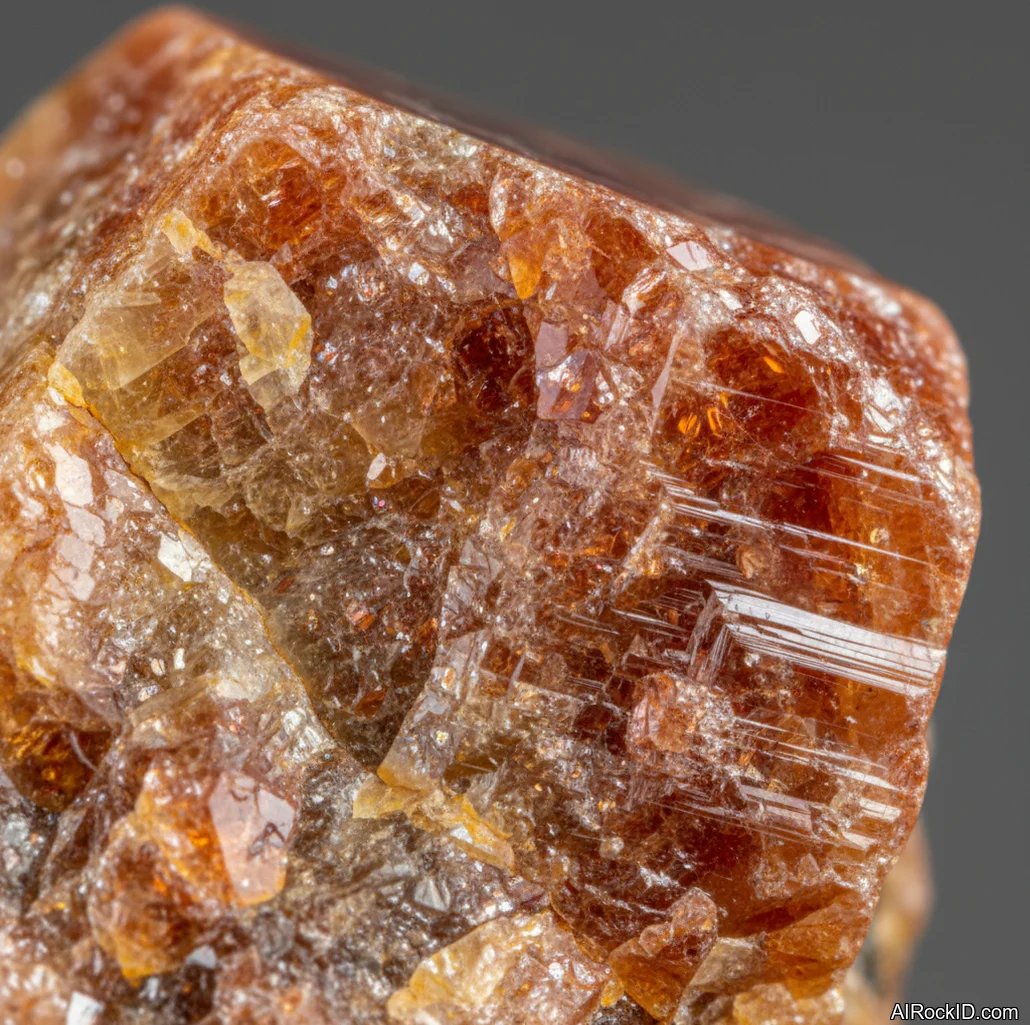
Sunstone
What Is Sunstone?
Sunstone’s a feldspar gemstone, and what makes it stand out is aventurescence, that glittery flash you get from tiny mineral platelets trapped inside the stone.
Grab a solid piece and you notice the feldspar “chunkiness” immediately. It’s not as heavy as garnet, but it also doesn’t have that fake, plasticky feel, and it stays cool against your skin until it’s been sitting in your palm for a bit. The really good material kicks off this coppery shimmer, like somebody dusted bronze powder just under the surface. Hold it under a single lamp, tip it a few degrees, and the flash jumps out, then disappears fast the second you lose the angle. Kind of picky like that.
People confuse it with carnelian or peach moonstone at first. But the sparkle’s a dead giveaway. Carnelian has more of a smooth glow, and moonstone gives you that floating sheen. Sunstone is different: it’s tiny reflective flakes. And in Oregon material, the schiller can look sharp and confetti-like instead of cloudy.
Origin & History
Back in the early 1800s, “sunstone” was being used as a trade name for sparkly feldspar. But the mineral that really nailed down the name was aventurescent feldspar, described by mineralogists working in Scandinavia and Russia. And yeah, you’ll also run into the older term “aventurine feldspar,” which borrows “aventurine” from glassmakers who noticed the same kind of glitter in man-made glass (that coppery, suspended sparkle you can catch when you tilt it under a lamp).
The name’s basically literal. Catch it at the right angle and it looks like sunlight stuck inside the stone, like it’s trapped under the surface. So that line gets repeated at gem shows constantly, usually while someone rocks a palm-sized piece back and forth until the flash hits. But here’s the thing: it isn’t magic. It’s straight-up physics, plus those thin little inclusions doing exactly what they do.
Where Is Sunstone Found?
Most of the classic gem-market sunstone comes from India and the western United States, with Oregon material being the big collector magnet. Smaller deposits show up in Scandinavia, Russia, Canada, and parts of East Africa.
Formation
Sunstone shows up in igneous and metamorphic places, basically wherever feldspar crystals have the time to grow and then later pick up these super thin platelets that bounce light back at you. And in a lot of specimens, those platelets are copper, hematite, or goethite. They’re not just floating around, either. They tend to settle into certain planes inside the feldspar, which is why the effect can look so organized.
Oregon rough, especially, often comes out of basalt flows and related volcanic rocks. Sometimes a raw chunk still has the host rock clinging to one side, like a crusty little tag you can’t quite knock off (and it’s a dead giveaway where it came from). The sparkle isn’t random. When those inclusions line up, you get that crisp flash. But when they don’t, what you’re left with is a nice orange feldspar with basically no glitter, and dealers will still try to move it as “sunstone” anyway. Why? Because the name sells.
How to Identify Sunstone
Color: Colors run from pale champagne and peach to orange, red-orange, and brownish red, sometimes with green or bi-color zones in Oregon stones. The flash is usually coppery or golden, but it can lean silvery in some pieces.
Luster: Vitreous on fresh faces and polished surfaces, sometimes a little pearly where cleavage is exposed.
Look closely under a single point light and rotate the stone slowly. Real sunstone shows plate-like sparkles that turn on and off with angle, not a uniform metallic sheen. If you scratch it with a steel needle, it shouldn’t gouge easily, but a quartz point will leave a mark since feldspar tops out around 6 to 6.5. And in the hand, most glassy fakes feel “too smooth” and warm up fast, while feldspar keeps that cool, slightly dry feel.
Properties of Sunstone
Physical Properties
| Crystal System | Triclinic |
| Hardness (Mohs) | 6-6.5 (Hard (6-7.5)) |
| Density | 2.56-2.76 g/cm3 |
| Luster | Vitreous |
| Diaphaneity | Transparent to translucent |
| Fracture | Uneven |
| Streak | White |
| Magnetism | Non-magnetic |
| Colors | Colorless, Champagne, Peach, Orange, Red-orange, Brown, Green |
Chemical Properties
| Classification | Silicates |
| Formula | NaAlSi3O8 – CaAl2Si2O8 (plagioclase series; commonly oligoclase) |
| Elements | Na, Ca, Al, Si, O |
| Common Impurities | Cu, Fe |
Optical Properties
| Refractive Index | 1.525-1.575 |
| Birefringence | 0.006-0.012 |
| Pleochroism | Weak |
| Optical Character | Biaxial |
Sunstone Health & Safety
For most people, handling it isn’t a big deal. The real concern is scuffing, chipping, or scratching the stone, not getting poisoned or anything like that.
Safety Tips
If you’re going to cut or grind it, put on safety glasses and a respirator, and keep some water running on it to knock the dust down (seriously, that fine powder gets everywhere).
Sunstone Value & Price
Price Range
Rough/Tumbled: $5 - $80 per piece
Cut/Polished: $10 - $200 per carat
Price mostly comes down to how strong and even the aventurescence looks, plus the body color and clarity. And yeah, the Oregon red and green stones can spike in price really fast. Thing is, big, clean rough is tougher to find than people assume. I’ve seen chunks that look great at first, then you turn them under a lamp and there’s a cloudy patch or a crack hiding right along the edge. So if you’ve got a larger piece that’s actually good for cutting, it’ll cost more than the little tumbled pieces.
Durability
Moderate — Scratch resistance: Good, Toughness: Fair
It’s stable in normal conditions, but cleavage means it can chip if it gets knocked around in a pocket or jewelry box.
How to Care for Sunstone
Use & Storage
Store it in a soft pouch or a divided box slot so it doesn’t get rubbed by quartz, topaz, or anything harder. If you’ve got a flashy polished piece, keep it face-up so it doesn’t collect micro-scratches.
Cleaning
1) Rinse with lukewarm water. 2) Use a drop of mild soap and your fingers or a very soft brush, then rinse again. 3) Pat dry with a soft cloth and don’t toss it back in with harder stones while it’s still wet.
Cleanse & Charge
If you do the metaphysical cleanse thing, smoke, sound, or a quick rinse works fine. I don’t leave it baking in harsh sun for days just because the polish can look tired over time.
Placement
Put it where a single lamp or a window angle can hit it, because the flash needs directional light. On a shelf under diffuse lighting it can look like plain feldspar.
Caution
Skip ultrasonic cleaners and steam cleaning, and don’t toss it loose in a bag where it can clack against quartz or corundum. Those cleavage chips are no joke, especially along sharp, freshly faceted edges where you’ll see tiny bites taken out if it gets knocked around.
Works Well With
Sunstone Meaning & Healing Properties
Next to a lot of “happy stones,” sunstone is one of the few that kind of backs it up the second you pick it up. The feel is familiar if you’ve handled a bunch of tumbled stuff: smooth, a little weighty for its size, and then, when you tilt it under a lamp, that coppery flash pops like someone flicked a tiny switch inside. Hard not to perk up. That’s not a medical claim. It’s the same little mood bump you get when you’re leaning over a specimen tray at a show and the lights hit just right.
People usually link sunstone with confidence, motivation, and a more outgoing sort of energy. I’ve seen it be the one folks reach for when they’re stuck in a rut and want something bright, but not screaming neon in their face. But look, there’s a limit to what it feels like. If you want calming the way blue lace agate can feel, sunstone probably isn’t going to scratch that itch. It reads more like “get moving” than “slow down.” That’s the vibe.
In my own stash, I grab sunstone when I’m sorting minerals or pricing flats and my brain starts floating off somewhere else (you know that glazed-over moment?). One quick glance at the schiller and I’m back. And if you do meditation or intention work, it goes nicely with grounding pieces so it doesn’t feel too buzzy. Think of it as a nudge to show up, not some stand-in for sleep, therapy, or actual medical care.
Identify Any Crystal Instantly
Snap a photo and get properties, value, care instructions, and healing meanings in seconds.