Super Seven
What Is Super Seven?
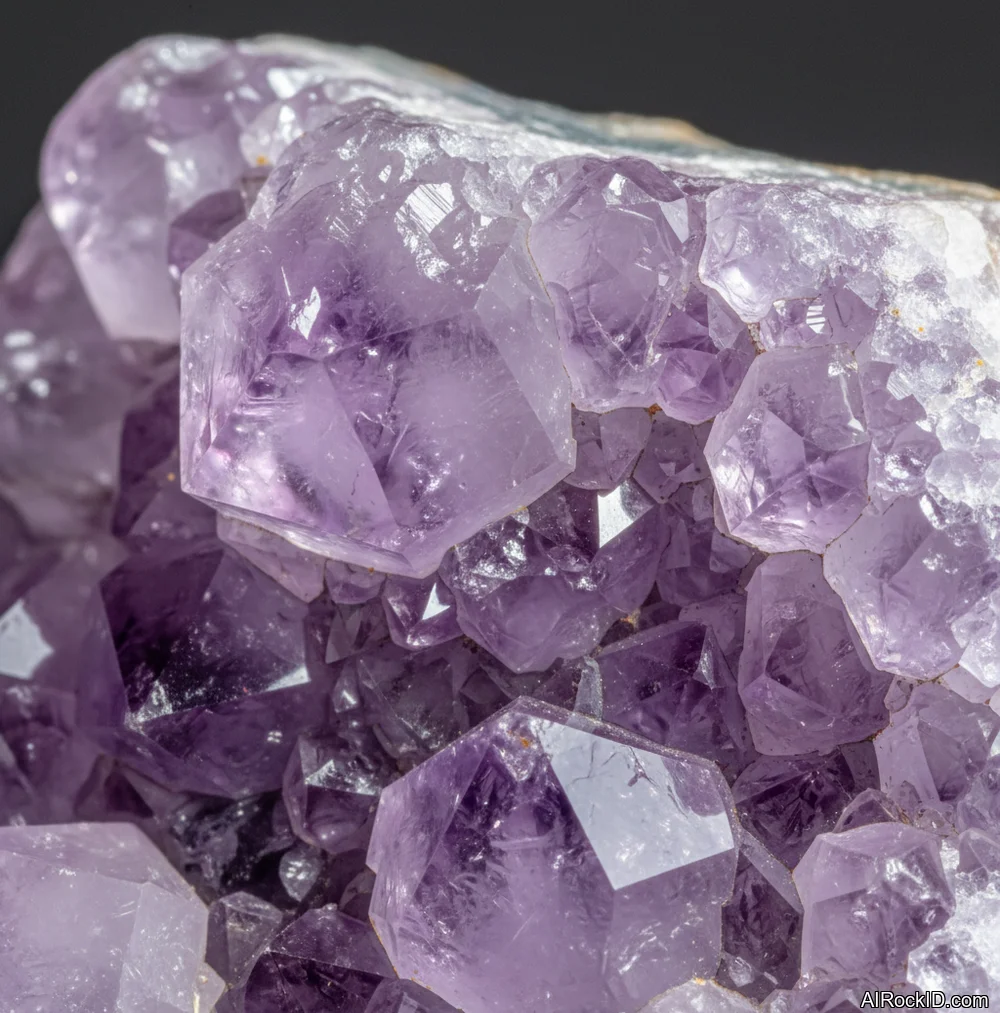
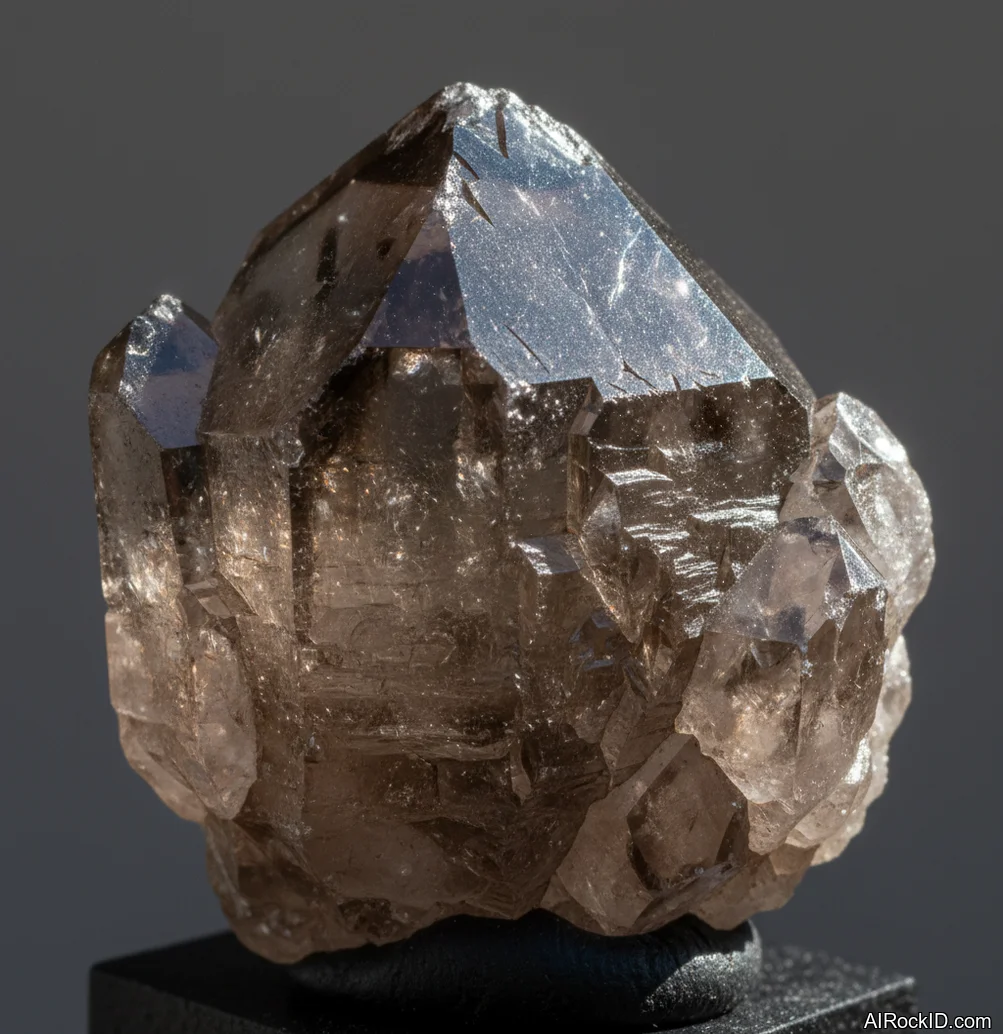
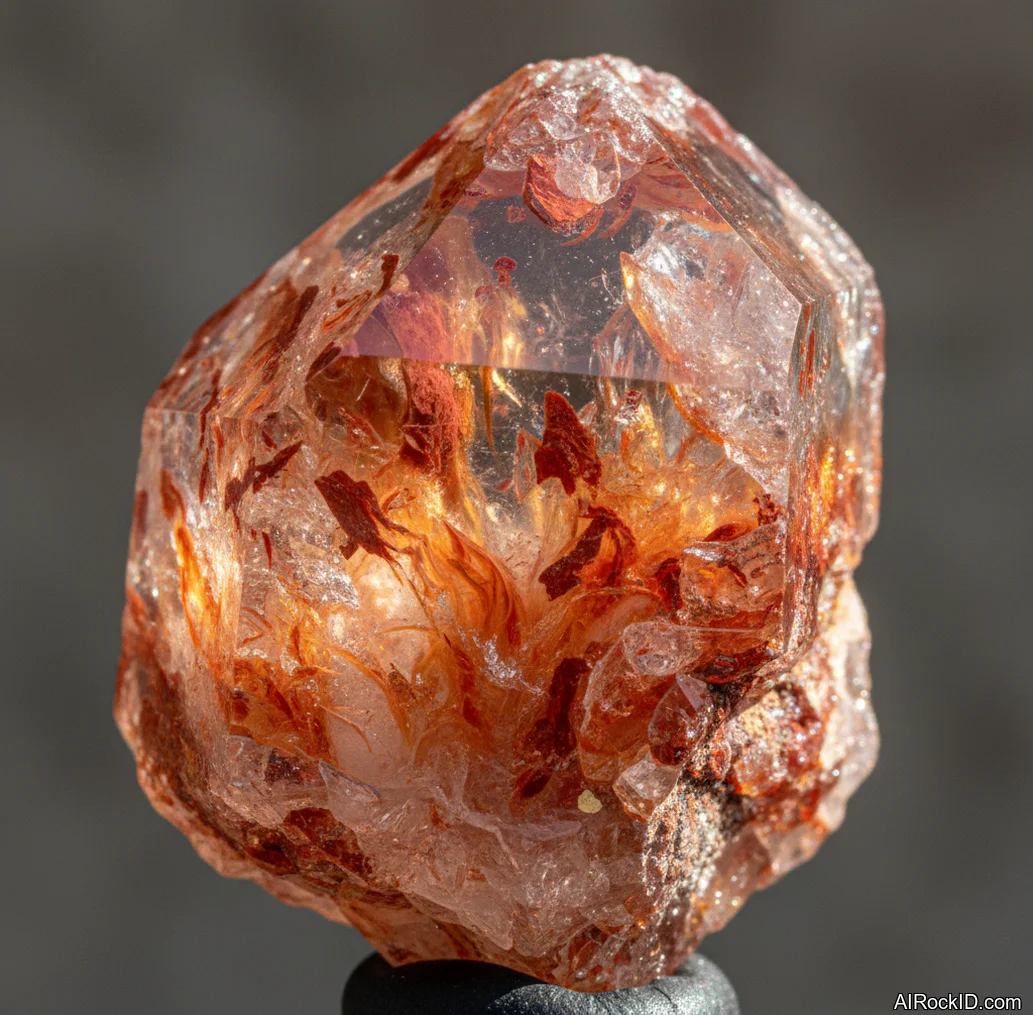
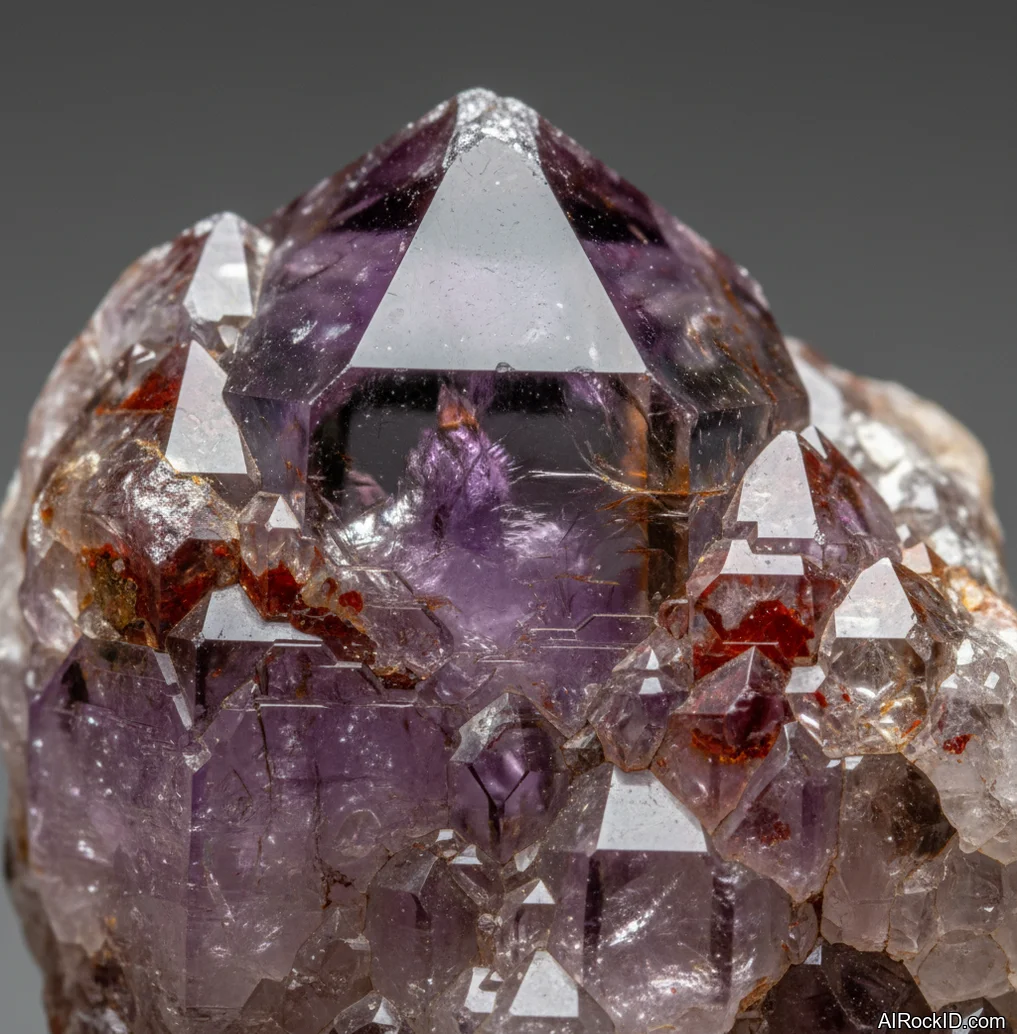
Super Seven is a trade name dealers use for quartz that’s marketed as having seven minerals, or mineral phases, all in the same piece. Thing is, when it’s in your hand, you’re mostly holding quartz. The rest shows up as inclusions and color zoning that look like tiny rust clouds, black threads, and those purple amethyst patches, like they’re trapped under glass.
Pick one up and you’ll notice the temperature first. Real quartz stays cool, even if it’s been sitting on a dealer’s black velvet tray under hot lights. And when you tilt it, the inclusions don’t “float” the way they do in resin fakes. They sit where they are, at fixed depths, like layers in a window.
At a glance, a lot of Super Seven on the market can look pretty similar. But the range is bigger than people expect. Some pieces are mostly clear quartz with just a few red-brown sprays. Others go heavy on amethyst, with smoky sections and fine needles. But here’s where it gets messy: that label gets used loosely. I’ve opened parcels where “Super Seven” was basically hematoid quartz with a sales pitch, and nothing close to seven identifiable components.
Origin & History
Most dealers I’ve talked to peg the name “Super Seven” to the 1990s metaphysical market. Back then it was sold as one stone that supposedly carries seven different energies. And you’ll hear it called “Melody’s Stone,” too, linked to Melody (the well-known crystal author) because her books and the whole shop scene helped that label stick.
Name-wise, it’s pretty straightforward: “super” plus “seven,” since sellers say the stone has seven inclusions or associated minerals. The usual lineup is amethyst, clear quartz, smoky quartz, rutile, goethite, lepidocrocite, and cacoxenite. But here’s the catch: if you’re being strict about mineral ID, you can’t always prove every single one is actually present without lab work. Thing is, a lot of what gets pointed out as “cacoxenite” is really just that golden-brown, radial, sunburst-looking inclusion habit, and in the trade it tends to get called cacoxenite anyway.
Where Is Super Seven Found?
Commercial Super Seven is strongly associated with Brazil, especially Minas Gerais and nearby pegmatite and hydrothermal quartz-producing districts; the “Super Seven” name is rarely used for comparable included quartz from elsewhere.
Formation
Look at the best pieces up close and you can practically watch them grow. Quartz builds out of silica-rich fluids sitting in veins and pockets, and when the chemistry drifts you get zoning: clear to smoky, then those purple amethyst bands, then it swings back to clearer quartz again. You can even see the boundaries if you catch it under a hard light and tilt it, that little “step” where the color changes.
Inclusions show up when iron oxides, titanium minerals, or other phases are floating around in the fluid while the crystal’s forming, or when earlier minerals get coated over, trapped, and sealed in as the quartz keeps growing. Thing is, compared to plain rock crystal, included material usually comes from pockets where the fluid was carrying a lot of “stuff.” So instead of a clean, empty look, you get plumes, needles, tiny starbursts. Busy, in a good way.
But not every piece forms in a way that gives you the full “seven” checklist. In my experience, the most convincing Super Seven has obvious amethyst zoning plus at least two clearly different inclusion styles, like reddish plates and black needles, all sealed under crisp quartz faces (the kind that still catch a sharp edge when you run a fingernail along them).
How to Identify Super Seven
Color: Color ranges from clear to smoky gray with patches of amethyst purple, plus red-brown, gold, or black inclusions that look like threads, dust, or little blooms inside the crystal.
Luster: Vitreous luster, like clean glass.
The real test is a loupe. Inclusions in natural quartz have sharp depth and irregular boundaries, not printed-looking speckles or perfectly repeated patterns. If you scratch it with a steel knife, quartz shouldn’t take the scratch, but the knife will leave a faint metal streak you can usually wipe off. And watch for dye: overly even, inky purple that sits in fractures is a red flag, especially in drilled beads.
Properties of Super Seven
Physical Properties
| Crystal System | Trigonal |
| Hardness (Mohs) | 7 (Hard (6-7.5)) |
| Density | 2.65 g/cm3 |
| Luster | Vitreous |
| Diaphaneity | Transparent to translucent |
| Fracture | Conchoidal |
| Streak | White |
| Magnetism | Non-magnetic |
| Colors | Colorless, White, Gray, Brown, Purple, Red, Black, Golden |
Chemical Properties
| Classification | Silicates |
| Formula | SiO2 |
| Elements | Si, O |
| Common Impurities | Fe, Al, Ti, Mn |
Optical Properties
| Refractive Index | 1.544-1.553 |
| Birefringence | 0.009 |
| Pleochroism | None |
| Optical Character | Uniaxial |
Super Seven Health & Safety
Super Seven is usually safe to handle since it’s mostly quartz. Just treat it like you would any other quartz stone. If you’re cutting or grinding it, stick to normal stone-care habits (you know, dust control and all that).
Safety Tips
If you’re going to do any lapidary work, put on a respirator and keep everything wet so the silica dust doesn’t get into the air.
Super Seven Value & Price
Price Range
Rough/Tumbled: $15 - $250 per piece
Cut/Polished: $2 - $20 per carat
Prices shoot up when the amethyst zoning is really strong, the natural points are sharp and clean, and the inclusions are dramatic and mixed. But plain, included quartz gets slapped with the “Super Seven” label too, and honestly? It shouldn’t cost much.
Durability
Durable — Scratch resistance: Excellent, Toughness: Good
Quartz is stable in normal home conditions, but polished points can chip on edges if they bang against other hard stones.
How to Care for Super Seven
Use & Storage
Store it in a pouch or a compartmented box so the tips don’t knock together. Quartz is hard, but pointy edges still chip when they meet other quartz.
Cleaning
1) Rinse under lukewarm water with a drop of mild soap. 2) Use a soft toothbrush around creases and base edges. 3) Rinse well and pat dry; avoid leaving it sitting on a sunny windowsill for long periods.
Cleanse & Charge
For metaphysical-style cleansing, rinse with water or use smoke or sound if you don’t want to wet a wrapped pendant. If you charge in sunlight, keep it brief because some purple can look a bit washed after long, bright exposure.
Placement
I like it where side light hits it, like a shelf near a lamp, because the inclusions pop when the light comes in low. On a desk, set it on a felt pad so it doesn’t skate and click against other pieces.
Caution
Skip harsh chemicals and don’t use an ultrasonic cleaner, especially on included quartz since it can have those tiny fracture networks running through it. And keep polished points from knocking around with other hard stones, because the edges bruise fast (you’ll see little nicks show up right on the sharp corners).
Works Well With
Super Seven Meaning & Healing Properties
A lot of people buy Super Seven for the story as much as the way it looks. In crystal-shop talk, it gets pegged as an “all chakras” stone, like some all-in-one toolkit you can just grab and go. My take, after handling a ton of it (and hearing what customers say year after year), is that it acts like quartz first: it’s a focus stone. You sit with it, your attention tightens up, and that busy, speckled, streaky interior gives your mind something to latch onto.
Next to plain clear quartz, the inclusions seem to shift what people notice. A piece with a lot of smoky zoning often feels more grounded in practice, and the purple amethyst-y sections push things toward calmer, quieter sessions. But look, I’m not going to sell it as medicine. If you’ve got anxiety, sleep issues, or anything physical going on, get real support and treat crystals like a personal ritual object, not a fix.
Thing is, the “Super Seven” label can make people shop by checklist. And honestly, I’ve seen better outcomes when folks just choose with their eyes and their hands. Pick up a few. Feel the weight in your palm, the way the edges catch slightly if it’s been polished a little too sharply, the cool-to-warm shift after it’s been sitting against your skin for a minute. The one you keep turning over without even thinking, that’s usually the right one for your shelf or your pocket, even if it’s “only” got two or three inclusion types you can actually see. Who cares if it ticks every box?
Identify Any Crystal Instantly
Snap a photo and get properties, value, care instructions, and healing meanings in seconds.