Triplite Wagnerite And Pyrite In Quartz
What Is Triplite Wagnerite And Pyrite In Quartz?
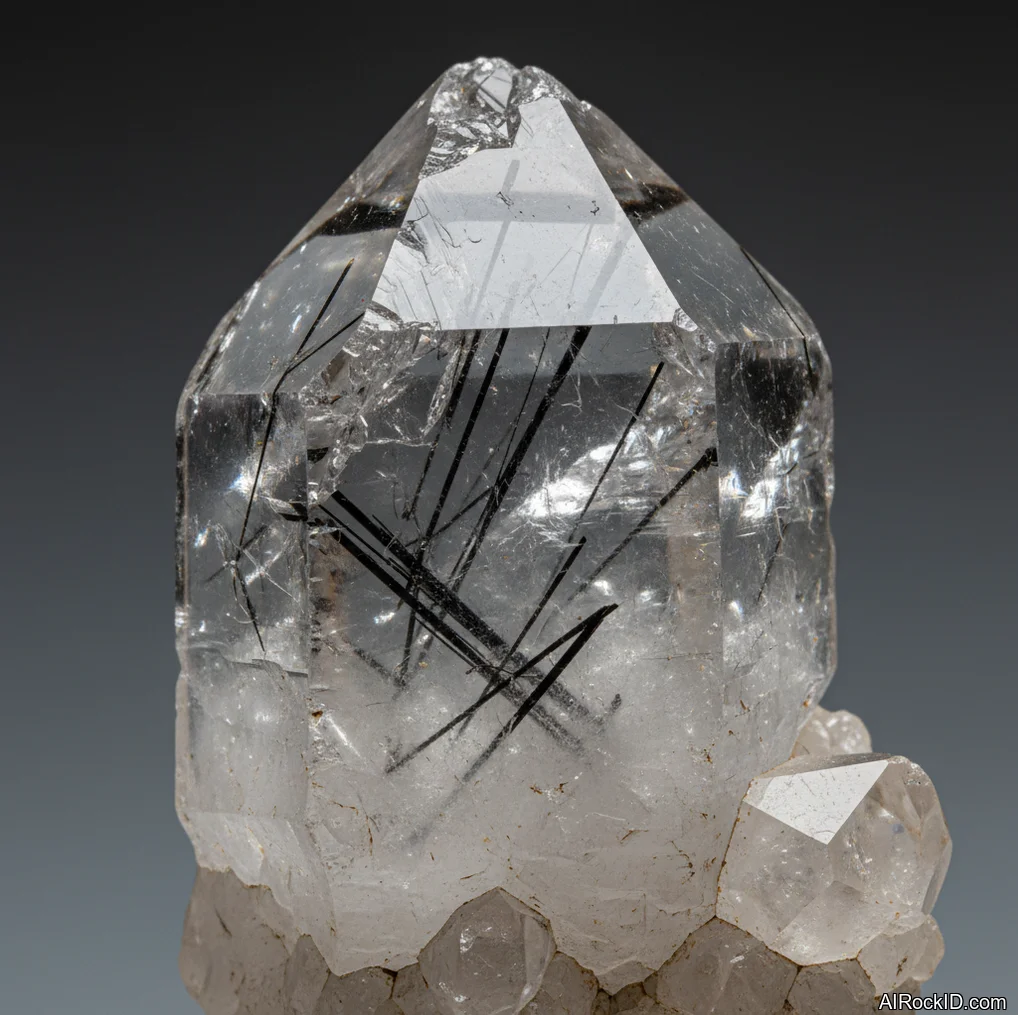
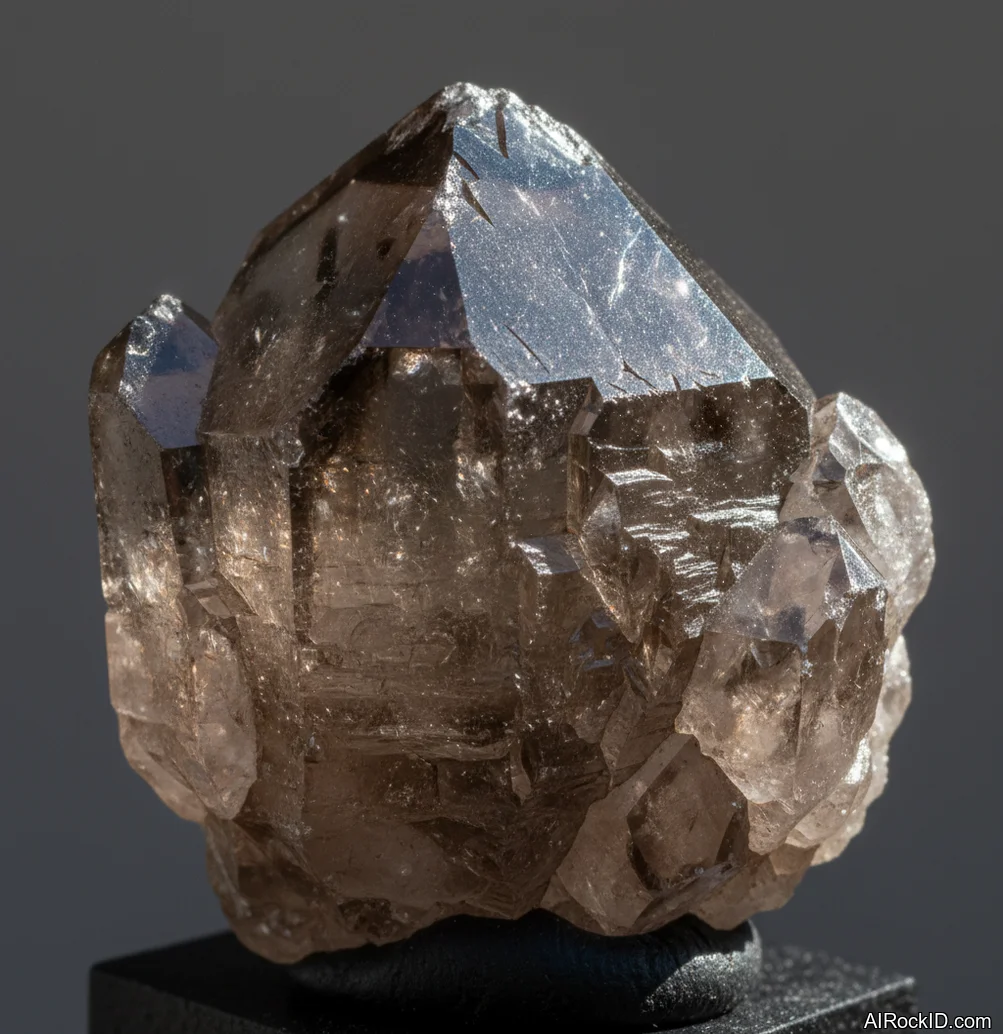
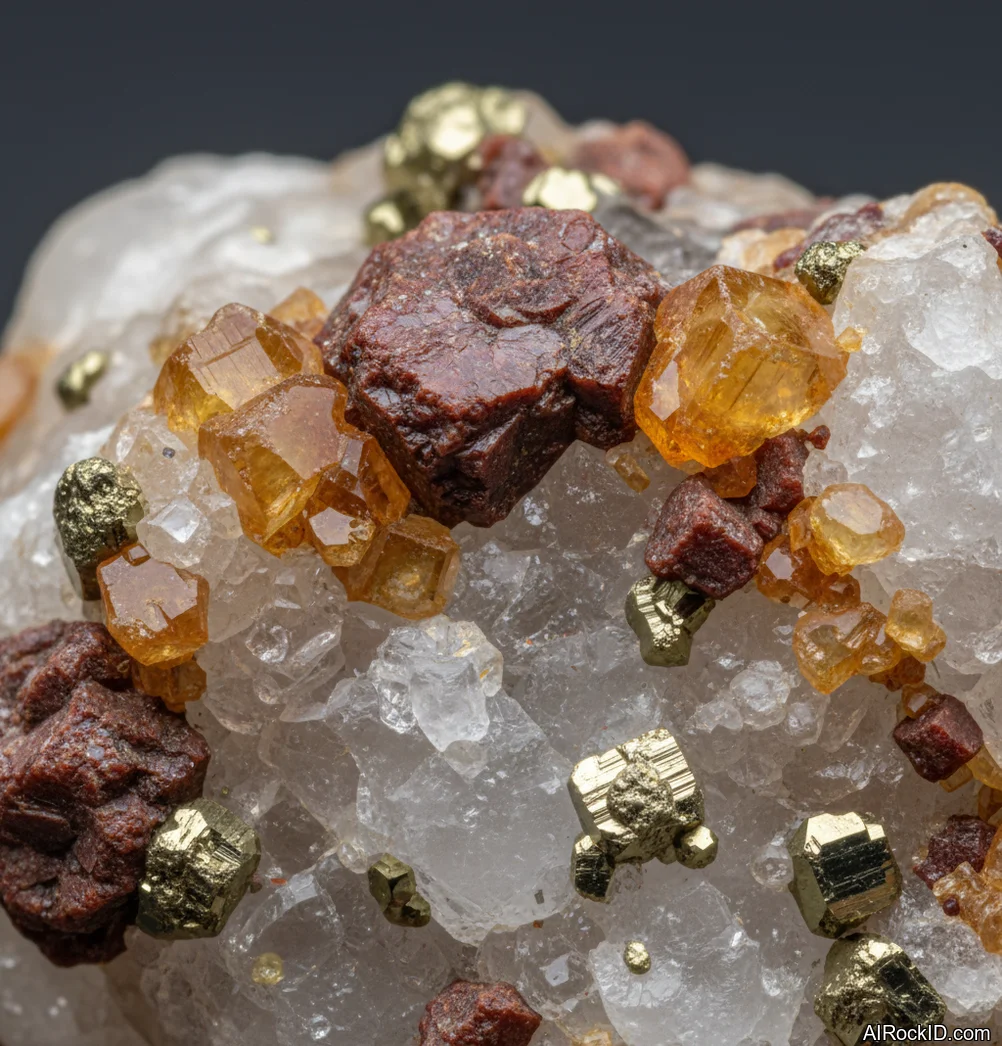
Triplite Wagnerite And Pyrite In Quartz is a quartz specimen with inclusions of triplite and/or wagnerite (phosphate minerals), plus pyrite.
Pick one up and the first thing you notice is the temperature. Quartz stays cool in your hand, even if it’s been sitting under warm show lights, and the tiny brassy pyrite bits will flash the second you tilt it a few degrees. And the triplite or wagnerite usually shows as caramel to tobacco-brown blobs, specks, or streaky patches. At first glance it can look like iron staining, but it doesn’t behave like stain once you’ve handled a few pieces (the shapes are too “mineral,” too self-contained).
Most of the time, it isn’t some clean, museum-perfect inclusion scene. You’ll see internal fractures, wispy veils, maybe a couple cloudy zones that catch the light in a hazy way. But when the quartz is reasonably clear and the pyrite is crisp, you end up with the kind of piece you keep turning over in your palm. Why? Because every angle gives you a different little window into what’s going on inside.
Origin & History
Triplite got its formal write-up in 1813 from François Sulpice Beudant, and the name is basically a nod to that “triple” cleavage thing it does when you split it. Wagnerite was described earlier (early 1800s) and it was named after the German mineralogist Johann Andreas Wagner. Pyrite’s name is much older, pulled from the Greek word for “fire,” since it’ll actually toss off sparks if you smack it with something hard (you can hear that sharp little ping, too).
As for triplite plus wagnerite plus pyrite sitting inside quartz, you’re not really dealing with one famous, named old deposit. It’s more a look, a habit, that collectors hunt down. So dealers tend to lead with the host rock on the tag because the quartz keeps the whole thing steady, looks good in a case, and ships without crumbling, while the phosphate bits are the geeky prize tucked inside (the stuff you end up squinting at under a light).
Where Is Triplite Wagnerite And Pyrite In Quartz Found?
You’ll see it tied to granitic pegmatites and alpine-type veins where phosphate minerals and sulfides can end up trapped during quartz growth.
Formation
Think late-stage granite chemistry. Down in pegmatites and little hydrothermal pockets, you’ve got fluorine, phosphorus, plus this messy brew of iron and manganese sloshing around and reacting. Triplite and wagnerite pop up in those phosphate-happy conditions, and they’re often sitting right next to the usual pegmatite suspects: tourmaline, feldspar, and mica.
Then quartz shows up like the clear epoxy of the mineral world. It grows around whatever formed first, and sometimes it seals those crystals in so cleanly they look frozen in place. But other times the quartz cracks, then heals back up, and you end up with those “breadcrumb trail” strings of inclusions that follow the old break lines (you can almost picture the fracture snapping shut). Pyrite can form in the same setup too, either as tiny cubes or more granular clumps, and if the timing’s right it gets trapped along with everything else. The real tell is this: do the inclusions look sharp-edged and truly suspended inside the quartz, or are you just looking at surface staining sitting in fractures?
How to Identify Triplite Wagnerite And Pyrite In Quartz
Color: Quartz runs clear to milky white; triplite/wagnerite inclusions usually read as honey-brown, cinnamon, or rusty orange; pyrite is brassy yellow to pale gold. In bright daylight, the phosphate inclusions look more earthy than metallic, while pyrite pops hard.
Luster: Quartz is vitreous, pyrite is metallic, and triplite/wagnerite tends to look resinous to sub-vitreous where you can see it clearly.
Look closely with a loupe: pyrite will show flat reflective faces or tiny cubic edges, not glittery “gold dust.” If you scratch a hidden corner of the quartz with a steel pin, you won’t do much, but you might flake softer inclusion material if it’s exposed near the surface. And when I’m sorting trays at a show, I tilt the piece under a single point light; real internal pyrite flashes on and off cleanly, while iron staining just stays dull.
Properties of Triplite Wagnerite And Pyrite In Quartz
Physical Properties
| Crystal System | Trigonal |
| Hardness (Mohs) | 7 (Hard (6-7.5)) |
| Density | 2.65 g/cm3 |
| Luster | Vitreous |
| Diaphaneity | Transparent to translucent |
| Fracture | Conchoidal |
| Streak | white |
| Magnetism | Non-magnetic |
| Colors | colorless, white, smoky, brown, rusty orange, brassy gold |
Chemical Properties
| Classification | Silicates |
| Formula | SiO2 |
| Elements | Si, O |
| Common Impurities | Al, Fe, Ti, Mn |
Optical Properties
| Refractive Index | 1.544-1.553 |
| Birefringence | 0.009 |
| Pleochroism | None |
| Optical Character | Uniaxial |
Triplite Wagnerite And Pyrite In Quartz Health & Safety
Normal handling is pretty low risk. Thing is, the real problem is the fine dust you kick up when you cut it or scrub it hard (you can even feel that gritty powder on your fingers), not when it’s just sitting out on display.
Safety Tips
If you ever need to cut it or sand it, do it wet, keep the area well ventilated, and wear a real respirator (the kind with cartridges that seals around your face). But for normal handling, it’s simple: just wash your hands afterward when you’ve been touching mineral specimens.
Triplite Wagnerite And Pyrite In Quartz Value & Price
Price Range
Rough/Tumbled: $40 - $450 per specimen
Price jumps fast depending on how clear the quartz is and how easy the inclusions are to actually see. People open their wallets for pieces where you’ve got sharp, brassy pyrite crystals and those very obvious brown phosphate blobs sitting right in a clean quartz “window” you can look straight through (the kind that catches the light when you tilt it).
Durability
Durable — Scratch resistance: Excellent, Toughness: Fair
Quartz holds up well day to day, but impact can chip edges and internal fractures can spread if it takes a hard knock.
How to Care for Triplite Wagnerite And Pyrite In Quartz
Use & Storage
Store it where it won’t clack against harder pieces like corundum or topaz. I keep mine in a flat with little foam dividers because quartz chips love to happen at the worst time.
Cleaning
1) Rinse under lukewarm water to remove grit. 2) Use a soft toothbrush with a drop of mild dish soap for surface grime. 3) Rinse well and air-dry; avoid long soaks if the piece has open fractures with iron staining.
Cleanse & Charge
If you do energetic cleansing, stick to smoke, sound, or a quick rinse and dry. Long salt soaks are overkill and can leave crust in cracks.
Placement
A windowsill works if you’re not worried about glare, but I prefer a shelf with side lighting so the pyrite flashes and the inclusions read deeper. Set it on a stable base because a short fall can mean a new chip.
Caution
Skip acids and rust removers. They can etch or dull pyrite, and the shine goes flat pretty quickly, like it’s been handled too much and lost that crisp, metallic look. And don’t toss it in an ultrasonic cleaner if it has fractures or a bunch of included zones. That vibration can work its way into those weak spots and make things worse (why risk it?).
Works Well With
Triplite Wagnerite And Pyrite In Quartz Meaning & Healing Properties
In the metaphysical crowd, I mostly see people reaching for inclusion quartz as a “focus object,” not some one-trick healing stone. And yeah, that lines up with how it actually feels when you’re holding it. You’ve got clear quartz doing the basic structure, then these tiny, specific little interruptions trapped inside. Thing is, when you look into one, your attention locks in. Fast.
Pyrite usually gets tied to motivation and practical confidence. I get it. It’s bright, kind of crisp-looking, and it has that engineered vibe, like a little metal part you’d find in a drawer. But there’s a catch people skip over: if the piece is mostly cloudy quartz with just a couple pyrite grains, it doesn’t land the same as a clean “window” with an actual cube you can spot right away. The visuals matter. A lot.
Triplite and wagnerite are more collector “inside baseball” minerals, so the meanings aren’t as standardized. What I’ve heard, and what I personally connect with, is a grounded, body-based feel that’s calmer than the straight pyrite energy talk. Still. It’s not medicine. If you’re using it as a simple reminder to stay steady, or to keep your head clear during a stressful week, that seems like a pretty normal human way to use it (no big mystical claim required).
Identify Any Crystal Instantly
Snap a photo and get properties, value, care instructions, and healing meanings in seconds.