Turquoise On Quartz
What Is Turquoise On Quartz?
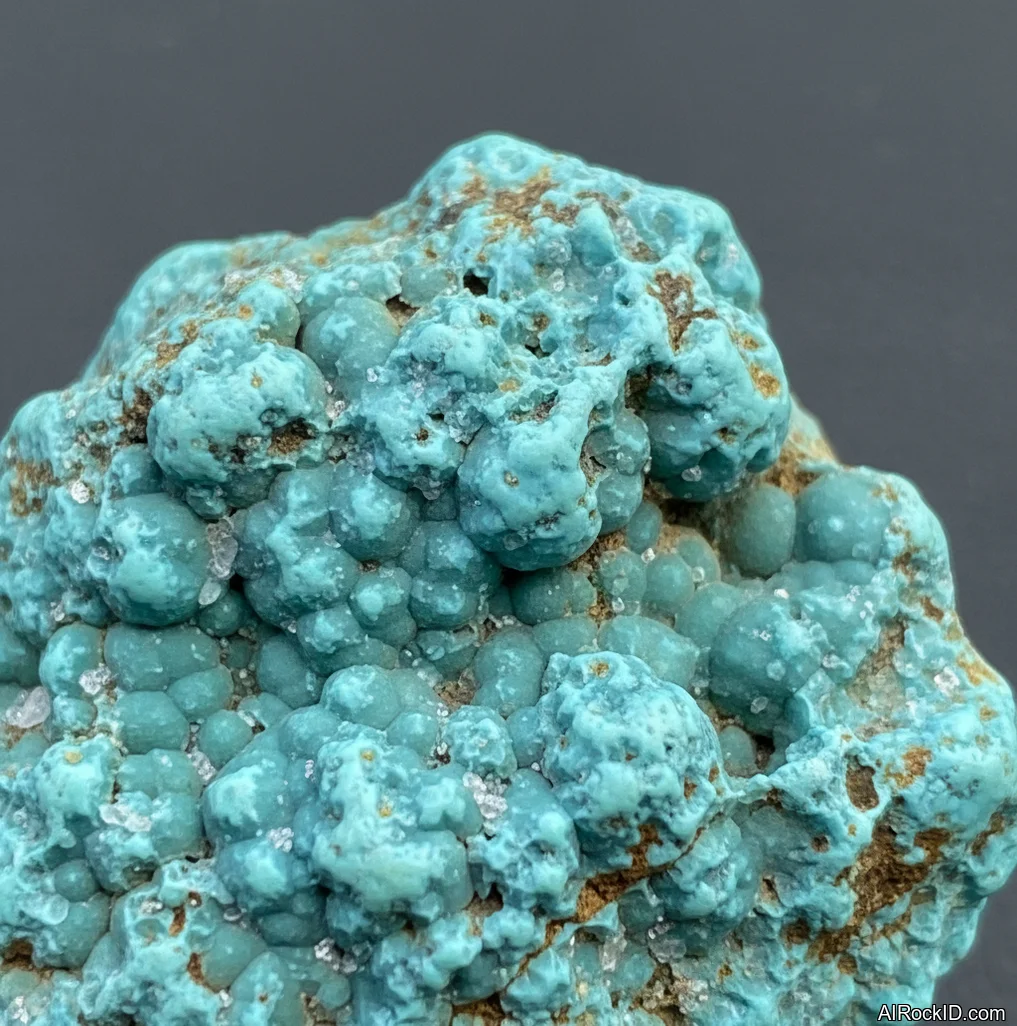
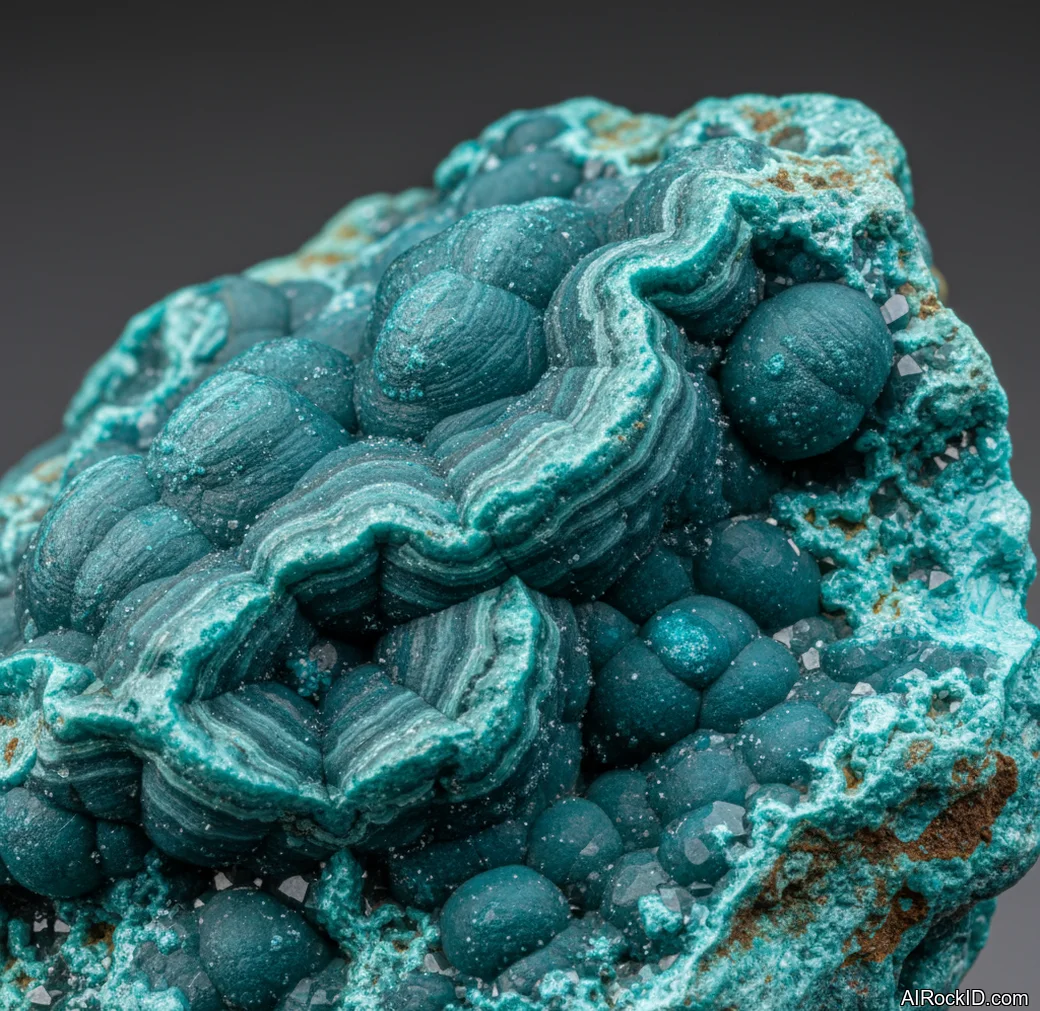
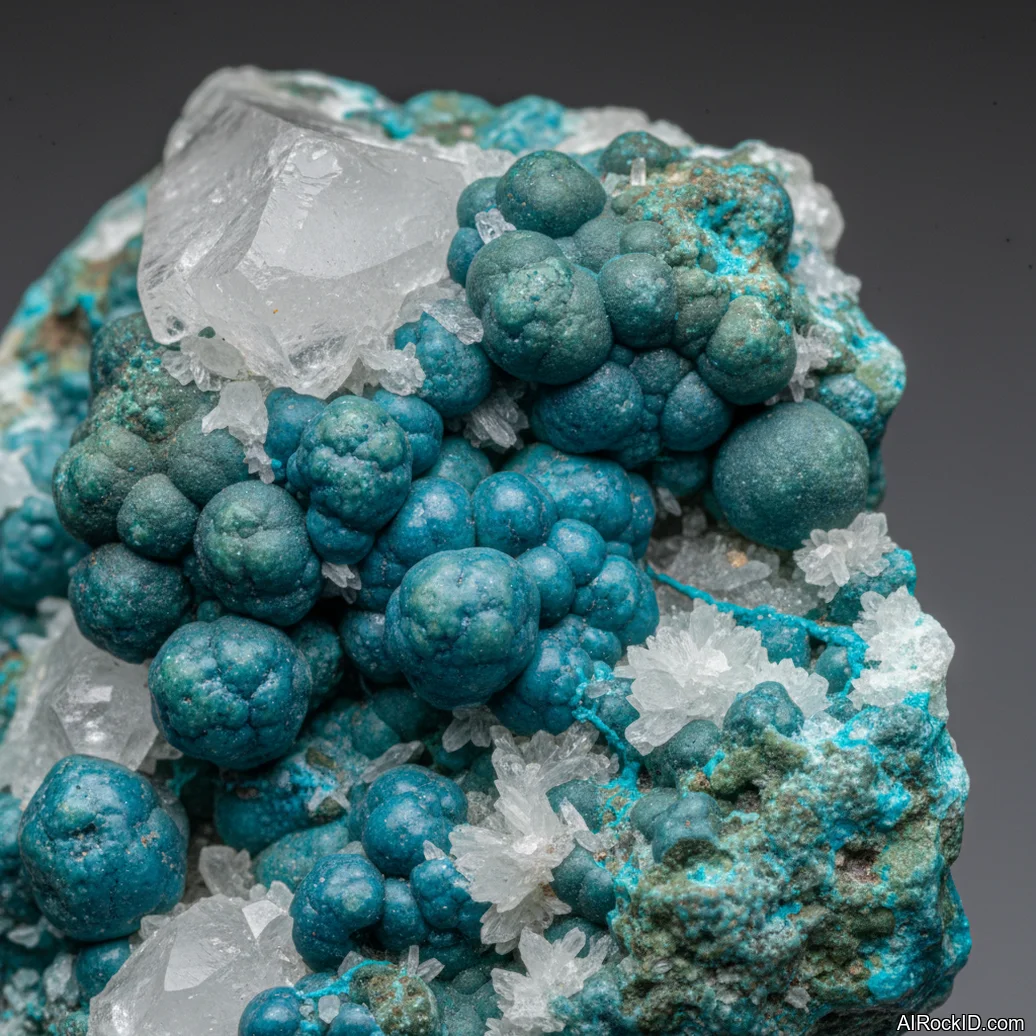
Turquoise on quartz is exactly what it sounds like: turquoise (a copper-aluminum phosphate) that’s naturally attached to quartz matrix, either coating it or settling into little fractures and seams. It’s a combo piece, not one mineral species, and that’s the whole point because you’re holding two very different personalities in the same specimen.
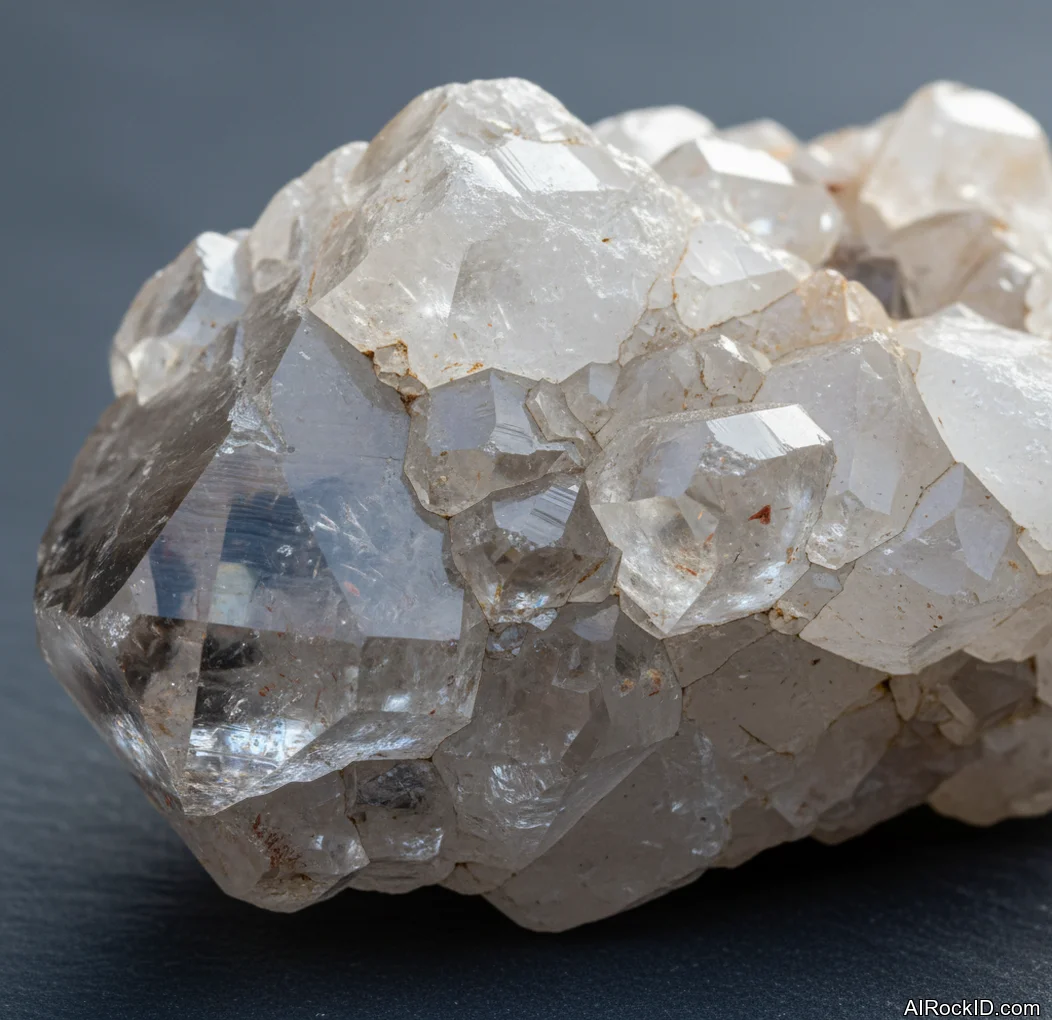
Pick up a decent one and the contrast hits fast. Quartz has that glassy, crisp feel, even when the surface is rough. Turquoise, on the other hand, looks softer, almost a little waxy right at the skin. On some pieces the turquoise shows up as small, rounded crusts sitting on top of sugary quartz druse, and you can literally feel the texture change under your thumb if you rub across it. I’ve handled specimens where the quartz is razor-hard and sparkly, but the turquoise side already has tiny edge dings from getting knocked around in a dealer’s flat (you can see those little scuffs catch the light).
People glance at the name and expect one solid robin’s-egg chunk, but most “turquoise on quartz” looks more like color splashed across a white or smoky matrix. The best display pieces have clean separation between the colors and a pattern that looks like it grew there, not like somebody stuck it on after the fact. And yes, the glue issue is real. I’ve seen “turquoise on quartz” more than once where the “turquoise” was actually dyed howlite chips glued onto quartz points. How can you tell? Sometimes the chips sit a little too neatly, and the color pools in odd spots along the glue line.
Origin & History
Turquoise got its official mineral description in 1816, thanks to A. G. Werner. The name filters in through the French word “turquoise,” which basically means “Turkish,” because the stone came into Europe via Turkish trade routes even though a lot of it was actually mined in Persia (modern Iran). Quartz, on the other hand, had its name way earlier from the German “Quarz,” and it’s been the steady workhorse in mineral collections for ages.
Pieces labeled “turquoise on matrix” like this don’t have one clean “first described” date, because it’s not a separate species. It’s just turquoise naturally stuck in (or running through) its host rock. Collectors ended up using the phrase the same casual way we say “malachite on azurite” or “fluorite on quartz.” It’s a shop and show label, plain and simple. But it’s handy. The look is different, and the care rules aren’t the same as for solid turquoise cab material. Why pretend otherwise?
Where Is Turquoise On Quartz Found?
You see turquoise on quartz most often from copper districts where silica-rich fluids and phosphate chemistry overlap, especially in the American Southwest and parts of China and Mexico.
Formation
Most turquoise is a secondary mineral. Put simply, it shows up after the fact, when copper-bearing water seeps through rock and reacts with aluminum and phosphate, usually up in the oxidation zone above copper deposits. That’s why the color can drift from a soft blue into greener tones if there’s more iron mixed in.
Quartz is kind of the opposite. It can be older, tougher, and already sitting there as veins, breccia cement, or those sparkly drusy linings you can feel as a gritty, sugar-crystal crust when you run a fingertip over it. Turquoise comes in later and grabs onto it where it can, coating fractures, forming little crusts on top of druse, or filling tiny spaces when the chemistry and pore space line up. Look, if you really stare at a piece under decent light, you’ll sometimes catch turquoise sitting in hair-thin seams that cut across the quartz like somebody dragged a blue pen through the crack. Hard to unsee once you notice it.
The issue with calling something “turquoise on quartz” is that sellers sometimes slap that label on anything blue sitting on a white rock. Real turquoise usually has a slightly uneven, natural edge where it meets the quartz, not a clean, perfect boundary like it was poured on. And if it’s truly natural, the turquoise tends to follow the quartz matrix, hugging the little pits and bumps instead of just skating right over them. Why would it ignore the texture if it actually grew there?
How to Identify Turquoise On Quartz
Color: Color ranges from pale sky blue to blue-green, often in patches, seams, or crusts against white, gray, or smoky quartz. Natural color usually has little variations, not one flat, uniform blue across the whole piece.
Luster: Quartz is vitreous; turquoise is waxy to dull, so the surface sheen changes as your eye moves from one to the other.
Look closely at the contact line: natural turquoise tends to sit in seams and low spots, and it doesn’t usually form a clean, sharp “paint edge.” Pick up the piece and feel the temperature. Quartz stays cool and glassy; dyed fakes and resin-heavy composites often feel oddly warm or plasticky. If you scratch-test at all, do it on an inconspicuous turquoise area and use something gentle, because turquoise is much softer than quartz and you can leave a scar fast.
Properties of Turquoise On Quartz
Physical Properties
| Crystal System | Trigonal |
| Hardness (Mohs) | 5-6 (turquoise) and 7 (quartz) (Medium (4-6)) |
| Density | 2.60-2.65 (quartz); 2.60-2.90 (turquoise) |
| Luster | Vitreous |
| Diaphaneity | Opaque |
| Fracture | Conchoidal |
| Streak | White to bluish white |
| Magnetism | Non-magnetic |
| Colors | sky blue, blue-green, green, white, gray, smoky brown |
Chemical Properties
| Classification | Phosphates (turquoise) and Silicates (quartz) |
| Formula | CuAl6(PO4)4(OH)8·4H2O (turquoise) + SiO2 (quartz) |
| Elements | Cu, Al, P, O, H, Si |
| Common Impurities | Fe, Zn, Ca |
Optical Properties
| Refractive Index | 1.61-1.65 (turquoise); 1.544-1.553 (quartz) |
| Birefringence | 0.040 (turquoise); 0.009 (quartz) |
| Pleochroism | Weak |
| Optical Character | Uniaxial |
Turquoise On Quartz Health & Safety
Normal handling is pretty low risk. But if you’re cutting, grinding, or sanding it, you can kick up fine dust, so don’t breathe that stuff in (you’ll see it hanging in the air like a light haze).
Safety Tips
Use water and make sure you’ve got real airflow going when you’re doing lapidary work. And don’t skip the respirator, either. You want one that’s rated for fine particulates, because that powdery grit gets everywhere (you can feel it in your nose if you mess up once).
Turquoise On Quartz Value & Price
Price Range
Rough/Tumbled: $20 - $250 per specimen
Price shoots up when the blue is really saturated, the coverage looks like it grew that way (not painted on), and the quartz matrix is actually pretty, especially when there’s druse in it (those tiny sparkly crystals catch the light fast). But if it’s stabilized or dyed, it’s usually cheaper. And those glued-together combo pieces? They should be straight bargain-bin, no question.
Durability
Moderate — Scratch resistance: Fair, Toughness: Fair
Quartz holds up well, but turquoise can chip and can change color if it’s porous and exposed to skin oils, sweat, or prolonged sun.
How to Care for Turquoise On Quartz
Use & Storage
Store it so the turquoise side isn’t rubbing against harder stones. I keep mine in a cotton-lined box because quartz points nearby will chew up softer turquoise edges over time.
Cleaning
1) Rinse briefly with lukewarm water and a drop of mild soap if needed. 2) Use a soft toothbrush only on the quartz areas, and go light around turquoise. 3) Pat dry and let it air-dry fully before putting it back in a closed container.
Cleanse & Charge
If you do energetic cleansing, stick to smoke, sound, or a quick pass under running water, then dry it well. Skip salt soaks, because porous turquoise can take that personally.
Placement
Look closely at the turquoise and decide which face you want forward, because the best pieces have one side that reads like a little landscape of blue over white. Keep it out of a sunny windowsill if the turquoise looks porous or chalky.
Caution
Skip ultrasonic cleaners. And don’t reach for harsh chemicals or leave turquoise sitting in a long soak. Turquoise can be porous, stabilized, or sealed, and those treatments don’t always handle aggressive cleaning the way you’d expect (I’ve seen pieces come out looking a little “off” afterward). Also, don’t use oils or any “conditioning” stuff. It can soak into porous turquoise, darken it, and leave that uneven, blotchy look that’s hard to unsee once it happens. Why risk it?
Works Well With
Turquoise On Quartz Meaning & Healing Properties
Plain quartz on its own can feel like a blank amplifier. But mixed with turquoise, it’s less “one-note” and more like two surfaces talking to each other. Quartz has that clean, bright, glassy snap to it. Turquoise comes in softer and steadier, and a lot of people tie it to communication and cooling down emotional static.
On a hectic day, just holding a piece does a lot before you even get into any meaning. Thumb on the turquoise, which has that slightly waxy, almost skin-warm feel. Fingers catching the tiny quartz points, the sharp little sparkles that can actually snag a bit if the crystal faces are fresh. It grounds you in a physical way, not just in your head. So yeah, it can be helpful. But I’m going to say it plainly: none of this replaces medical care, and if someone’s pitching it like a cure, I’m out.
And here’s the other thing dealers will tell you, if they’re being straight with you: turquoise is one of the most messed-with materials in the trade. Stabilized turquoise can still be real turquoise, but it often feels a little different in the hand and it won’t age the same way. Dyed “turquoise-colored” material can look loud under show lights, then kind of dead in natural daylight. If you’re buying into the energy side of it, you still want the real mineral, because you can tell when it’s plastic and dye pretending to be stone. (You feel it immediately.)
Identify Any Crystal Instantly
Snap a photo and get properties, value, care instructions, and healing meanings in seconds.