Vatican Stone


Quick answer: Vatican Stone is a trade name most often used for calcite-rich decorative limestone or marble sold as a souvenir or collectible stone. It should be identified by its carbonate reaction, softness, and appearance rather than by the name alone, because the label is not a formal mineral species.
AI Rock ID can help screen Vatican Stone by checking visual clues such as cream-to-tan color, veining, polish, and likely carbonate texture. RockIdentifier.io treats Vatican Stone as a decorative stone label rather than a distinct mineral name, so final identification may require simple tests such as hardness and acid reaction.
Good fit
- Collectors who want a souvenir-style decorative stone with a historical or religious association
- Beginners learning to recognize calcite-rich limestone and marble materials
- Users comparing soft carbonate stones that may scratch more easily than quartz-based rocks
- People who prefer a neutral cream, beige, or veined display stone
Not a good fit
- Anyone needing a durable ring stone or high-wear jewelry material
- Collectors seeking a formally recognized mineral species name
- Users who want a stone that can safely contact acids, vinegar, or harsh cleaners
- Buyers expecting documented Vatican origin without seller-provided provenance
Most commonly confused with
- Marble: Marble is a metamorphic carbonate rock; Vatican Stone may be sold as a marble-like decorative carbonate.
- Limestone: Limestone is usually sedimentary and calcite-rich; many Vatican Stone pieces fit this broader rock category.
- Calcite: Calcite is a mineral with Mohs hardness 3; Vatican Stone is typically a rock made largely of calcite.
- Travertine: Travertine often shows porous or banded textures, while polished Vatican Stone may look denser and more marble-like.
Vatican Stone vs Similar Decorative Stones
| Material | Typical Hardness | Key Difference | Acid Reaction |
|---|---|---|---|
| Vatican Stone | About Mohs 3 | Trade name for calcite-rich souvenir limestone or marble | Fizzes with dilute acid |
| Calcite | Mohs 3 | Single mineral, not a rock or souvenir trade label | Fizzes strongly |
| Marble | About Mohs 3 | Metamorphosed carbonate rock with crystalline texture | Fizzes, sometimes more on powdered surface |
| Travertine | About Mohs 3 | Porous or banded calcium carbonate deposit | Fizzes |
| Gypsum Alabaster | Mohs 2 | Softer and easier to scratch with a fingernail | Little to no fizz |
AI identification confidence
AI identification confidence for Vatican Stone is usually moderate because the name is a commercial or souvenir label, not a unique mineral species with one diagnostic appearance. A confident result should be treated as a likely carbonate decorative stone unless confirmed by hardness, acid reaction, and provenance.
When AI gets it wrong
- A polished surface hides grain size, porosity, or fossil texture that would separate limestone, marble, and travertine.
- Cream, beige, or white stones in photos may be quartzite, gypsum alabaster, ceramic, or resin rather than calcite-rich rock.
- Lighting and filters can make dyed or sealed stone look like natural veining.
- The label may reflect where the item was sold rather than where the material was quarried.
Final recommendation
Choose Vatican Stone as a decorative or souvenir carbonate stone, not as a rare mineral species. For authenticity, favor sellers who clearly state the material, source information if available, and whether the piece is natural stone, composite, or coated.
How to Check Vatican Stone Authenticity
Authenticity depends on what the seller claims: a natural calcite-rich stone, a souvenir from a specific location, or stone sourced from a particular quarry. A real carbonate stone should be relatively soft, feel cool and dense, and react to dilute acid on an inconspicuous spot, but these tests do not prove Vatican origin. Documentation, packaging, receipts, or provenance notes are needed if geographic association is important.
Vatican Stone in Jewelry and Display
Vatican Stone is better suited to display pieces, small carvings, cabochons, and low-wear pendants than to rings or bracelets. Its calcite content makes it vulnerable to scratching, acid etching, and dulling from repeated handling. Protective settings and dry storage help preserve the polish.
Natural Stone, Composite, or Coated Piece
Some decorative souvenir stones may be sealed, stabilized, dyed, or mounted in metal or resin. A coating can reduce surface fizzing and make the polish look more uniform than untreated carbonate rock. If the piece has unusually bright color, identical repeated patterns, or plastic-like warmth, ask whether it is natural stone, composite material, or a coated souvenir.
What Is Vatican Stone?
Vatican Stone is a trade-name souvenir stone, usually a calcite-rich limestone or a marble, and it’s sold with Vatican City imagery tied to it.
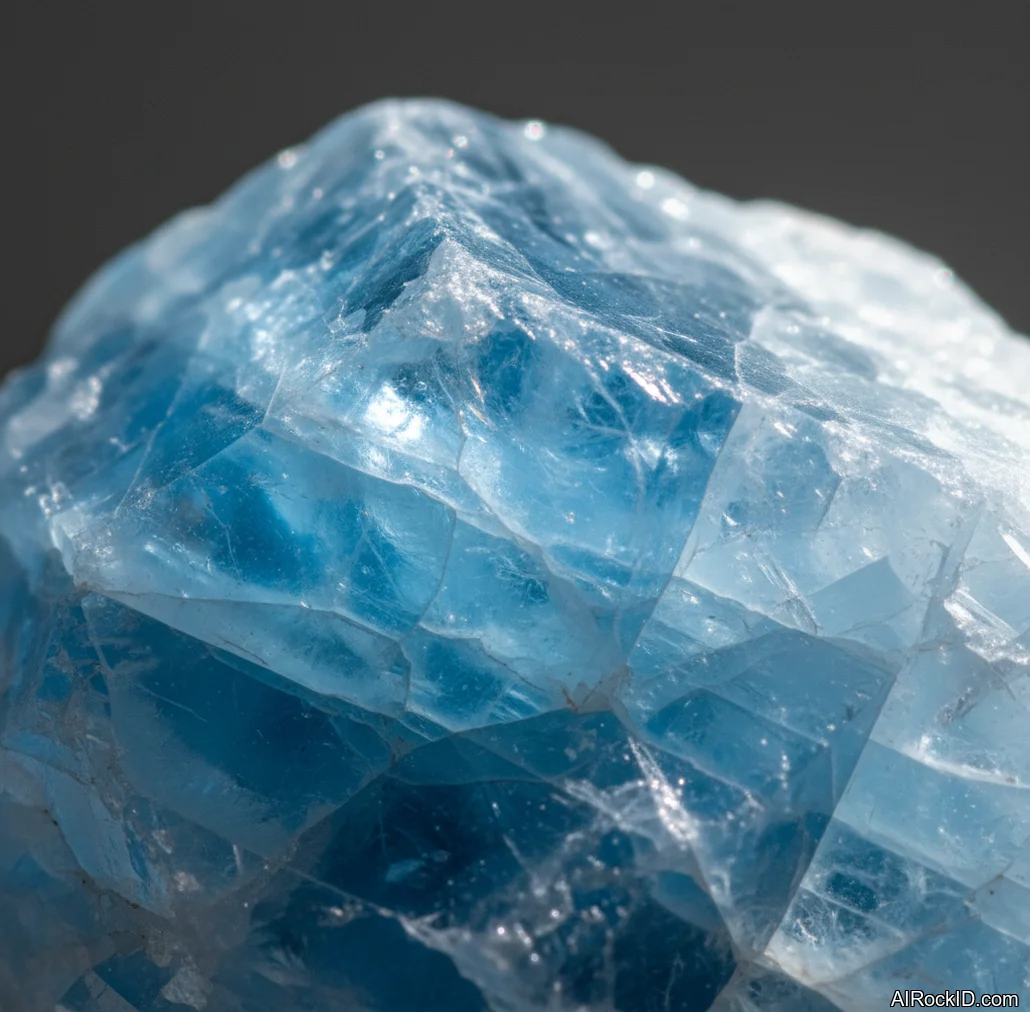
At first it just looks like warm beige rock. But once you’ve actually got a piece in your hand, it’s pretty easy to clock what it is: that soft, slightly chalky calcite stuff that can take a really nice polish, then gets bruised if you knock it around. Grab a palm stone and you’ll notice it doesn’t have that glassy, cold feel quartz has. It’s more “buttery,” and it warms up fast, especially if it’s been sitting under bright shop lights (you can feel it almost immediately).
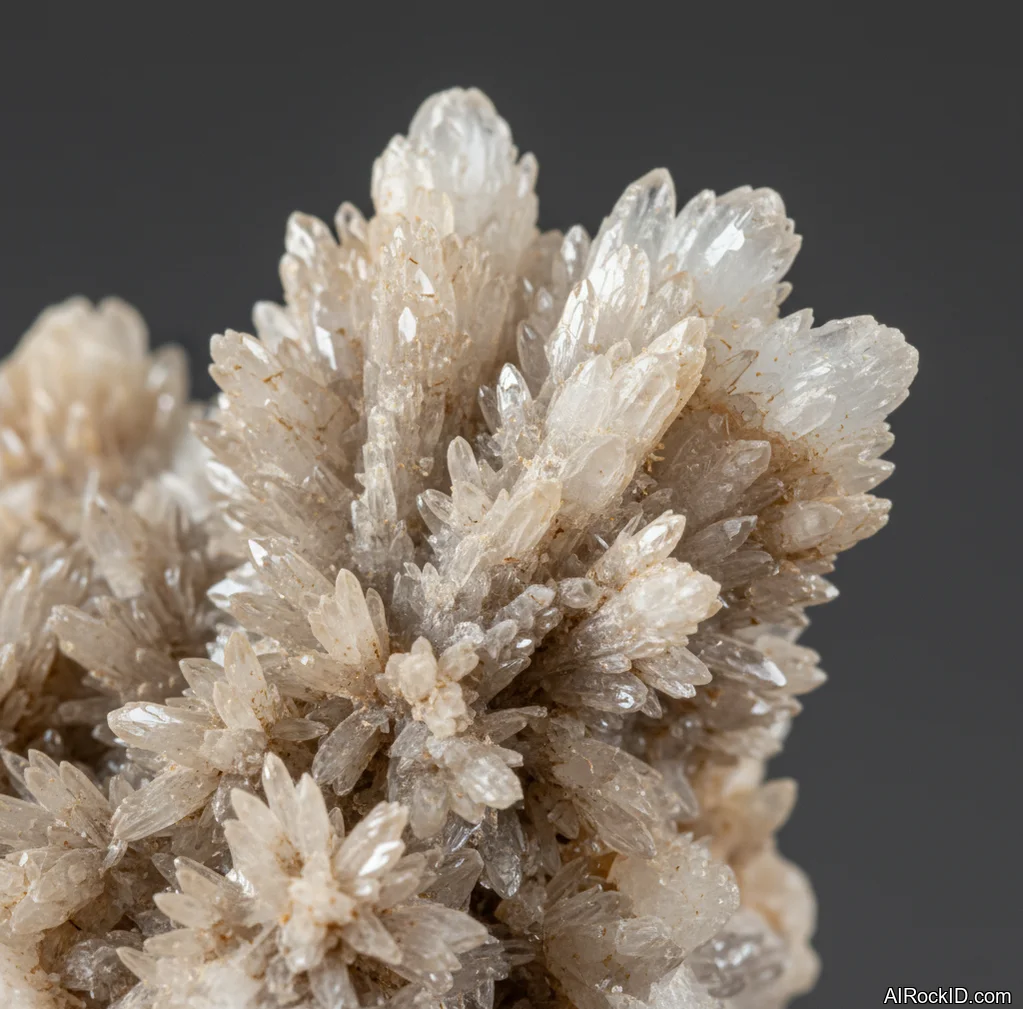
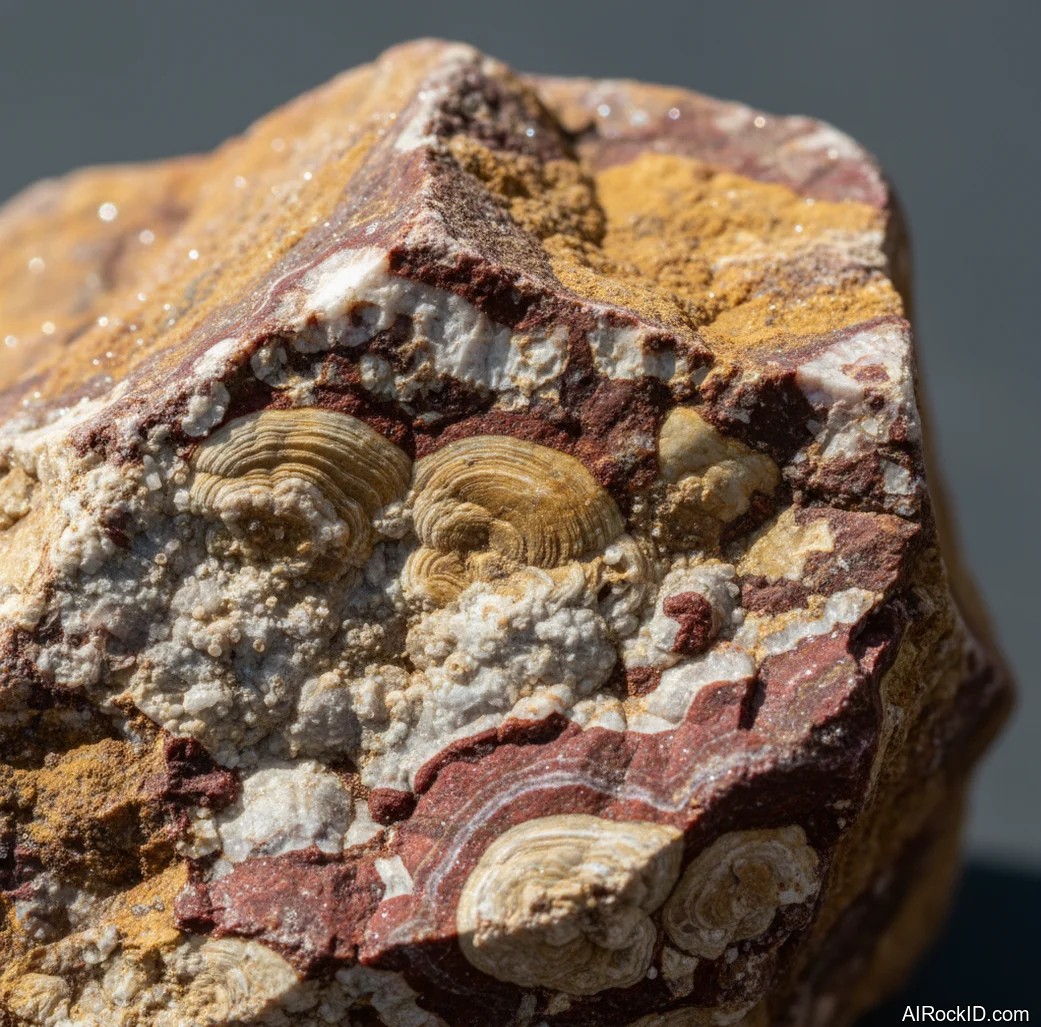
If you stare at it for a second, you’ll usually catch cloudy banding, faint honey-ish tones, plus little white seams that look like healed cracks running through it. Some pieces read more like marble, with that sugary sparkle in the grain when you tilt it. Others lean more limestone and stay kind of matte until someone polishes them up. And the real-world catch is this: “Vatican Stone” isn’t a formally defined species. It’s just a label, so what you end up with can vary a lot depending on the seller.
Origin & History
Most dealers toss around “Vatican Stone” the same way they do “Jerusalem stone” or “cathedral stone.” It’s a place-tagged souvenir name, not a real mineral name. You’ll spot it turned into rosaries, tiny carvings, little polished tumbled bits, the kind of stuff that ends up in a pilgrim’s pocket or a tourist’s gift bag.
On the actual mineralogy side, what’s sold under that label is usually calcite rock, basically limestone or marble. That lines up with what you’d expect given the region’s building-stone tradition. But here’s the snag: traceability. I’ve been at gem shows, looking through those shallow plastic flats of mixed pieces, and plenty of “Vatican” lots were obviously just generic banded calcite that could’ve come from anywhere exporting decorative carbonate stone. How would you even prove it?
Where Is Vatican Stone Found?
Pieces sold as Vatican Stone are linked by trade to Italy, but the raw carbonate material in the souvenir market can be sourced from multiple countries that cut and export calcite and marble.
Formation
Carbonate rocks like this show up in Vatican Stone, and they come together in basically two different ways. Limestone starts out in the ocean, where calcium carbonate piles up (think shells and limey mud), then it gets compacted and cemented until it’s solid rock. Marble is the same material after it’s been heated and squeezed during metamorphism, so the calcite recrystallizes and you end up with that sugary, grainy texture.
If you’ve ever snapped one of those cheap carved calcite animals in half, you already know the look inside. You get those cloudy white spots, some banding, and that gritty little calcite glitter on the fresh break (it almost looks like tiny sugar crystals catching the light). And next to quartz? It just doesn’t break with that hard, clean snap. It’s softer. It feels softer in your hand, too.
How to Identify Vatican Stone
Color: Most Vatican Stone on the market is cream, beige, ivory, or light honey with white calcite veining or cloudy banding. Some pieces show faint tan to caramel stripes that look a lot like banded calcite sold as “onyx marble.”
Luster: Polished pieces have a waxy to vitreous shine; raw surfaces look dull to chalky.
If you scratch it with a copper coin or a steel nail, it’ll mark pretty easily, which is your big calcite clue. The real test is a tiny drop of weak acid: vinegar will often fizz slowly on a fresh scratch because it’s carbonate. And in the hand, it usually feels a touch “softer” and less glass-cold than quartz or agate, especially after you’ve held it for a minute.
Common Look-Alikes
Vatican Stone is sometimes confused with these materials:
- Travertine (banded calcite limestone), often sold as “Italian stone” palm stones
- Honey calcite / yellow calcite (tumbled), especially when Vatican Stone is more honey-toned
- Aragonite (cream to tan), including tumbled aragonite sold as “onyx marble” in tourist shops
- Beige marble or “onyx marble” souvenirs (calcite marble) from Italy/Turkey that get relabeled with Vatican imagery
- Dyed limestone/marble sold as “Vatican Stone” with tea-brown or golden dye to punch up the color
- Resin or glass souvenir blanks printed with Vatican City art (the too-perfect, too-shiny stuff)
Market Cautions & Treatments
When AI Can Get This Wrong
In photos, AI mixes Vatican Stone up with honey calcite, travertine, and generic beige marble because they all read as warm cream-to-tan with low contrast. The real test is physical: a copper coin or steel nail will scratch it fast (Mohs 3), and a drop of weak acid will fizz if it’s calcite-rich, but resin and glass won’t. Pick it up and tap it too: calcite marble gives a duller click, while glass has that sharper ring and looks wet-shiny under the same light.
Properties of Vatican Stone
Physical Properties
| Crystal System | Trigonal |
| Hardness (Mohs) | 3 (Soft (2-4)) |
| Density | 2.71 g/cm3 |
| Luster | Vitreous |
| Diaphaneity | Translucent to opaque |
| Fracture | Uneven |
| Streak | White |
| Magnetism | Non-magnetic |
| Colors | Cream, Beige, Ivory, Honey, Tan, White |
Chemical Properties
| Classification | Carbonates |
| Formula | CaCO3 |
| Elements | Ca, C, O |
| Common Impurities | Fe, Mn, Mg |
Optical Properties
| Refractive Index | 1.486-1.658 |
| Birefringence | 0.172 |
| Pleochroism | None |
| Optical Character | Uniaxial |
Vatican Stone Health & Safety
It’s usually safe to handle. But keep it away from acids, and if you’re grinding or carving it, don’t breathe in the dust, especially when that fine powder starts hanging in the air and settling on your fingers.
Safety Tips
If you’re shaping it, put on a dust mask and keep a little water on it so the dust doesn’t go everywhere. Then go back and wipe everything down afterward (you’ll feel the grit if you don’t).
Vatican Stone Value & Price
Price Range
Rough/Tumbled: $5 - $40 per tumbled stone/palm stone
Price usually tracks finish quality and whatever story comes with the piece, not mineral rarity. A clean, glassy polish you can feel under your thumb, good-looking banding that pops when you tilt it under a lamp, and real provenance paperwork (when you can actually get your hands on it) are what bump the price up.
Durability
Nondurable — Scratch resistance: Poor, Toughness: Fair
Calcite is soft and acid-sensitive, so it scratches easily and can etch or dull if it meets vinegar, lemon juice, or harsh cleaners.
How to Care for Vatican Stone
Use & Storage
Store it in a soft pouch or a separate compartment so harder stones don’t chew it up. If you toss it in a bowl with quartz, you’ll see scratches fast.
Cleaning
1) Rinse quickly with lukewarm water. 2) Use a drop of mild soap and your fingers or a very soft cloth. 3) Rinse again and pat dry; don’t soak it for long and don’t use acidic cleaners.
Cleanse & Charge
For non-water methods, use smoke, sound, or a short rest on a dry bed of plain selenite. Skip salt water and skip anything acidic.
Placement
Keep it on a shelf away from kitchen splashes and bathroom cleaners. A felt pad under it helps if it’s a polished slab or carved piece.
Caution
Don’t use vinegar, citrus, or any abrasive powders on it. They can etch the surface (and once that happens, you’ll feel the rough, dull spot right away). And skip ultrasonic or steam cleaners too.
Works Well With
Vatican Stone Meaning & Healing Properties
If you’re looking at Vatican Stone as a souvenir, the “meaning” people attach to it is usually about where it came from and the ritual around it, not some weird, rare mineral trick. And honestly, that’s how I see it. When someone puts a piece in my hand and says it came from a pilgrimage, what you’re really holding is their memory, plus the intention they packed into that trip.
On the day-to-day crystal side, calcite-type stones usually come across as gentle and steady in practice. Not fireworks. I’ve carried soft beige calcite palm stones as a worry-stone, mostly because the surface stays slick and warm after a minute or two in your palm (that little hand-heat shift is hard to miss). But here’s the catch: since the name is basically a trade label, two “Vatican Stone” pieces can feel and act differently if one is dense marble and the other is more porous limestone. Same tag. Different stone.
So keep it practical. If you’re using it for meditation or prayer, treat it like a tactile anchor. Grab the same stone each time, notice the temperature change, and let that be your cue to slow down. And if anxiety or health stuff is part of the picture, do the real-world things too. Crystals can sit alongside that. They don’t replace it.
Common mistakes
- Assuming Vatican Stone is a formal mineral name rather than a trade or souvenir label.
- Treating every Vatican Stone item as quarried from the Vatican without provenance.
- Using vinegar, lemon juice, or acidic cleaners on a calcite-rich surface.
- Expecting quartz-like durability from a stone with about Mohs 3 hardness.
- Identifying the stone from color alone instead of checking hardness, texture, and carbonate reaction.
- Mistaking a polished coating or resin mount for the natural surface of the stone.
Identify Vatican Stone from a photo
Compare Vatican Stone traits, care tips, value clues, and common lookalikes with a clear photo.