Wild Horse
What Is Wild Horse?
Wild Horse is a trade name for a tan magnesite rock with brown hematite or limonite veining, and the material people talk about most comes out of Arizona.
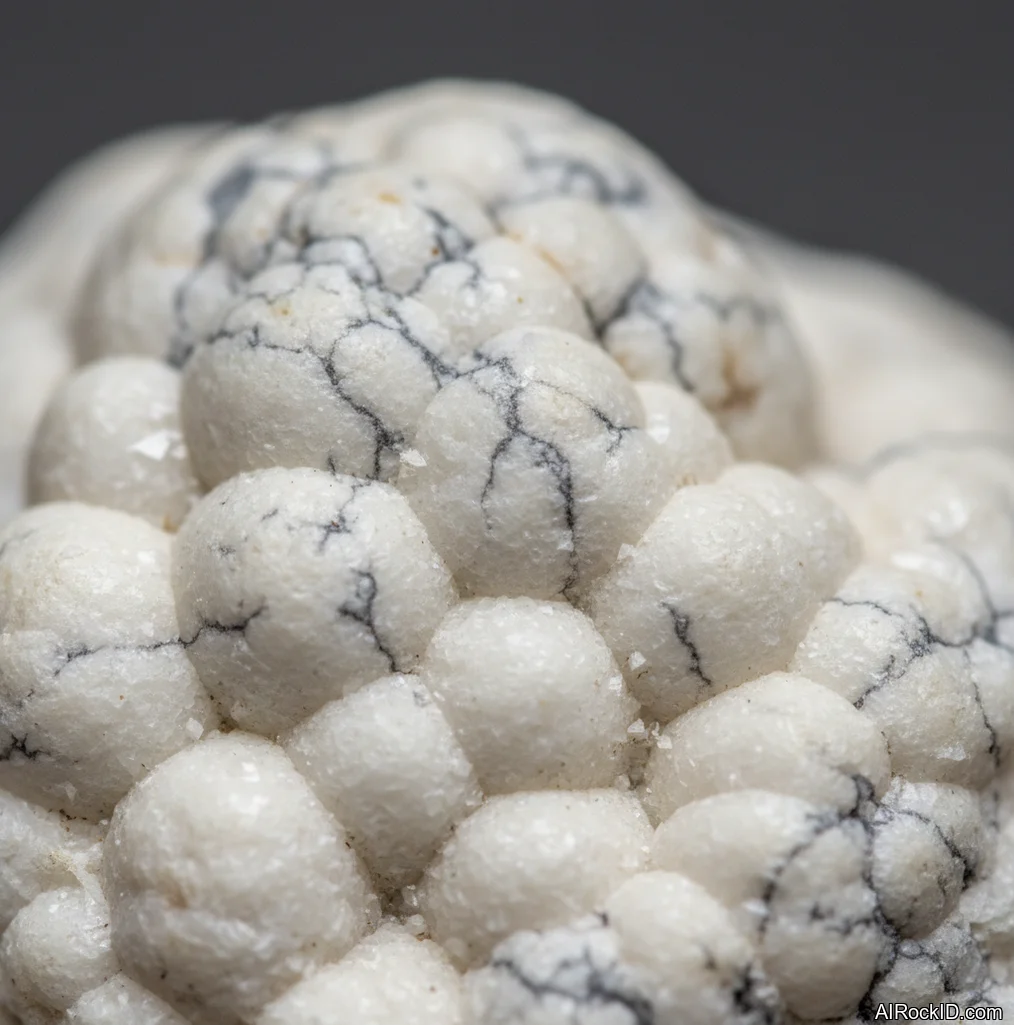
Grab a palm stone and you’ll notice it right away: it’s smooth, but kind of “dry” under your fingers compared to quartz. No glassy chill. It feels warmer, almost like chalk that’s been polished down (in a good way). Wild Horse usually shows creamy beige to caramel color with brown webbing or blotches that honestly look like someone spilled coffee on it and it dried there. Some pieces break up into big, chunky blocks of color. Others go the opposite direction, all tight and lacey. Either way, it reads earthy from across the table.
Most of what you run into is tumbled, cabbed, or cut into freeforms, because the pattern is the whole point. But look, it’s not a hard stone. I’ve literally seen people toss it into a bowl with agate and come back later like, why does my Wild Horse look bruised? It’ll take a nice polish, sure, but it likes a gentle touch.
Origin & History
“Wild Horse” isn’t some old-school mineral term. It’s a marketing name that started getting used for stone coming out of the Gila Bend area of Arizona. Dealers leaned hard into that Southwest vibe, and the name ended up sticking at shows because it’s easy to remember and, honestly, the pattern kind of sells itself the second you see it.
And yeah, you’ll hear people call it “Wild Horse Jasper,” which causes endless confusion. Jasper is a quartz variety. This material is mostly magnesite, and the brown you’re seeing is iron-oxide staining. So it’s more accurate to think of it as patterned magnesite rock that got a great nickname (and a catchy one, too).
Where Is Wild Horse Found?
Most Wild Horse on the market is associated with Arizona in the United States, especially the Gila Bend area.
Formation
Magnesite shows up when magnesium-rich rocks get changed by fluids carrying carbon dioxide. Basically, you’ve got the right host rock, those reactive fluids keep pushing through it for a long time, and eventually magnesium carbonate precipitates out.
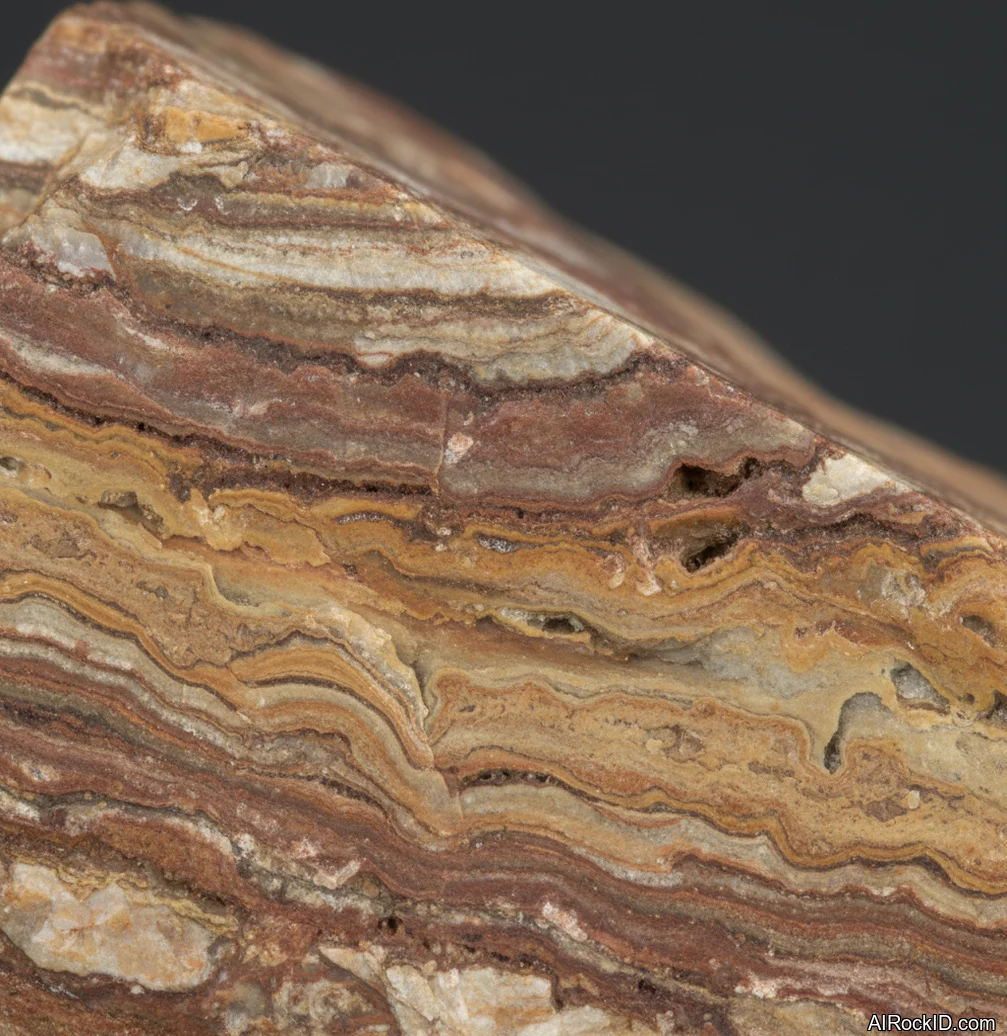
That brown “wild horse” pattern is usually iron oxides, things like hematite and limonite, seeping into tiny fractures and pore spaces. If you hold a polished face under a bright light and tilt it a bit, you can sometimes catch that the brown areas sit just slightly different from the cream, like they’re staining or filling gaps instead of being one uniform mineral. And on rough chunks, the brown zones often follow old crack lines (you’ll see them snake right along the breaks).
How to Identify Wild Horse
Color: Creamy tan to beige magnesite with brown to dark brown veining, webbing, or patches from iron oxides. Patterns can be tight and netted or broad and blocky.
Luster: Waxy to dull in rough pieces, taking a soft, satiny polish when finished.
Pick up a piece and compare it to quartz or jasper. It’ll feel a bit lighter and less glassy, and it won’t have that hard “ring” when you tap it. If you scratch it with a steel nail, real magnesite-based Wild Horse can show a scratch, while true jasper (quartz) usually won’t. The problem with online listings is that anything tan and brown gets tagged “Wild Horse,” so ask sellers whether it’s magnesite and where it was sourced.
Properties of Wild Horse
Physical Properties
| Crystal System | Trigonal |
| Hardness (Mohs) | 3.5-4.5 (Soft (2-4)) |
| Density | 2.95-3.10 |
| Luster | Waxy |
| Diaphaneity | Opaque |
| Fracture | Uneven |
| Streak | White |
| Magnetism | Non-magnetic |
| Colors | cream, tan, beige, brown, dark brown |
Chemical Properties
| Classification | Carbonates |
| Formula | MgCO3 |
| Elements | Mg, C, O |
| Common Impurities | Fe |
Optical Properties
| Refractive Index | 1.509-1.717 |
| Birefringence | 0.208 |
| Pleochroism | None |
| Optical Character | Uniaxial |
Wild Horse Health & Safety
Wild Horse is usually safe to handle and keep on display. That said, if you’re cutting or grinding it, stick to the normal lapidary dust precautions, because that fine powder gets everywhere (and it’ll end up in your nose if you’re not careful).
Safety Tips
If you’re sanding or cutting, keep things wet with water and put on a proper respirator. Then, once you’ve cleaned up the dust and scraps, go wash your hands.
Wild Horse Value & Price
Price Range
Rough/Tumbled: $5 - $60 per piece
Price mostly comes down to contrast in the pattern, how clean the polish looks, and the size. Tight, spiderweb-like lines with crisp color breaks usually run higher than the muddy, low-contrast stuff that just kind of blends together.
Durability
Nondurable — Scratch resistance: Fair, Toughness: Fair
It’s stable in normal room conditions, but the softer surface can pick up scratches and edge dings pretty easily.
How to Care for Wild Horse
Use & Storage
Store it away from harder stones like quartz and topaz, or it’ll collect little scratches fast. A soft pouch or a separate compartment in a flat works fine.
Cleaning
1) Rinse with lukewarm water. 2) Use a drop of mild soap and your fingers or a soft toothbrush for creases. 3) Rinse again and pat dry, then let it fully air-dry before putting it back in a box.
Cleanse & Charge
If you do energetic cleansing, stick to gentle stuff like smoke, sound, or a quick rinse and dry. Long salt soaks aren’t necessary and can be rough on polished surfaces over time.
Placement
I like Wild Horse where you’ll actually touch it, like a desk stone or a worry stone in a pocket. Just keep it off gritty windowsills and away from keys.
Caution
Skip harsh cleaners. Don’t use ultrasonic machines either. And don’t just toss it into a mixed tumble barrel with harder rocks where it’ll clack around and get dinged up. It can take a polish, sure, but it really doesn’t like impacts.
Works Well With
Wild Horse Meaning & Healing Properties
People pick up Wild Horse because it straight-up looks like a little slice of desert turned into stone. And that same feel shows up in how a lot of folks use it spiritually: grounded, steady, no drama. When I’m behind a table sorting palm stones at a show, Wild Horse is one of the only ones that makes people pause mid-reach and just stare at the pattern for a beat.
If you use crystals as a personal tool, I’ve found Wild Horse is best when you’re trying to lock in routines and stay consistent. It’s the kind of stone you leave on your desk, then grab without thinking when you’re trying to stay on task, or when you want to feel more in your body after spending all day stuck in your head. But look, there’s a line here. None of this is medical care, and it won’t replace actual treatment if you’re dealing with anxiety, pain, or anything serious.
Next to the flashy stones, Wild Horse doesn’t act like it’s trying to impress anybody. That’s why people like it. But here’s the catch: some folks expect it to be tough like jasper. It won’t. If you carry it every day, expect tiny scratches and the edges to get a little soft over time, kind of like a favorite coin that’s lived in your pocket for years (you can almost feel that worn rim, right?).
Identify Any Crystal Instantly
Snap a photo and get properties, value, care instructions, and healing meanings in seconds.