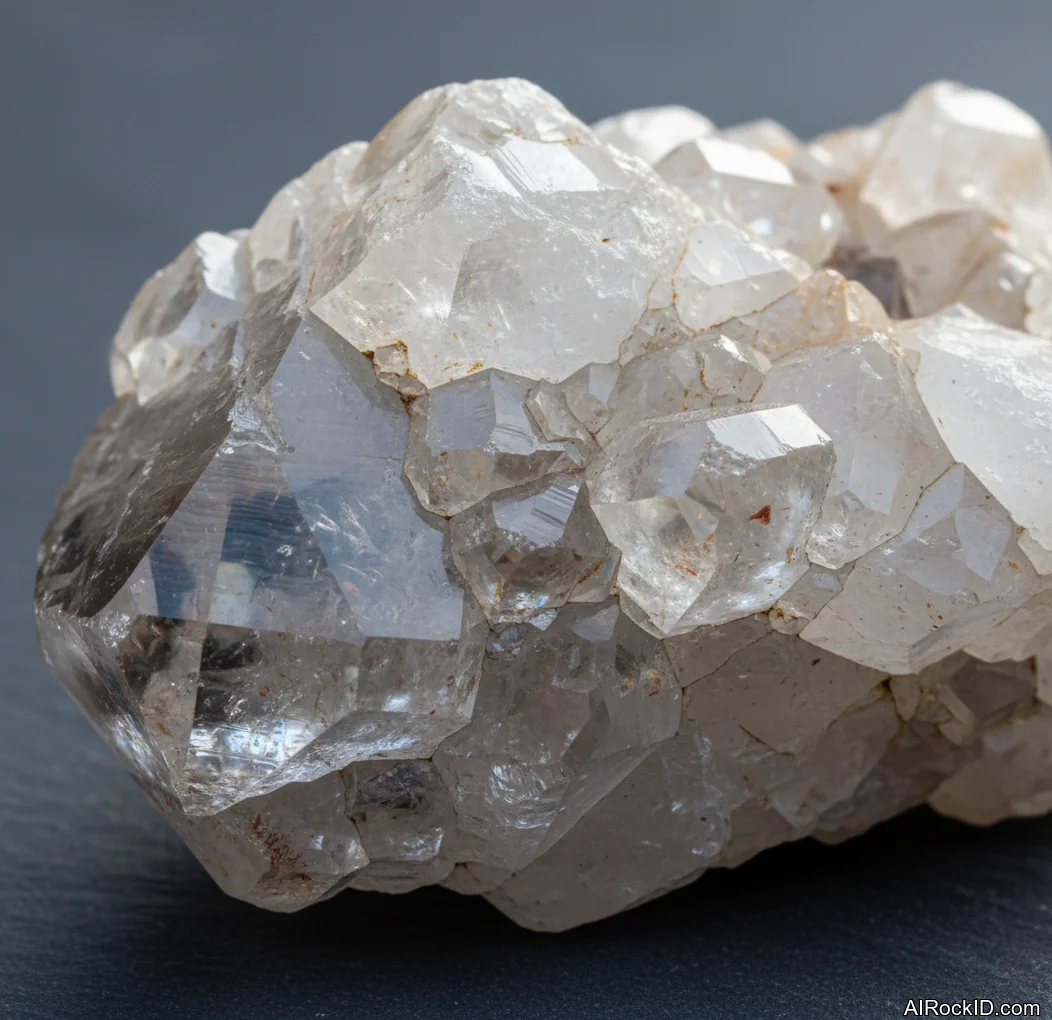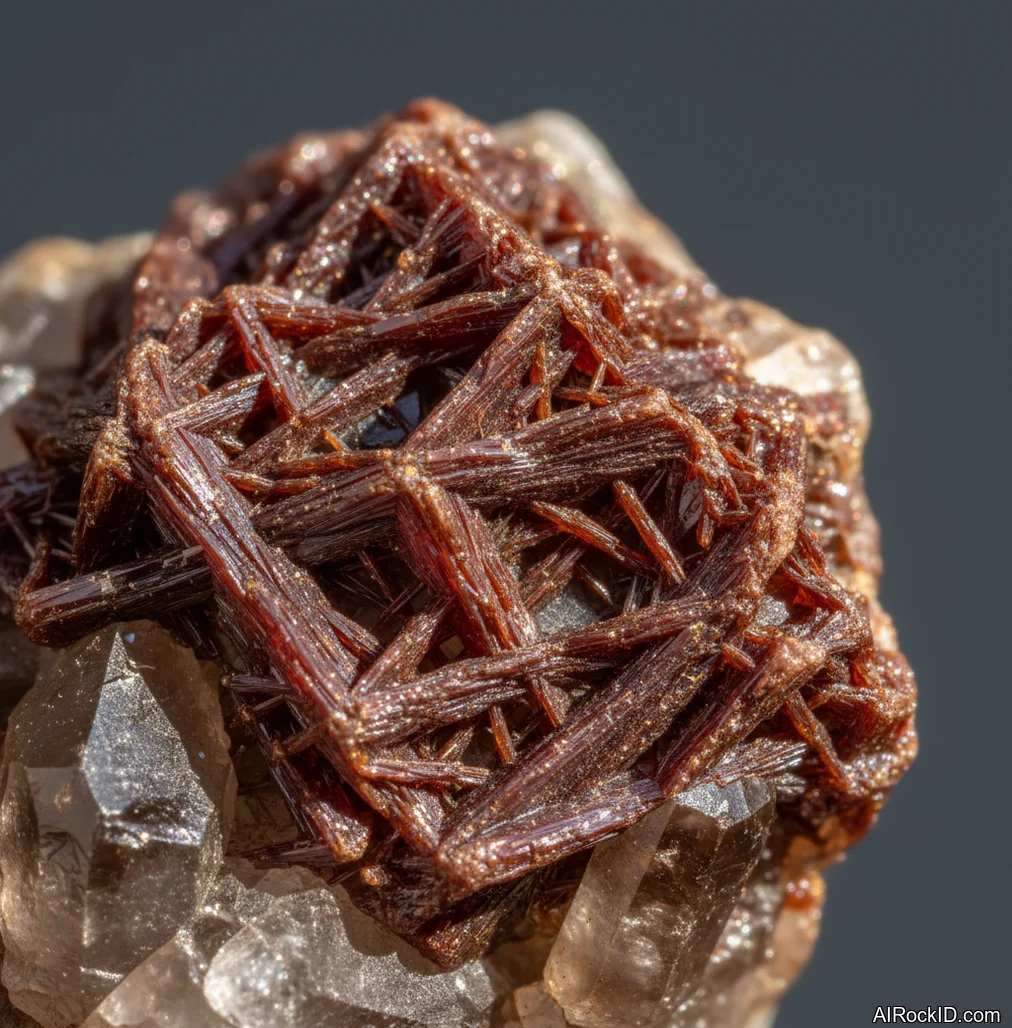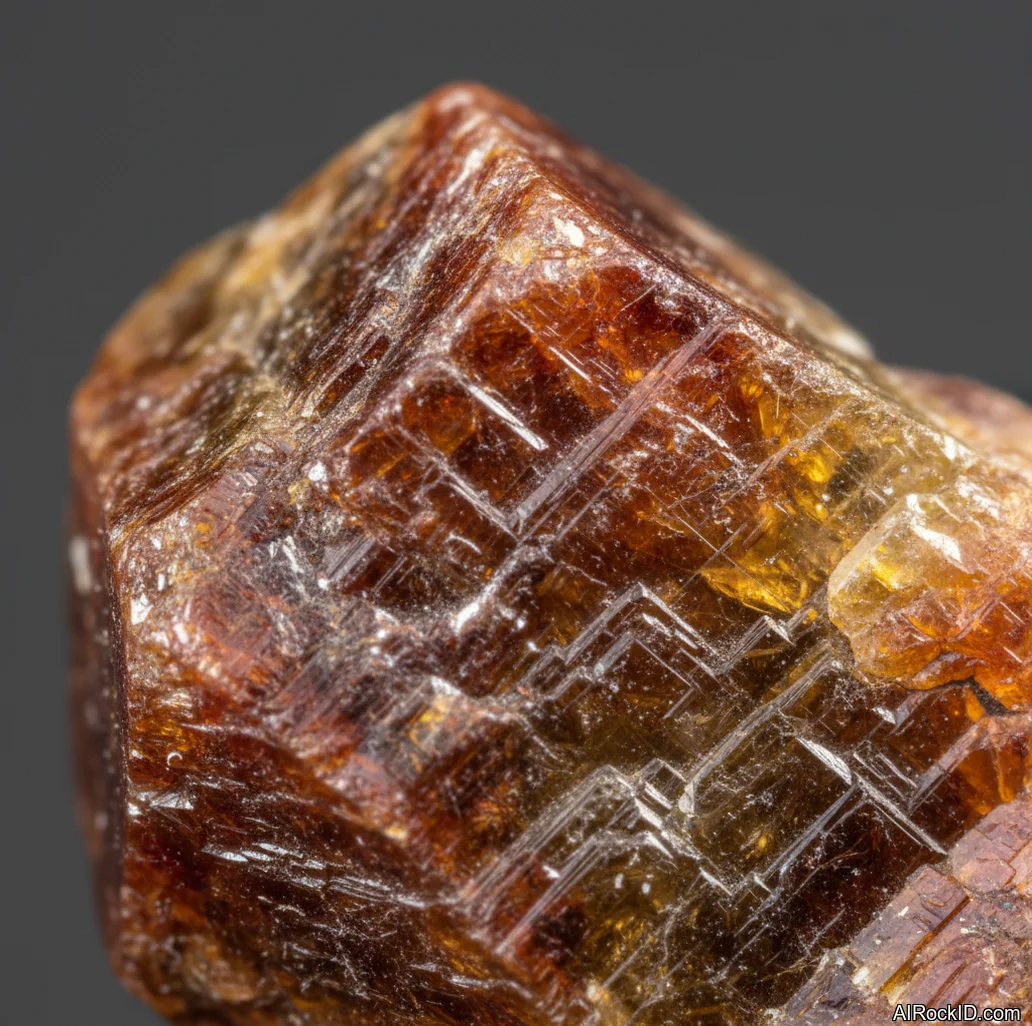
Zircon
What Is Zircon?
Zircon is a zirconium silicate mineral with the formula ZrSiO4.
Grab a decent crystal and the first thing you clock is the heft. Even a small bit sits heavy in your palm, and if it’s clean enough the surface throws off this almost glassy, heat-lamp shine when you tilt it under a desk light. In a shop setting, people mix it up with cubic zirconia constantly (honestly, it happens daily), which is kind of funny because real zircon has its own vibe: tons of fire, plus that slightly doubled facet-edge look once your eye learns what to catch.
Thing is, at first glance zircon seems like it ought to be tougher than it is. It takes a really nice polish and it can be pretty hard, but it’s also a little brittle, so those sharp facet junctions can chip if it gets bumped in a tray or knocked against a tweezer tip. And some pieces are metamict from radiation damage, so they come off duller and lower in density than the crisp, snappy high-type crystals collectors go hunting for.
Origin & History
In 1789, Martin Heinrich Klaproth took a close look at zircon and spotted zirconia (zirconium oxide) inside it, and that’s what eventually got the element zirconium named after the mineral. The word “zircon” itself traces back to the Persian “zargun,” usually translated as “gold-colored,” which tracks if you’ve ever picked through old gravels and turned over those honey-to-brown, river-worn gems in your fingers (smooth as glass, with that slightly oily shine).
Zircon’s been used as a gemstone for ages. But it’s also a real workhorse in geology. Those tiny zircon grains in igneous rocks can make it through weathering and metamorphism without falling apart, and they’re famous for U-Pb dating. The oldest reliably dated minerals on Earth are zircons from Western Australia, and honestly, who doesn’t grin a little at the idea that a sand-grain can be older than most of the planet’s crust?
Where Is Zircon Found?
Zircon turns up worldwide in igneous and metamorphic rocks, and as durable grains in placer deposits. Gem material often comes from Sri Lanka, Cambodia, Myanmar, Thailand, Madagascar, and parts of East Africa.
Formation
Most zircon starts out in silica-rich igneous rocks. Granites. Syenites. Pegmatites, too. It usually crystallizes as a minor accessory mineral, but it’s stubborn stuff, so it survives a lot of geological abuse. And that’s why you also run into it later as tiny prismatic grains in sandstones and even beach sands.
If you get a well-formed crystal under a hand lens and roll it around in the light, you’ll often spot tetragonal prisms with pyramidal terminations. Some pieces have been around long enough to take uranium and thorium into the lattice. Then time does its thing. The radiation can mess up the crystal structure (metamictization), and honestly you can feel it in hand: the best crystals are crisp and bright, with sharp edges that catch on your fingertip a bit; the more damaged ones can look kind of greasy, cloudy, or just tired. Why do some look worn even when the shape’s still there? That’s usually part of it.
How to Identify Zircon
Color: Zircon comes in colorless, honey-yellow, brown, red-brown, green, and blue, with blue often produced or improved by heat treatment from brown material. Natural colors can show zoning, especially in rough.
Luster: Clean zircon has a strong vitreous to adamantine luster with noticeable fire when faceted.
Pick up a loose stone and tilt it under a point light. Zircon throws sharp flashes, and in many stones you can catch birefringence as a subtle doubling of back facets near the girdle. If you scratch it with quartz, zircon should resist or only mark lightly, but don’t do that on a finished gem. The real test is density: it feels heavier than most look-alikes of the same size, especially compared to glass or quartz.
Properties of Zircon
Physical Properties
| Crystal System | Tetragonal |
| Hardness (Mohs) | 6.5-7.5 (Hard (6-7.5)) |
| Density | 3.9-4.7 g/cm3 |
| Luster | Adamantine |
| Diaphaneity | Transparent to translucent |
| Fracture | Conchoidal |
| Streak | Colorless to white |
| Magnetism | Non-magnetic |
| Colors | Colorless, Blue, Yellow, Honey, Brown, Red-brown, Green, Gray |
Chemical Properties
| Classification | Silicates |
| Formula | ZrSiO4 |
| Elements | Zr, Si, O |
| Common Impurities | Hf, U, Th, Fe, REE |
Optical Properties
| Refractive Index | 1.81-2.01 |
| Birefringence | 0.059 |
| Pleochroism | Weak |
| Optical Character | Uniaxial |
Zircon Health & Safety
Handling zircon is usually pretty safe. The main real-world issue is mechanical: if you knock it around or drop it onto a hard surface, those sharp little crystal edges can chip, and the flakes can be surprisingly pointy if you catch them the wrong way. And yes, there’s a small subset of zircon that can be mildly radioactive because of trace elements. But for casual handling, it’s generally not something you need to worry about.
Safety Tips
If you’ve got a bunch of rough zircon, toss it in a box instead of letting it rattle around loose in your pocket (those sharp little corners love to snag fabric). And don’t grind it up or breathe in any dust from an unknown specimen. Why risk it?
Zircon Value & Price
Price Range
Rough/Tumbled: $5 - $200 per specimen
Cut/Polished: $20 - $400 per carat
Price jumps fast based on color, clarity, and how well the stone’s cut. Deep blue pieces and fine colorless stones that throw off a lot of brilliance move quickly, but included brown rough and metamict crystals (the kind that can look a bit cloudy and tired in the hand) are usually cheap.
Durability
Moderate — Scratch resistance: Good, Toughness: Fair
Zircon is stable in normal conditions, but brittle stones can chip and heat-treated colors can shift if subjected to high heat during jewelry repair.
How to Care for Zircon
Use & Storage
Store zircon gems in a separate pouch or a compartmented box because facet edges can chip and harder stones can scratch it. For crystals, wrap sharp pieces so terminations don’t rub together.
Cleaning
1) Rinse with lukewarm water and a drop of mild soap. 2) Use a soft brush to clean around inclusions or along crystal faces. 3) Rinse well and dry with a soft cloth; avoid ultrasonic cleaners for brittle or heavily included stones.
Cleanse & Charge
For people who do energetic upkeep, gentle methods like smoke, sound, or setting it on a dry cloth overnight are the safest. Skip heat and skip prolonged direct sun if you’re worried about color stability in treated material.
Placement
On a desk it looks great under a single lamp because the fire shows up fast. If it’s a crystal with sharp faces, keep it where it won’t get knocked to the floor.
Caution
Skip steam cleaning, and keep high heat from jewelry repair torches away from zircon. And don’t just toss zircon jewelry into a heap with sapphires or diamonds where it can get scuffed up. Thing is, if you’ve got a potentially radioactive rough piece, don’t sleep with it under your pillow. Don’t powder it or grind it, either. Why take that risk?
Works Well With
Zircon Meaning & Healing Properties
Compared to the flashier metaphysical go-tos like amethyst or labradorite, zircon kind of slips by unnoticed, and honestly? I like that about it. When I’m carrying a small tumbled zircon, it lands as “clear head, steady pace” in my body. Not wired. Not floaty. Just clean, practical energy that doesn’t try to steal the whole show. And if you’ve ever actually handled a bright, well-cut zircon, you’ll get why people tie it to mental sharpness. The way it throws light is crisp, almost snappy, like it’s got edges.
But look, I’ll be blunt about the limit here: none of this is medical care. If someone’s pitching zircon like it’s a cure-all, I’m out. What it’s good for, in a personal practice, is pretty simple: focus and staying grounded when your brain’s doing that pinball thing. I’ve kept a pale honey zircon in my pocket during long show weekends, standing there talking to customers for hours, and you can feel your attention start to fray at the seams. That’s when I reach for it without even thinking.
And there’s this “time” feeling around zircon that’s hard to unsee once you learn a bit of the geology. It’s a mineral that survives. It keeps a record. So if you lean toward meditation that’s more reflective (a little quieter, a little inward), zircon fits. Grab a crystal with sharp faces, notice the cool weight sitting in your palm, and it becomes a solid tactile anchor. No big promises. Just something real you can hold onto.
Identify Any Crystal Instantly
Snap a photo and get properties, value, care instructions, and healing meanings in seconds.