Black Jade
What Is Black Jade?
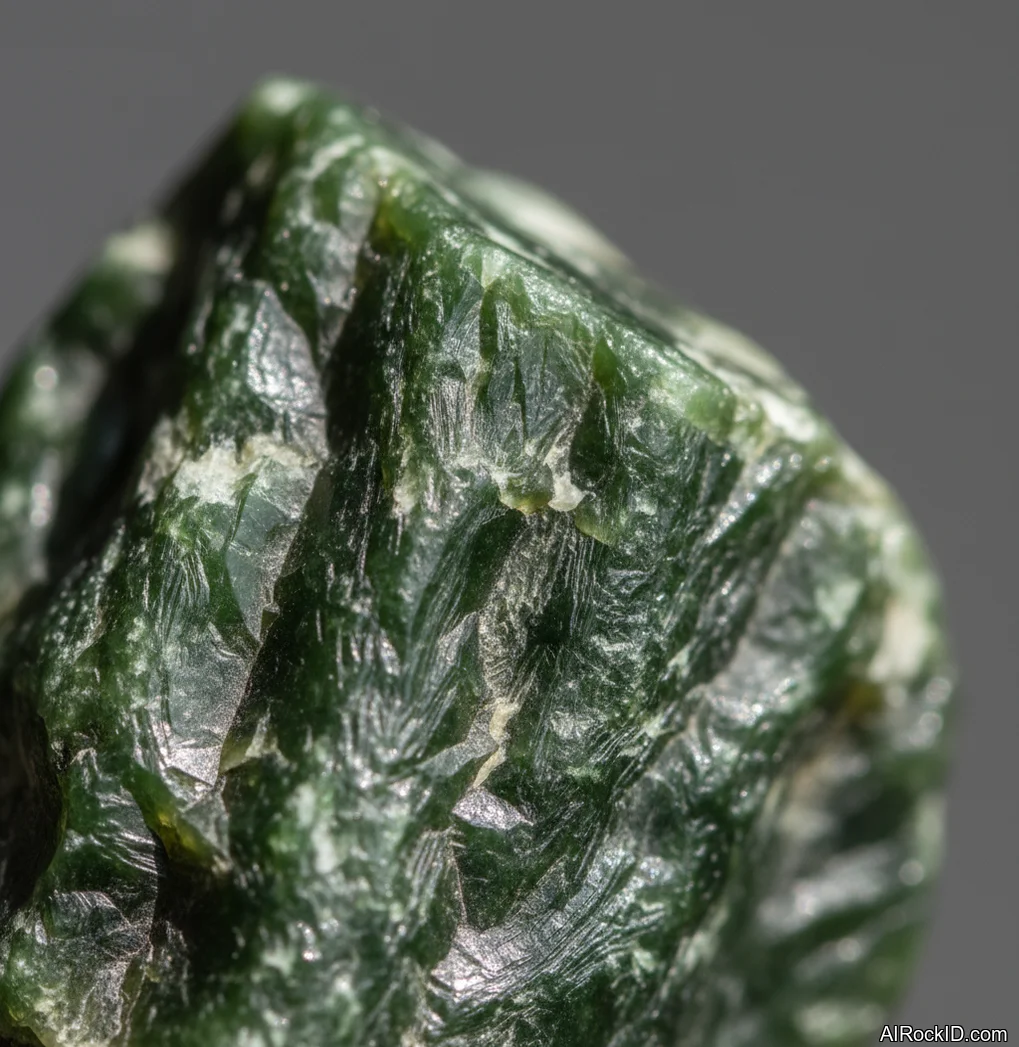
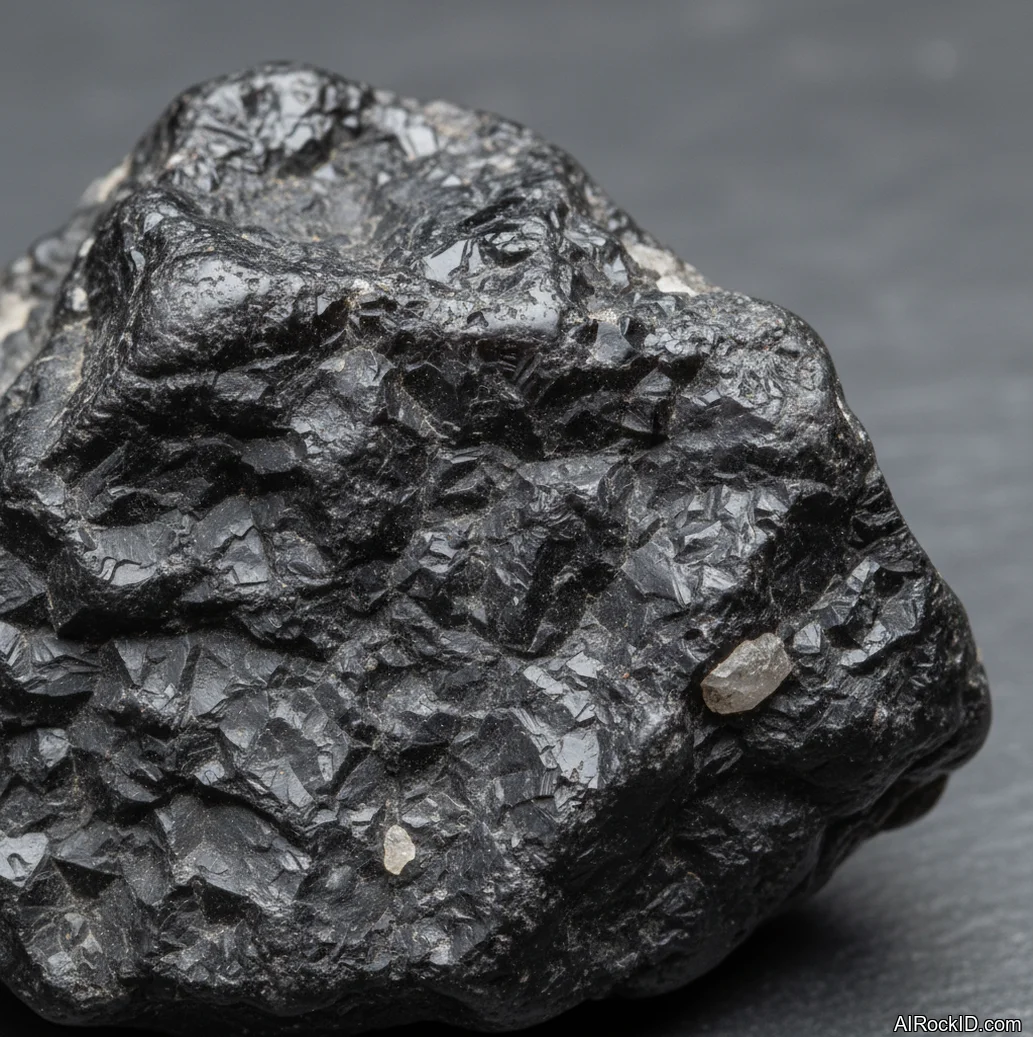
Black Jade is just a trade name for really dark jade, usually nephrite, an amphibole rock made mostly of tremolite actinolite, and it reads as black under normal room light.
Pick up a piece and the weight hits you first. It sits heavy in your palm, and if it’s been polished well the surface has that slightly greasy, soapy slickness to it (not that cold, glassy feel you get from quartz). And thing is, a lot of “black” jade isn’t truly jet-black. It looks black at a glance, but if you rake a strong flashlight across it from the side, you can sometimes catch a deep bottle-green or brownish-green body color hiding underneath.
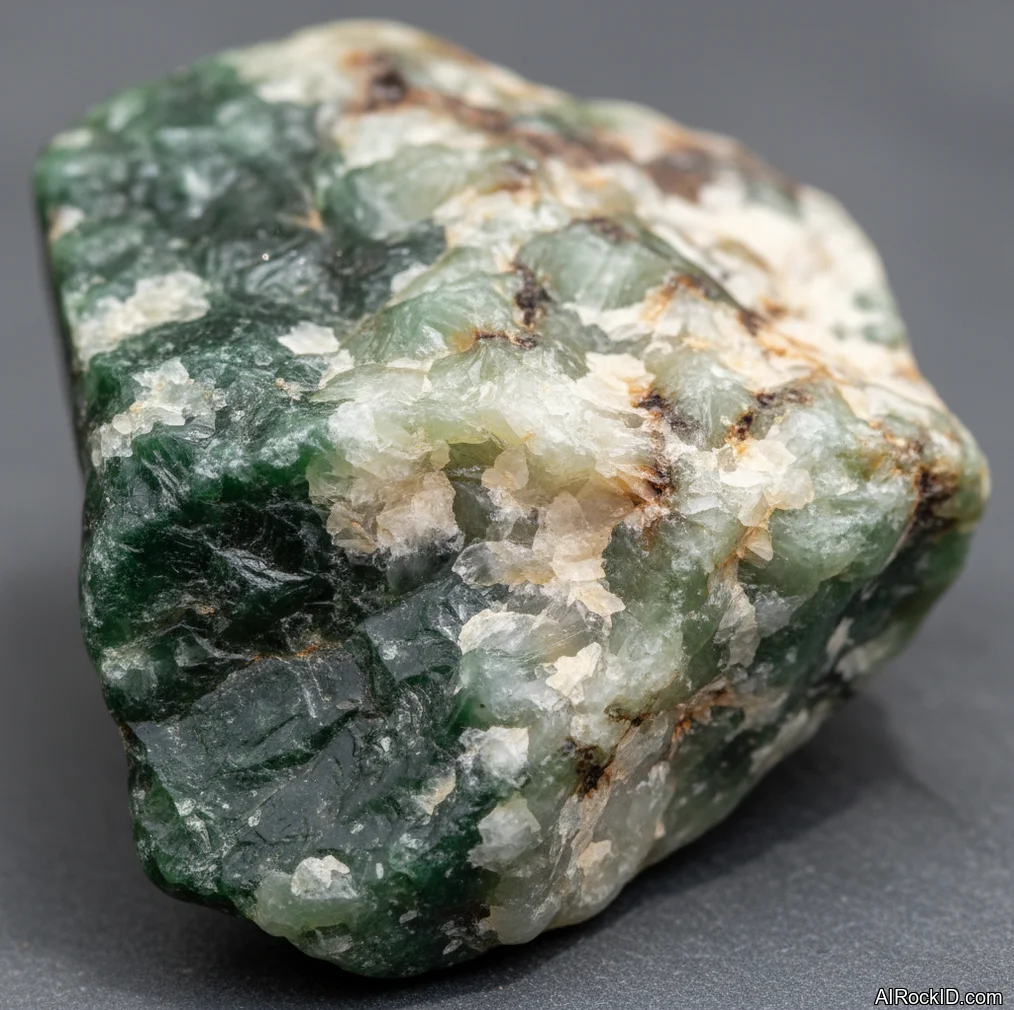
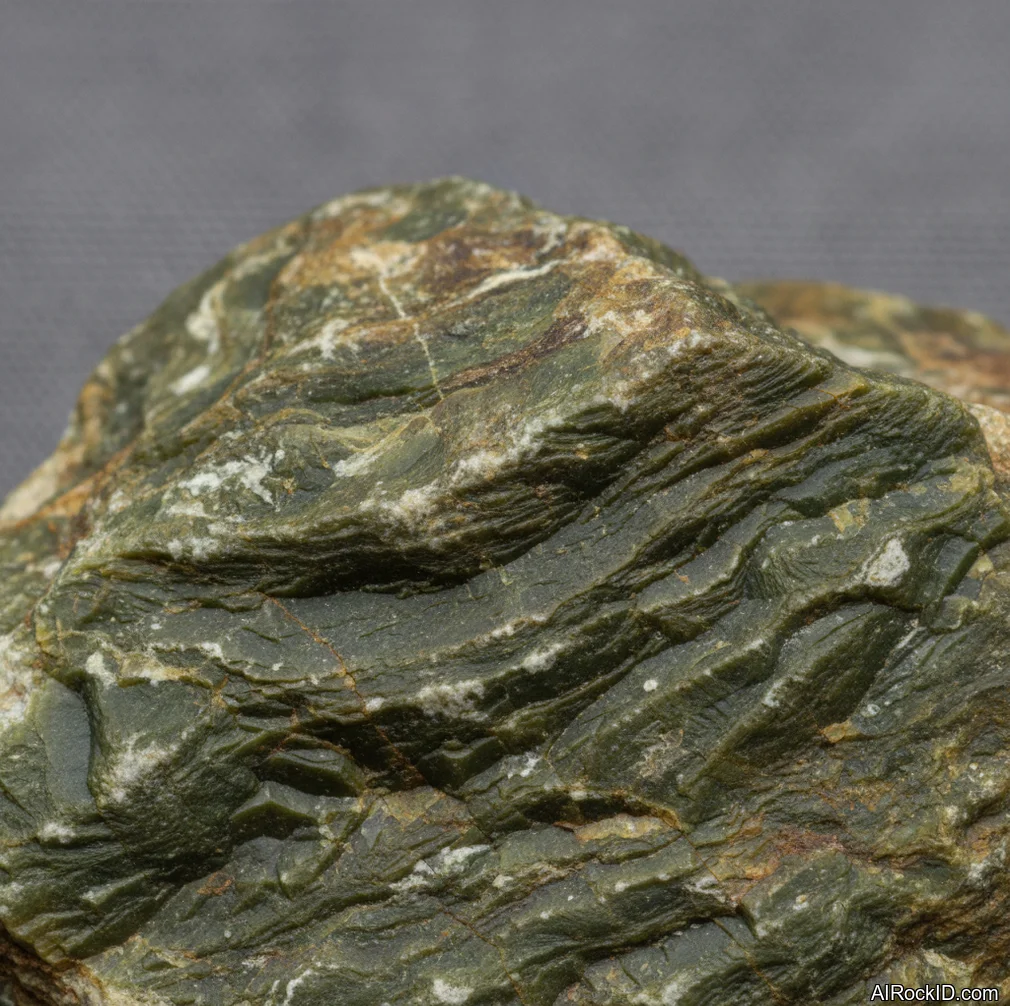
Most dealers move it as tumbled stones, bangles, worry stones, or simple cabochons. Raw chunks are around too, but they’re usually just tough, dark, bouldery-looking material with a rind and a dull outer skin. And here’s the annoying part: a tag that says “black jade” doesn’t mean it’s jade at all. I’ve seen serpentine, dyed quartzite, even black glass all get called jade on the same show table, so yeah, you really want to know what you’re holding.
Origin & History
“Jade” is one of those words people used first, and scientists argued about later. It comes from the Spanish *piedra de ijada*, basically “stone of the side,” because of old lapidary and folk use. But the real scientific sorting-out didn’t happen until the 1800s, when researchers finally split “jade” into two different materials: nephrite and jadeite.
Black jade, as a color name, shows up way more in modern trade than in classic mineral descriptions. Thing is, the “black” is usually just iron-rich nephrite that reads dark in the hand, especially under indoor lighting. In Chinese markets it’s sold as *heiyu*, and in the West it often gets pitched as a protective stone. Historically, nephrite itself mattered a lot for tools and carvings because it’s ridiculously tough. You can actually feel that toughness when you tap two pieces together. It’s a dull, solid clack, not a brittle tink.
Where Is Black Jade Found?
Dark nephrite occurs in many of the same regions that produce green nephrite, especially along metamorphic belts near ultramafic rocks. A lot of material in the market is attributed to western China, Siberia, and western North America.
Formation
Nephrite shows up during metamorphism, most often where silica-rich fluids get into magnesium-rich rocks. Think serpentinite bodies, shear zones, and fluid movement that just won’t quit. So you find jade in places with old tectonic damage, not sitting pretty in neat granite pegmatites.
That black color usually comes from more iron in the mix, meaning more actinolite compared to tremolite, and sometimes you’ll also get fine graphite or other dark specks trapped inside. Next to the pale “mutton fat” nephrite, the dark material can read as almost opaque. But cut it thin and you’ll catch a little translucence at the edges. I’ve had slabs in my hands where the middle looked like spilled ink, then the rim flashed green when I held it up to a light on the countertop (the kind that makes the surface glare back at you). Pretty wild, right?
How to Identify Black Jade
Color: Usually near-black to very dark green, sometimes with brownish or gray undertones. Under a bright penlight, many pieces show a deep green body color rather than true black.
Luster: Waxy to greasy when polished, not sparkly or glassy.
The real test is the feel: good nephrite stays cool to the touch and has that dense, smooth “soapstone but tougher” vibe when you rub a thumb across it. If you scratch it with a steel knife, it shouldn’t gouge easily, but it also won’t behave like quartz, so don’t expect it to shred glass with no effort. Cheap versions often look too uniformly black and glossy, and they feel warm fast in your hand like glass or resin.
Properties of Black Jade
Physical Properties
| Crystal System | Monoclinic |
| Hardness (Mohs) | 6.0-6.5 (Hard (6-7.5)) |
| Density | 2.90-3.10 g/cm3 |
| Luster | Waxy |
| Diaphaneity | Translucent to opaque |
| Fracture | Splintery |
| Streak | white |
| Magnetism | Non-magnetic |
| Colors | black, very dark green, greenish black, brownish black, grayish black |
Chemical Properties
| Classification | Silicates |
| Formula | Ca2(Mg,Fe)5Si8O22(OH)2 |
| Elements | Ca, Mg, Fe, Si, O, H |
| Common Impurities | Fe, Cr, Ni, Mn, graphite |
Optical Properties
| Refractive Index | 1.606-1.632 |
| Birefringence | 0.021 |
| Pleochroism | Weak |
| Optical Character | Biaxial |
Black Jade Health & Safety
Finished black jade is safe to touch, and for everyday stuff it’s totally fine around water too. Thing is, the real gotcha is accidentally buying a dyed or resin-treated lookalike, because those can react differently (and they don’t always hold up the same).
Safety Tips
If you’re cutting or sanding jade, handle it like any other stone job. Keep the work wet so the dust doesn’t go airborne, and wear proper respiratory protection so you’re not breathing that grit in.
Black Jade Value & Price
Price Range
Rough/Tumbled: $5 - $80 per tumbled stone or small carving
Cut/Polished: $10 - $120 per carat
Price jumps around depending on how see-through the stone is, how even the color looks in real light, and whether it’s actually verified nephrite or just “jade” slapped on a tag as a fuzzy catch-all. The good stuff, the kind carvers like because it cuts clean and finishes with that slick, waxy polish you can feel under your thumb, runs way higher than rough that’s dead-opaque and blotchy.
Durability
Very Durable — Scratch resistance: Good, Toughness: Excellent
Nephrite is very tough and stable in normal wear, but the polish can dull if it’s constantly rubbed against harder grit like quartz sand.
How to Care for Black Jade
Use & Storage
Store it in a soft pouch if you’ve got polished pieces, because the polish can pick up fine scratches from harder stones in the same box. If it’s a bangle, don’t toss it in a drawer with keys.
Cleaning
1) Rinse with lukewarm water and a drop of mild soap. 2) Use a soft toothbrush to get into carvings or creases. 3) Rinse and dry with a microfiber cloth.
Cleanse & Charge
If you do energetic cleansing, running water or a bit of smoke is common and won’t hurt nephrite. Skip harsh salt soaks if the piece has cracks or glued fittings.
Placement
On a desk it stays looking sharp because the dark color hides dust, but it also shows fingerprints fast under bright light. A quick wipe fixes that.
Caution
Skip strong acids, bleach, and ultrasonic cleaners if the piece could be waxed, dyed, or polymer-impregnated. That combo can chew up treatments fast, leaving a weird dull patchy look you can feel with your fingernail. And don’t do the lighter “heat test” on “jade.” Seriously. You’ll scorch the surface (sometimes it goes a little cloudy or gets that faint burnt-plastic whiff) and you still won’t learn much.
Works Well With
Black Jade Meaning & Healing Properties
In the crystal world, black jade gets treated like black tourmaline’s quieter cousin. People reach for it when they want to feel steady, hold their boundaries, and not get sucked into everyone else’s drama. And honestly, that lines up with how it feels in your hand. Heavy. Dense. Grounded. It’s got that cool weight that sits there like a paperweight, not the buzzy, high-charge thing some folks swear they get from clear quartz.
But let me draw the line cleanly: none of this is medical care. Still, as a habits tool, it can actually help. I’ve carried a smooth black nephrite worry stone in my pocket at loud shows, and rubbing that slightly waxy surface gives your fingers something to do besides doom-scrolling or messing with your badge. (Also, it gets a little warmer as you keep rubbing it, which is weirdly calming.)
Thing is, if you meditate, black jade tends to click more for people who want less “visions” and more “stay in your body.” So it can be a solid anchor. But it isn’t magic armor, right? A lot of the marketing makes it sound like buying a stone replaces the hard stuff, like saying no, sleeping, doing the work, or getting help when you need it. Use it as a reminder in your pocket. Not as a replacement for real support.
Identify Any Crystal Instantly
Snap a photo and get properties, value, care instructions, and healing meanings in seconds.