Blue Barite
What Is Blue Barite?
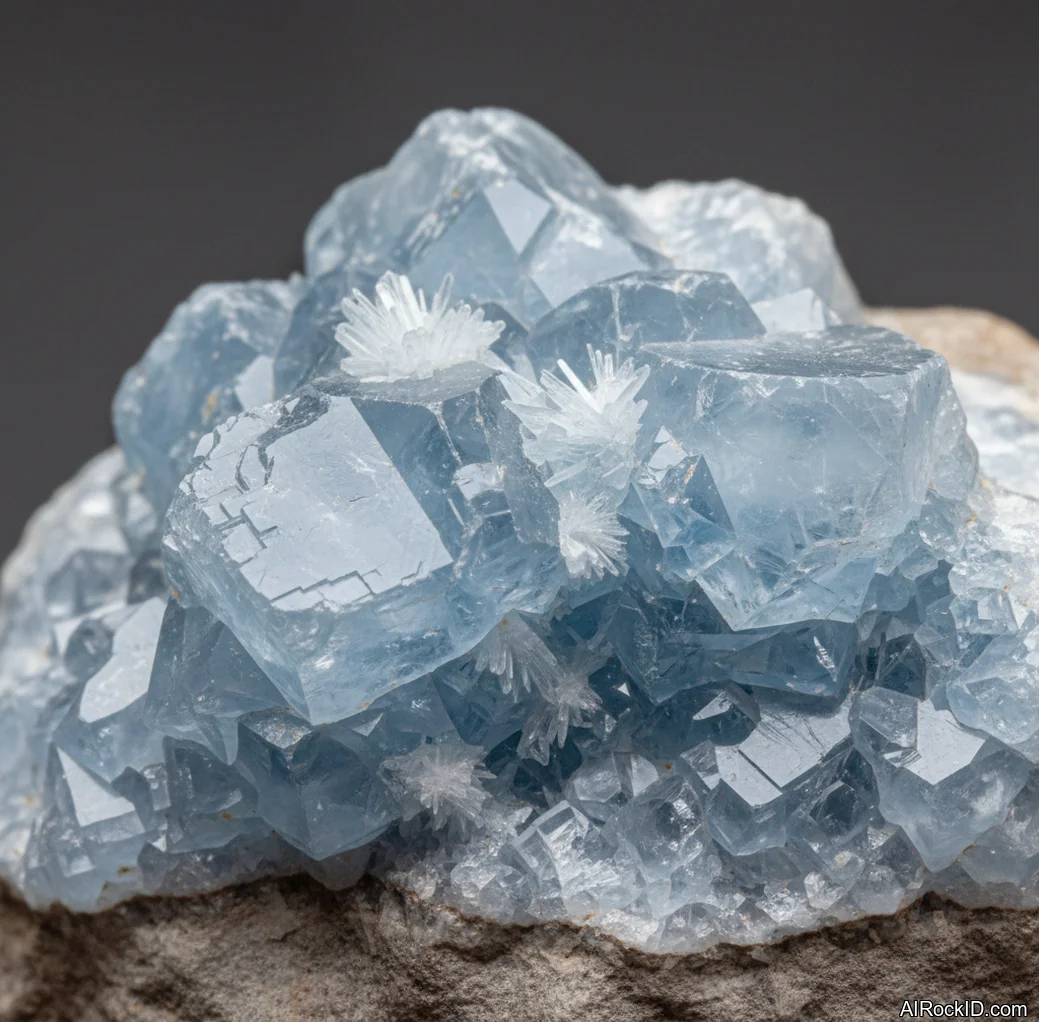
Blue Barite is just barite that happens to be blue, a barium sulfate mineral (BaSO4) that grows into heavy, often tabular crystals with perfect cleavage.
Pick up a piece and you feel the weight first. It drops into your palm with this dense, no-joke heft that catches people off guard if they’re used to quartz or calcite, and that heaviness is one of the fastest tells that you’ve got real barite in your hand.
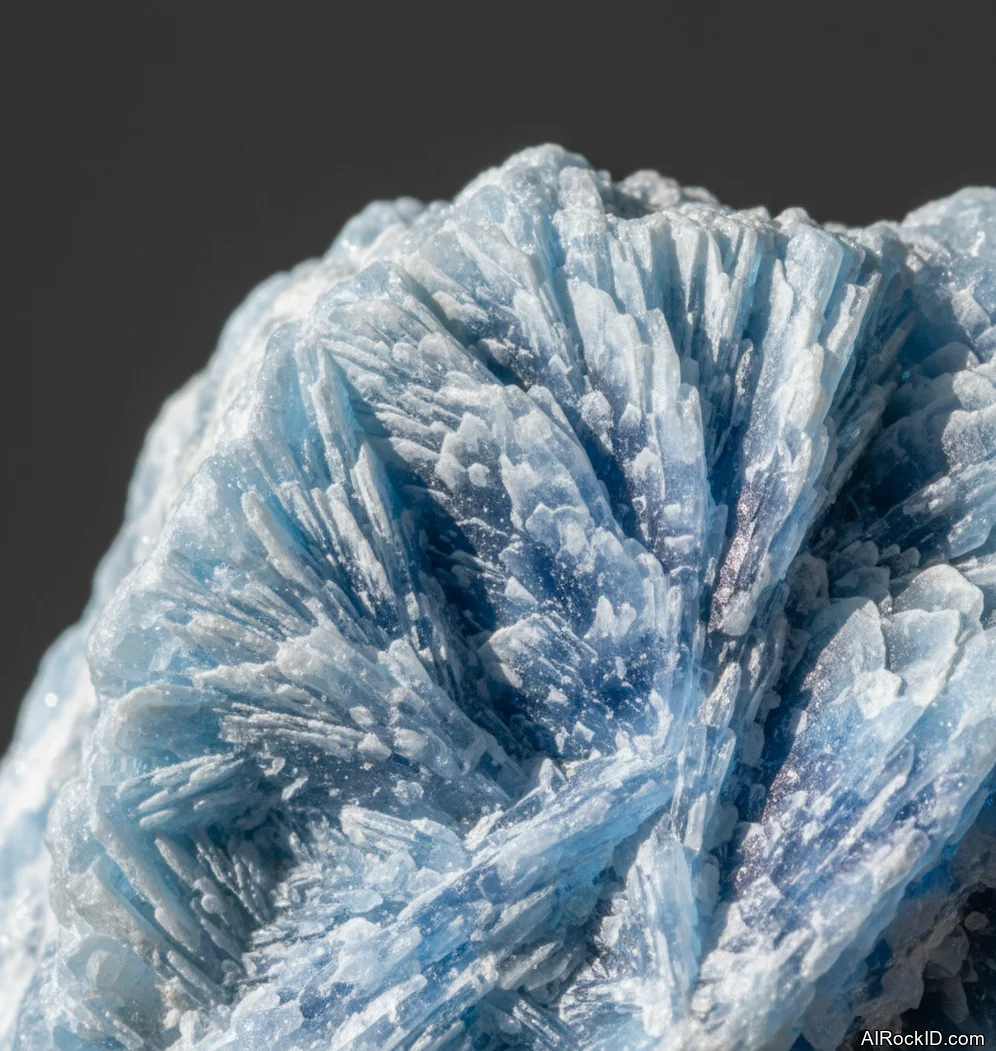
At a glance, a nice blue barite can look like a chunk of frozen sky, especially when it’s built up in stacked blades or those chunky rectangular plates. But it’s a finicky crystal, too. The cleavage planes aren’t some textbook detail, they’re the real deal, and one careless bump in a display case can turn a sharp edge into a fresh, bright chip you swear wasn’t there yesterday.
Origin & History
In 1800, the German mineralogist Dietrich Ludwig Gustav Karsten formally described barite. The name comes from the Greek “barys,” meaning “heavy,” and it’s not some flowery reference. It’s just true. This mineral is weirdly dense for how ordinary it can look.
But people were trading barite as a collector mineral long before that. It just kept getting lumped into the “heavy spar” bucket in old mining notes. And honestly, once you’ve picked up a few chunks, you see why. A plain, pale piece, maybe with that slightly glassy sheen and gritty dust on your fingertips, can feel like it’s trying to drag your hand straight down. Who wouldn’t remember the weight?
Where Is Blue Barite Found?
Blue barite shows up in hydrothermal veins and sedimentary settings worldwide, with Morocco and parts of the western USA being steady sources for collector-grade pieces.
Formation
Most blue barite shows up when barium-rich fluids run into sulfate in just the right spot. It tends to happen in low to moderate temperature hydrothermal veins, or in sedimentary settings where the chemistry flips fast. So it’s no surprise you’ll often find it sitting right alongside calcite, fluorite, galena, sphalerite, and sometimes celestine.
If you actually stop and stare at the crystal shapes, they tell you how it grew. You’ll see tabular blades. Rosettes. Those stacked “book” habits that look like someone kept laying thin pages on top of each other (and you can almost feel the faint ridges if you drag a fingernail lightly across a face). And, look, the stepped growth lines are a giveaway, those tiny terrace-like ledges that catch the light when you tilt the piece.
The blue color usually isn’t from one simple, dye-like element. Thing is, it’s more about trace impurities and defects in the crystal lattice, which is why the shade can jump from icy pale to a deeper denim depending on the pocket. Why does one pocket go darker than the next? That’s just how those little chemistry quirks shake out.
How to Identify Blue Barite
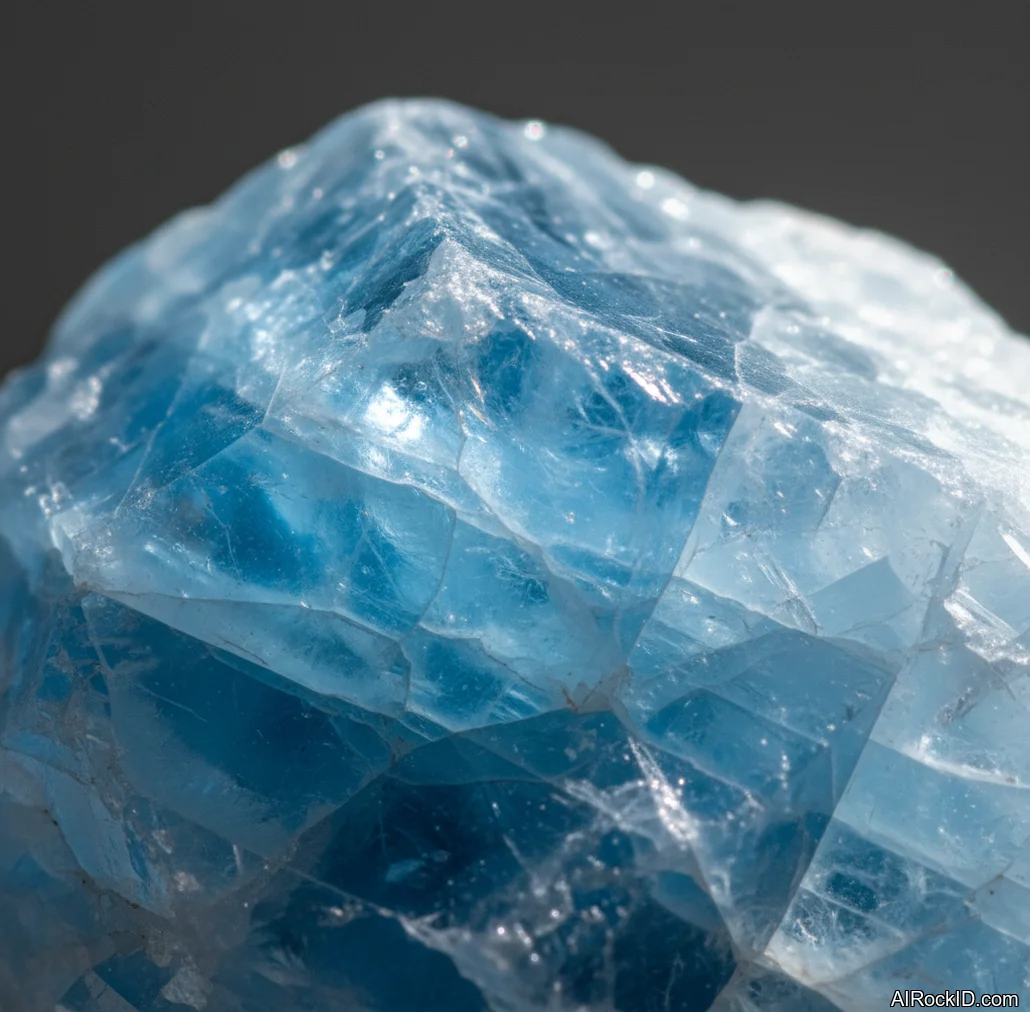
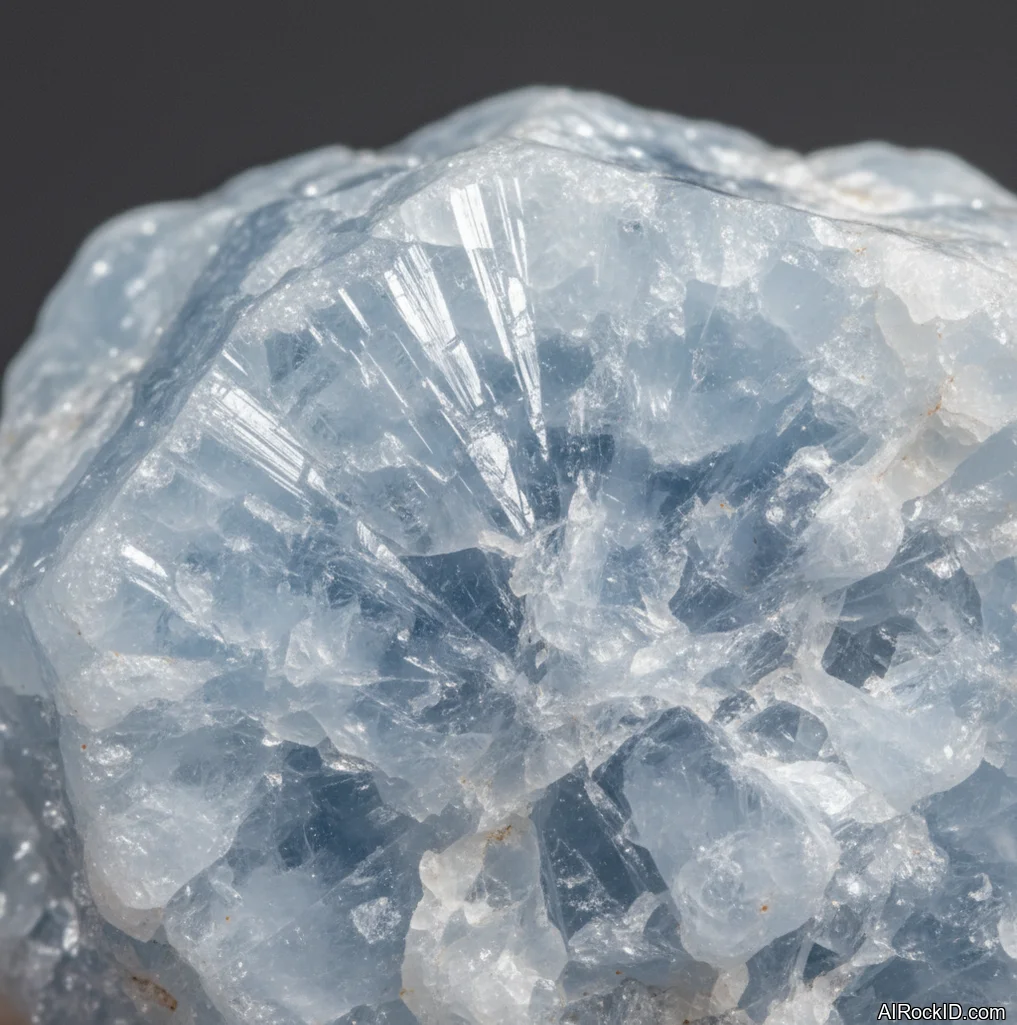
Color: Blue Barite ranges from very pale ice-blue to medium sky-blue, sometimes with gray or beige tones from included clay or matrix. Color is often uneven, with clearer edges and cloudier centers.
Luster: Luster is typically vitreous to pearly, especially strong on cleavage faces.
The real test is the weight. Barite has a “too heavy for its size” feel that you can pick out after you’ve handled a few pieces side by side. If you scratch it with a copper coin or a steel nail, it’ll mark easier than quartz, and the scratch often looks chalky on lighter material. And watch the cleavage: tap a corner gently and it wants to split into flat, shiny planes instead of breaking like glass.
Properties of Blue Barite
Physical Properties
| Crystal System | Orthorhombic |
| Hardness (Mohs) | 3-3.5 (Soft (2-4)) |
| Density | 4.3-4.6 g/cm3 |
| Luster | Vitreous |
| Diaphaneity | Transparent to translucent |
| Fracture | Uneven |
| Streak | white |
| Magnetism | Non-magnetic |
| Colors | pale blue, sky blue, blue-gray, white, beige |
Chemical Properties
| Classification | Sulfates |
| Formula | BaSO4 |
| Elements | Ba, S, O |
| Common Impurities | Sr, Ca, Fe, Mn, Pb |
Optical Properties
| Refractive Index | 1.636-1.648 |
| Birefringence | 0.012 |
| Pleochroism | Weak |
| Optical Character | Biaxial |
Blue Barite Health & Safety
Normal handling’s pretty low risk. But don’t kick up dust when you’re trimming the matrix or scrubbing at it too hard, because that fine powder hangs in the air and gets everywhere. And watch the broken edges, too. They can be surprisingly sharp.
Safety Tips
If you’re cutting, grinding, or drilling barite, don’t do it dry. Use water to keep the dust down, make sure you’ve got real ventilation (like a fan actually moving air out, not just swirling it around), and wear a respirator rated for fine particulates.
Blue Barite Value & Price
Price Range
Rough/Tumbled: $15 - $250 per specimen
Price mostly follows color, clarity, and how clean the edges and terminations are. Deep, saturated blue blades that look crisp against a contrasting matrix can jump in price in a hurry, but pieces with little chips along the rim or a washed-out, very pale blue usually stay pretty affordable.
Durability
Fragile — Scratch resistance: Poor, Toughness: Poor
It’s stable in normal indoor conditions, but it bruises and cleaves easily, so handling and storage matter more than temperature or humidity.
How to Care for Blue Barite
Use & Storage
Store it in a padded box or on a stable shelf where it won’t get bumped. I don’t toss barite into mixed “crystal bowls” because it’ll come out with new chips every time.
Cleaning
1) Rinse quickly with lukewarm water to remove loose dust. 2) Use a soft makeup brush or paintbrush to get into crevices without prying at edges. 3) Pat dry and let it air dry fully before putting it back in a case.
Cleanse & Charge
For metaphysical-style cleansing, stick to smoke, sound, or a dry reset in a closed box with a little selenite nearby. Skip salt soaks and anything abrasive.
Placement
Set it somewhere calm where it can catch soft light from the side, because the cleavage faces throw little flashes when you tilt it. Keep it away from high-traffic desks where elbows and mugs live.
Caution
Soft and kind of brittle, so skip the ultrasonic cleaner and stay away from harsh chemicals or any rough tumbling. And don’t toss it in a box where it’ll grind against quartz points or metal tools (those edges will scuff it up fast).
Works Well With
Blue Barite Meaning & Healing Properties
Next to a lot of showy stones, blue barite is basically the quiet kid in the room. In my own stash, it’s the one I reach for when my brain won’t stop looping. It has this slow, heavy feel that makes me breathe lower in my chest without me even trying. Sounds a little woo? Sure. But it’s also just plain sensory: it’s cool when you first pick it up, and it has that surprising heft for its size, and those two signals alone can nudge your body to unclench.
People tend to connect it with communication and calmer thinking, and yeah, I see it. If you sit with it for a few minutes, that pale blue doesn’t demand attention the way bright lapis or azurite does. It’s more like having a soft, steady background in the room while you sort your thoughts out (and it doesn’t fight you for attention). But look, here’s the line it won’t cross: it won’t “fix” anything by itself, and if crystals are replacing sleep hygiene, therapy, or real medical care, you’re going to smack into a wall fast.
And there’s a hands-on, practical part to it too. Barite is fragile. So you end up working with it in a gentler, more deliberate way, sometimes without even noticing that’s what you’re doing. I’ve seen people fidget with harder stones like worry coins, but with barite you slow down automatically because you don’t want to snap a blade. That shift in how you handle it is part of what people feel, whether you call it energy work or just mindful handling.
Identify Any Crystal Instantly
Snap a photo and get properties, value, care instructions, and healing meanings in seconds.