Blue Dolomite
What Is Blue Dolomite?
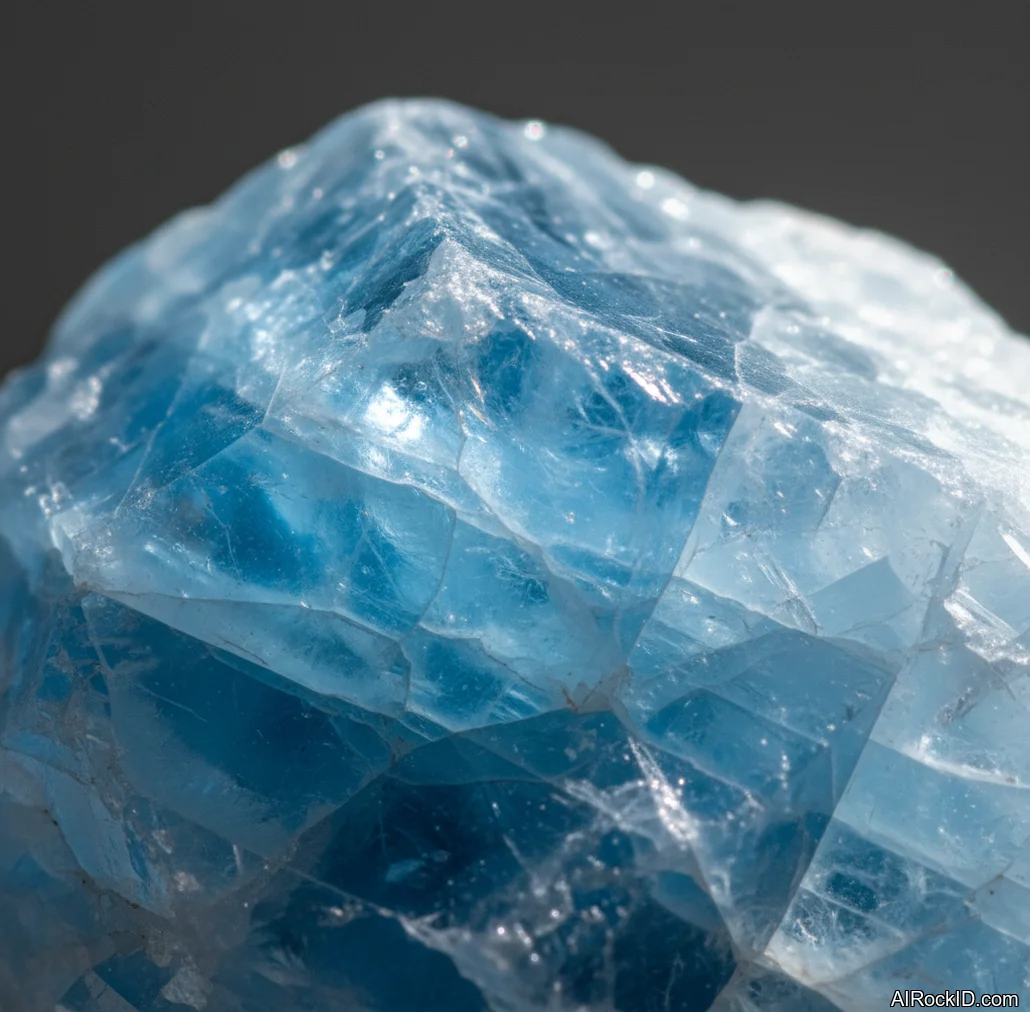
Blue Dolomite is just dolomite, CaMg(CO3)2, but with a blue to blue-gray look. Most of the time that color comes from tiny trace elements, fine inclusions, or a thin blue silica coating sitting in the matrix.
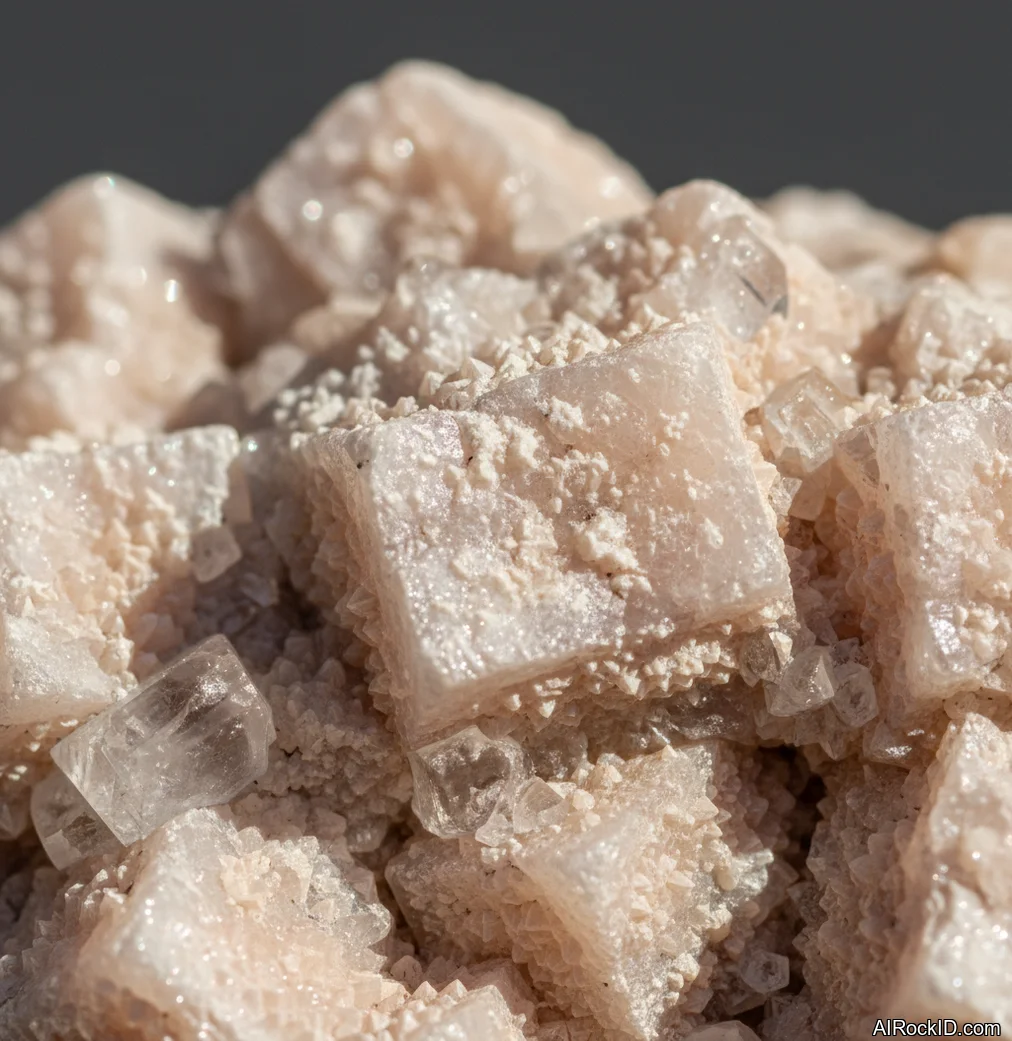
Grab a hand-size chunk and two things hit you right away. First, it’s lighter than you’d think for something that looks that “solid.” Second, the raw crystal faces have this faint sugary feel, kind of like super fine sand clinging to a clean flat plane (you can feel it when you drag a fingertip across an edge). If it’s the rhombohedral material, tilt it under a lamp and you’ll see broad, flat flashes that pop in and out, not that tight little glitter you get from druzy quartz.
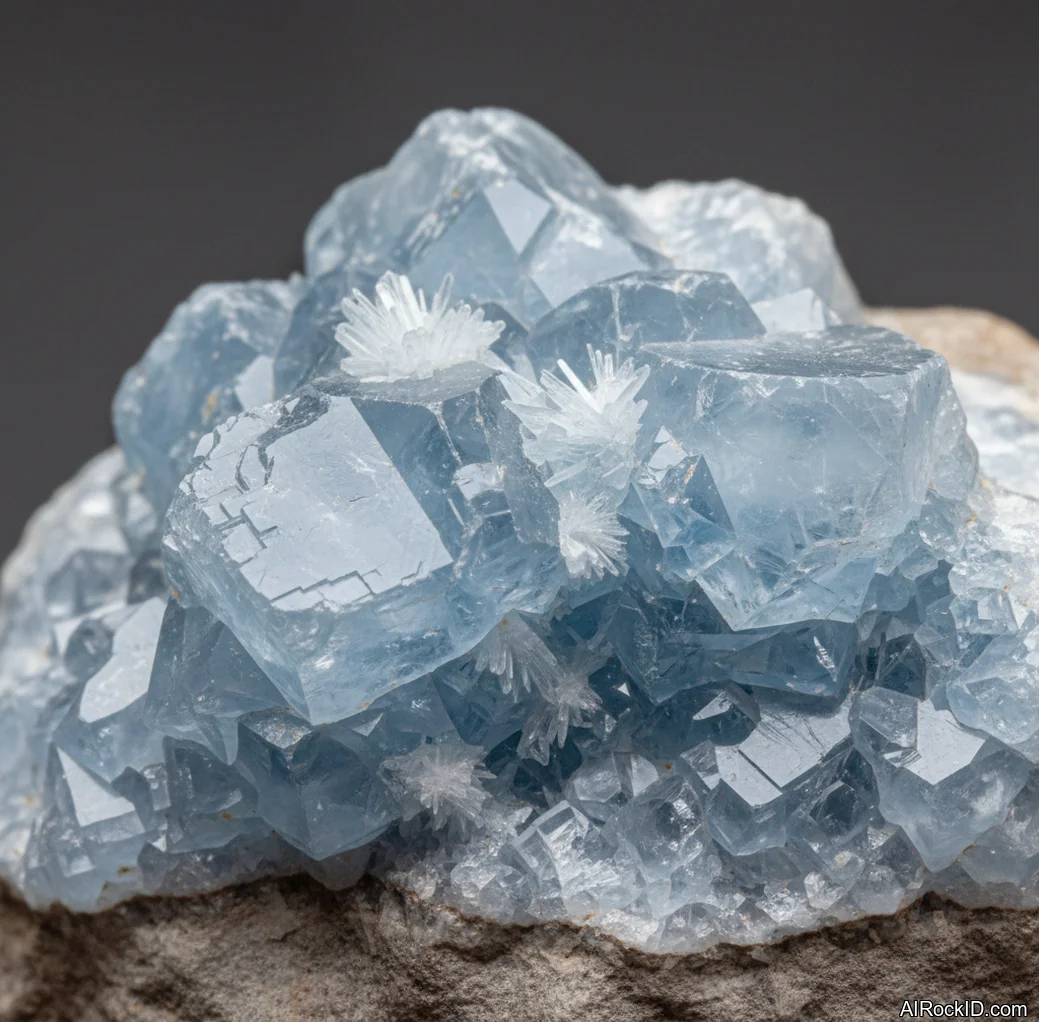
Thing is, a lot of what gets sold as “blue dolomite” is actually a combo. Dolomite crystals perched on blue chalcedony, or dolomite with a thin blue coating that reads as one uniform color until you get close. And that’s totally fine. Those mixed pieces can look really good sitting in a flat. But if you’re picturing solid, gemmy blue dolomite all the way through, you’re gonna be let down, because that’s not what most dealers are actually selling.
Origin & History
Dolomite got written up as its own mineral species in 1791 by Déodat Gratet de Dolomieu, a French geologist who was out working in the Alps. The mineral’s named after his surname, and it really stuck, partly because “dolostone” is basically dolomite in bulk. If you’ve ever handled a chunk, you know what I mean: that slightly gritty, sugar-like sparkle on a fresh break, and the way it can look a bit dull until the light hits it just right.
“Blue dolomite” isn’t a separate mineral name in the strict, official sense. It’s a trade label collectors use for dolomite specimens that lean bluish, usually from one pocket or a particular mine run where the color came out consistent enough that sellers could actually market it. And most of the time, that blue is just a color habit, tied to impurities or to whatever else is sitting with it in the matrix. (Because when does a specimen ever show up totally alone?)
Where Is Blue Dolomite Found?
Blue-toned dolomite shows up in a bunch of carbonate districts worldwide, especially where dolomite grows with silica, fluorite, or sulfides in veins and cavities.
Formation
Look at where dolomite actually shows up in nature and it clicks. It grows in carbonate environments, either dropping out as a primary precipitate in certain marine settings or, more often in the kind of specimens collectors end up with, forming later as a mineral that fills open space in veins, vugs, or breccias. You’ll spot it lining little pockets with those classic rhomb shapes, and sometimes you get the curved “saddle” crystals when it formed at higher temperatures (the ones that look slightly warped compared to the crisp rhombs).
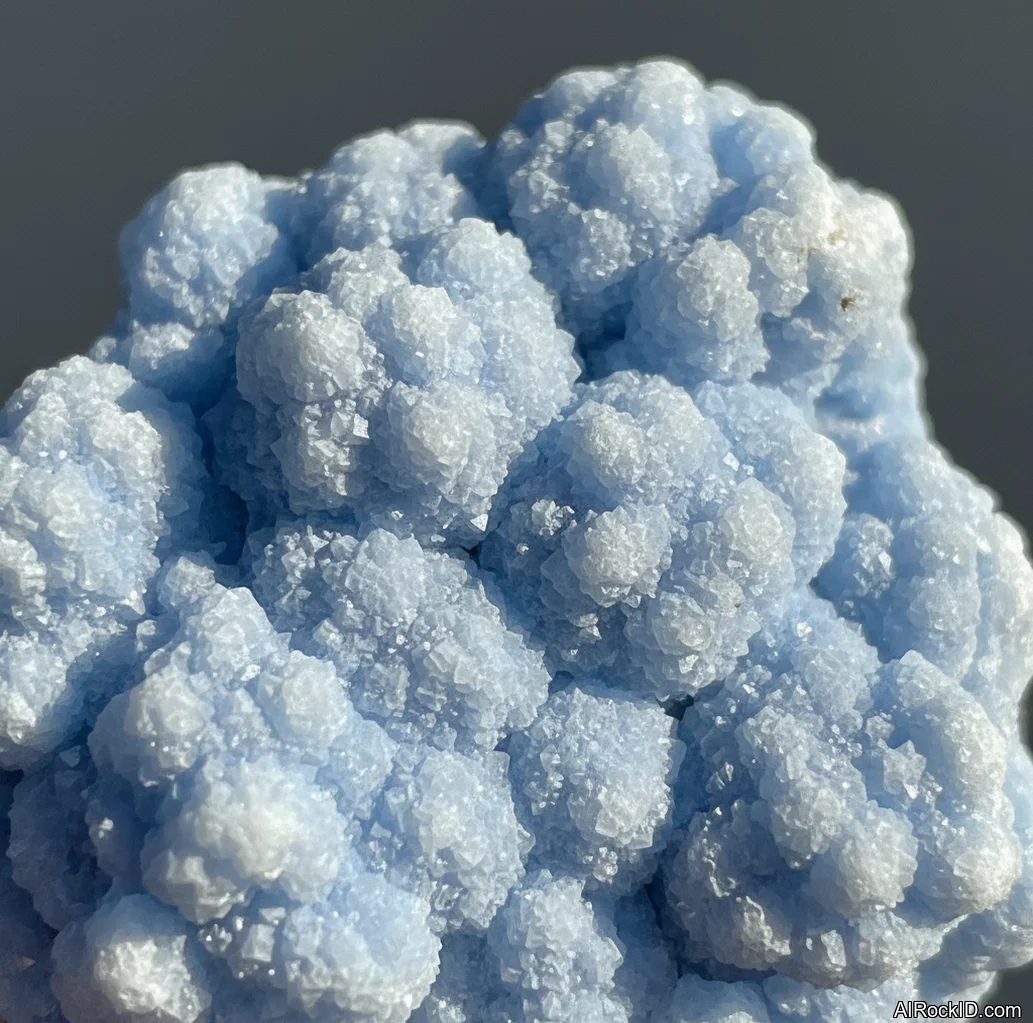
But the blue color is the part that messes with people. Sometimes it comes from trace chemistry in the carbonate itself. Sometimes it’s a microscopic intergrowth of dolomite with other minerals that nudges the overall color. And sometimes the “blue” you’re seeing is really from nearby blue chalcedony, or a thin coating that sneaks in between the crystals and tints everything from the outside.
So how do you tell? Breakage tells on it. Check a fresh chipped edge with a loupe, the kind where you can see the sugary sparkle in the fracture. If the inside stays the same color as the surface, you’re looking at genuinely blue dolomite material. If it goes white in the core, then the blue was mostly surface-deep or it was coming from the matrix. Simple as that, right?
How to Identify Blue Dolomite
Color: Usually pale sky-blue, blue-gray, or dusty denim-blue, often with white zones or a blue tint concentrated on crystal surfaces. Many specimens are actually white to tan dolomite sitting on blue chalcedony, which reads as “blue dolomite” from a distance.
Luster: Vitreous to pearly on fresh cleavage faces, with a softer, sugary sparkle on drusy clusters.
If you scratch it with a copper penny, dolomite often shows a mark because it’s only Mohs 3.5 to 4, so don’t treat it like quartz. Put a bright light low across the surface and look for flat rhombohedral faces that flash in big plates when you tilt the piece. And if you’ve got a dropper bottle of dilute acid (or even careful vinegar at home), dolomite reacts weakly when cold but fizzes more when powdered or warmed, which helps separate it from calcite that usually fizzes faster.
Properties of Blue Dolomite
Physical Properties
| Crystal System | Trigonal |
| Hardness (Mohs) | 3.5-4 (Soft (2-4)) |
| Density | 2.85-2.88 g/cm3 |
| Luster | Vitreous |
| Diaphaneity | Transparent to translucent |
| Fracture | Uneven |
| Streak | White |
| Magnetism | Non-magnetic |
| Colors | Blue, Blue-gray, Pale blue, White, Tan |
Chemical Properties
| Classification | Carbonates |
| Formula | CaMg(CO3)2 |
| Elements | Ca, Mg, C, O |
| Common Impurities | Fe, Mn, Zn, Pb |
Optical Properties
| Refractive Index | 1.679-1.681 |
| Birefringence | 0.179 |
| Pleochroism | None |
| Optical Character | Uniaxial |
Blue Dolomite Health & Safety
Regular handling is totally fine. The bigger issue is cracking or chipping the specimen (those edges can flake off fast), not getting poisoned or anything. But if you’re grinding or cutting any carbonate material, don’t breathe the dust.
Safety Tips
Wash your hands after you’ve handled mixed-mineral pieces. And if you ever lap or shape one, keep the dust down with basic control (a little water on the surface helps, and you’ll notice the fine grit sticking to your fingers and the wheel instead of floating around).
Blue Dolomite Value & Price
Price Range
Rough/Tumbled: $10 - $120 per specimen
Prices jump when that blue is actually sitting inside the dolomite crystals, not just smeared through the matrix, and when the rhombs look crisp and glassy instead of scuffed up. Big cabinet pieces are out there, sure. But the stuff that really hits your wallet is the one with clean, sharp corners and edges that haven’t been chipped or bruised (you can usually feel those little flea-bites the second you run a finger along the rim).
Durability
Nondurable — Scratch resistance: Fair, Toughness: Fair
It’s stable in normal room conditions, but the faces chip easily and acids can etch it, even mild household stuff if you’re careless.
How to Care for Blue Dolomite
Use & Storage
Store it so the crystal faces don’t rub anything, because dolomite corners chip like little bits of chalky glass. I keep mine in perky boxes or on a shelf with a soft pad under the base.
Cleaning
1) Blow off grit with a bulb blower or soft brush. 2) Rinse quickly with lukewarm water and a drop of mild soap if needed. 3) Pat dry and let it finish air-drying; avoid acids and skip ultrasonic cleaners.
Cleanse & Charge
If you do energetic cleansing, stick to smoke, sound, or moonlight, since salt and acidic “cleansing” mixes can dull the faces. A quick rinse is fine, but don’t soak it for hours just because someone online said to.
Placement
Keep it out of direct sun if the blue is from a surface coating or matrix color, because I’ve seen some pieces look washed out after a season on a bright windowsill. A shaded shelf with angled light shows the luster best.
Caution
Skip vinegar, lemon juice, or any other acidic cleaner. They’ll etch carbonates, and you’ll see that dull, chalky bite in the surface pretty fast. And don’t just drop it into a pocket with quartz or feldspar. Those harder bits rattle around like little sandpaper chips, and it’ll come back scratched and sad.
Works Well With
Blue Dolomite Meaning & Healing Properties
Next to the flashier blue stones, Blue Dolomite is kind of the quiet one in the room. When I’m sorting flats at a show, I’ll sometimes leave a chunk sitting on the table just because the color’s easy on the eyes, especially under those cool LED lights that make everything look a little colder. It’s not a “wow” stone like larimar. It’s more like a steady, soft blue that doesn’t try to steal the whole scene.
In crystal-healing circles, blue carbonates usually get lumped into the calming, communication, and wind-down bucket. So if you’re using it in that spirit, I’d treat it like a reminder object. Put it somewhere you’ll actually notice it when you’re trying to slow your breathing or pull yourself out of a spiral. But keep your feet on the ground here. It isn’t medical care, and it’s not going to fix anxiety by itself.
One practical thing I like about it for meditation is how it feels. Raw dolomite has those crisp planes and these tiny little sparkles that catch when you tilt it under a lamp, so your attention has somewhere to land without getting yanked around by something super flashy. But here’s the catch. If you fidget with it, you can chip it. I’ve done it (heard that little click and then, yep, new corner missing). For hands-on use, a tumbled carbonate or a sturdier blue stone is usually the better pick, and I save the sharp rhombs for display.
Identify Any Crystal Instantly
Snap a photo and get properties, value, care instructions, and healing meanings in seconds.