Blue Tiger Eye
What Is Blue Tiger Eye?
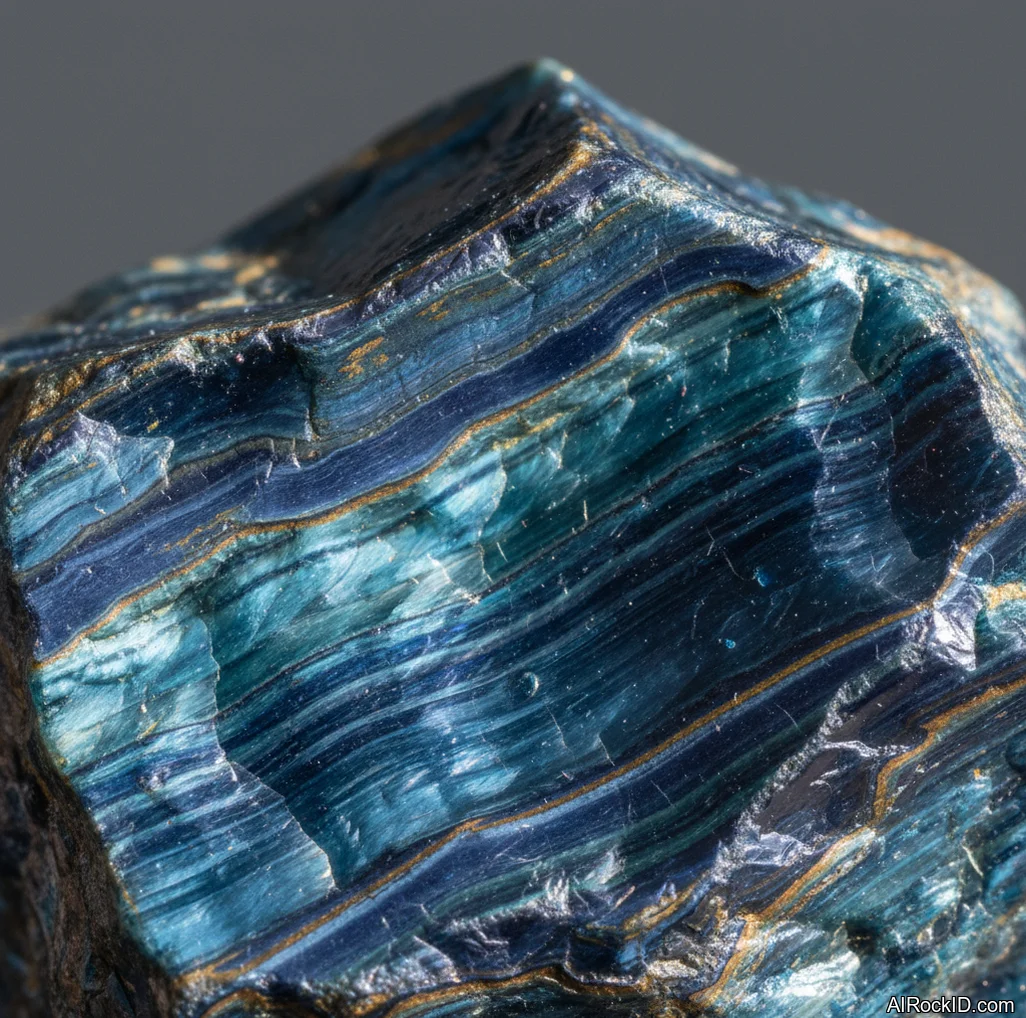
Blue Tiger Eye is a chatoyant kind of fibrous quartz. It forms when silica replaces crocidolite fibers, and that’s what gives it that blue-gray to blue-green cat’s-eye look.
Pick up a polished piece and you’ll notice something right away: it feels cooler than it looks. Tilt it under a lamp and the bright band doesn’t just “shine,” it slides across the surface like a headlight sweeping the road. Some stones read more steel-blue, others drift a little green, and the best ones have tight, even fibers so the flash stays crisp, not fuzzy.
Most of what you’ll see for sale is tumbled or cut into cabs, and yeah, that makes sense. This stuff really pays you back when it’s polished. But it’s not magic. If the cutter’s off-axis, the “eye” doesn’t pop, it turns into a dull smear. I’ve dug through bargain bins where half the pieces had the chatoyancy stuck on the edge because they were sliced the wrong way (how does that even happen so often?).
Origin & History
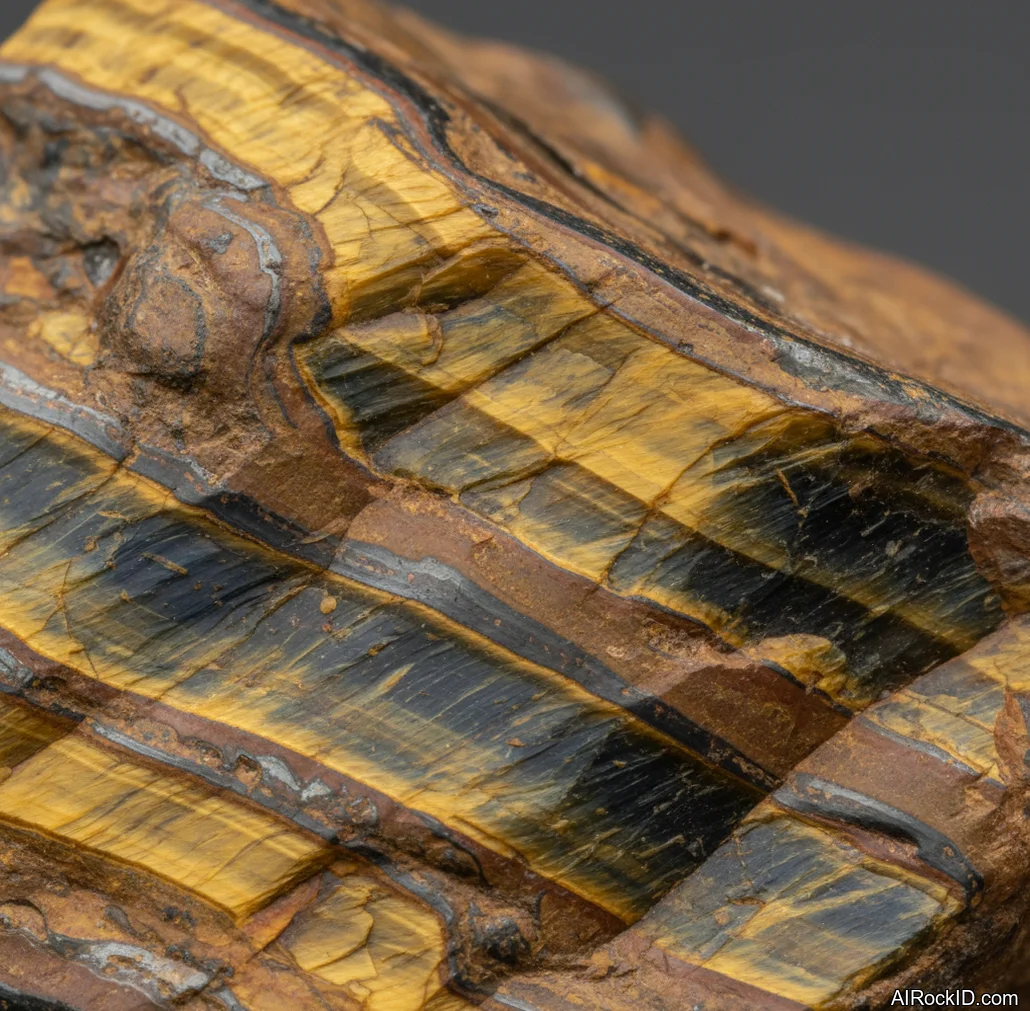
The name “tiger eye” really took off in the gem trade in the 1800s, once South African rough started flowing through European markets and cutters figured out how crazy that moving band looks when you slice it into a cabochon and polish it slick. “Hawk’s eye” (you’ll also hear “falcon’s eye”) popped up as a trade name for the blue-gray stuff, which is basically just a color variant in the same tiger-eye family.
Geology-wise, it all circles back to crocidolite, the blue asbestos mineral. People were already nailing down descriptions of crocidolite and other fibrous amphiboles in the 19th century (and “crocidolite” comes from Greek roots meaning “wool” and “stone”). Later on, researchers realized tiger eye and hawk’s eye are quartz replacements that keep that original fibrous texture, right down to the way the light skates along it. In shop talk, folks still tangle up “dyed” versus “natural” blue. Natural hawk’s eye is real, but dyed quartz is out there too, so you’ve got to look close.
Where Is Blue Tiger Eye Found?
Most commercial Blue Tiger Eye comes from southern Africa, especially South Africa and Namibia, with other sources in Australia, India, China, the USA, and Brazil.
Formation
Picture it like a slow, stubborn swap. You start with fibrous crocidolite sitting in banded ironstone or a quartz-rich rock. Then silica-rich fluids seep through the rock, and bit by bit the quartz replaces the amphibole but keeps that original fiber shape. That’s why it ends up with that silky grain, instead of the chunky, massive look you get from regular quartz.
Thing is, the fibers have to stay lined up. If they do, light snaps back in a tight band and you get chatoyancy. But if the fibers are bent, broken up, or just pointing every which way, you’ve still got a nice-looking stone, only the “eye” comes out weak.
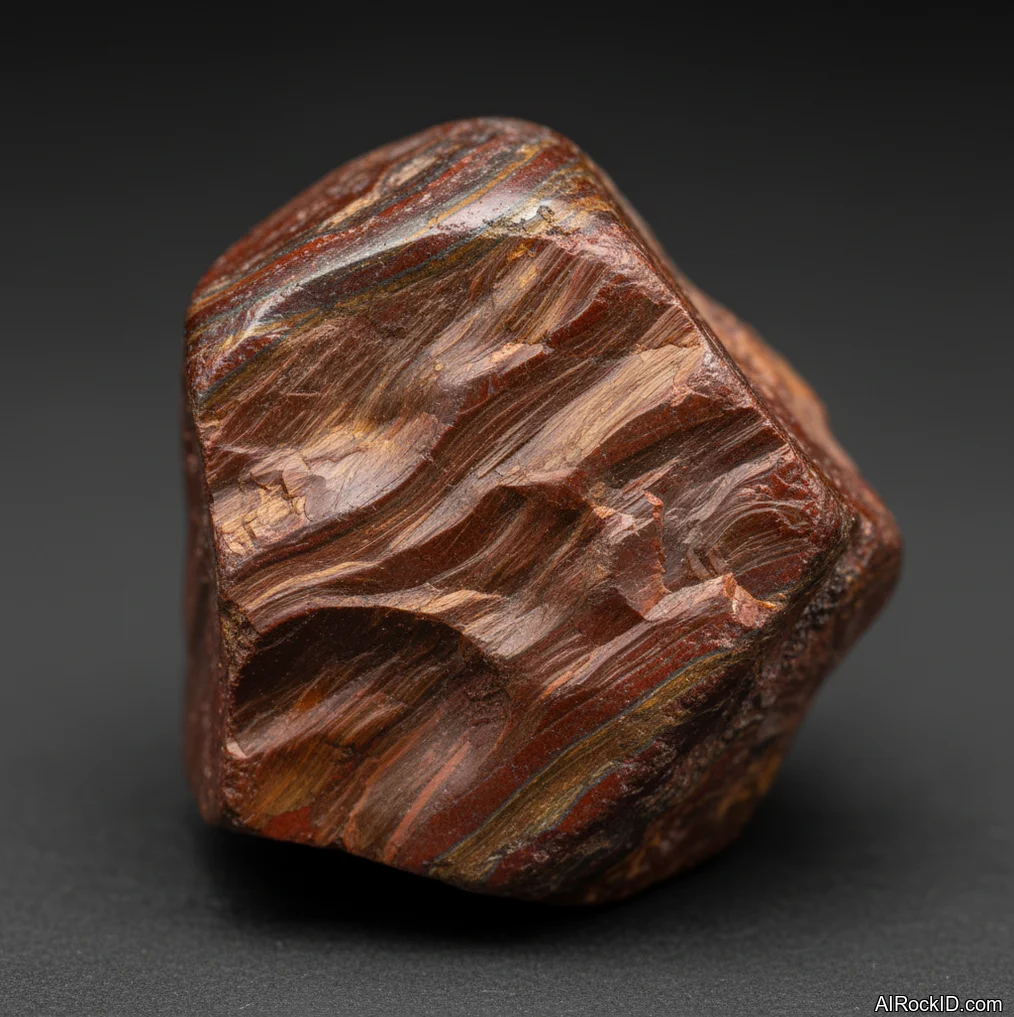
And heat and oxidation are in the mix too. The blue material is usually less oxidized than the golden-brown tiger eye, so out in the field you can run into the whole spread, from blue-gray through greenish to that classic gold.
How to Identify Blue Tiger Eye
Color: Blue Tiger Eye ranges from smoky blue-gray to blue-green, often with darker bands and a bright silvery line that moves with the light.
Luster: Polished surfaces show a silky luster from the fibrous structure.
Pick up the stone and roll it under a single point light source. The chatoyant band should move as one clean stripe, not glitter all over like aventurescence. Look closely at the sides on a cab or tumble: you should see fine parallel fibers or banding, and the stone should feel like quartz in hardness, not like soft resin or glass.
Properties of Blue Tiger Eye
Physical Properties
| Crystal System | Trigonal |
| Hardness (Mohs) | 6.5-7 (Hard (6-7.5)) |
| Density | 2.64-2.71 g/cm3 |
| Luster | Silky |
| Diaphaneity | Opaque |
| Fracture | Uneven |
| Streak | White |
| Magnetism | Non-magnetic |
| Colors | Blue-gray, Steel blue, Blue-green, Gray, Black |
Chemical Properties
| Classification | Silicates |
| Formula | SiO2 |
| Elements | Si, O |
| Common Impurities | Fe |
Optical Properties
| Refractive Index | 1.544-1.553 |
| Birefringence | 0.009 |
| Pleochroism | Weak |
| Optical Character | Uniaxial |
Blue Tiger Eye Health & Safety
Handling and rinsing are pretty low-risk. But once you start cutting, sanding, or drilling, that’s when you can kick up respirable silica dust. And if some of the material wasn’t fully replaced, you might also end up with fiber-related dust in the air too.
Safety Tips
If you’re going to cut, shape, or drill it, keep it wet, make sure you’ve got solid ventilation, and wear a real respirator that’s actually rated for silica dust (not just a flimsy paper mask).
Blue Tiger Eye Value & Price
Price Range
Rough/Tumbled: $5 - $60 per piece
Cut/Polished: $1 - $8 per carat
Price really comes down to what you see when you tilt the stone under a light: how sharp the eye looks, how tight those fiber bands are, and whether the polish is actually clean (not that slightly hazy, smeared kind). Big, well-cut cabs with a centered moving band will cost more than tumbled stones with a dull flash.
Durability
Durable — Scratch resistance: Good, Toughness: Good
It’s stable in normal wear, but the polish can get scuffed if you toss it in a pocket with harder grit or rough quartz.
How to Care for Blue Tiger Eye
Use & Storage
Keep it in a pouch or a divided box slot so the polished face doesn’t rub against harder stones or metal. And don’t leave your best piece rolling around in the car cupholder, it’ll pick up micro-scratches fast.
Cleaning
1) Rinse with lukewarm water and a drop of mild soap. 2) Gently scrub with a soft toothbrush along the bands, then rinse well. 3) Pat dry with a soft cloth and let it fully air-dry before storing.
Cleanse & Charge
For a simple reset, rinse and dry it, or leave it on a shelf in indirect light for a few hours. If you use smoke or sound, keep the stone away from soot and oils that can dull the polish.
Placement
On a desk it reads like a little storm cloud with a moving highlight, which I love for focus work. If you’re placing it in a window, go off to the side where it gets bright ambient light, not harsh direct sun all day.
Caution
Don’t breathe in the dust when you’re cutting or sanding. And skip the harsh cleaners or an ultrasonic machine, because over time that stuff can take the shine right off the surface (it ends up looking kind of cloudy).
Works Well With
Blue Tiger Eye Meaning & Healing Properties
Blue Tiger Eye always strikes me as the quieter cousin of the golden stuff. The mood people chase with it is that cool, level focus, like you’ve stepped back from the noise and you’re looking at the whole situation from a few feet higher up. I keep a cab on my desk when I’m sorting flats of minerals because it pushes me into “one label at a time” mode (which I need more often than I’d like to admit).
If you actually stop and stare at it, it’s easy to see why people link it with calm. The color lives in that slate-to-sea zone, and that shifting band gives your eyes something steady to follow. For some folks, that feels grounding in the same way watching a candle flame can settle you down. But look, it’s not a stand-in for sleep, therapy, or real medical care. It’s a stone. The “benefit” is mostly how you use it, as a reminder, a little anchor, a tool you can touch.
And then there’s the market issue: “blue tiger eye” gets slapped on dyed material more than it should. Dyed pieces can still be pretty, sure, but the color often looks too even, almost like ink sitting under the polish. Natural hawk’s eye usually shows smoky zones, little gray breaks, and that silvery band that pops, then disappears as you turn it in your fingers. When I’m buying in person, I’ll tilt it under those harsh show lights and watch for the eye to stay tight instead of turning into a glittery blur. Because once you’ve seen that blur, you can’t unsee it, right?
Identify Any Crystal Instantly
Snap a photo and get properties, value, care instructions, and healing meanings in seconds.