Crocoite
What Is Crocoite?
Crocoite is lead chromate (PbCrO4), a rare chromate mineral that grows those bright orange-to-red prismatic crystals.
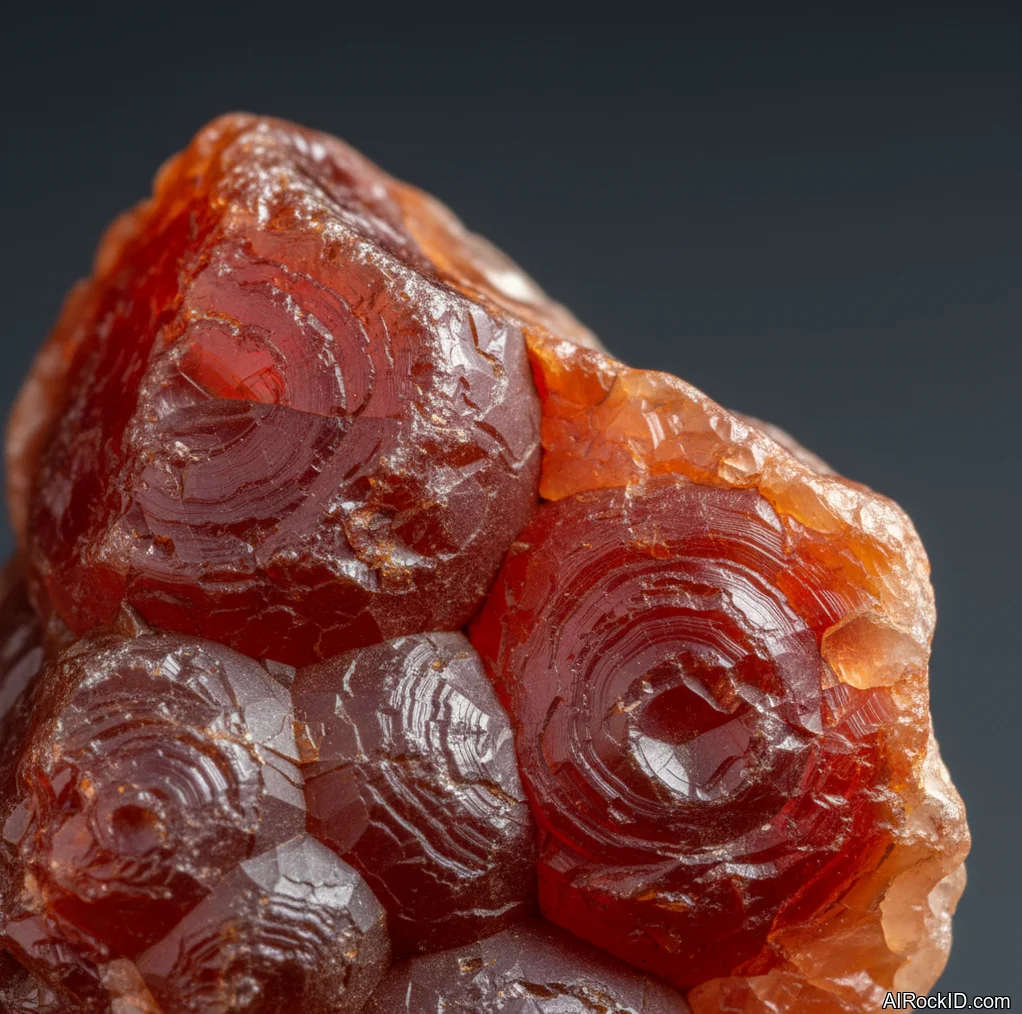
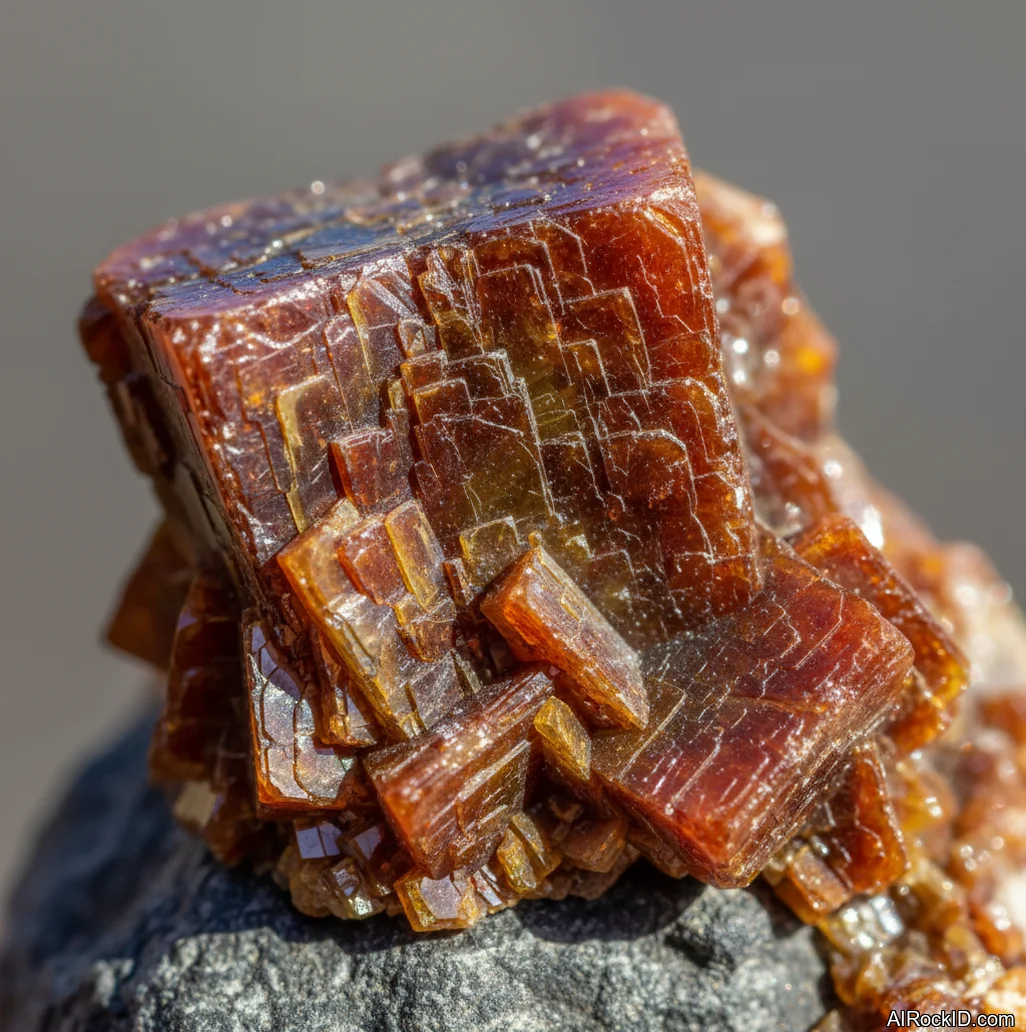
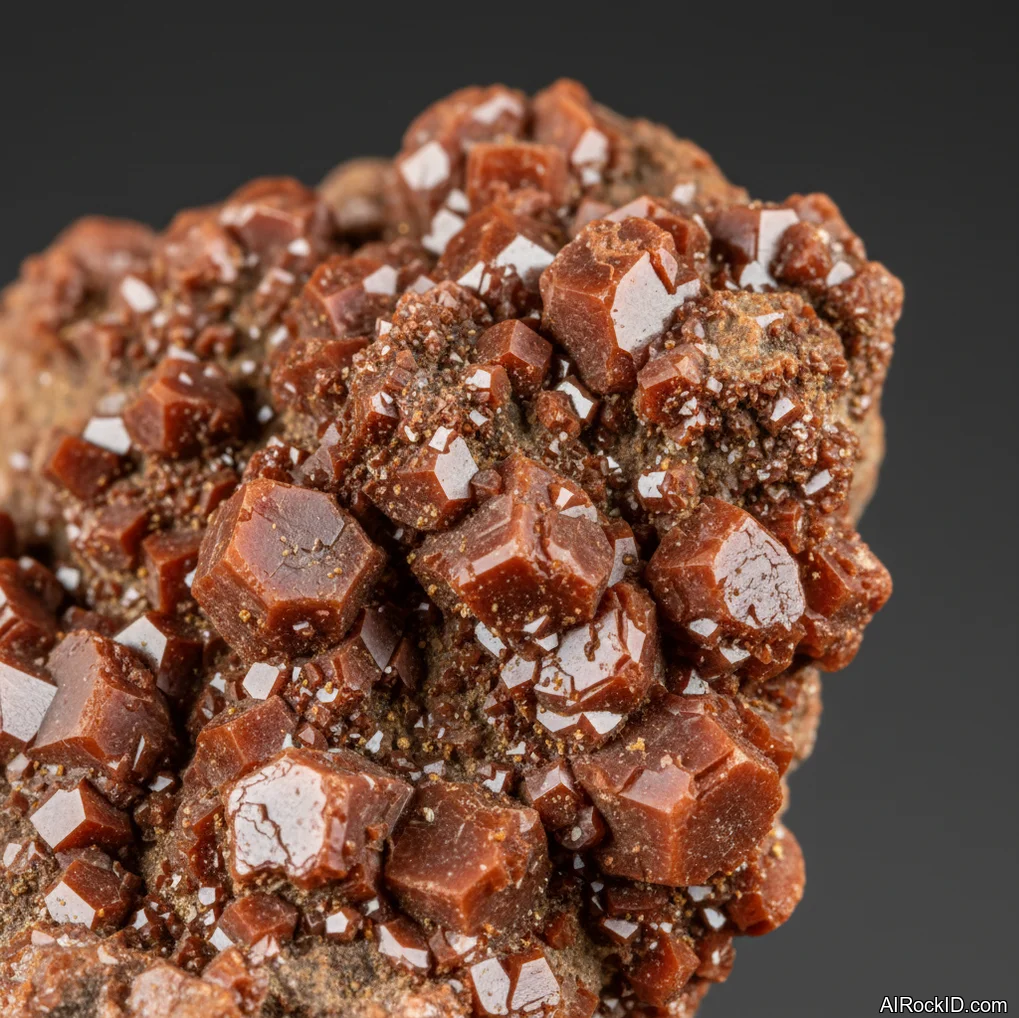
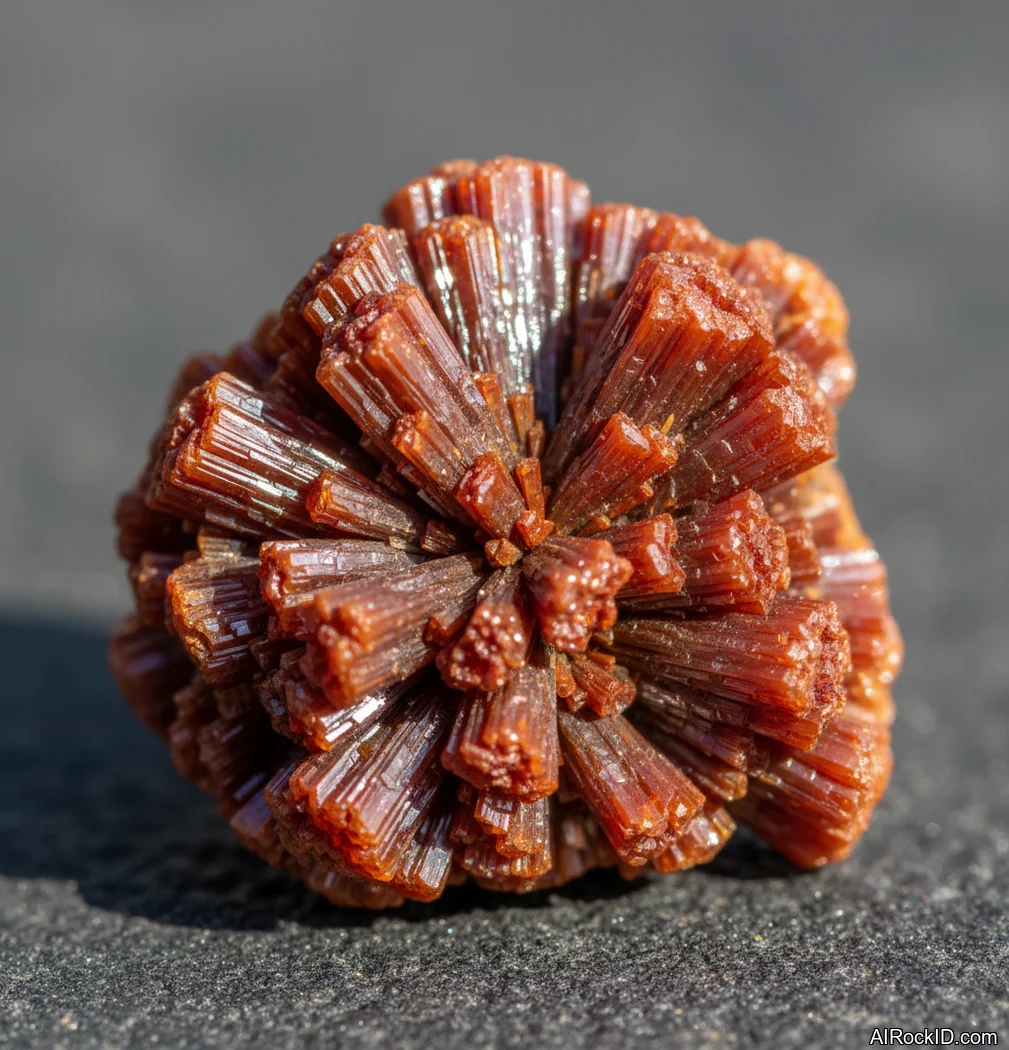
Thing is, the first time you pick up a decent cabinet piece, the color smacks you in the face. It’s that traffic-cone orange that slides toward red, the kind that looks almost fake until you turn it a hair and catch the glassy luster pinging off the prism faces. The crystals are usually skinny and striated, like tiny matchsticks, and they’ll snap if you so much as bump the edge of the thumbnail they’re sitting on. No joke. I’ve seen dealers crack open a flat after shipping and find a couple perfect needles turned into orange grit, just from a little jostling in transit.
But this isn’t a “wear it every day” stone. The hardness is low, the cleavage is real, and the chemistry isn’t friendly. So crocoite’s a display mineral. The kind you keep in a box with a label, and when you do handle it, you grab the base, not the crystals (unless you want to learn the hard way).
Origin & History
Tasmania’s what everyone thinks of first, but the story actually kicks off in Europe. Crocoite got its formal description in 1832 from François Sulpice Beudant, and the name’s pulled from the Greek *krokos*, meaning saffron, which makes sense the second you see that hot orange color in person.
Collectors grabbed onto it right away because it didn’t look like the usual “brown rock with tiny sparkles.” It’s the kind of mineral that almost looks lit from inside under a desk lamp, and you find yourself instinctively holding it over a soft pad because, honestly, who wants to be the person who bumps it? And back in the 1800s it wasn’t just eye candy, either. It mattered scientifically since it’s tied to chromium chemistry. Crocoite helped confirm chromium as a distinct element in early mineralogical work, even if most of us now just stare at the color and try not to knock it around.
Where Is Crocoite Found?
The classic material comes from the Dundas region in western Tasmania. Smaller occurrences show up in parts of Russia, Europe, and a few oxidized lead deposits elsewhere.
Formation
Most crocoite shows up in the oxidation zone of lead ore deposits, right where lead minerals and chromium-bearing fluids run into each other. It’s basically a chemical handshake: lead from stuff like galena meets chromate under the right oxidizing conditions.
Look at a good matrix piece up close and you’ll often catch crocoite perched next to gossan-y iron oxides and other secondary lead minerals. That setting matters. A lot.
Crocoite’s a late-stage mineral, not something that grows deep down where it’s hot, like in some granite pocket. It’s more like nature doing surface-level chemistry (messy, reactive), and it tends to form open-space crystals where there’s actually room for those long prisms to build out. Why else would the crystals get that kind of shape?
How to Identify Crocoite
Color: Bright orange, orange-red, to red, often with a slightly translucent glow at thin edges. Color is usually strong and saturated, not pastel.
Luster: Vitreous luster on fresh crystal faces, sometimes a little resinous on worn bits.
Pick up the specimen by the matrix and feel how the crystals stay cool and glassy, not waxy or plastic. The real test is fragility: even a gentle tap will chip tips and make tiny orange crumbs, so handle like it’s spun sugar. If you see “crocoite” tumbled stones, be skeptical, because the real mineral doesn’t love being knocked around and most polished lookalikes are dyed or are different orange minerals entirely.
Properties of Crocoite
Physical Properties
| Crystal System | Monoclinic |
| Hardness (Mohs) | 2.5-3 (Soft (2-4)) |
| Density | 5.9-6.1 g/cm3 |
| Luster | Vitreous |
| Diaphaneity | Transparent to translucent |
| Fracture | Uneven |
| Streak | orange-yellow |
| Magnetism | Non-magnetic |
| Colors | orange, orange-red, red |
Chemical Properties
| Classification | Chromates |
| Formula | PbCrO4 |
| Elements | Pb, Cr, O |
| Common Impurities | S, Fe, Ca |
Optical Properties
| Refractive Index | 2.30-2.66 |
| Birefringence | 0.36 |
| Pleochroism | Strong |
| Optical Character | Biaxial |
Crocoite Health & Safety
Handle it gently, and try not to stir up any dust or end up with that chalky residue on your fingers (it clings). And don’t put crocoite in drinking water or use it for elixirs. Why risk it?
Safety Tips
Wash your hands after you handle it. Keep it out of reach of kids and pets. And stash it somewhere it won’t get knocked around, because those crystals can flake off little chips if they rattle against a hard shelf. If a piece cracks or breaks, don’t dry sweep it (that just kicks dust up). Grab a damp wipe, or use a HEPA vacuum, and pick it up that way.
Crocoite Value & Price
Price Range
Rough/Tumbled: $80 - $5,000+ per specimen
Prices climb fast as the crystals get bigger, the terminations stay razor-sharp, and the sprays look clean with no chips or scuffed tips (you can usually spot that cloudy “kissed” damage right at the points). And most dealers hit the provenance pretty hard too if it’s solid Dundas, especially older finds that still have great color and hardly any bruising.
Durability
Fragile — Scratch resistance: Poor, Toughness: Poor
Crocoite is soft, cleaves easily, and the crystals chip and crumble with casual handling or vibration.
How to Care for Crocoite
Use & Storage
Keep it in a perky box or a display case where it can’t get bumped. I like foam with a cutout so the matrix is supported and the crystal spray floats free.
Cleaning
1) Skip water and chemicals. 2) Use a soft air bulb or very soft brush to move dust off the matrix, not the crystal tips. 3) If you must pick off a loose chip, use tweezers and do it over a tray so nothing disappears.
Cleanse & Charge
If you do energy-style cleansing, stick to dry methods like sound, intention, or a quick pass through incense smoke in a well-ventilated spot. Avoid salt, water, and long sun sessions.
Placement
Put it somewhere stable, away from doors, subwoofers, and curious hands. A little riser helps, because the best view is often side-on where the prisms catch light.
Caution
Don’t tumble, cab, or grind crocoite. Seriously. It’s way too fragile, and the dust you kick up is hazardous. And keep it away from water. Even a quick rinse can mess with it, so just don’t. Wash your hands after you handle it (especially if you’ve got that fine orange-red powdery stuff on your fingertips). Why take the risk?
Works Well With
Crocoite Meaning & Healing Properties
Most folks who pick up crocoite for reasons other than collecting are really after that “orange fire” look. That color. It’s not subtle. In my own drawer, it hits like a get-moving stone, basically a visual shot of caffeine, and even when it’s sitting still on a shelf my eyes keep snapping back to it. Weird, right? But it shifts your mood, even if it’s purely in your head.
But I’m going to be blunt. Crocoite has lead and chromium, so I don’t treat it like a pocket stone, a massage stone, or anything you press on your skin for long stretches. I’m not trying to be dramatic, I just don’t want that dust on my hands (and yes, it leaves that faint gritty film if you’ve ever handled a crumbly piece). If you’re into crystal work, treat it like a look-only ally: meditate with it nearby, journal with it across the table, then put it back in its box and wash up.
So if you want the same “warm, spicy, creative” vibe without the handling baggage, I usually steer people to carnelian or orange calcite. Crocoite is for the display shelf and the collector heart. The energy story is fine, just keep it in the grown-up lane and don’t pretend it’s medicine.
Identify Any Crystal Instantly
Snap a photo and get properties, value, care instructions, and healing meanings in seconds.