Cyanotrichite
What Is Cyanotrichite?
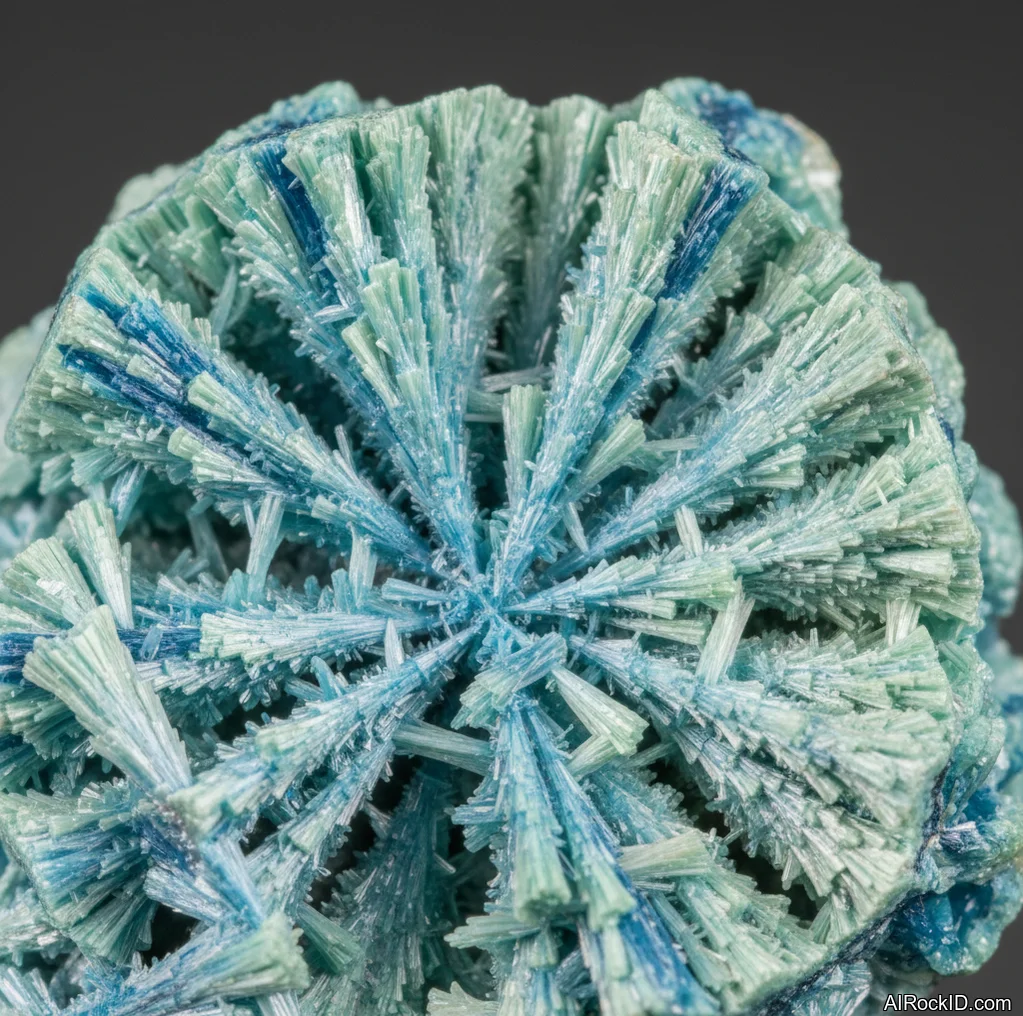
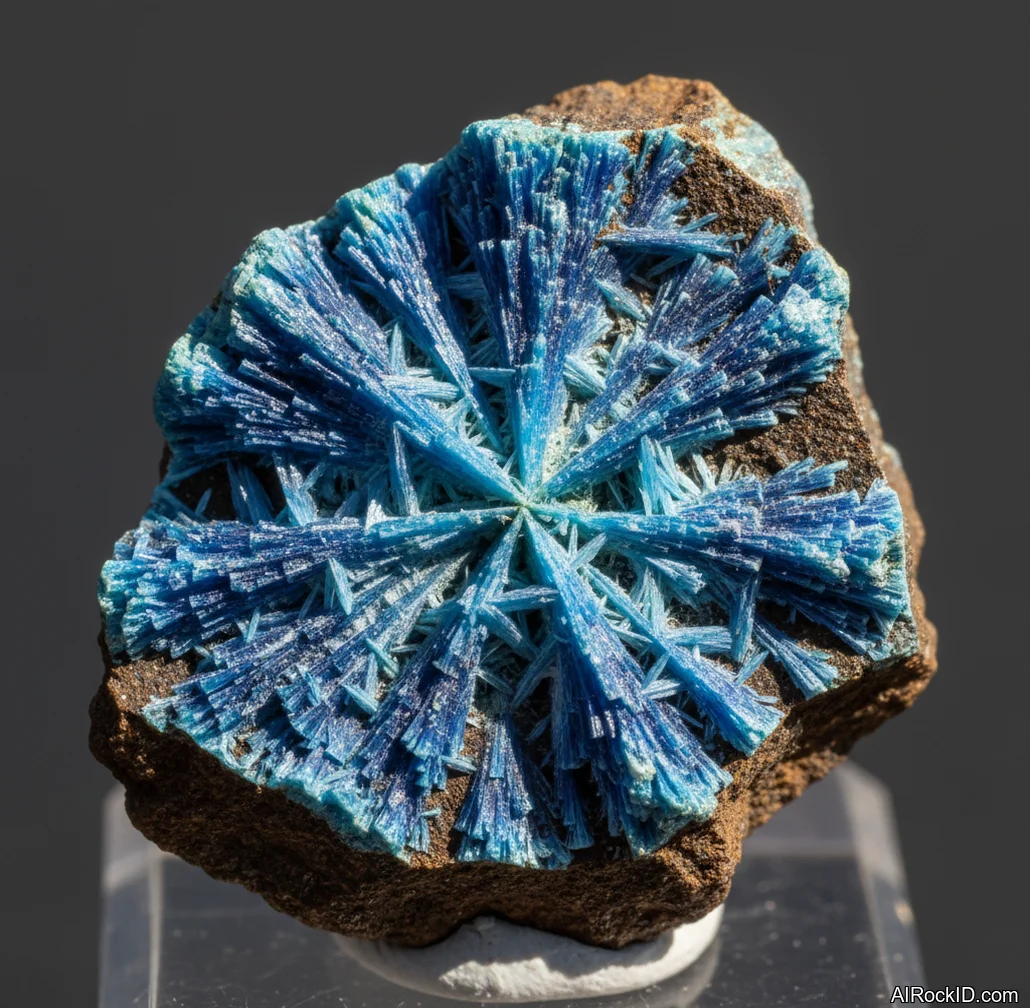
Cyanotrichite is a rare-to-uncommon secondary copper-aluminum sulfate hydroxide mineral that shows up on oxidized copper deposits as soft, sky-blue to turquoise fibrous sprays and crusts.
Pick up a specimen and you’ll feel that instant collector reflex: don’t squeeze. Seriously. The fibers look like fuzzy lint at first, but they’re really a tight bundle of tiny crystals, and they’ll crush if you handle them the way you’d handle quartz. I keep mine in a perky box because even a light rub against foam can rough up the “hair” texture (and once it’s flattened, it’s just… not the same).
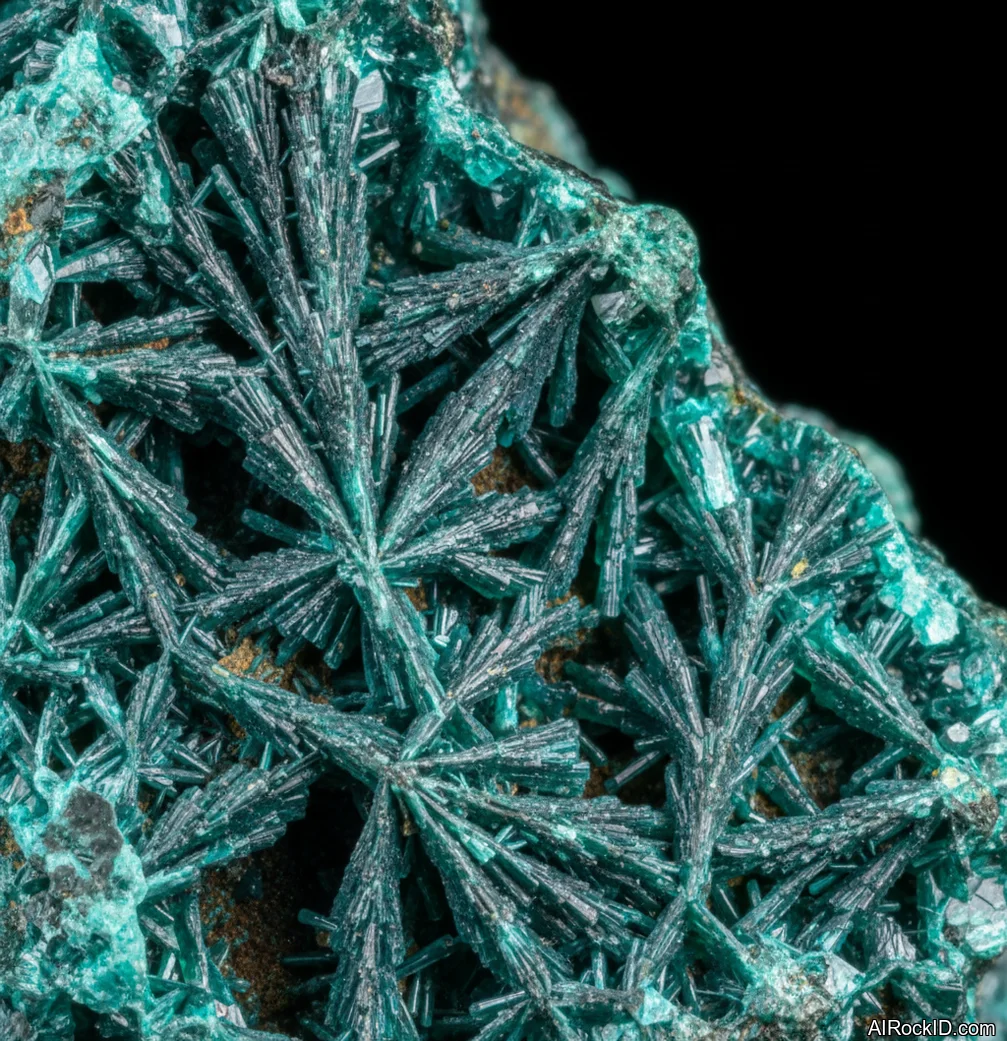
People often confuse it with aurichalcite at a glance, or assume it’s dyed, but cyanotrichite hits a more electric, airy blue and it has a very particular vibe. Little starbursts. Tufts. Feathery coatings that sit on the matrix like frost. Tilt it under a desk lamp and that silky shimmer pops in and out fast, especially on the freshest sprays. Kinda wild, right?
Origin & History
Cyanotrichite gets its name from Greek: kyanos meaning “blue” and thrix meaning “hair,” and honestly, that’s exactly what it looks like when you’re holding a sharp specimen up to the light and you see those fine, fuzzy blue sprays. It was first described in 1854 by the Austrian mineralogist Wilhelm von Haidinger.
In older European collections, you’ll sometimes find it filed away in a drawer with other oxidized copper minerals, mostly because it shows up with the same usual suspects: brochantite, langite, chrysocolla, malachite. It was never really a “classic gem” sort of mineral. It’s more of a micromounter and cabinet specimen thing, and the best pieces have always moved quietly from one collector’s hands to another’s.
Where Is Cyanotrichite Found?
Cyanotrichite forms in the oxidation zones of copper deposits, especially where sulfate-rich fluids alter earlier copper minerals. Collectors most often see material from classic European localities and a handful of copper districts in the USA and Brazil.
Formation
Look at how it’s perched on the rock and you can usually tell what happened. Cyanotrichite is a secondary mineral, which just means it shows up late, after oxygenated water starts chewing through the primary copper minerals. Sulfate in the mix matters a lot, so you tend to find it where sulfides are breaking down and the chemistry turns acidic and sulfate-heavy.
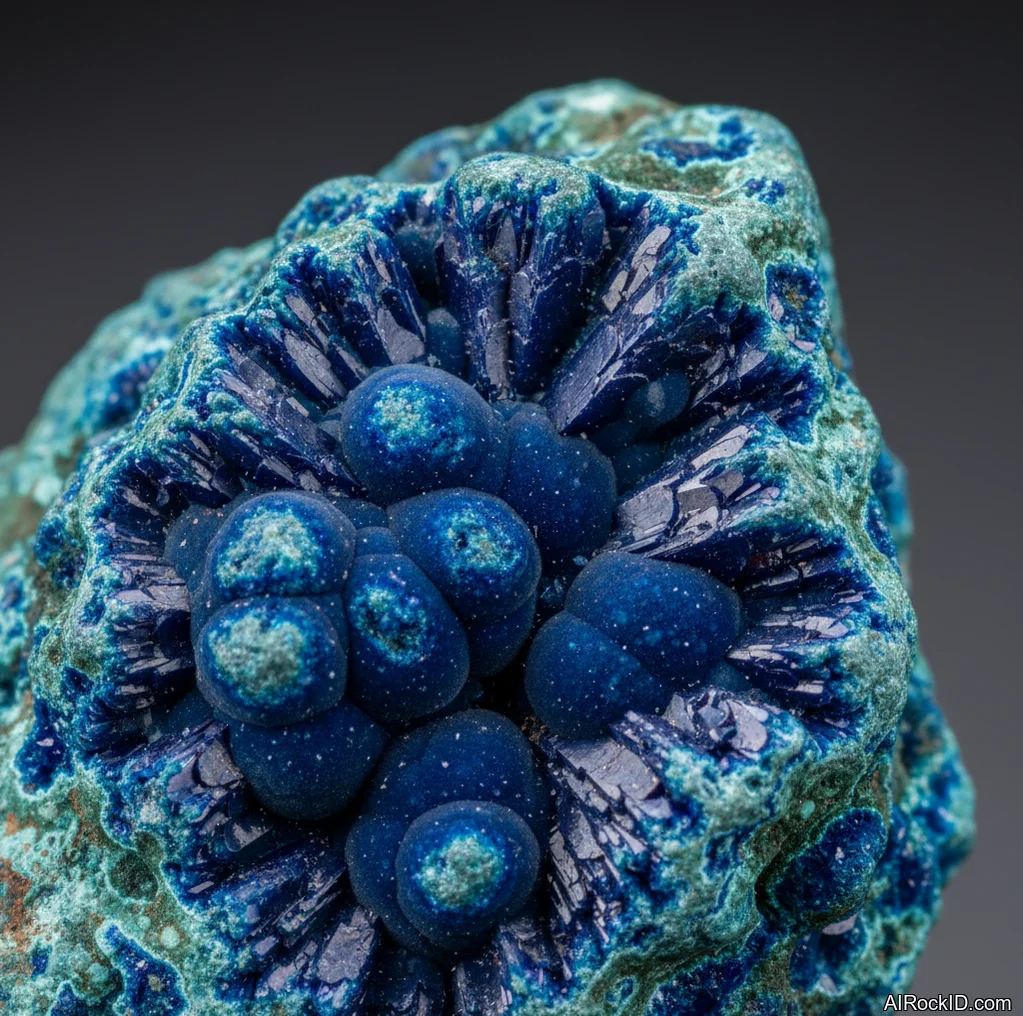
Compared to tougher copper minerals like malachite, cyanotrichite is basically a delicate surface grow. It likes cavities, fractures, little protected pockets, that sort of thing. And it often ends up sharing space with other blue sulfates. I’ve cracked open oxidized copper pieces where the outside looked dead plain (dusty, almost chalky to the touch), but a sheltered seam inside had these tiny blue tufts, like someone dragged a paintbrush right into the crack. Who expects that from a boring-looking chunk?
How to Identify Cyanotrichite
Color: Usually pale sky-blue to turquoise-blue, sometimes leaning slightly greenish depending on what else is growing with it. The color is commonly stronger at the base of sprays and lighter at the tips.
Luster: Silky, especially on fresh fibrous bundles.
Pick up the matrix and don’t touch the blue directly at first. A real cyanotrichite spray looks fibrous under a loupe, like ultra-fine threads packed together, not a smooth paint-like crust. The real test is gentleness: if you lightly brush it, it’ll shed or flatten, because it’s very soft and fragile, unlike dyed quartz or glassy blue coatings.
Properties of Cyanotrichite
Physical Properties
| Crystal System | Orthorhombic |
| Hardness (Mohs) | 1.5-2 (Very Soft (1-2)) |
| Density | 2.70-2.86 g/cm3 |
| Luster | Silky |
| Diaphaneity | Translucent |
| Fracture | Splintery |
| Streak | Pale blue |
| Magnetism | Non-magnetic |
| Colors | Sky blue, Turquoise blue, Blue-green |
Chemical Properties
| Classification | Sulfates |
| Formula | Cu4Al2(SO4)(OH)12·2H2O |
| Elements | Cu, Al, S, O, H |
| Common Impurities | Fe, Zn |
Optical Properties
| Refractive Index | 1.56-1.59 |
| Birefringence | 0.03 |
| Pleochroism | Weak |
| Optical Character | Biaxial |
Cyanotrichite Health & Safety
It’s usually fine to handle, but I’d still treat it like any copper mineral and keep it away from food and kids. Thing is, the bigger “risk” is you messing up the specimen, because it’s so soft. One careless squeeze and you’ll leave a little shiny smear on your fingers (or a dent you can feel with your thumbnail). Why chance it?
Safety Tips
Wash your hands after you handle it. And don’t grind it down or scrub it hard, the gritty dust gets everywhere. Store it snug so it can’t rattle around in the container.
Cyanotrichite Value & Price
Price Range
Rough/Tumbled: $20 - $250 per specimen
Price jumps fast when the spray is clean, not chipped, and that blue is really strong. Big, open-face tufts sitting on a contrasting matrix usually run higher than thin crusts or pieces that’ve been rubbed down from handling.
Durability
Fragile — Scratch resistance: Poor, Toughness: Poor
It’s stable on a shelf, but the fibers crush and shed easily with handling or vibration.
How to Care for Cyanotrichite
Use & Storage
Store it in a perky box or a rigid display case so the fibers can’t rub on foam or other rocks. If it’s in a drawer, keep it isolated because even gentle sliding can scuff the sprays.
Cleaning
1) Skip running water and skip scrubbing. 2) Use a hand blower or very soft artist bulb to move dust, holding the specimen so air doesn’t hit the fibers straight-on. 3) If you must, use a barely damp cotton swab on the bare matrix only, not the blue growth.
Cleanse & Charge
For a metaphysical reset, use smoke, sound, or a quick pass on a selenite plate rather than salt or soaking. Keep the handling minimal and focus on intention over ritual tools.
Placement
Put it somewhere it won’t get bumped, like a high shelf or a closed cabinet with steady temperature. Side lighting looks great because it catches the silky sheen.
Caution
Don’t use an ultrasonic cleaner, a steam cleaner, or anything that involves hard brushing. And don’t just toss it in your pocket to rattle around, let it tumble, or stick it in any “crystal grid” setup where the stones are touching and rubbing against each other (that’s how you end up with little scuffs you can feel with a fingernail).
Works Well With
Cyanotrichite Meaning & Healing Properties
In crystal circles, cyanotrichite usually gets filed under that “blue mind” vibe: calming, inward-looking, good for quiet focus. And yeah, I see it. Just sitting with a piece feels like staring at blue frost clinging to a winter windowpane. Your brain eases off the gas. That’s the whole mood.
But look, it’s not a stone you mess with. It’s a look-at-it stone. When I’ve used it in meditation, I set it on the table and don’t touch it, because even one lazy thumbprint can mash those tiny fibers down. Then you’re stuck wishing you’d just left it alone.
So if you use crystals as support, treat cyanotrichite like a soft nudge to turn down the internal static, not a fix for anything. It sits nicely next to journaling, breathwork, and those late nights when you’re trying to wind down but your thoughts keep sprinting in circles. And if “busy” stones make you feel twitchy, this one tends to read as quiet, probably because the specimen itself asks for slow, careful attention (do you really want to risk messing up that fuzzy surface?).
Identify Any Crystal Instantly
Snap a photo and get properties, value, care instructions, and healing meanings in seconds.