Eclogite
What Is Eclogite?
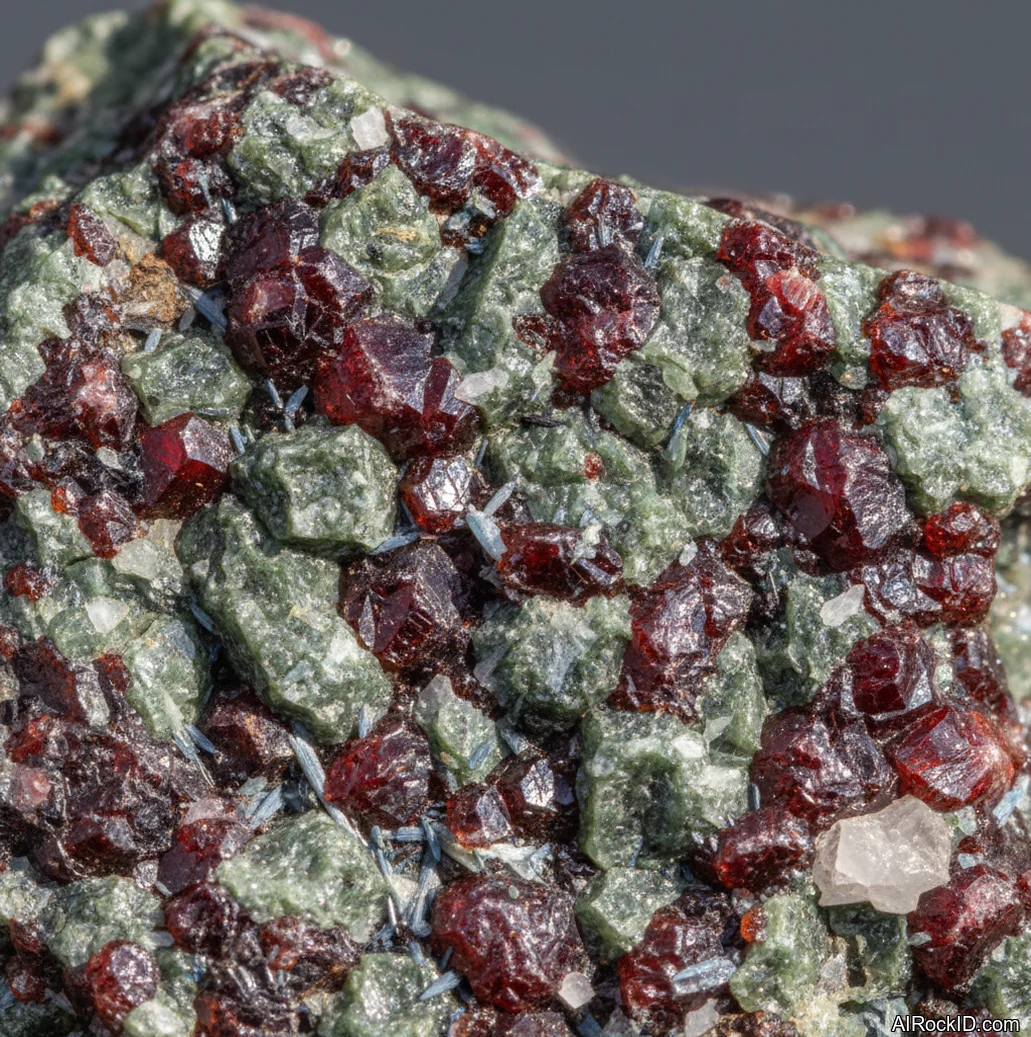
Eclogite is a high-pressure, high-temperature metamorphic rock made mostly of garnet and a green clinopyroxene called omphacite. First time you see it, it can look like a strange Christmas color mashup, red specks sitting in a deep green-black base, but it doesn’t really read as “festive” once you’ve got it in your hands. Pick up a hand sample and the weight hits you right away. It feels heavy in the palm compared to a lot of other dark metamorphic rocks.
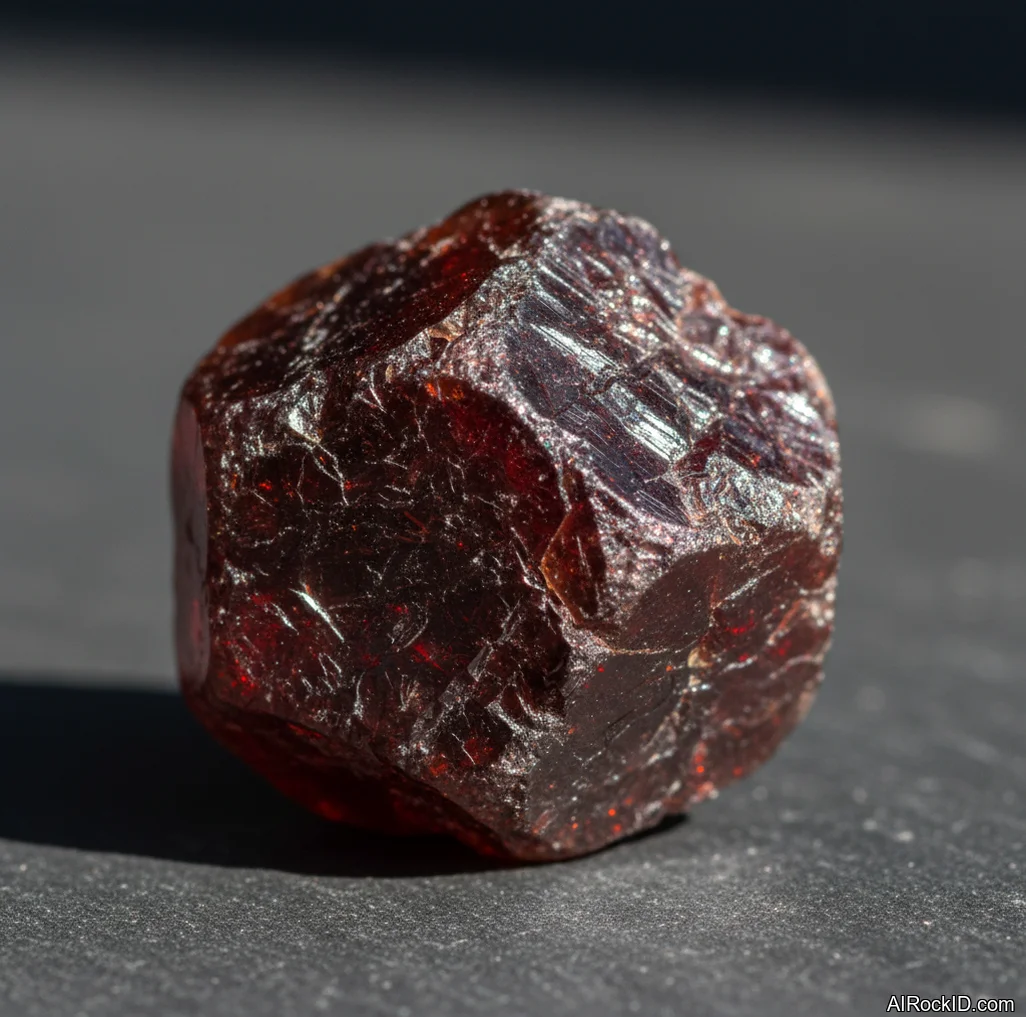
Look closer and you’ll usually spot rounded garnet grains, sometimes pea-sized, sometimes more like peppercorns, locked into a tighter, tougher green matrix. Fresh break? The garnets can catch the light and flash a bit of glassy red. But after it’s been weathered, or it’s picked up that fine dust from a show tray (you know the kind that clings to everything), the colors dull out fast, and it can pass for just another dark rock unless the seller gives it a quick wipe.
Origin & History
“Eclogite” comes from the Greek word “eklogē,” which basically means “choice” or “selection,” and the name showed up in the early 1800s. René Just Haüy used it in 1810 for these “picked out” rock types, because when you’ve got a clean, fresh piece in your hand, the minerals really do jump out at you. You can see the contrast right away.
And historically, it’s a big deal because it’s one of the clearest hints that parts of the crust get hauled way down deep and then brought back up again. That’s the subduction story, sitting there as a rock you can actually hold. Thing is, the first time it really clicks that something like this formed under pressures you can’t even visualize, it feels different. Like, wait, this was down there?
Where Is Eclogite Found?
You’ll find eclogite where deep subduction-related rocks got exhumed, especially in the Alps and Norway. In the US, California’s Coast Ranges have classic occurrences tied to the Franciscan Complex.
Formation
Most eclogite starts out as plain old basalt or gabbro. Then it gets hauled way down a subduction zone, deep enough that the normal basalt minerals just can’t hang on under that kind of pressure. Plagioclase is basically done at that point, and instead you grow garnet plus omphacite. That’s the big mineral swap.
And the fun part is how the “earlier life” sometimes sticks around. Some chunks still preserve older textures or tiny relic minerals tucked in there, while other pieces are totally recrystallized and kind of sugary looking, like someone sprinkled fine grains through the whole rock. But buying eclogite from random rock shops can be messy, because sellers will sometimes toss the name on any green rock that happens to have garnet in it (seen that more than once, honestly). Real eclogite should feel dense in your hand, look tight-grained, and most of the time you’ll see that classic pairing: garnet with green pyroxene.
How to Identify Eclogite
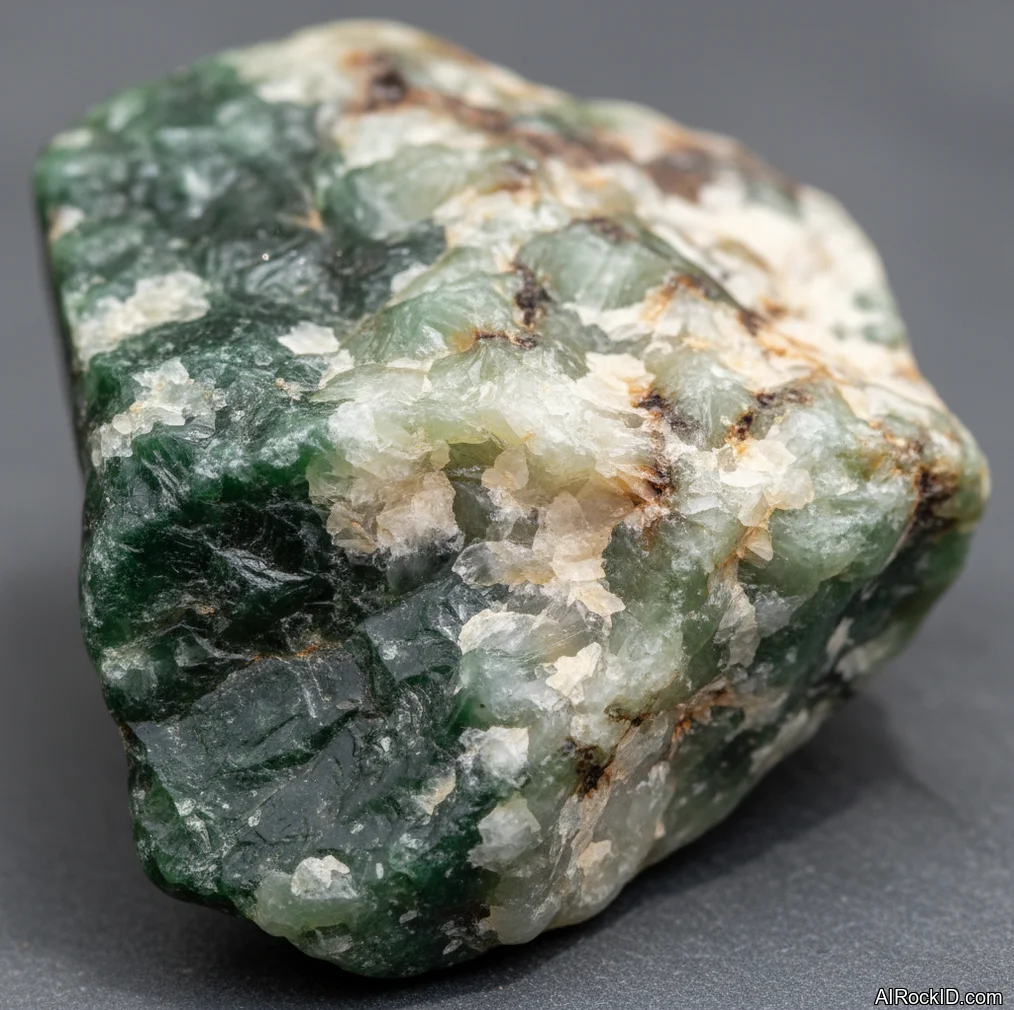
Color: Most pieces are dark green to nearly black with scattered red to reddish-brown garnet grains. Some material also shows pale green patches or tiny golden needles/specks from rutile.
Luster: Fresh surfaces range from dull to vitreous, with garnet grains often looking glassier than the matrix.
Pick up two similar-looking rocks and compare weight. Eclogite usually feels heavier than you expect for its size because garnet and pyroxene are dense. If you’ve got a hand lens, check whether the red grains are rounded garnet (glassy, no cleavage) rather than flaky mica or rusty spots. And if the green part looks waxy and fibrous, you might be looking at serpentinized stuff instead of true omphacite.
Properties of Eclogite
Physical Properties
| Crystal System | Amorphous |
| Hardness (Mohs) | 6.5-7.5 (Hard (6-7.5)) |
| Density | 3.3-3.6 g/cm3 |
| Luster | Vitreous |
| Diaphaneity | Opaque |
| Fracture | Uneven |
| Streak | white to pale greenish-white |
| Magnetism | Non-magnetic |
| Colors | dark green, blackish green, red, reddish brown, gray, black |
Chemical Properties
| Classification | Silicates |
| Formula | Rock; primarily (Mg,Fe,Ca)3Al2(SiO4)3 + (Ca,Na)(Mg,Fe,Al)Si2O6 |
| Elements | Si, O, Al, Ca, Mg, Fe, Na |
| Common Impurities | Ti, Mn |
Optical Properties
| Refractive Index | 1.74-1.82 |
| Birefringence | 0.010-0.030 |
| Pleochroism | Weak |
| Optical Character | Biaxial |
Eclogite Health & Safety
Eclogite’s fine to handle and put on display. Just use the usual rock-shop common sense if you’re cutting or grinding it, because you’ll kick up dust and get those sharp, gritty bits everywhere (they stick to your fingers and the bench).
Safety Tips
If you’re doing any lapidary work, put on eye protection and run water the whole time to keep the dust from going airborne. Silicate dust is nasty stuff, and you really don’t want it in your lungs.
Eclogite Value & Price
Price Range
Rough/Tumbled: $8 - $120 per piece
Cut/Polished: $5 - $40 per carat
Prices can swing a lot, honestly, and it mostly comes down to contrast and how well it’s polished. If the garnets are big and clean, sitting in that deep green matrix, you’ll see the number jump. And if you can spot rutile and kyanite with the naked eye (those little needle-like bits and the bluish streaks), that bumps it up fast too.
Durability
Durable — Scratch resistance: Good, Toughness: Good
It’s generally stable in normal household conditions, but polished pieces can chip on edges if you knock them against harder stones.
How to Care for Eclogite
Use & Storage
Store it like you would any harder rock specimen: separate from softer crystals so it doesn’t scratch them, and pad polished pieces so corners don’t get dinged. I keep my best eclogite slice face-up because grit on a shelf can haze the polish over time.
Cleaning
1) Rinse under lukewarm water to remove grit. 2) Use a soft toothbrush with a drop of mild soap to get into pits around garnet grains. 3) Rinse again and pat dry; don’t rub with a gritty towel.
Cleanse & Charge
For a quick reset, I use running water and then let it sit on a windowsill for indirect light. But don’t bake it in harsh sun all day if the piece has a high polish, since heat swings can stress tiny fractures.
Placement
On a desk it’s great as a “thinking rock” because it’s dense and grounding to hold. If you’re displaying it, angle it so the garnets catch light, otherwise it photographs darker than it looks in hand.
Caution
Skip harsh acids and gritty cleaners. They’ll haze the matrix and can even leave the garnets looking kind of undercut, like the edges got chewed on. And if you can see any cracks in the piece, don’t put it in an ultrasonic cleaner.
Works Well With
Eclogite Meaning & Healing Properties
A lot of people who click with eclogite are really into the whole pressure-and-change angle. This stuff formed way down deep, got cooked and squeezed hard, and still made its way back up with the garnets hanging on. When I’m stressed, I’ll pick up a chunk and just sit with the heft for a minute. Sounds almost too simple. But that dead weight in your palm, cool at first and then warming up as you hold it, can yank you out of that brain-spiral.
Compared to a flashy crystal, eclogite feels more like something you’d toss in a pack and actually use. Steady. Practical. And it’s not “soft” energy, if you talk about it that way. I’ve noticed it can feel a bit intense at night if you’re already keyed up, especially when the piece has those little garnet bumps that catch on your fingertips or scratch at your cuticles if you fidget with it (ask me how I know).
And keep the line clear: none of this is medical care. If you’re using stones as a focus for habits, breathwork, or journaling, eclogite fits that resilience and follow-through theme. The real test is whether it helps you slow down and make one good decision at a time, not whether it’s out here doing miracles.
Identify Any Crystal Instantly
Snap a photo and get properties, value, care instructions, and healing meanings in seconds.