Fairy Stone
What Is Fairy Stone?
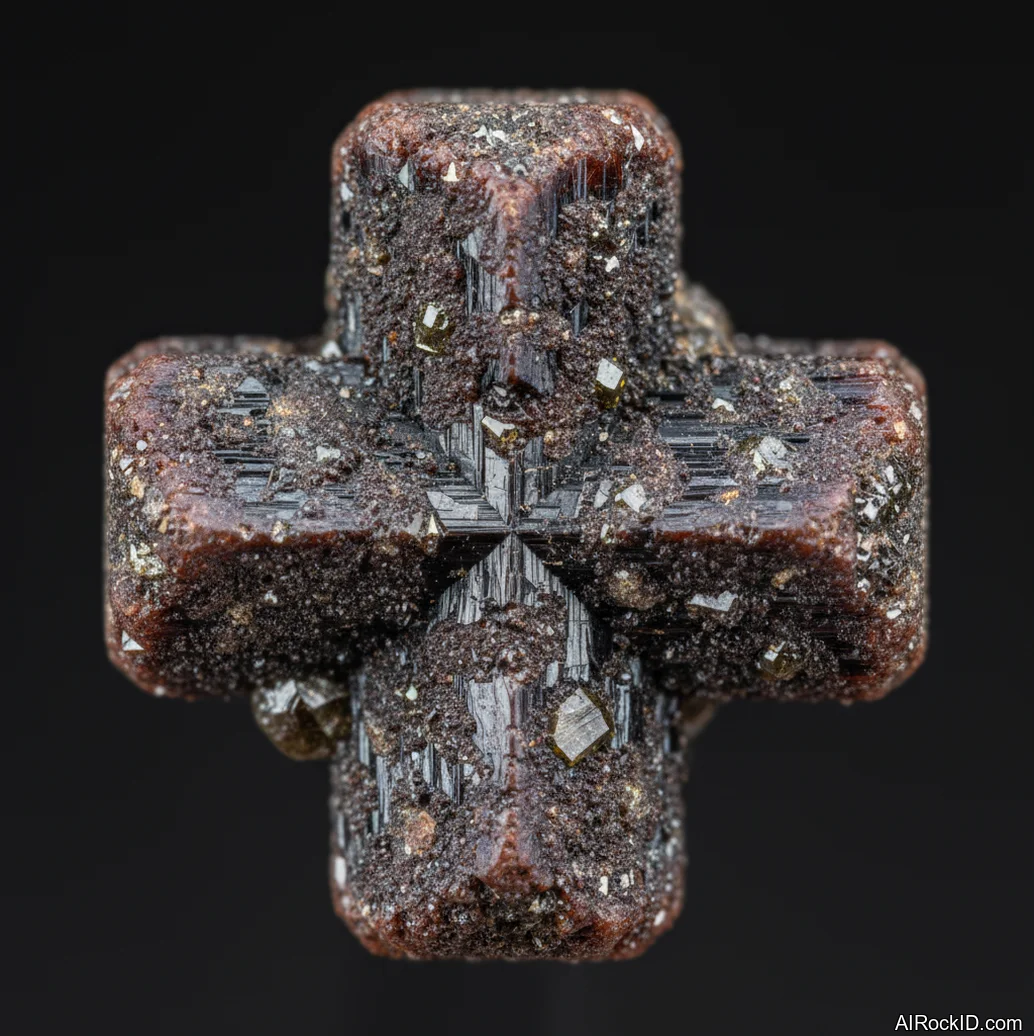
A Fairy Stone is a naturally twinned staurolite crystal, and it usually grows into a cross. If you’ve ever held one, you already know why people tuck them into a pocket and forget they’re there until their fingers hit it again. They’re weirdly heavy for something so small, like an iron-ish pebble, and it stays cool against your palm even after it’s been riding around with you for hours.
At first, it just looks like a rusty brown lump with sharp-ish little arms. But that cross shape isn’t carved by someone with a Dremel, it’s real crystallography. Most of them are rough and matte, with those tiny sandy pits you can actually feel if you rub your thumb over the surface, plus a few flat faces that flash for a split second when you tilt it under a lamp. And yeah, they’re not big. A lot of the ones I see at shows land in the 1 to 3 inch range, and the really clean, symmetrical crosses get snagged fast.
Grab a handful and the differences jump out. Some are classic 90 degree crosses. Some come in that angled X shape, around 60 degrees. And some are half-formed, lopsided, a little wonky (in a good way). I’m into the imperfect ones too. They look like they actually came out of a rock. Because they did.
Origin & History
“Fairy Stone” is basically a folklore nickname. People have used it for centuries in parts of Europe and the Appalachian region to talk about naturally formed “cross stones.” In the mineralogy world, staurolite got its formal description in 1792 from Jean-Claude Delamétherie, and the species name comes straight out of Greek: stauros (cross) and lithos (stone). So yeah, the cross shape is the whole point.
Thing is, the “fairy” stories change depending on where you are. In places like Brittany and parts of the British Isles, people carried cross stones as charms. But down in the southern Appalachians, they’re tied to local legends and you’ll see them for sale at roadside shops. That’s mostly culture, not geology, but it explains why they still sell at gem shows even when they aren’t sparkly.
Where Is Fairy Stone Found?
Fairy Stones turn up in metamorphic terrains where staurolite forms, especially schists and gneisses. In the US, the Virginia and Georgia material is the stuff most collectors run into first.
Formation
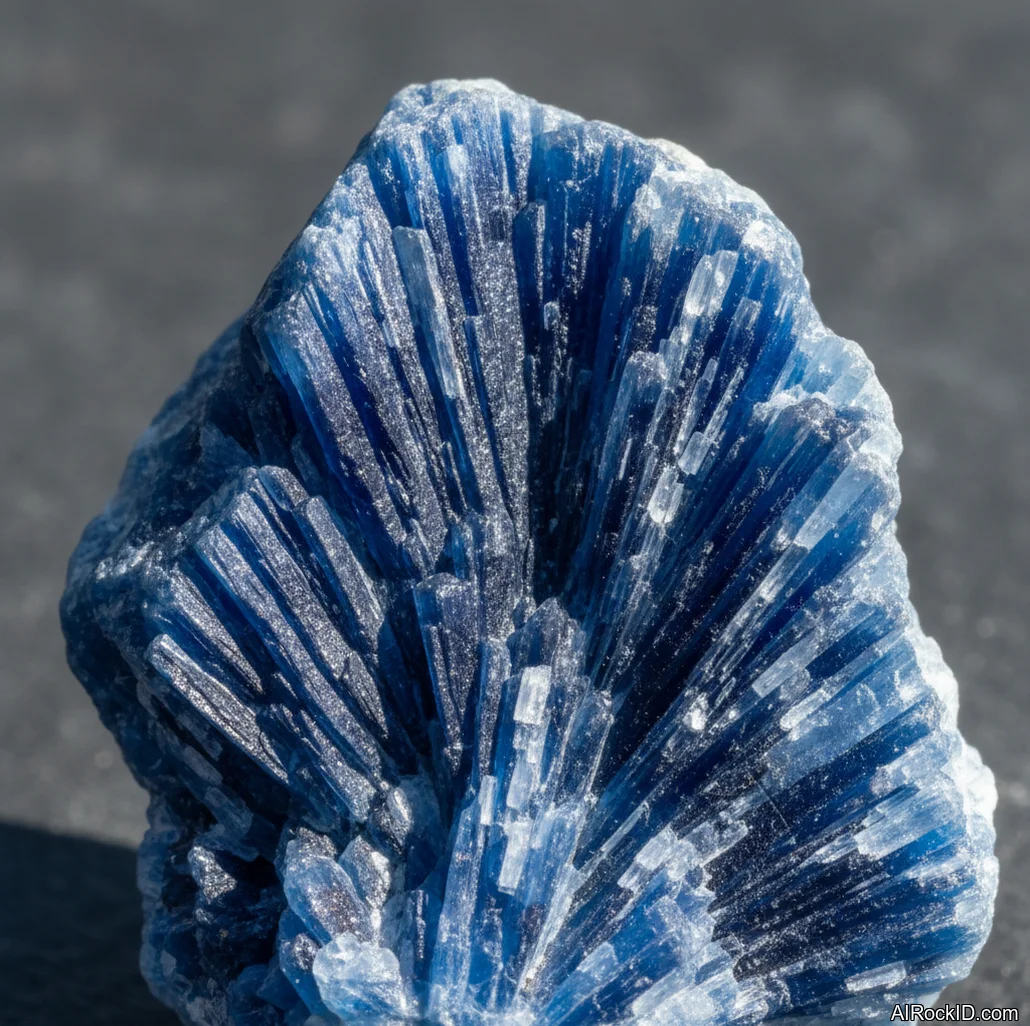
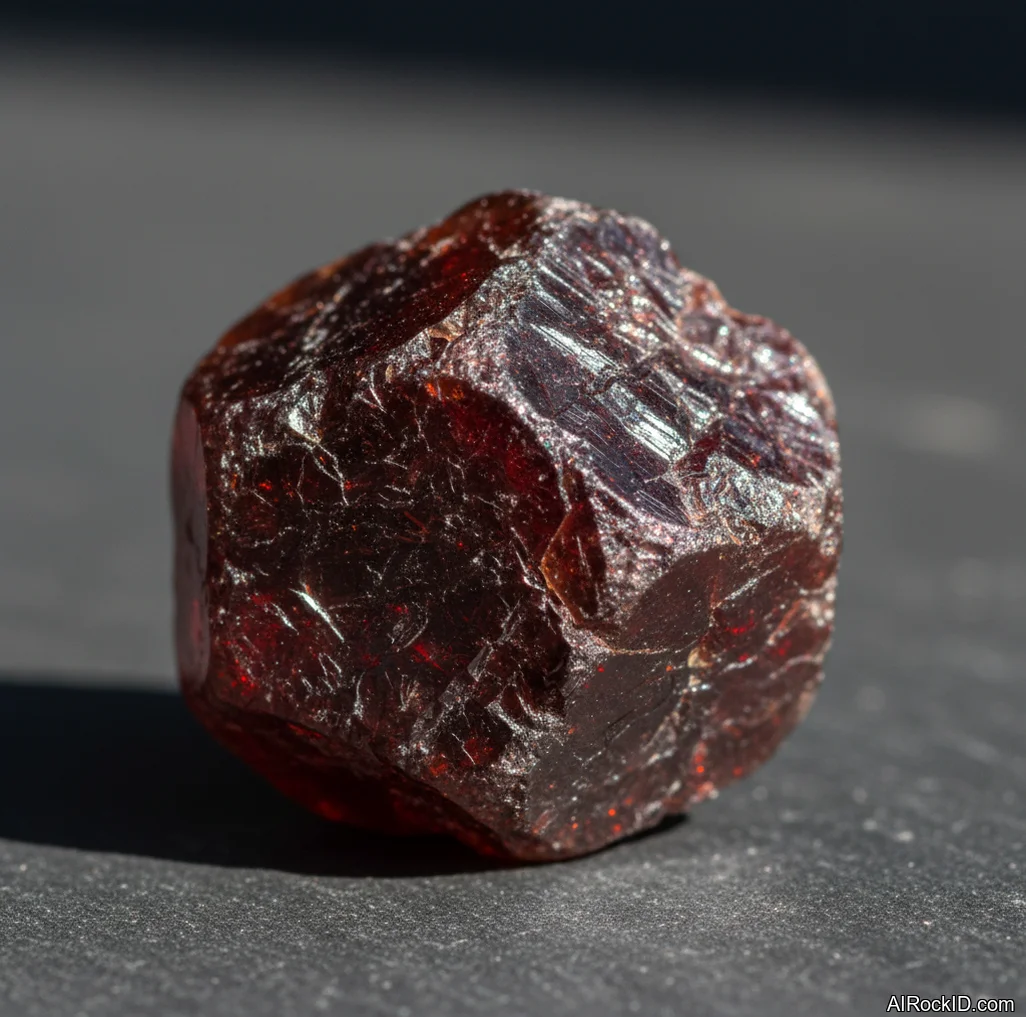
Look at the host rock up close and the whole story’s sitting there in plain sight: staurolite forms during regional metamorphism, usually in aluminum-rich pelitic rocks that get cooked and squeezed until they turn into schist. The amphibolite facies is the sweet spot for the temperature and pressure, and the crystals grow right in a matrix that’s loaded with mica, garnet, kyanite, and quartz (you can feel the flaky mica and see the glassy quartz when the light hits it).
And that cross shape? It isn’t some separate mineral glued on. It’s twinning. Staurolite likes to form penetration twins at specific angles, most often close to 60 degrees and close to 90 degrees. But here’s where the market gets messy: sellers will sometimes slap “fairy stone” on any random cross-shaped stone. Real staurolite twins have this heavy, gritty feel in your hand, plus that brown, iron-stained look that’s honestly hard to fake convincingly.
How to Identify Fairy Stone
Color: Most Fairy Stones are brown to reddish-brown, sometimes almost black, with a rusty tone from iron. Fresh breaks can show a darker interior compared to the weathered outer surface.
Luster: Luster is usually dull to resinous on broken faces, and more matte on weathered surfaces.
Pick up a piece and pay attention to the weight. Staurolite feels heavier than you expect for a brown rough stone. If you scratch it with a steel nail, you usually won’t get much of a mark, but it can scratch glass because it sits around Mohs 7 to 7.5. The real test is the twin angle and the texture: natural twins often have slightly uneven arms and a gritty, schist-worn surface rather than crisp, carved edges.
Properties of Fairy Stone
Physical Properties
| Crystal System | Monoclinic |
| Hardness (Mohs) | 7.0-7.5 (Hard (6-7.5)) |
| Density | 3.65-3.80 |
| Luster | Resinous |
| Diaphaneity | Opaque |
| Fracture | Uneven |
| Streak | White to gray |
| Magnetism | Non-magnetic |
| Colors | Brown, Reddish-brown, Dark brown, Blackish-brown |
Chemical Properties
| Classification | Silicates (nesosilicate) |
| Formula | Fe2+2Al9Si4O22(OH)2 |
| Elements | Fe, Al, Si, O, H |
| Common Impurities | Mg, Mn, Zn |
Optical Properties
| Refractive Index | 1.739-1.747 |
| Birefringence | 0.008 |
| Pleochroism | Moderate |
| Optical Character | Biaxial |
Fairy Stone Health & Safety
Fairy Stone is safe to pick up, hold, and put on a shelf. But it’s still a hard silicate, so if you’re grinding or cutting it and it starts kicking up that fine, chalky dust, don’t breathe it in.
Safety Tips
If you’re going to lap or sand it, keep a little water going and do the basic dust-control stuff (vac, wet down, don’t let it get airborne). And when you’re done dealing with the slurry, wash your hands.
Fairy Stone Value & Price
Price Range
Rough/Tumbled: $5 - $60 per piece
Cut/Polished: $10 - $80 per carat
Price mostly comes down to two things: how big and symmetric the cross twin is, and how clean the arms look when you actually turn it in your hand under a light. Some pieces that are still half stuck in schist tend to go for less (you can feel that gritty, flaky matrix clinging in the corners), but if you’ve got a crisp, well-formed 90 degree cross, the price can jump fast.
Durability
Durable — Scratch resistance: Excellent, Toughness: Fair
It’s stable in normal indoor conditions, but the twin arms can chip if you bang it around in a pocket with keys.
How to Care for Fairy Stone
Use & Storage
Store it in a small box or pouch if you want the arms to stay sharp. If it’s a really clean cross, I wouldn’t let it rattle around loose in a drawer.
Cleaning
1) Rinse with lukewarm water to knock off grit. 2) Use a soft toothbrush with a drop of mild soap for crevices. 3) Rinse again and let it air-dry fully before putting it away.
Cleanse & Charge
For non-physical use, people usually do smoke cleansing, sound, or a quick rinse and dry. Avoid salt scrubs if the piece has fragile edges or attached schist.
Placement
I like these on a shelf where side lighting hits the arms and you can actually see the twin geometry. A small stand helps because they love to roll into weird angles.
Caution
Don’t put anything with matrix or fractures in an ultrasonic cleaner. It’ll find every little crack and rattle it. And don’t toss a crisp, well-formed cross in the tumbler unless you’re genuinely okay with the arms getting rounded off (because they will).
Works Well With
Fairy Stone Meaning & Healing Properties
Next to the flashy crystals, Fairy Stone is the quiet one. No sparkle show. Just a lump of rock that sits heavy in your palm and feels steady.
People grab it when they want something grounded, and honestly, I don’t even think that has to be woo. It’s just how it’s built: it’s dense, it’s hard, and it doesn’t have that fragile, “don’t drop me” feeling. You can feel the weight right away, and the little cross shape has these blunt arms and slightly gritty edges that your thumb naturally finds (especially if you’ve had one rattling around in a pocket for a while).
In folk practice, it gets tied to protection and travel. That’s mostly because it was easy to carry, and the cross shape meant something to a lot of different communities. I’ve met plenty of people who keep one in a glove box, or tucked into a backpack pocket, kind of like a worry stone. And the comfort is real. Even if you treat it as a personal ritual, not medicine.
But keep the boundaries clear, yeah? Any “healing” talk here is spiritual or emotional support, not a replacement for a doctor. If you want something practical, Fairy Stone works well for mindfulness because your fingers have something to follow. The arms, the corners, those uneven little edges. They make you slow down and actually pay attention.
Identify Any Crystal Instantly
Snap a photo and get properties, value, care instructions, and healing meanings in seconds.