Fossil Shell Jasper
What Is Fossil Shell Jasper?
Fossil Shell Jasper is jasper that actually carries fossils in it. Technically, it’s microcrystalline quartz (chalcedony) that formed with visible shell fragments, or shell-shaped fossil patterns, locked inside and preserved.
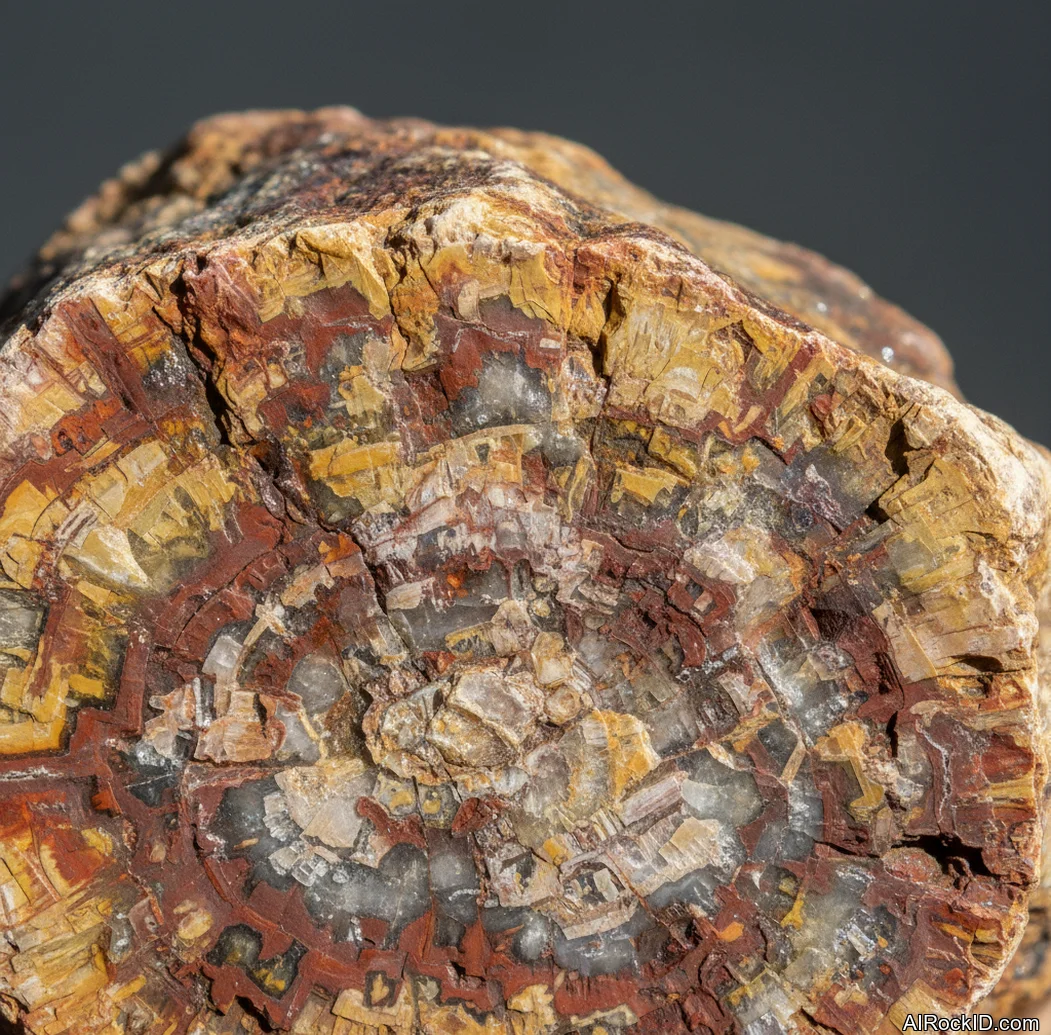
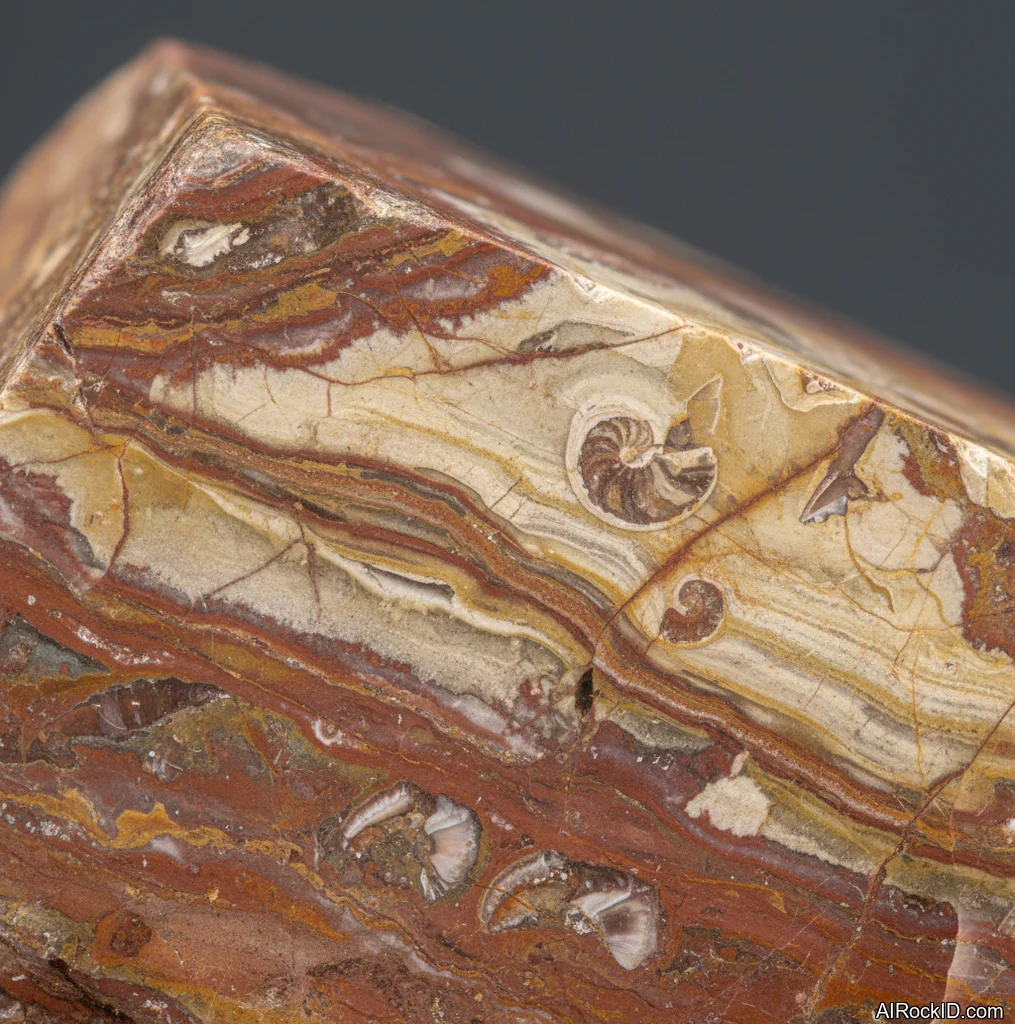
Hold a palm stone and the first thing you feel is that classic jasper weight. It’s not heavy like hematite, but it’s definitely denser than it looks, the kind of stone that thunks softly when you set it on a table. The really nice pieces show creamy shell arcs and tiny “comma” shapes that jump out once it’s polished, like you’re staring at cross-sections of old shells suspended in caramel (sounds dramatic, but that’s the vibe).
Some of it gets mislabeled as “fossil coral” or even “agatized shell” when you first see it. But Fossil Shell Jasper is usually more patchy and earthy, with the fossil shapes sitting in a tight, opaque quartz body. And yeah, most of what’s out there for sale is polished. Raw chunks exist, but the patterns don’t read as clearly until somebody puts it to a wheel. Why? Because that shine makes the fossils actually show themselves.
Origin & History
“Jasper” gets to us by way of Old French and Latin (iaspis). Historically it was a catch-all for speckled, patterned stones people used for ornaments, and honestly the trade has tugged that word in a lot of directions over the years. “Fossil shell” is basically the plain-English tag dealers slap on when you can see the pattern is coming from shell material or shell impressions (the kind you can spot once you’ve turned a piece under a light and the glossy bits pop).
There isn’t one official “first described” moment for Fossil Shell Jasper as a species, because it isn’t a separate mineral. It’s a lapidary name for a fossiliferous variety of jasper, and those names usually get coined at gem shows or in cutting shops, not in old mineralogy papers.
Where Is Fossil Shell Jasper Found?
It’s found wherever silica-rich fluids replaced or cemented fossil-bearing sediments. A lot of the commercial material is exported from Madagascar and Indonesia, with some U.S. material turning up in fossil-heavy sedimentary areas.
Formation
Look at the pattern for a minute and you can pretty much work the story backward. First there are shells sitting in sediment. Then silica shows up, carried in by groundwater or hydrothermal fluids, and over time the whole thing gets cemented and swapped out until what you’re left holding is basically quartz preserving a snapshot of those shells.
Thing is, “jasper” is microcrystalline, so it can grab tiny details and still stay opaque. Iron oxides and other impurities tint it into tans, browns, reds, and those mustardy yellows you only really notice when you tilt it under a light. But it isn’t always a neat, one-to-one fossil replacement. Sometimes the shell dissolves out and leaves a shell-shaped void, and later that space fills with silica, so you get a razor-sharp outline with an inside that just looks like plain jasper.
How to Identify Fossil Shell Jasper
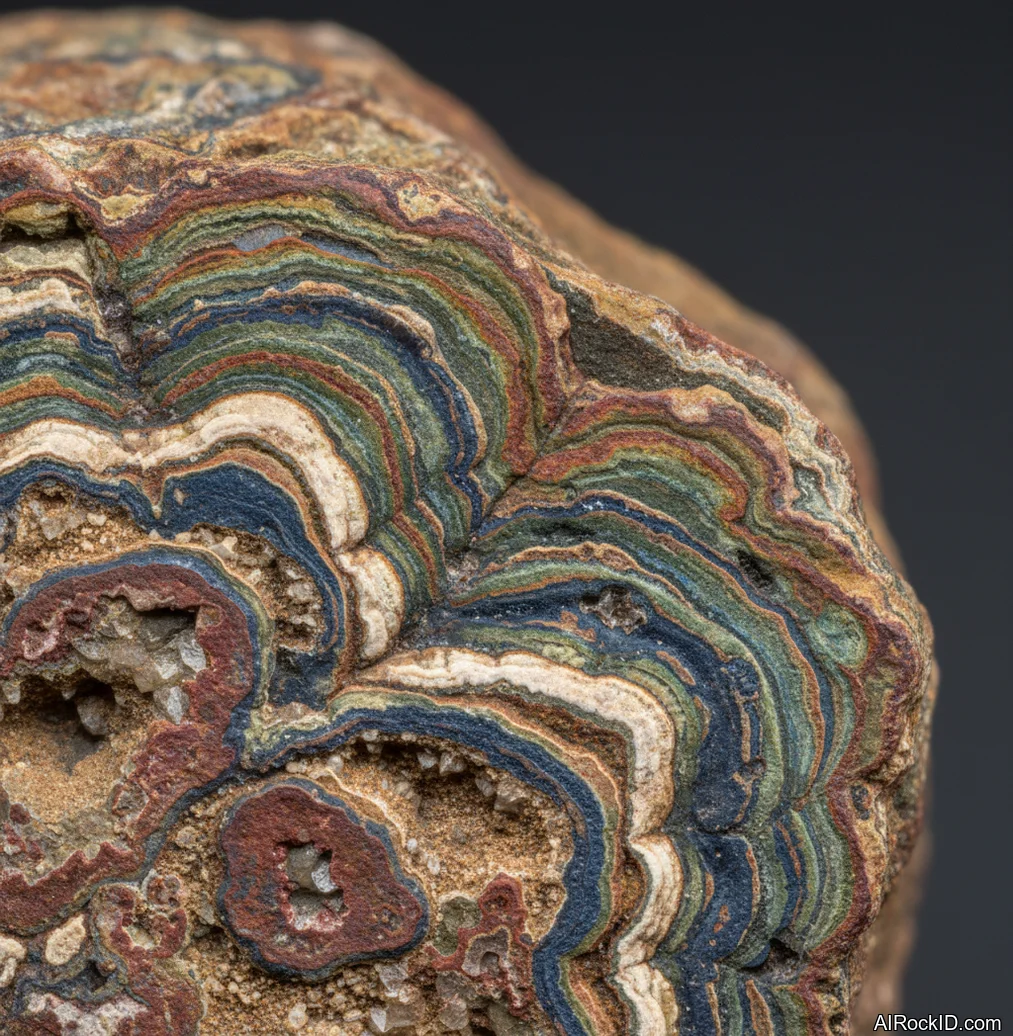
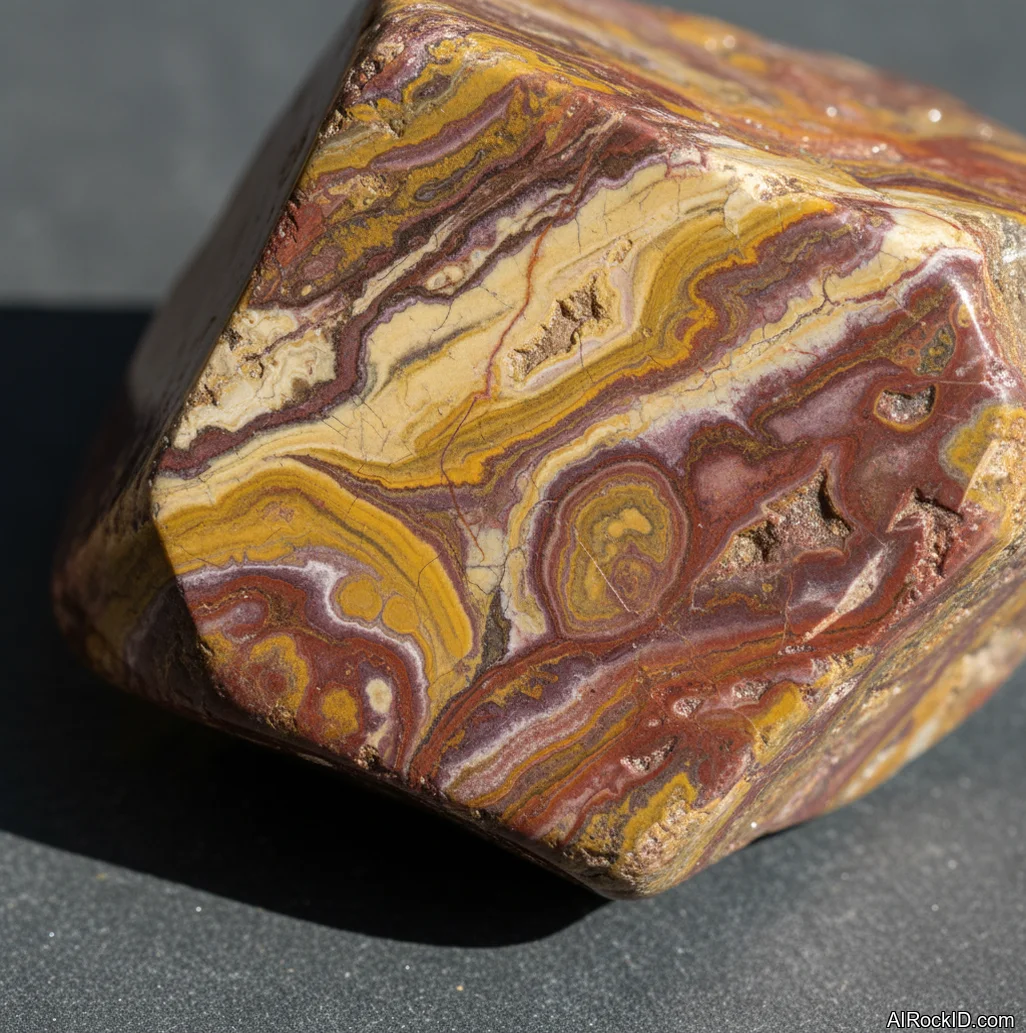
Color: Most pieces are tan, beige, brown, cream, and rusty red, often with lighter shell arcs or circular cross-sections. Some shows a mottled, brecciated look where the fossil bits break up the background.
Luster: Polished material has a waxy-to-vitreous shine; rough surfaces look dull and chalky until you wet them.
Pick up a piece and tilt it under a single overhead light. Real fossil shell patterns look “embedded” at different depths, not printed on the surface. If you scratch it with a steel nail, it usually won’t bite, but the nail can leave a gray streak that wipes off. The problem with some cheap lookalikes is dyed jasper or printed resin; those feel warmer in the hand and the pattern repeats in a way nature just doesn’t bother with.
Properties of Fossil Shell Jasper
Physical Properties
| Crystal System | Trigonal |
| Hardness (Mohs) | 6.5-7 (Hard (6-7.5)) |
| Density | 2.58-2.65 |
| Luster | Waxy |
| Diaphaneity | Opaque |
| Fracture | Conchoidal |
| Streak | White |
| Magnetism | Non-magnetic |
| Colors | Tan, Beige, Brown, Cream, Red, Yellow, Gray |
Chemical Properties
| Classification | Silicates |
| Formula | SiO2 |
| Elements | Si, O |
| Common Impurities | Fe, Mn, Al, Ca |
Optical Properties
| Refractive Index | 1.530-1.540 |
| Birefringence | None |
| Pleochroism | None |
| Optical Character | Uniaxial |
Fossil Shell Jasper Health & Safety
It’s safe to handle, and it’s fine around water in normal day-to-day use. Thing is, like any quartz-rich stone, the only real worry is the dust you kick up if you cut it or sand it (that fine, gritty powder that hangs in the air for a second).
Safety Tips
If you’re going to grind or drill it, run water on it, wear a real respirator (not just a paper mask), and wipe up the wet slurry when you’re done instead of sweeping up dry dust. Why make more dust than you have to?
Fossil Shell Jasper Value & Price
Price Range
Rough/Tumbled: $3 - $25 per palm stone or small piece
Cut/Polished: $1 - $8 per carat
Price usually comes down to two things: how crisp the pattern is, and how “shell-y” it still looks after you polish it up. Big slabs are where the numbers climb in a hurry, but only if the fossil cross-sections are clean and high-contrast. And yeah, orientation matters more than people think. If the cutter lined it up right, the whole thing pops the second the shine hits it.
Durability
Durable — Scratch resistance: Good, Toughness: Good
It’s basically quartz, so it holds up well in daily handling, but thin edges and drilled holes can chip if you drop it on tile.
How to Care for Fossil Shell Jasper
Use & Storage
Keep it in a pouch or a divided box if it’s polished, since jasper will still scuff softer stones sitting against it. And if it’s a slab, store it flat so corners don’t get dinged.
Cleaning
1) Rinse with lukewarm water and a drop of mild soap. 2) Use a soft toothbrush to get into pits around fossil pockets. 3) Rinse again and dry with a cotton cloth.
Cleanse & Charge
If you do the metaphysical thing, running water or smoke cleansing is fine, and moonlight won’t hurt it. I avoid long, hot sunbathing just because some jasper colors can look a little washed after weeks in a bright window.
Placement
On a desk it’s great as a worry stone because the polish stays smooth and the patterns give your eyes something to land on. In a display case, angle it so the fossil arcs catch side light.
Caution
Skip harsh cleaners or ultrasonic machines if the piece has natural pits or hairline fractures, since liquid can sneak in there and get stuck. And if you’re cutting or drilling it, don’t breathe in the dust.
Works Well With
Fossil Shell Jasper Meaning & Healing Properties
Most people grab Fossil Shell Jasper when they want something steady and earthy, but not boring. It feels like you’re holding “time.” Old seabeds pressed into slow layers, silica creeping in and setting up shop, year after year after year.
When I’m stressed, I reach for that kind of stone over anything sparkly. Sparkly pieces kind of demand you look at them. This one doesn’t. It just sits there, heavy in your palm, like it’s saying, “Yeah, breathe. We’ve got a minute.”
Pick up a polished piece and run your thumb across the fossil shapes. Even with that glossy finish, you can catch tiny texture shifts where the polish hits a harder spot versus a softer pocket. It’s subtle, but you feel it. And that’s why people work it into grounding routines, as an actual physical anchor while you’re thinking, journaling, or trying to stop the mental spin (you know the one).
But look, let’s be honest: none of this replaces medical care, and a rock isn’t going to magically fix your nervous system. What it can do is give you a consistent object to hold while you practice a habit you’re building. Fossil Shell Jasper is good for that because it’s tough, it’s cheap enough that you’ll actually use it, and it stays interesting so you don’t ditch it after a week.
Identify Any Crystal Instantly
Snap a photo and get properties, value, care instructions, and healing meanings in seconds.