Garnet In Arfvedsonite
What Is Garnet In Arfvedsonite?
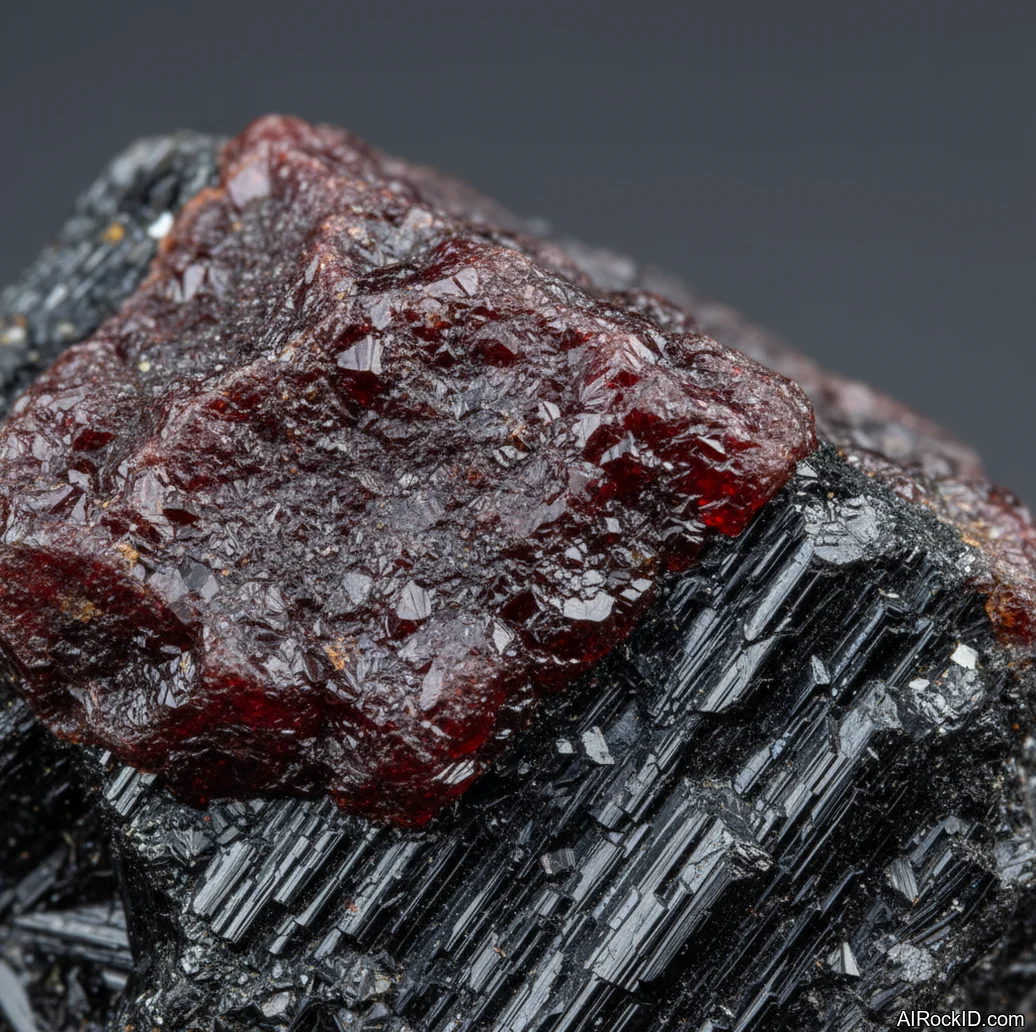
Garnet in Arfvedsonite is a composite rock that’s sold as red garnet crystals set into a dark arfvedsonite amphibole matrix.
Pick up a palm stone and the contrast hits you fast. The garnets read like little red buttons, almost bead-like, sitting in this stormy, inky background that can kick off a silvery-blue flash when you roll it under a lamp. It’s cooler in your hand than you’d guess at first touch, and the matrix has that slightly “oily” amphibole look, not the cleaner, glassy shine you’d expect from quartz.
But look, here’s the honest bit. A lot of the stuff on the market gets polished hard, so people assume they’re holding one single mineral with one neat set of properties. That’s not what it is. You’ve got tough garnet spots sitting in a more splintery amphibole matrix, so it’ll take a nice polish, sure, but it can still chip along the edges if it gets knocked around in a pocket (ever notice those tiny corner dings after a day out?).
Origin & History
Arfvedsonite first got described in 1823, and it was named after the Swedish chemist Johan August Arfwedson, the same person linked to the discovery of lithium. That name stuck to this dark amphibole because it turns up in alkaline igneous settings, where the chemistry’s a bit odd compared to plain, everyday granite.
Garnet’s been recognized and used for a long time. But “garnet in arfvedsonite” as a trade name is newer, more like modern lapidary and shop talk than anything old-school. You mostly see it popping up over the last couple decades in gem show bins, usually as palm stones, spheres, slabs, and those flat display pieces cut to really show the red crystals against that black-blue background.
Where Is Garnet In Arfvedsonite Found?
It’s associated with alkaline igneous complexes and related metamorphic zones where amphiboles and garnet can occur together. Most retail material is sold without tight locality info, but Brazil is a common source in the trade.
Formation
Arfvedsonite is a sodium-heavy amphibole you mostly run into in alkaline igneous rocks that are silica-undersaturated to only mildly silica-rich, especially nepheline syenites and the pegmatites tied to them. Thing is, it usually shows up when the melt cools slowly and the chemistry gets a little weird, with enough sodium and iron around to grow a dark amphibole instead of the more typical hornblende.
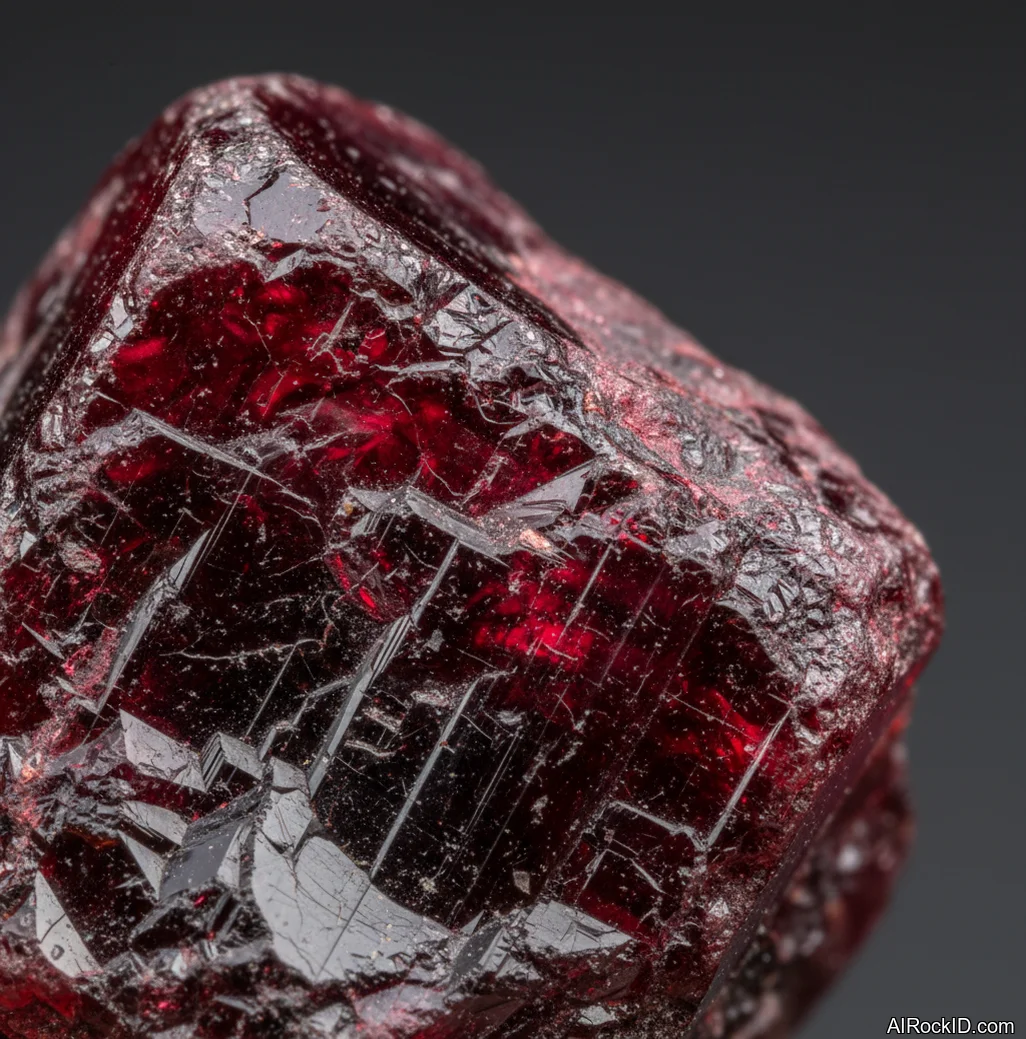
And the garnet you see in these pieces is commonly an iron-rich variety like almandine (though sometimes it leans toward spessartine, depending on the chemistry). Garnet can form late in igneous crystallization, or it can grow during metamorphism when the rock’s been heated and squeezed and the ingredients line up just right. In hand samples, you’ll often spot rounded to dodecahedral garnet crystals that look kind of “set into” the matrix, because garnet tends to grow as chunky, stand-alone crystals while the amphiboles creep in later and fill, wrap, and weave around them as the rock keeps evolving.
How to Identify Garnet In Arfvedsonite
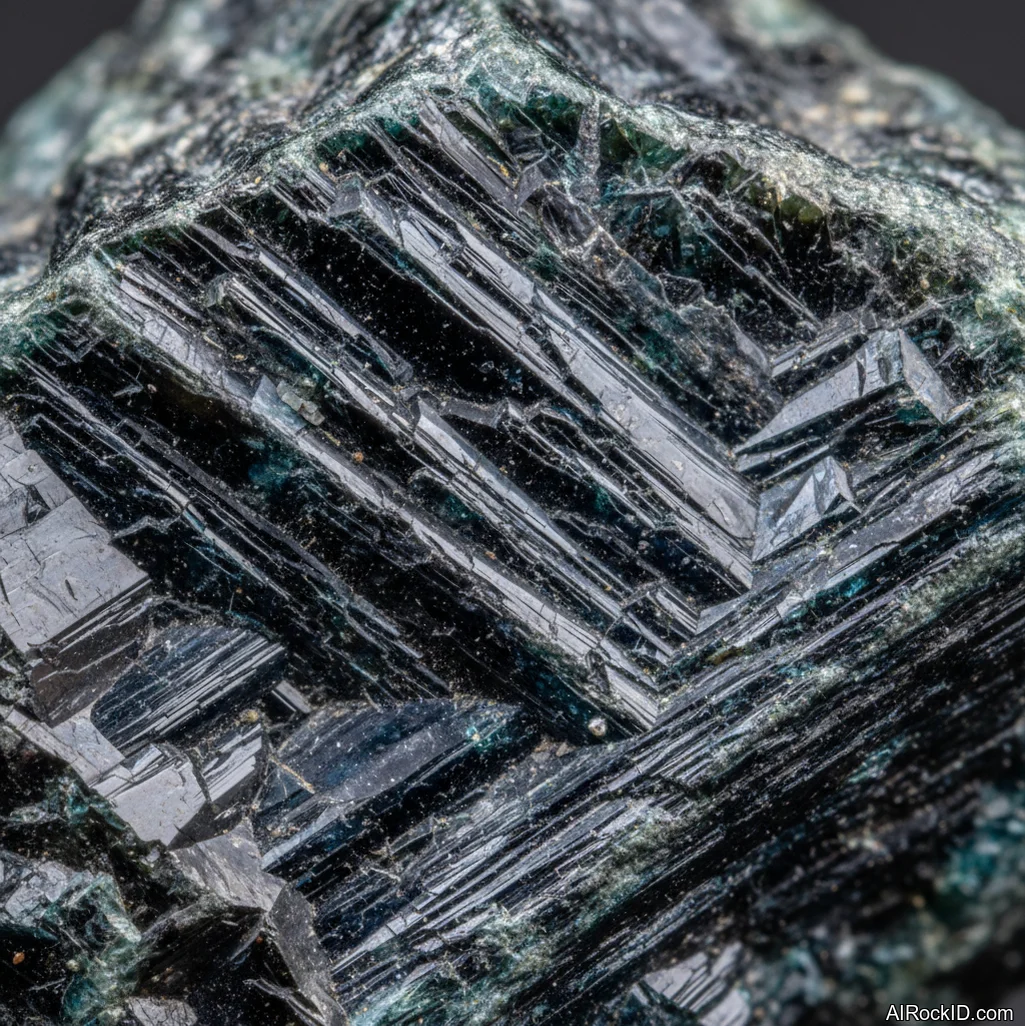
Color: Matrix is typically deep blue-black to black with occasional silvery-blue sheen; garnets show as red to reddish-brown crystals or spots. Some pieces look almost wine-red in the garnets under warm indoor light.
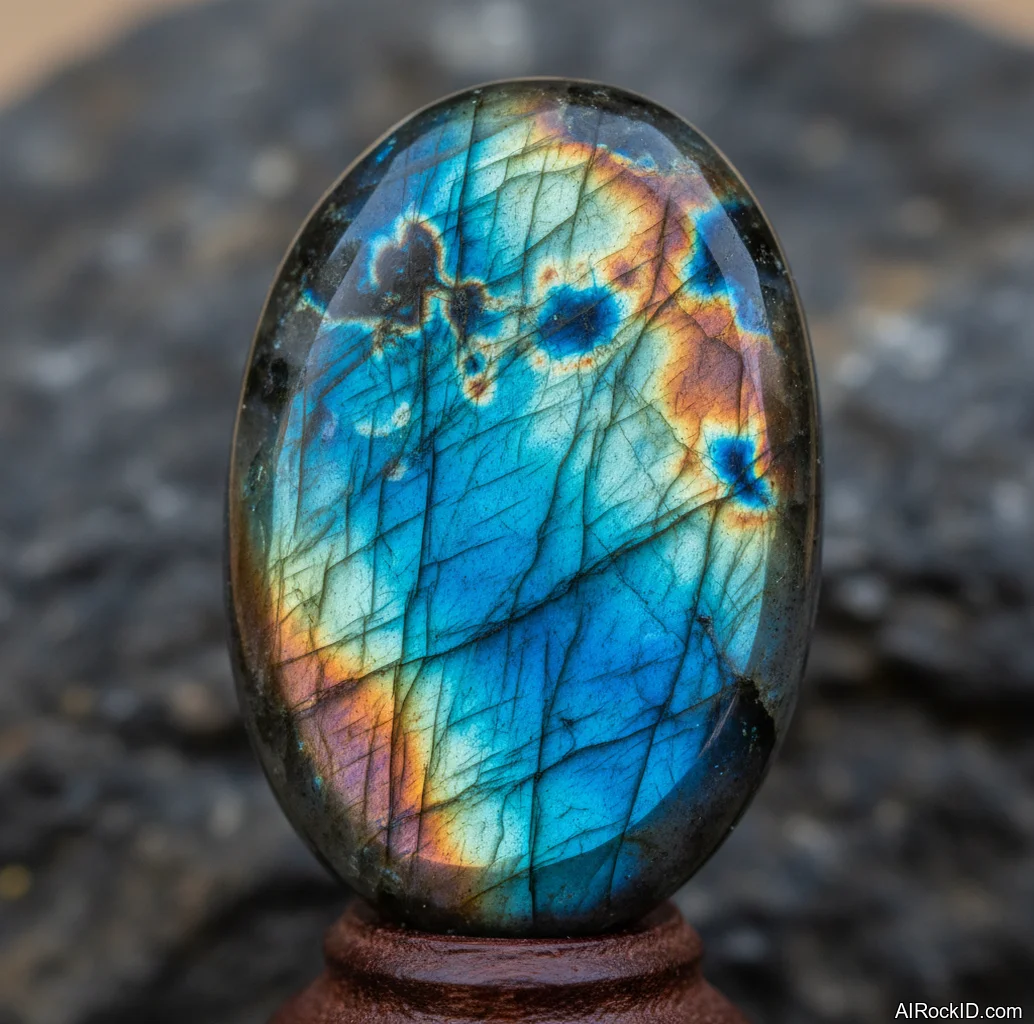
Luster: Arfvedsonite is usually vitreous to silky on fresh surfaces; polished pieces can look glossy with a subtle chatoyant flash.
Look closely at the garnet spots with a loupe. Real garnet tends to have crisp crystal faces or curved dodecahedral outlines, not painted-looking circles. Pick up two similar-sized stones and compare weight. The real stuff tends to feel a bit heavier than a dyed resin fake, and it stays cool in your hand longer. The real test is a bright point light. Tilt it and you’ll catch that amphibole sheen sweeping across the matrix, while the garnet areas stay more glassy and “still.”
Properties of Garnet In Arfvedsonite
Physical Properties
| Crystal System | Monoclinic |
| Hardness (Mohs) | 5-7.5 (Hard (6-7.5)) |
| Density | 3.4-4.3 g/cm3 |
| Luster | Vitreous |
| Diaphaneity | Opaque |
| Fracture | Splintery |
| Streak | grayish white |
| Magnetism | Weakly Magnetic |
| Colors | black, blue-black, dark gray, red, reddish-brown |
Chemical Properties
| Classification | Silicates |
| Formula | Arfvedsonite: Na3(Fe2+4Fe3+)Si8O22(OH)2; Garnet (almandine endmember): Fe3Al2(SiO4)3 |
| Elements | Na, Fe, Al, Si, O, H |
| Common Impurities | Mn, Mg, Ti, Ca |
Optical Properties
| Refractive Index | 1.68-1.88 |
| Birefringence | 0.020-0.030 |
| Pleochroism | Strong |
| Optical Character | Biaxial |
Garnet In Arfvedsonite Health & Safety
It’s safe to handle and keep on display. But if you’re sanding or drilling it, don’t breathe in the dust. Polished pieces are low-risk for normal use.
Safety Tips
If you’re going to cut or grind it, keep a little water running on the spot to knock the dust down. Wear eye protection too, because those tiny chips can sting like hell when they hit your face. And don’t skip the respirator, just make sure it’s rated for fine mineral dust.
Garnet In Arfvedsonite Value & Price
Price Range
Rough/Tumbled: $10 - $120 per piece
Prices bounce around depending on how clean the matrix is, how deep red the garnets are and how nicely they’re formed, plus what you’re actually buying: a basic palm stone, or a heavier sphere or slab that’s been polished until it throws a strong sheen when you tilt it under a light.
Durability
Moderate — Scratch resistance: Good, Toughness: Fair
It’s stable as a display stone, but the amphibole-rich matrix can chip on corners even when the garnet areas stay intact.
How to Care for Garnet In Arfvedsonite
Use & Storage
Keep it in a soft pouch or a separate compartment if you’ve got other stones in the same box. Garnet can scratch softer stuff, and the matrix edges can get dinged up in a jumble.
Cleaning
1) Rinse briefly with lukewarm water. 2) Use a soft brush with a drop of mild soap to lift skin oils from polished surfaces. 3) Rinse and dry completely with a microfiber cloth.
Cleanse & Charge
If you do energy-style cleansing, stick to gentle options like smoke, sound, or a quick pass under running water. Long salt soaks can be rough on mixed-material stones over time.
Placement
A windowsill looks great for the sheen, but don’t cook it in hot direct sun on a glass shelf. A stable shelf with angled light is where the matrix flash really shows.
Caution
Skip ultrasonic cleaners and anything too harsh chemical-wise. They’ve got a way of sneaking into the hairline seams where the garnet meets the matrix, and once that happens, chipping gets a lot more likely.
Works Well With
Garnet In Arfvedsonite Meaning & Healing Properties
In crystal shops, this is the stone people grab when they want “grounded but not dull.” I get it. It has that vibe the second you pick it up. The garnet hits first with this steady, warm nudge, and then the arfvedsonite comes in cooler and darker, almost like looking into a night sky, especially when that silvery flash catches at an angle.
Look, grab a polished piece and run your thumb right over the line where the garnet bumps into the dark matrix. Even when it’s smooth, you can still feel the change. Tiny shift. Slight drag. It’s subtle, but it’s there (and once you notice it, you keep noticing it). That physical contrast is a big part of why people reach for it when they’re trying to focus and actually finish what they start. It’s like a little cue in your hand: you can be intense without getting pulled in five directions. Who doesn’t need that sometimes?
And just to keep it real, none of this is medical care. If someone’s trying to sell it like it’ll fix anxiety or cure anything, I’d step back. I use it more like a supportive object for routines. On my desk when I’m buried in paperwork. In a pocket on days I’m trying not to procrastinate. Or next to the bed when my thoughts want to sprint.
Identify Any Crystal Instantly
Snap a photo and get properties, value, care instructions, and healing meanings in seconds.