Golden Calcite
What Is Golden Calcite?
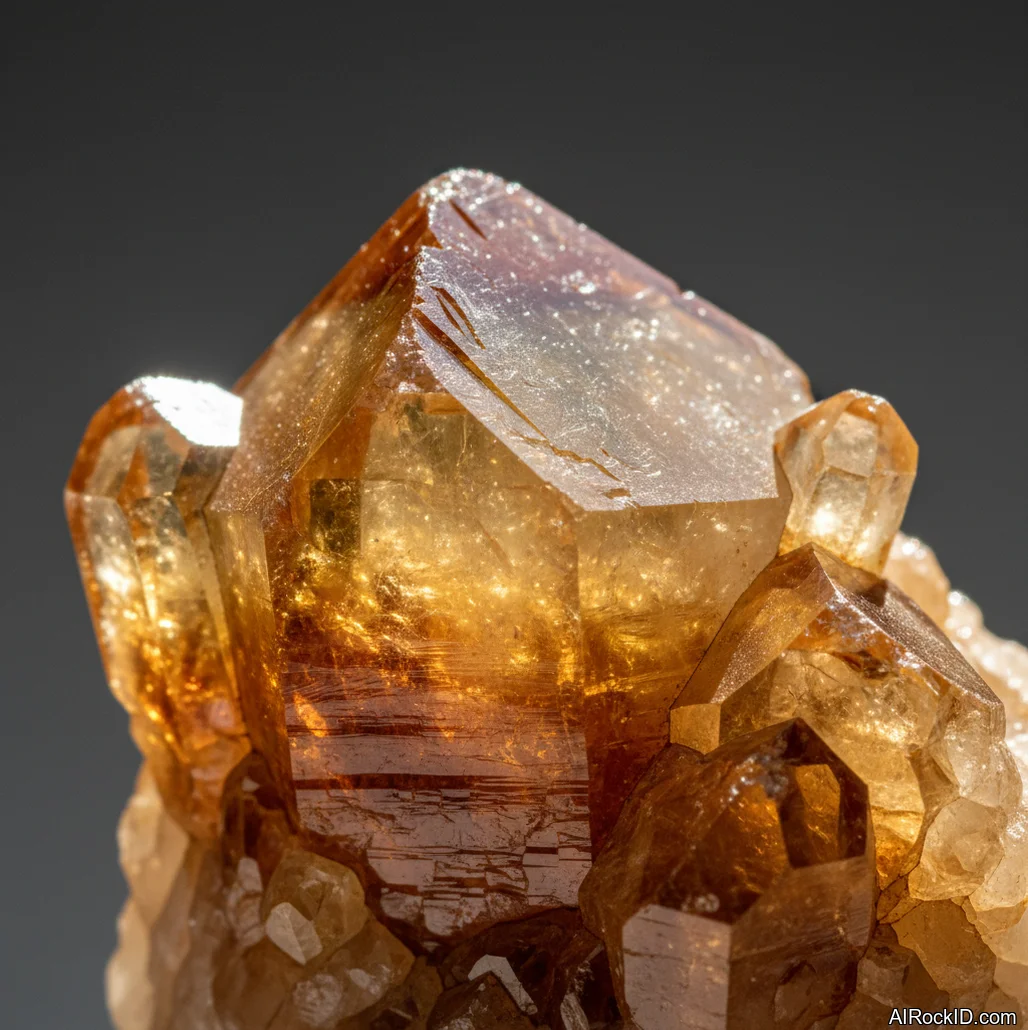
Golden Calcite is the yellow to honey-colored kind of calcite (calcium carbonate, CaCO3). Most of what you’ll run into are translucent chunks or chunky cleavage blocks, and the edges light up when you hit them with a beam, sort of like candle wax. Just heavier.
Pick one up. The weight is the first thing you clock. Calcite has that “yep, this is a rock” heft, and Golden Calcite in particular can feel a little slick on a fresh cleavage face, almost like a shard of glass that’s been passed around for years. Tip it under a shop light and the inside flashes, then the glow snaps off when you move it a couple degrees. Kinda dramatic. But it’s touchy, too. Drop it once and you’ll usually earn yourself a new chip.
People mix it up with citrine constantly, especially when it’s polished. Thing is, calcite gives itself away pretty quick: it’s softer, it has perfect rhombohedral cleavage, and you can sometimes catch that doubled-image effect if you set it over text and peer through a clearer edge.
Origin & History
Calcite got its formal mineral-species write-up in 1836, credited to Wilhelm Karl von Haidinger. The word “calcite” comes from the Latin *calx*, meaning lime, which tracks because it’s basically the same chemistry you’re dealing with in limestone and marble.
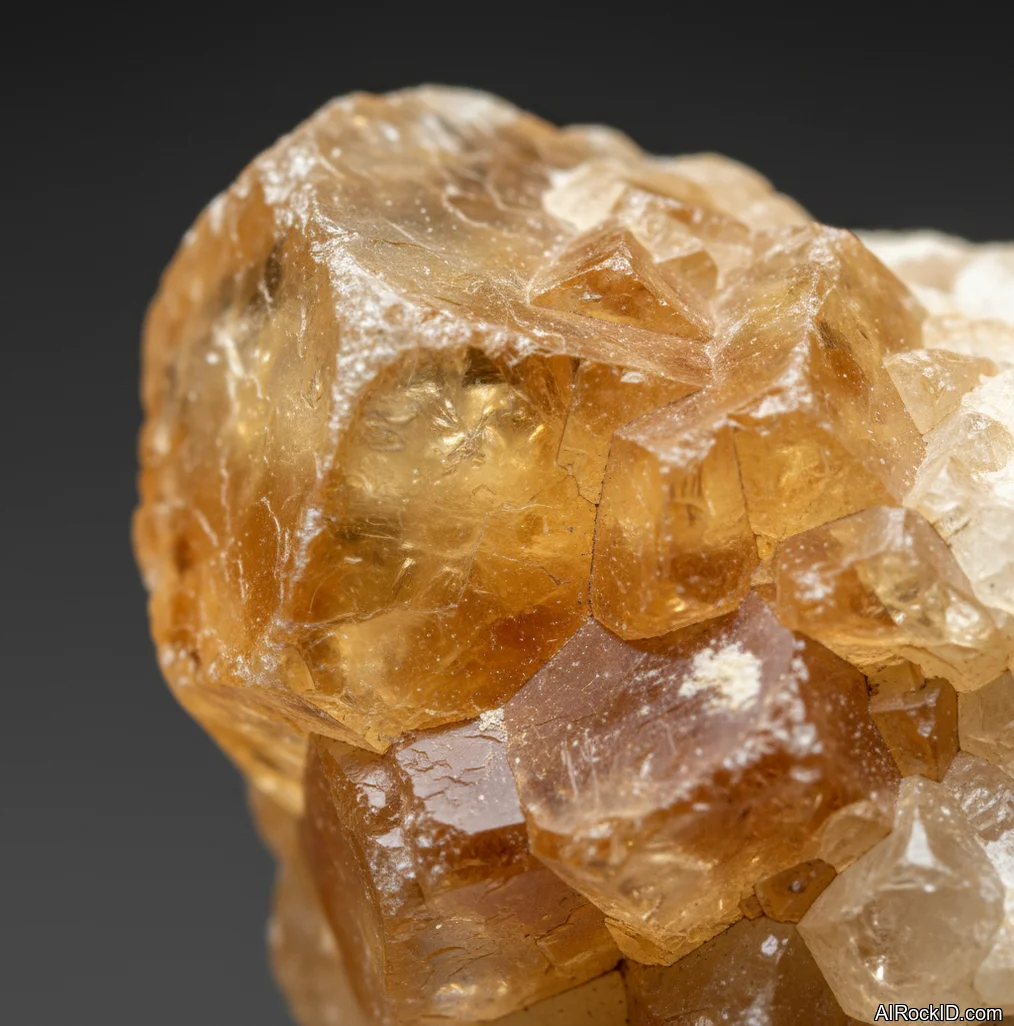
And “Golden Calcite”? That’s not some separate, official species name. It’s just a trade label shops and collectors slap on calcite that runs yellow through honey tones. I remember first seeing it pushed as Honey Calcite at gem shows in the 90s, usually sitting on the table as chunky polished freeforms and those big raw blocks with rough, sugary-looking faces (like they’d been popped right out of a vein pocket).
Where Is Golden Calcite Found?
Golden Calcite shows up in carbonate-rich veins and cavities worldwide, with a lot of lapidary-grade material coming from Mexico and Brazil and good collector pieces from classic U.S. mines.
Formation
Most Golden Calcite shows up when mineral-loaded fluids squeeze through cracks in limestone (or whatever rock is hosting it) and start dropping out calcium carbonate as the situation shifts. The conditions are touchy. Temperature. Pressure. CO2 levels. Impurities. Change any of that and the growth changes right along with it. Iron is a big deal for those yellow-to-honey colors, and every so often you’ll catch faint brown zoning where the chemistry wandered halfway through the crystal’s growth.
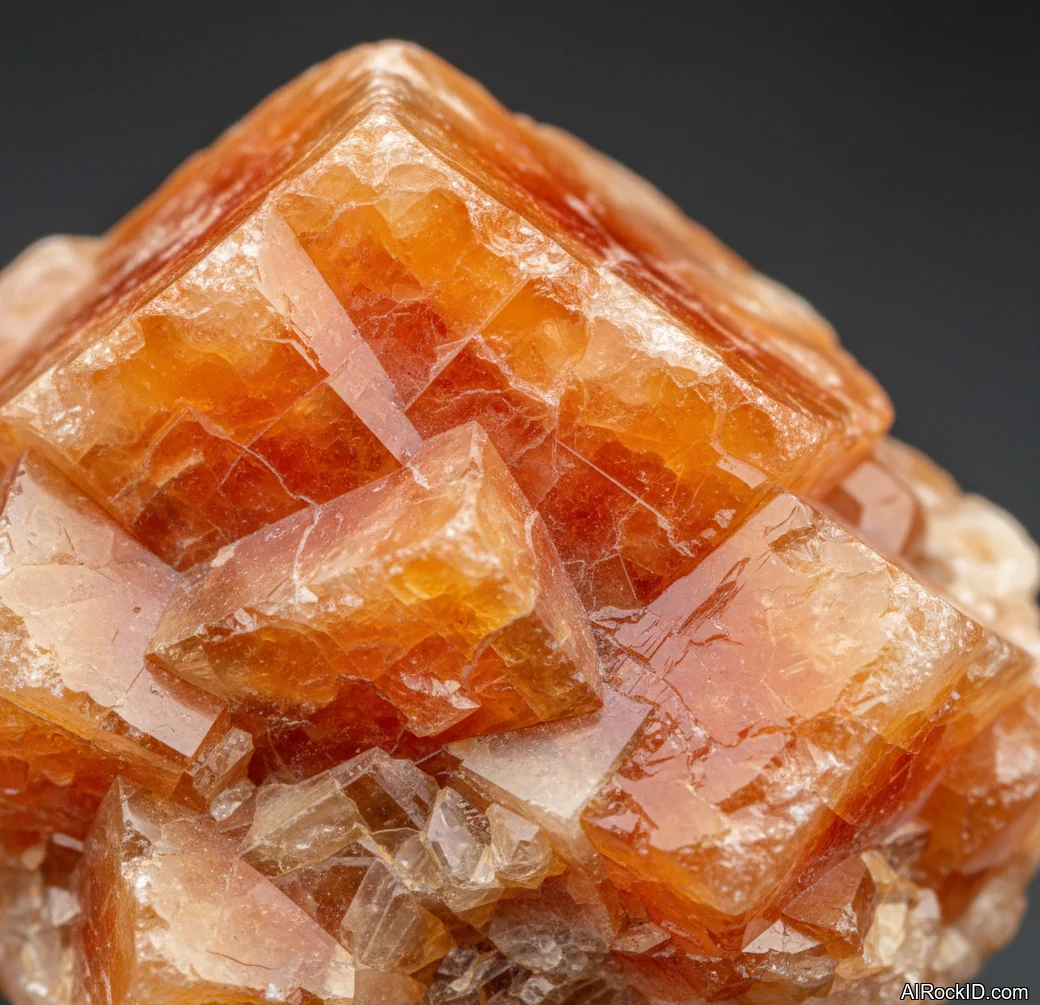
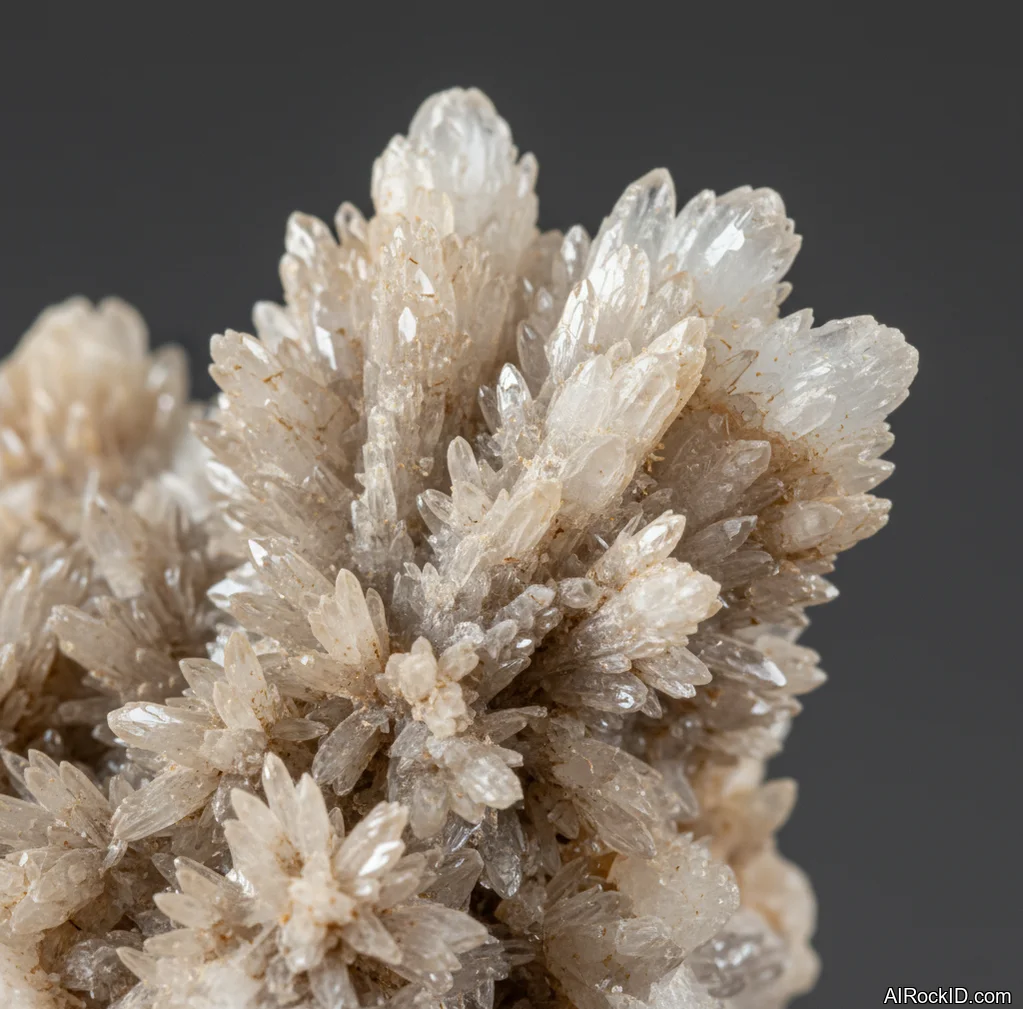
Look, if you pick up a raw chunk and really stare at it under decent light, you can sometimes “read” how it formed. You might see stacked rhombs, little stepped faces, or that chunky cleave-block vibe that comes from calcite’s perfect cleavage planes (the kind that makes it want to split into smooth flat sheets if you tap it wrong). But calcite can grow in caves and other near-surface spots too, so sometimes it comes out as softer-looking masses that don’t show a clean crystal shape at all, even though the cleavage is still sitting in there, ready to pop open.
How to Identify Golden Calcite
Color: Color ranges from pale butter yellow to deep honey, sometimes with caramel bands or cloudy white patches. The tone can look stronger at edges where light travels through more material.
Luster: Luster is vitreous to pearly, especially on fresh cleavage faces.
If you scratch it with a copper coin, it’ll usually mark, and a steel nail will bite in easily. The real test is the cleavage: break or chip an inconspicuous corner and it wants to split into rhombohedrons with flat, shiny faces. And if you put a clearer piece over printed text, you may see double images from calcite’s strong birefringence.
Properties of Golden Calcite
Physical Properties
| Crystal System | Trigonal |
| Hardness (Mohs) | 3 (Soft (2-4)) |
| Density | 2.71 g/cm3 |
| Luster | Vitreous |
| Diaphaneity | Transparent to translucent |
| Fracture | Uneven |
| Streak | White |
| Magnetism | Non-magnetic |
| Colors | Golden yellow, Honey yellow, Pale yellow, Yellow-brown, Cream |
Chemical Properties
| Classification | Carbonates |
| Formula | CaCO3 |
| Elements | Ca, C, O |
| Common Impurities | Fe, Mn, Mg |
Optical Properties
| Refractive Index | 1.486-1.658 |
| Birefringence | 0.172 |
| Pleochroism | None |
| Optical Character | Uniaxial |
Golden Calcite Health & Safety
Golden Calcite is non-toxic, so it’s safe to handle with bare hands. Thing is, the main “care” part isn’t about chemicals at all. It’s just about keeping it from getting chipped or scratched, especially on the edges and those little points that can catch when you set it down.
Safety Tips
If you’re cutting or grinding calcite, don’t breathe the dust. Run water on the cut, keep the area ventilated, and treat it like the fine white powder it turns into when it starts drying out.
Golden Calcite Value & Price
Price Range
Rough/Tumbled: $5 - $80 per piece
Prices jump fast once you get into higher clarity, cleaner edges, and bigger display pieces. Most dealers have bins of tumbled or carved Golden Calcite for cheap, but those larger translucent chunks with sharp, crisp faces and hardly any bruising (the kind that don’t have that chalky scuffed look on the corners) will cost more.
Durability
Nondurable — Scratch resistance: Poor, Toughness: Poor
Golden Calcite is stable in normal indoor conditions, but it scratches easily and chips along cleavage if it’s knocked around.
How to Care for Golden Calcite
Use & Storage
Store it by itself or in a padded box so harder stones don’t scuff it up. I don’t toss calcite into “mixed tumble bowls” because it comes out looking tired fast.
Cleaning
1) Rinse quickly with lukewarm water if needed. 2) Wipe with a soft microfiber cloth and a drop of mild soap. 3) Rinse and pat dry right away, then air-dry fully before putting it back on a shelf.
Cleanse & Charge
For non-water methods, use smoke, sound, or a night on a shelf away from direct sun. If you do use water, keep it brief and dry it well so it doesn’t sit damp in cracks.
Placement
Put it somewhere it won’t get bumped, like a stable shelf or a tray with a lip. Side lighting looks great on Golden Calcite because the cleavage planes flash when you tilt it.
Caution
Skip acids and acidic cleaners, vinegar included, because calcite reacts and you’ll end up with that dull, etched spot you can feel with a fingernail. And don’t toss it in an ultrasonic cleaner either. So keep it out of your pocket with keys or quartz, unless you want it coming out with little scuffs and cloudy patches.
Works Well With
Golden Calcite Meaning & Healing Properties
Compared to a lot of those high-gloss metaphysical stones, Golden Calcite just feels… practical. When I’m sorting new flats at a show, I like keeping a chunky piece right by the register because it’s grounding without feeling heavy or dark. And it’s the kind of stone you end up rubbing with your thumb without thinking, and after a minute the surface gets a little warm even though it started out cool.
People tie it to confidence, motivation, and mental organization, which tracks if you’ve ever kept one on your desk as a simple, tactile reminder. But it’s not some magic productivity switch. On days when my brain’s totally fried, Golden Calcite doesn’t fix that. It just gives me something steady to lock onto while I scribble out a list or straighten up the mess on my workspace.
If you’re using crystals as part of your personal routines, think of it like a tool for attention and mood, not medicine. I’ve watched people get disappointed because they expect a big emotional hit the first time they pick one up. Thing is, some pieces are loud. Some are quiet. Golden Calcite usually sits in the quiet camp, and honestly, that’s kind of the point.
Identify Any Crystal Instantly
Snap a photo and get properties, value, care instructions, and healing meanings in seconds.