Orange Calcite
What Is Orange Calcite?
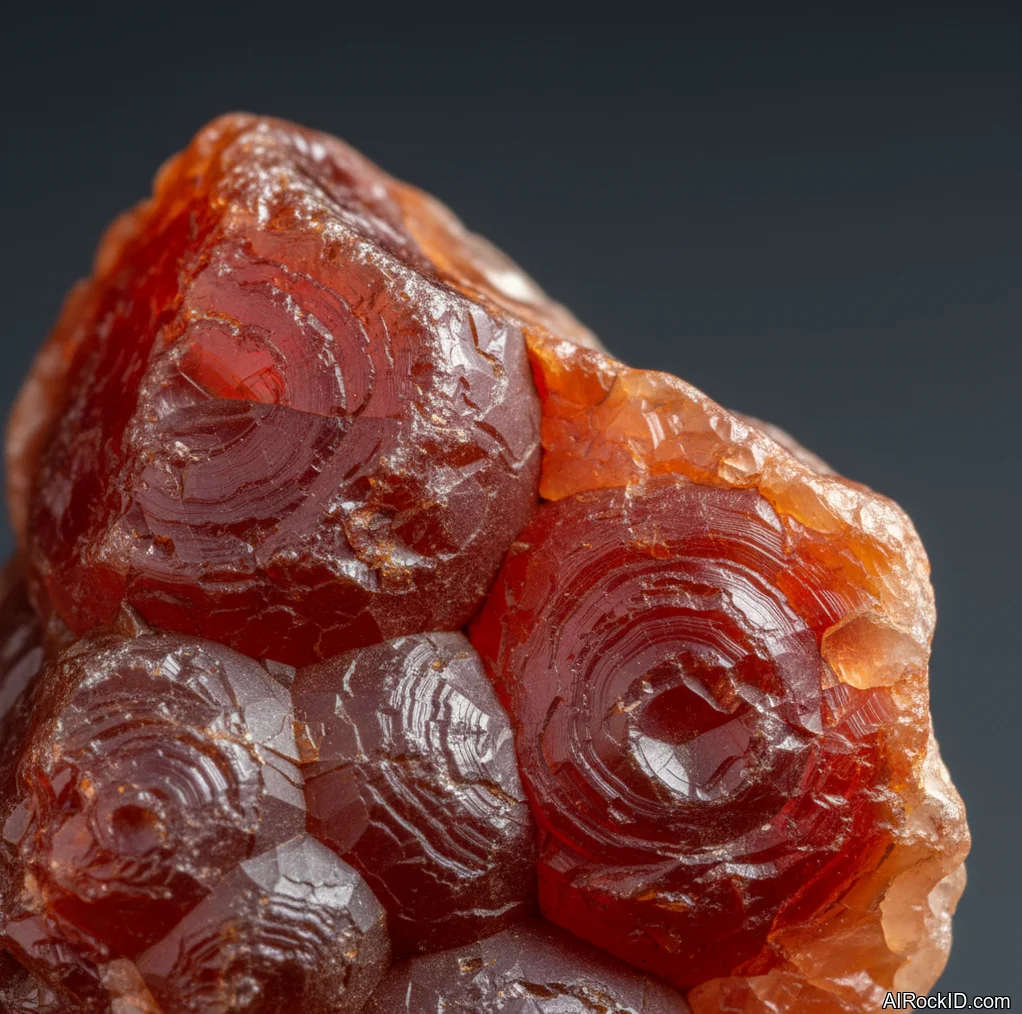
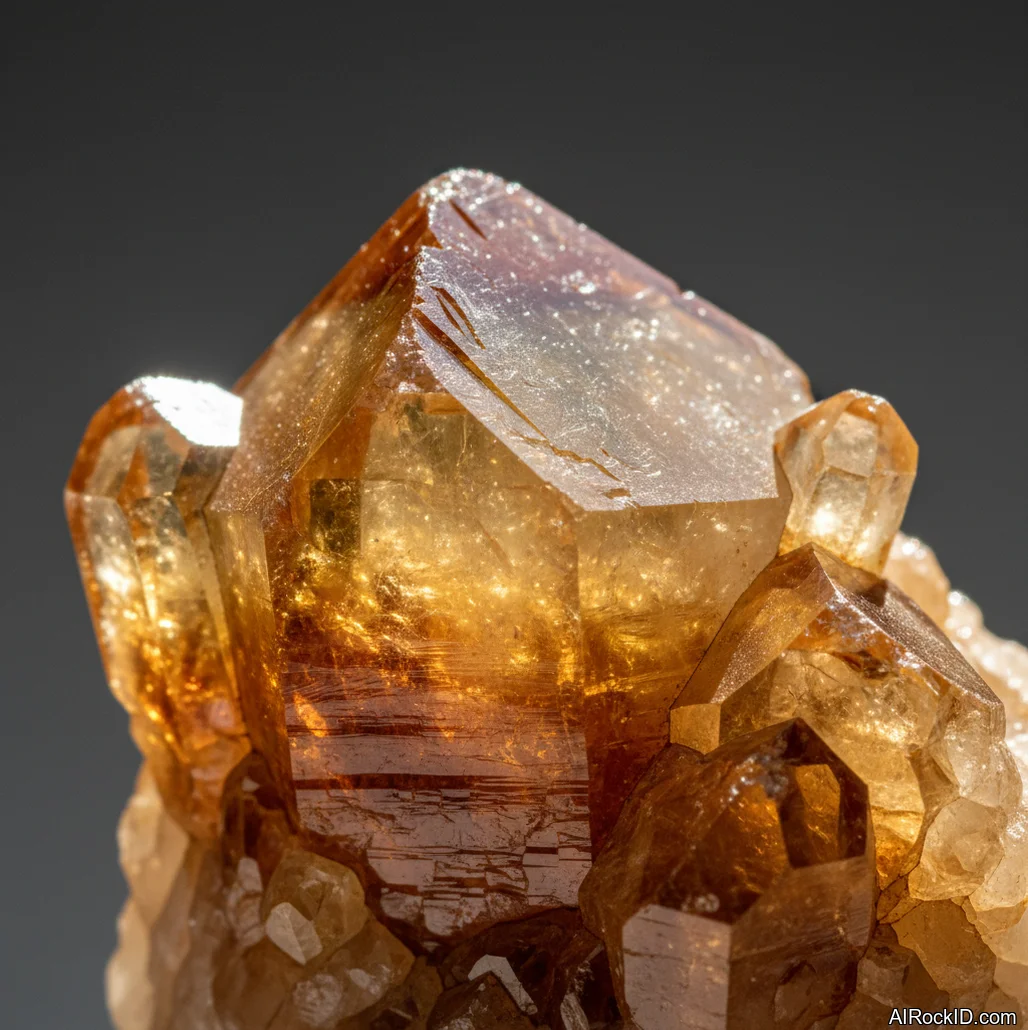
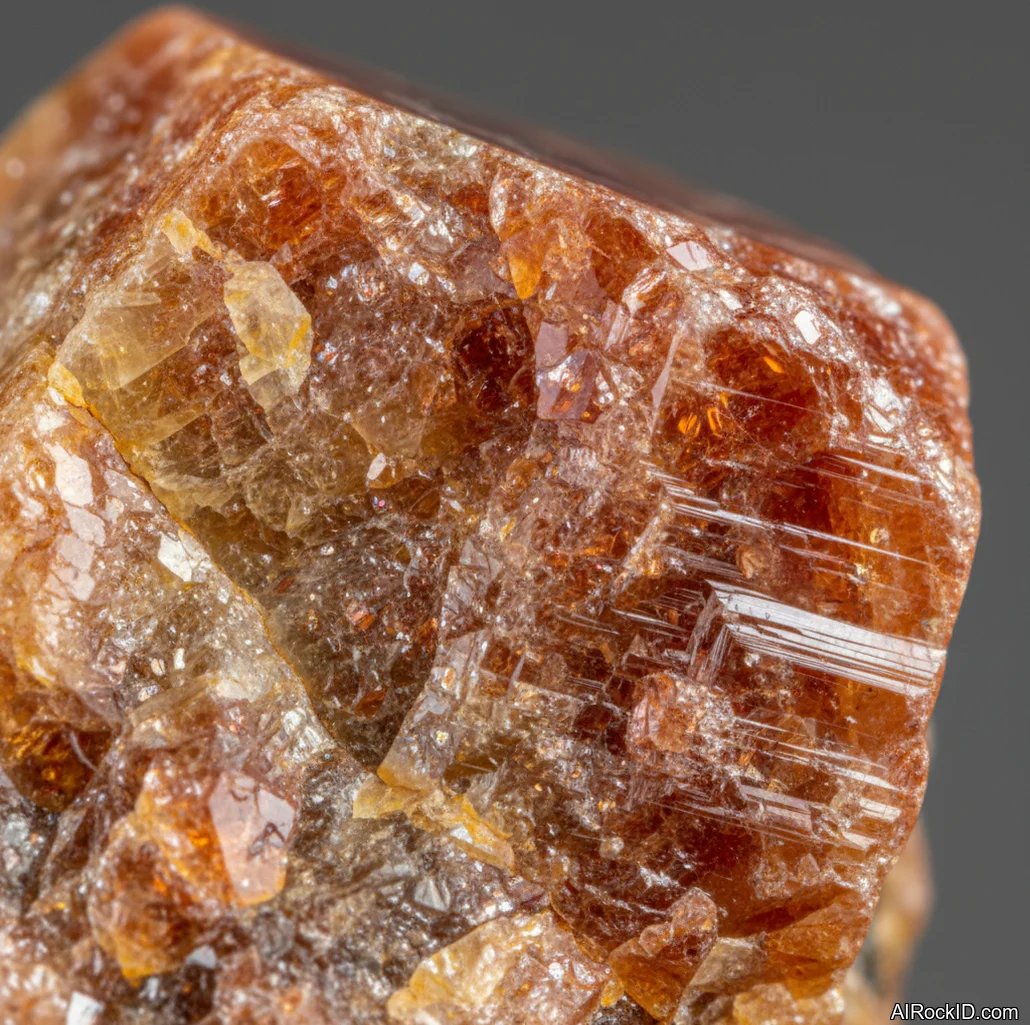
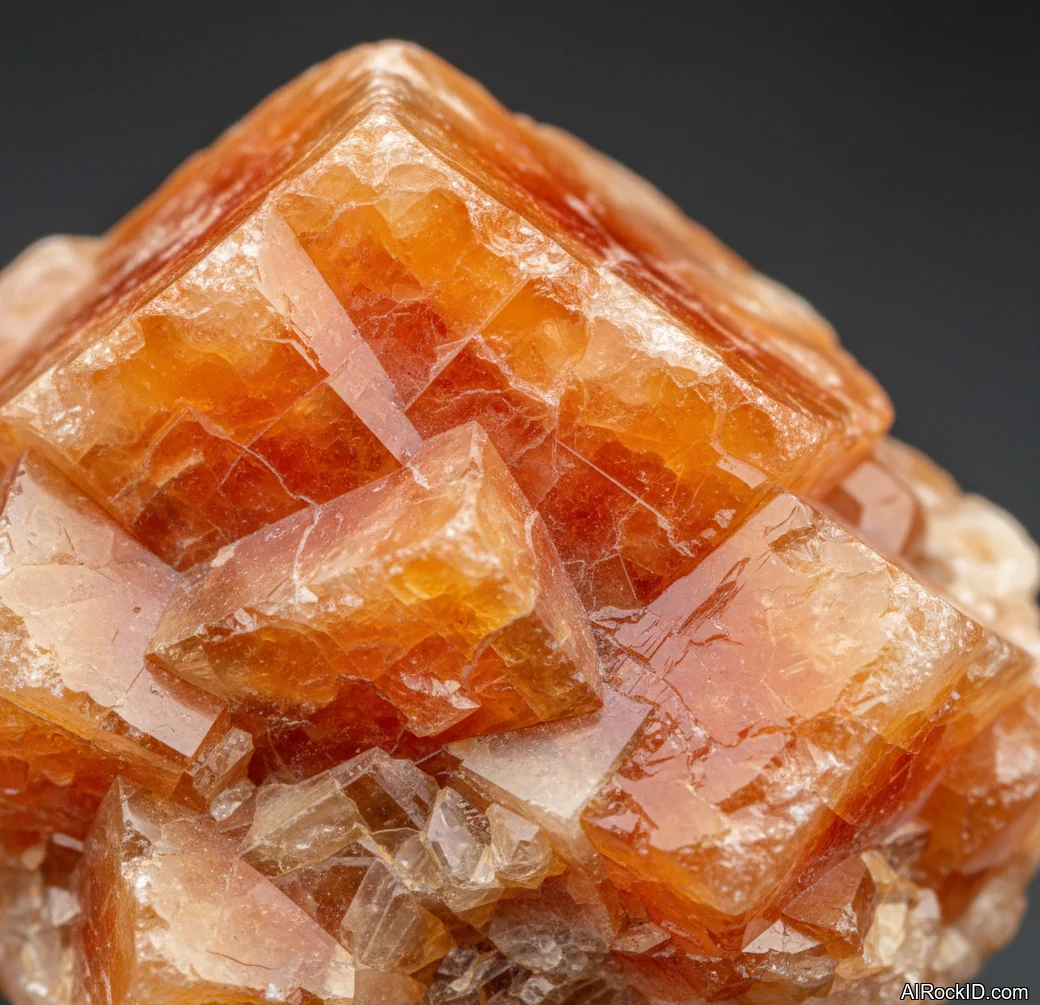
Orange Calcite is just calcite (calcium carbonate, CaCO3) that happens to be orange. Same exact mineral as clear Iceland spar or the white calcite you see in limestone. The difference is tiny impurities and included zones that nudge the color into apricot, pumpkin, or that soft “orange sherbet” vibe.
Grab a chunk and two things hit you fast. It feels cool against your fingers at first. And it’s lighter than you’d guess for the size, which tracks with most carbonates. A fresh cleavage face can look properly glassy, but a lot of the pieces you see in shops are polished, so they get that slick, almost waxy feel that tricks people into thinking it’s harder than it really is (it isn’t).
If you take a second and actually stare at a decent piece, you’ll usually spot internal planes and those cloudy, milky swirls inside. Tip it under a lamp and the cleavage flashes show up, then vanish when you shift it a couple degrees. But don’t expect it to act like quartz. Calcite has perfect cleavage, so an edge can chip just from clacking it against another stone in a bowl. Who hasn’t done that once?
Origin & History
Calcite’s been on people’s radar forever, but the “official” write-up most collectors mean goes back to the 18th century. That’s when Johan Gottschalk Wallerius used the word “calcite” for carbonate material tied to lime. The name itself comes from the Latin *calx*, meaning lime, which clicks the first time you drip a little acid on it and watch it fizz.
Orange Calcite, though, isn’t its own species, so there isn’t some single “discovery day” you can point to. It’s really just a trade and collector label for orange pieces that show up in the same deposits that also spit out calcite in other colors. And dealers didn’t really start leaning into the name until the late 20th century, when big runs of carved hearts, spheres, and palm stones started coming out of Mexico (and a few other countries).
Where Is Orange Calcite Found?
Orange calcite shows up anywhere calcite forms, but the bulk market material is commonly sourced from Mexico, with additional supplies from Brazil, Peru, Madagascar, and parts of the USA and Russia.
Formation
Most orange calcite shows up the same plain, everyday way calcite always does. Hot, mineral-loaded fluids push through little fractures and open pockets in the rock, carbonates drop out of the fluid, and you end up with vein fillings, vugs with crystals on the walls, or those chunky masses people later slice up and polish (you can usually feel how “waxy” the polished face gets under your thumb).
In sedimentary rocks, calcite can form too, just in a slower, quieter way. It grows during diagenesis, plugging up pore spaces like cement, and it can build banded layers as it accumulates.
Compared to quartz, calcite’s kind of “softer” in how it grows and how it fails. Those cleavage directions aren’t a myth. Look, if you’ve ever snapped a piece by accident and it split along a flat, tidy plane, that was the crystal structure doing exactly what it’s built to do.
And that orange color? Usually it’s trace iron or other impurities. Sometimes you’ll notice zoning, where the orange shifts in bands because the fluid chemistry changed over time. That’s the story written right into it, even if it’s subtle at first glance.
How to Identify Orange Calcite
Color: Color ranges from pale peach to deep orange, often with milky white banding or cloudy patches. Many pieces show subtle color zoning rather than a single flat tone.
Luster: Vitreous to slightly pearly on cleavage faces, with a glossy polish on worked pieces.
If you scratch it with a copper coin or a steel nail, it’ll mark easily because calcite is only Mohs 3. The real test is a drop of dilute acid: calcite will fizz, even more strongly if you scratch a spot first. And in your hand, it doesn’t have that “hard, crisp” feel quartz has; edges dent and chip sooner than people expect.
Properties of Orange Calcite
Physical Properties
| Crystal System | Trigonal |
| Hardness (Mohs) | 3 (Soft (2-4)) |
| Density | 2.71 g/cm3 |
| Luster | Vitreous |
| Diaphaneity | Transparent to translucent |
| Fracture | Uneven |
| Streak | White |
| Magnetism | Non-magnetic |
| Colors | Orange, Peach, Apricot, Honey, Orange-white banded |
Chemical Properties
| Classification | Carbonates |
| Formula | CaCO3 |
| Elements | Ca, C, O |
| Common Impurities | Fe, Mn, Mg |
Optical Properties
| Refractive Index | 1.486-1.658 |
| Birefringence | 0.172 |
| Pleochroism | None |
| Optical Character | Uniaxial |
Orange Calcite Health & Safety
It’s usually fine to handle. But because it cleaves, it can chip off into tiny, razor-sharp flakes (the kind that’ll snag your skin before you even notice). So if you’re cutting or sanding it, don’t breathe the dust.
Safety Tips
If you’re lapping or carving calcite, put on safety glasses and a proper dust mask. And run water while you work to keep the dust from kicking up everywhere. Calcite dust gets in your eyes and throat fast, and it’s just not worth it.
Orange Calcite Value & Price
Price Range
Rough/Tumbled: $5 - $80 per piece
Cut/Polished: $1 - $8 per carat
Price mostly comes down to how saturated the color looks, how translucent it is when you hold it up to a light, and whether the polish is clean or kind of hazy with little drag marks. Big pieces that are bright and don’t have many fractures usually cost more. But calcite’s common, so there’s almost always a cheaper bin tucked somewhere on the table if you’re willing to dig a bit.
Durability
Nondurable — Scratch resistance: Poor, Toughness: Poor
It’s stable in normal room conditions, but it scratches, cleaves, and etches easily from acids and many household cleaners.
How to Care for Orange Calcite
Use & Storage
Store it by itself or in a soft pouch so harder stones don’t scratch it up. If you keep a bowl of mixed tumbles, calcite will be the one that ends up dull and bruised.
Cleaning
1) Rinse quickly with lukewarm water and a tiny bit of mild soap. 2) Wipe with a soft cloth or microfiber, no scrubbing pads. 3) Pat dry right away and keep it away from vinegar, citrus cleaners, and anything acidic.
Cleanse & Charge
If you do energetic cleansing, stick to gentle options like smoke, sound, or a quick pass over dry selenite. I wouldn’t soak it in salt water since it can pit the surface over time.
Placement
Keep it off sunny windowsills if you want it looking fresh, since polished calcite can lose its crisp shine when it gets handled and sunbaked. A shelf spot where it won’t get bumped is the move.
Caution
Calcite sits at a 3 on the Mohs scale, so it scratches pretty easily, and acids will etch it, even the kind hiding in a lot of bathroom and kitchen cleaners. So skip the ultrasonic and steam cleaners. And don’t just toss it into a pile with harder stones like quartz, topaz, corundum, or it’ll come out with scuffs (you can usually feel them with a fingernail).
Works Well With
Orange Calcite Meaning & Healing Properties
Orange calcite looks like a “happy color” stone the second you see it, and yeah, that’s exactly how a lot of people use it. In my own pile, it’s the one I reach for when I’m dragging on a slow morning. Not magic. Just a visual nudge, plus that warm orange glow that somehow makes the whole desk feel less gray.
But here’s the thing with calcite that doesn’t get said enough: it’s soft. So if your routine is tossing a stone in your pocket all day, orange calcite is going to get knocked around fast and start looking chalky around the edges. I’ve literally watched palm stones lose that mirror polish in a month just from living next to keys and coins. Want the vibe without wrecking it? Leave a chunk on your nightstand or at your workspace and let it just sit there.
In metaphysical circles, people usually connect it to motivation, creativity, and emotional thawing. Look, I tell customers the same thing I tell friends: treat that as a personal or spiritual tool, not a medical one. If you’re using it for mood or focus, pair it with something grounded, and keep an eye on what changes in your routine are actually doing the heavy lifting. Because something usually is, right?
Identify Any Crystal Instantly
Snap a photo and get properties, value, care instructions, and healing meanings in seconds.