Golden Sheen Obsidian
What Is Golden Sheen Obsidian?
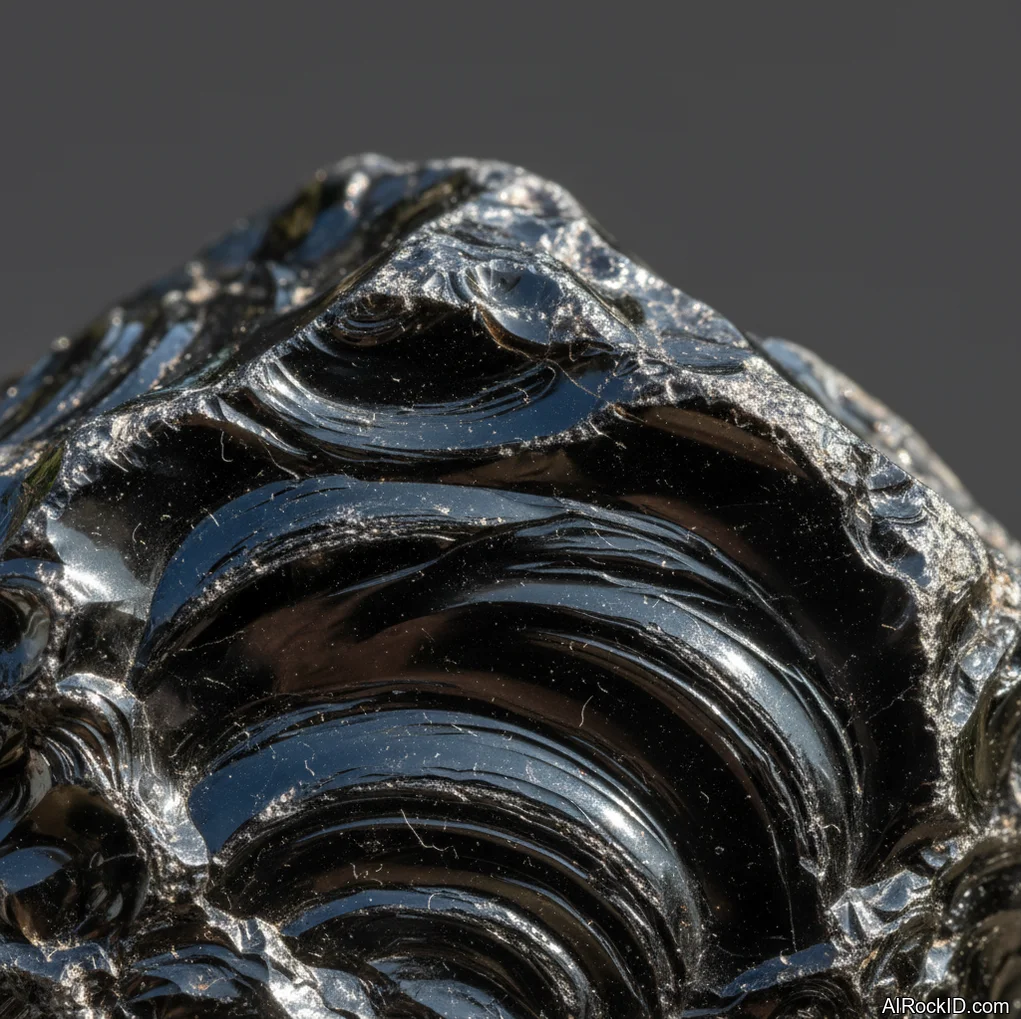
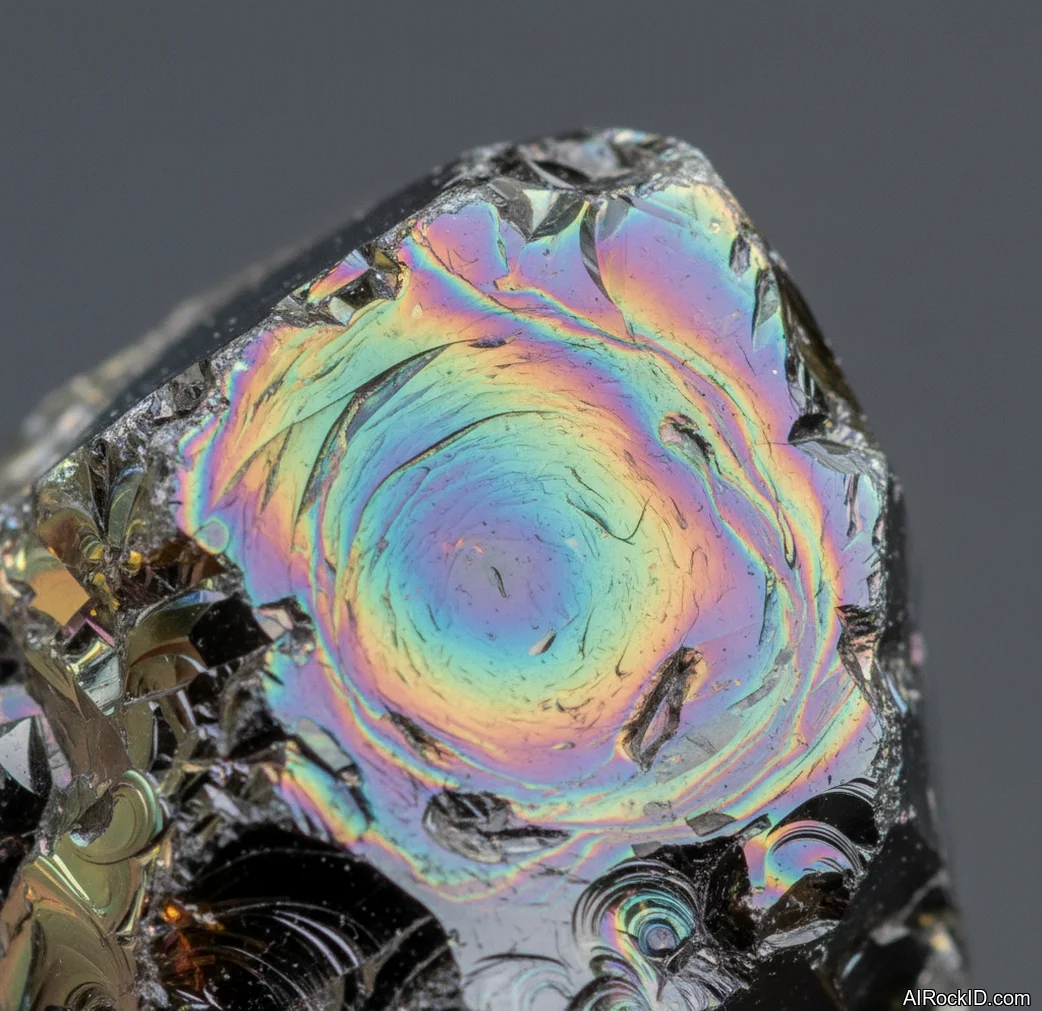
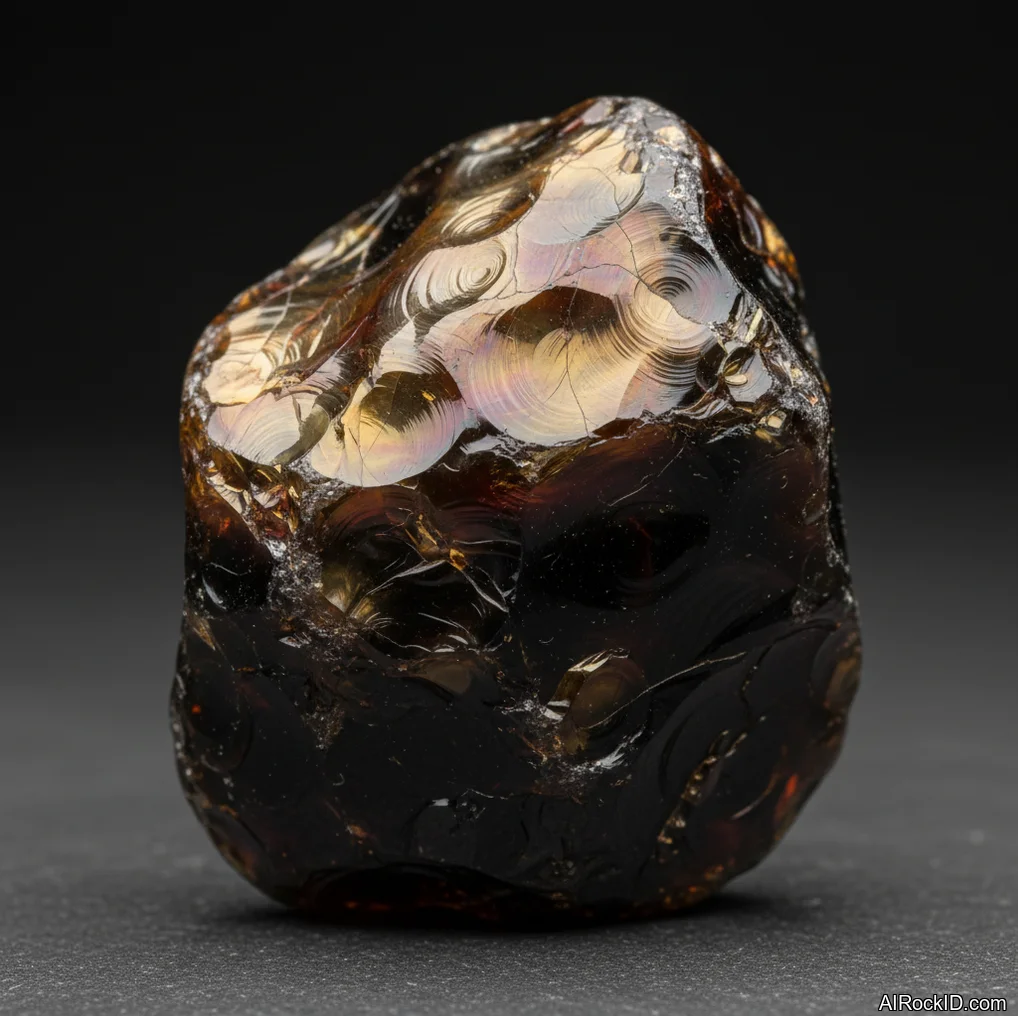
Golden Sheen Obsidian is a natural volcanic glass, obsidian, with a reflective gold sheen that comes from microscopic mineral inclusions. At a quick glance, it just reads as plain black obsidian. But tip it under one overhead light and that gold stripe slides across the face like oil on water.
Grab a palm stone and the first thing you feel is the temperature. It hangs onto that cool, slick feel longer than most polished jaspers sitting in the same tray. The sheen isn’t sparkly. It’s a muted, metallic flash that shows up, disappears, then shows up again depending on the angle, and on some pieces it runs in wide streaks, like the flow lines got caught halfway through a swipe.
But here’s the catch: a lot of pieces get cut in a way that punches up the sheen more than the rough really has. So a flat cab can look unreal, and the same material in rough can look kind of plain until you hunt for the one angle where it lights up. Why does that happen? It’s all about how that reflective band lines up with the surface you’re looking at.
Origin & History
Obsidian’s been known since antiquity. But “golden sheen obsidian” is really just a trade name, and it didn’t start showing up regularly until the late 20th century, when lapidaries and dealers began separating out the sheen varieties for the jewelry and carving market.
The word “obsidian” goes back to Latin, and it’s often tied to “Obsidius” in Roman writings. And people used it for blades, scrapers, and mirrors for a simple reason: it breaks into absurdly sharp edges. Like, the kind that’ll bite you if you get careless handling a fresh flake.
In the shop, the sheen types ended up with their own labels because they act a little differently on the wheel (some spots heat up and grab faster than you expect), and because buyers are chasing that exact flash. Gold sheen is in the same family as silver sheen and rainbow obsidian, just with a different look that comes from inclusion size and the way the glass flowed while it cooled.
Where Is Golden Sheen Obsidian Found?
Most golden sheen material on the market is associated with Mexican volcanic fields, with smaller occurrences and similar sheen obsidian found in parts of the western USA and the Caucasus.
Formation
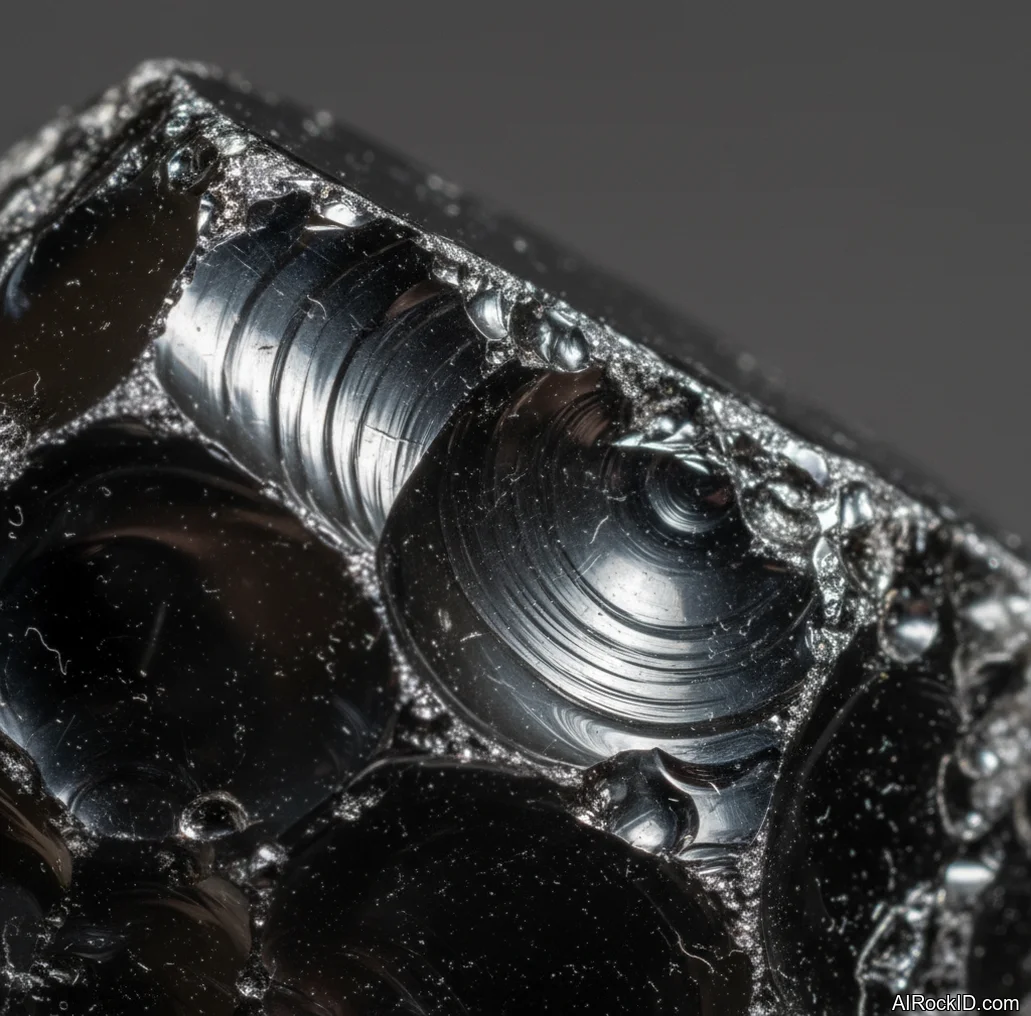
Obsidian shows up when silica-rich lava chills so fast the atoms never get a chance to lock into a crystal lattice. So you don’t get crystal faces or cleavage. Just glass.
That golden sheen? It comes from tiny plate-like inclusions plus little bubbles that get lined up as the lava flows, and they kick light right back at you.
Look, if you’ve got a polished face in your hand and you tilt it under a lamp, you can sometimes catch faint flow banding under the sheen. It’s subtle. More like smoky stripes than anything loud. And if you’ve ever put it on a saw, you figure out fast that the cut direction matters. Cut across the flow and the sheen can just die on you. Cut with the flow and the whole piece lights up. Why does that happen? Because you’re either slicing through those aligned layers or riding along them.
How to Identify Golden Sheen Obsidian
Color: Body color is usually jet black to very dark brown, with a gold reflective sheen that appears as bands or patches when tilted in light.
Luster: Vitreous luster with a metallic-looking sheen effect on polished surfaces.
Pick up the stone and rotate it under a single point light. The sheen should move as a smooth band, not as sparkly flecks. If you scratch it with a steel nail, it’ll mark easier than quartz does, and the scratch will look pale on the black glass. The real test is the feel on an edge: fresh chips are razor-sharp and glassy, and cheap “gold” coatings tend to feel warmer and look too uniform at every angle.
Properties of Golden Sheen Obsidian
Physical Properties
| Crystal System | Amorphous |
| Hardness (Mohs) | 5-5.5 (Medium (4-6)) |
| Density | 2.35-2.60 g/cm3 |
| Luster | Vitreous |
| Diaphaneity | Opaque |
| Fracture | Conchoidal |
| Streak | white |
| Magnetism | Non-magnetic |
| Colors | black, dark brown, gold |
Chemical Properties
| Classification | Silicates |
| Formula | SiO2 (amorphous, variable composition) |
| Elements | Si, O |
| Common Impurities | Fe, Mg, Ca, Na, K, Al, Ti |
Optical Properties
| Refractive Index | 1.48-1.51 |
| Birefringence | None |
| Pleochroism | None |
| Optical Character | Isotropic |
Golden Sheen Obsidian Health & Safety
Golden Sheen Obsidian is generally safe to handle, and it’s fine around water too. Thing is, the real concern isn’t the stone itself, it’s the edges. Raw chunks or freshly chipped bits can have razor-sharp, glassy edges (the kind that’ll catch your skin before you even notice), so that’s what you need to watch out for.
Safety Tips
Don’t run your thumb along any sharp edges. And if you ever knap it, cut it, or grind it, put on eye protection. Sharp chips fly fast, and you don’t always see them coming, right?
Golden Sheen Obsidian Value & Price
Price Range
Rough/Tumbled: $3 - $30 per piece
Cut/Polished: $1 - $6 per carat
Price mostly comes down to how strong that sheen is, how even it looks across the surface, and how clean the polish came out. Big, flat faces that throw a broad, even gold flash (the kind you see the second you tilt it under a light) move way quicker than chunky rough that only lights up at one specific angle.
Durability
Moderate — Scratch resistance: Fair, Toughness: Fair
It’s stable in normal indoor conditions, but it can chip on edges and scratch if it rides around with harder stones.
How to Care for Golden Sheen Obsidian
Use & Storage
Store it in a soft pouch or a separate compartment so it doesn’t pick up scratches from quartz or topaz. If it’s a carved piece, keep it where it won’t get bumped off a shelf.
Cleaning
1) Rinse with lukewarm water and a drop of mild soap. 2) Wipe with a soft microfiber cloth, especially along the sheen face. 3) Dry fully before putting it back in a bag or box.
Cleanse & Charge
If you do energetic cleansing, smoke, sound, or a quick rinse works fine. Avoid salt scrubs since they can leave tiny scuffs on a high polish.
Placement
Angle matters, so set it where a lamp or window light can hit it from the side and bring the sheen out. I like a small stand that lets you tilt it a few degrees until the gold band shows.
Caution
Skip ultrasonic cleaners and anything too abrasive, the kind that feels like gritty sandpaper in your hand, because it can haze the polish. And watch the edges on obsidian; they’re surprisingly sharp when you run a finger along them. Drop it on tile and, yep, it can chip.
Works Well With
Golden Sheen Obsidian Meaning & Healing Properties
Compared to a lot of shinier stones, golden sheen obsidian feels pretty blunt in your hand. It’s grounding. No fluff. Like it’s not here to “cheer you up” so much as it’s here to make you look at what’s actually going on. That’s why people like it. And yeah, this is metaphysical talk, not medical advice.
Grab a polished palm stone and just hold it for a minute. It’s got that glassy, slick feel, almost like a really smooth bottle that’s been tumbled forever, and that part is calming. But then the gold flash catches when you tilt it under a lamp or near a window, and your eyes keep snapping back to it. Like a visual anchor. I’ve had customers use it as a focus object while journaling, or when they’re trying to break a bad habit, because it feels steady and it doesn’t come off airy.
But look, I’ll be straight with you. Some people expect it to feel “soft” emotionally just because it’s gold. Most of the time, it doesn’t. Want something gentler? Pair it with rose quartz (that combo helps), or keep the obsidian for short sessions instead of carrying it around all day. Why force it?
Identify Any Crystal Instantly
Snap a photo and get properties, value, care instructions, and healing meanings in seconds.