Green Banded Agate
What Is Green Banded Agate?
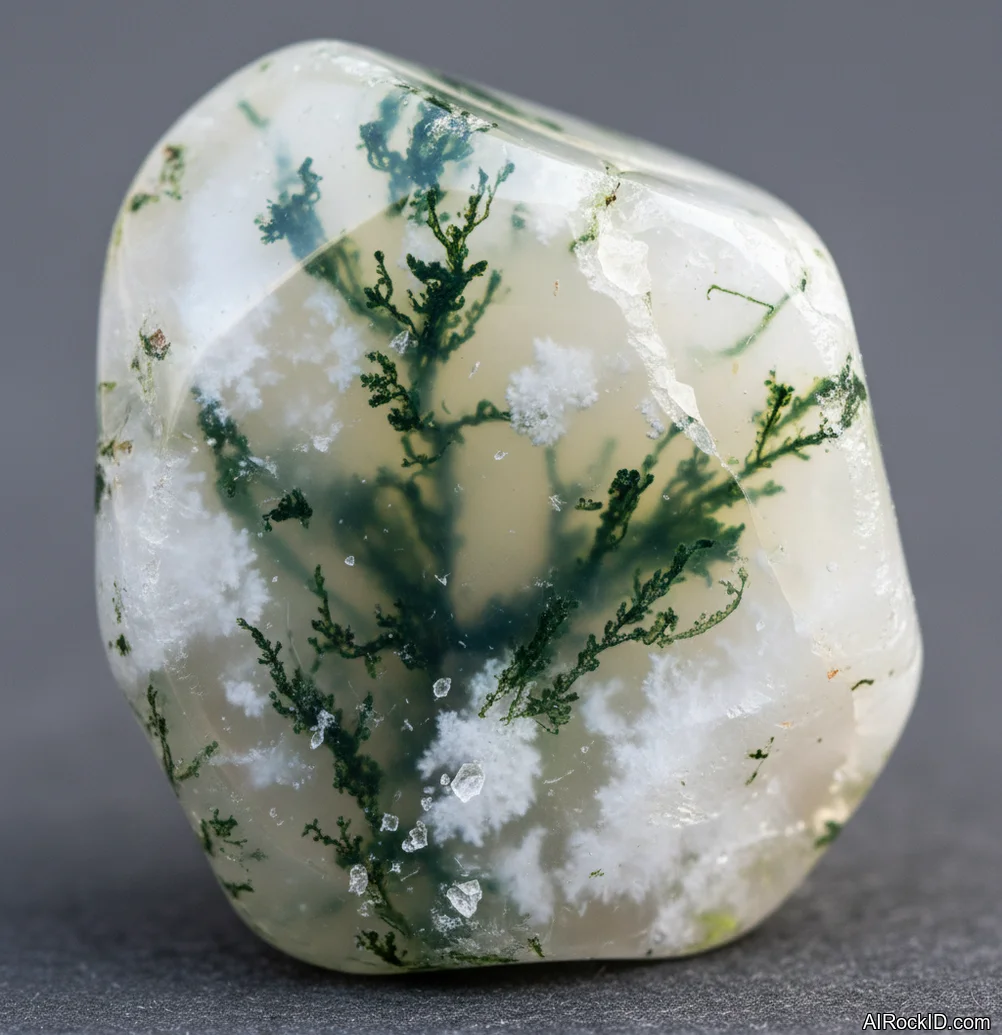
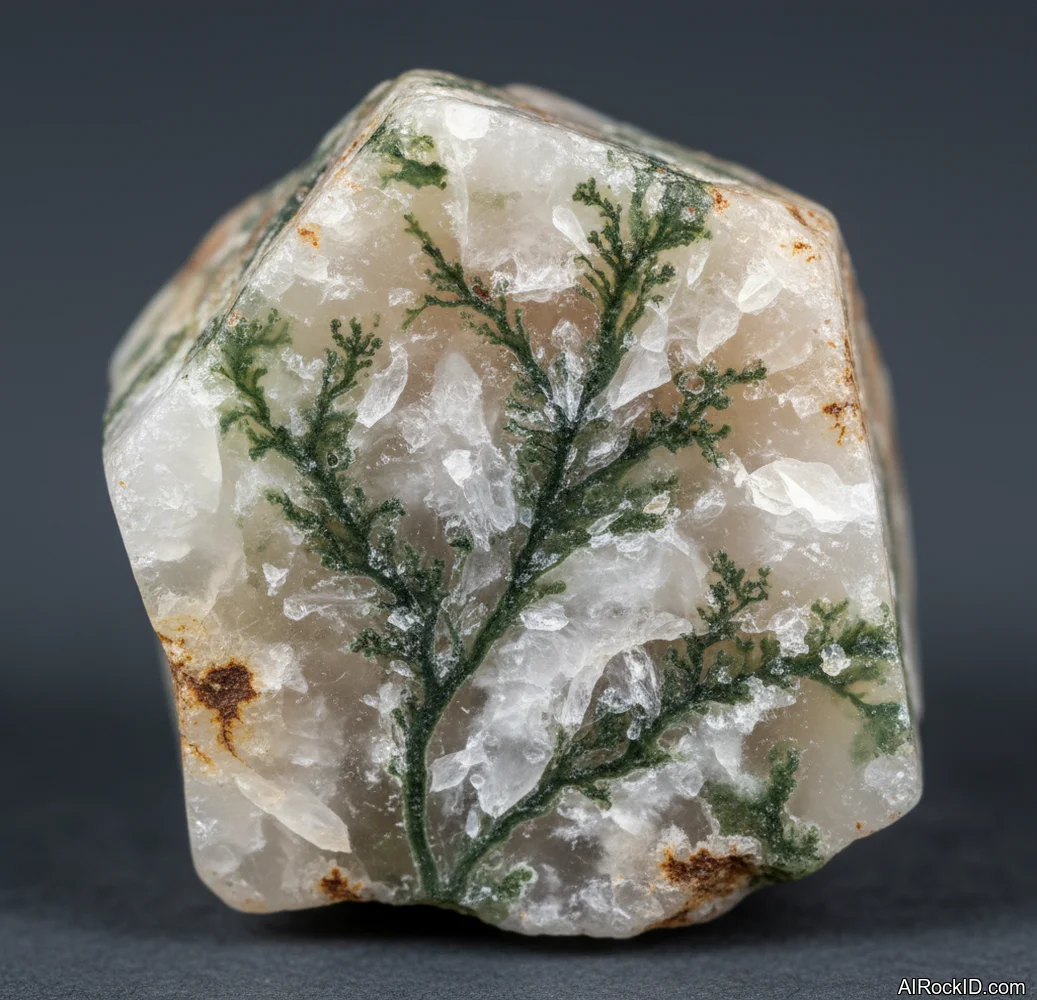
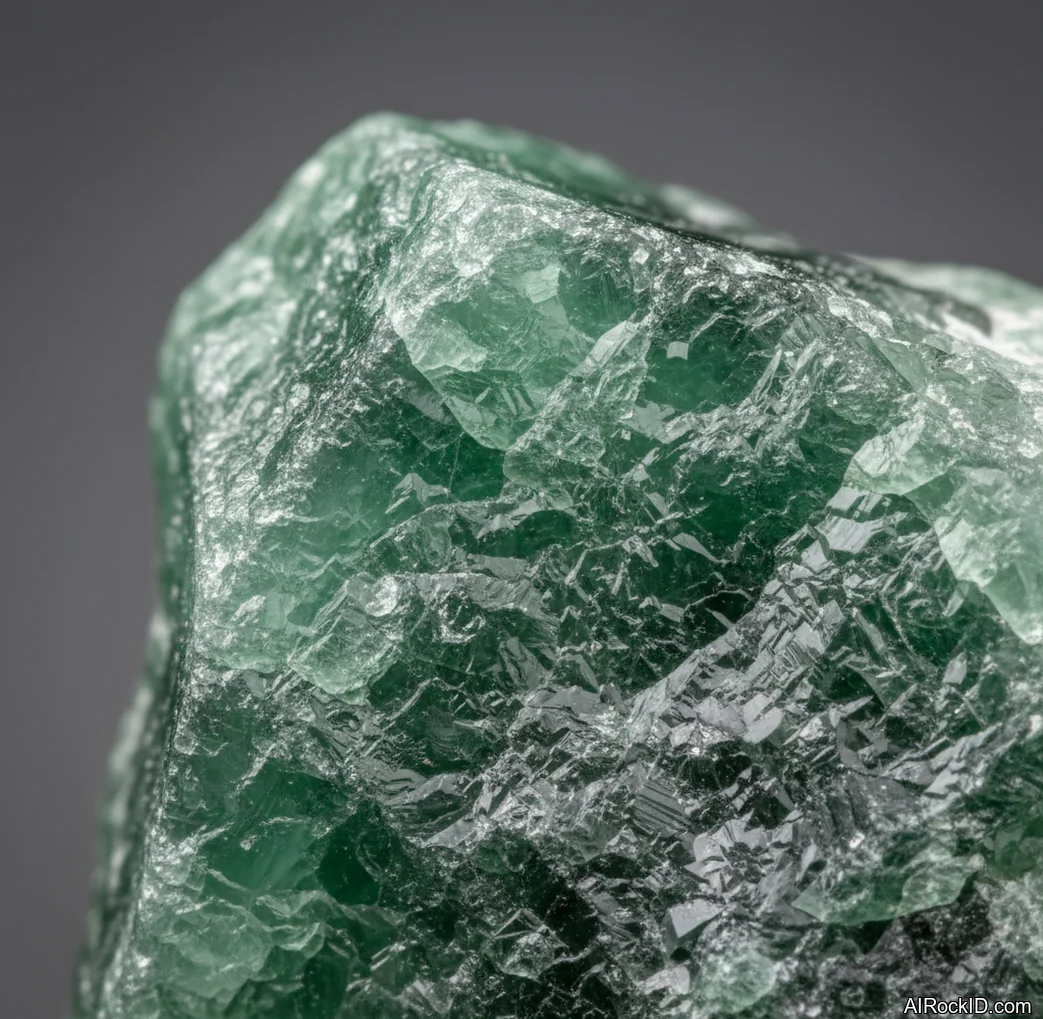
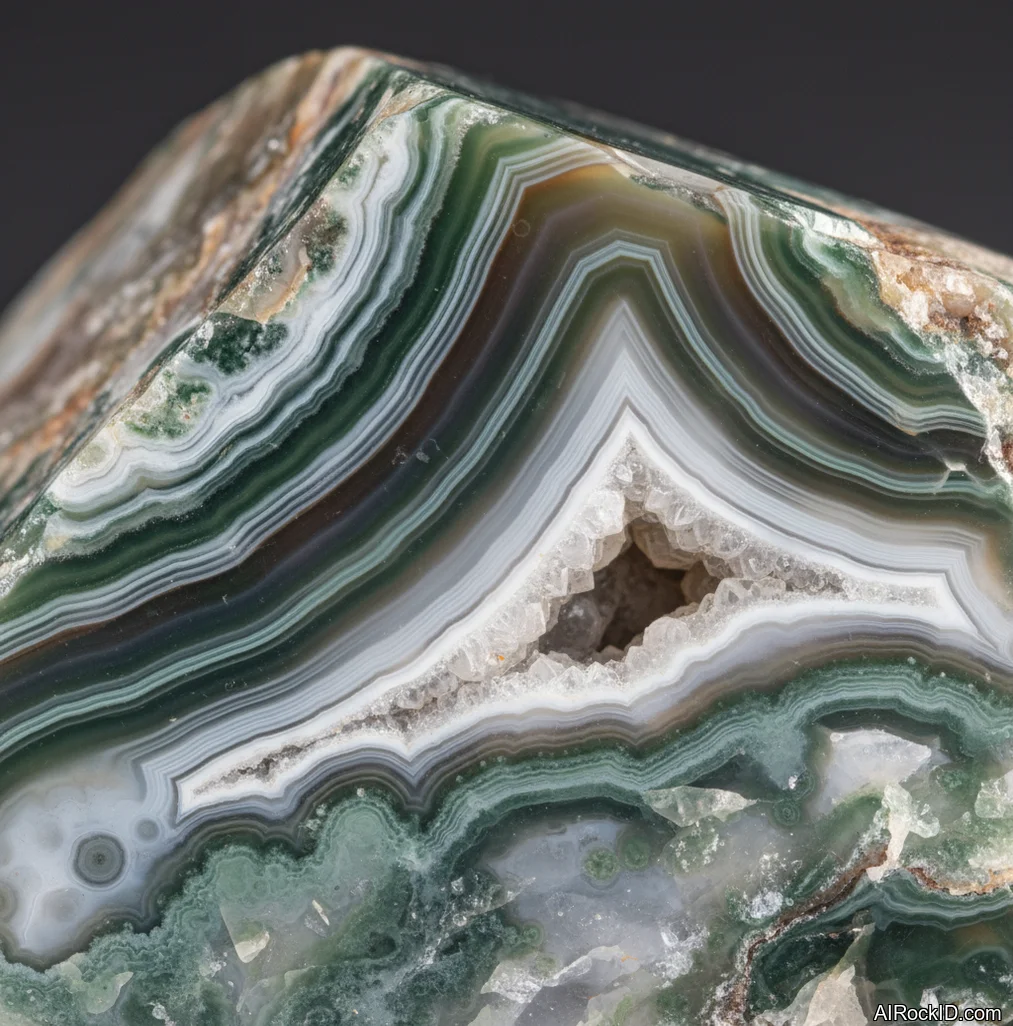
Green Banded Agate is a banded type of chalcedony (microcrystalline quartz) that gets its green color from trace minerals and inclusions.
Pick up a piece and you feel it before you really see it. It has that familiar agate heft and that slick, glassy-smooth surface, like a worry stone that’s been knocked around in someone’s pocket for years. And when the polish is done right, the bands can come off like soft watercolor stripes, kind of hazy at the edges.
At a quick glance, you’ll see a lot of it labeled “green onyx” at gem shows. But that’s just a trade label, not the mineral name. Real agate banding usually curves and rolls instead of running in perfectly straight, uniform lines, and you’ll often catch little cloudy zones where the chalcedony grew in pulses (you can almost see the stop-start rhythm if you tilt it under a light).
Origin & History
Agate as a name goes way back to the classical world, and people usually trace it to the Achates River in Sicily. Ancient writers talked about that river as a place you could get banded stones. Nobody carved out “green banded” as its own species or anything, because it’s still quartz. But lapidaries have always sorted agate by what it looks like and what color it is, since that’s what matters when you’ve got a slab on the saw and you’re deciding what’s worth cutting.
The modern label “green banded agate” is mostly a market name. It just helps buyers picture what they’re getting. And, honestly, it also helps sellers move dyed agate, because green is one of the most common dye colors you’ll spot in bins of tumbled stones. Ever notice how the green ones tend to look a little too even from edge to edge? (Yeah, that.)
Where Is Green Banded Agate Found?
Green banded agate turns up wherever agate-bearing volcanic rocks and nodules are found, with lots of commercial material cut from Brazilian nodules and similar deposits worldwide.
Formation
Most agate starts out when silica-rich fluids snake through little cavities in volcanic rock, or along cracks where the chemistry and temperature slowly drift over time. Bit by bit, microcrystalline quartz drops out of that fluid and stacks up in bands like tree rings. Sometimes it’s building around a hollow pocket that stays empty for a while, then later gets plugged with more silica.
That green color usually comes from trace elements and tiny inclusions, like iron-bearing minerals, chlorite, or other fine particles that get trapped as the silica turns gel-like and then hardens. Look, if you stare at a polished slice under good light and tip it back and forth, you can spot the “messy” zones where the color changes right in the middle of a band. Like the fluid’s recipe shifted halfway through a growth pulse. Why else would it cut across so awkwardly?
How to Identify Green Banded Agate
Color: Typically light to medium green with alternating pale and darker bands; some pieces show white, gray, or translucent layers mixed in. Very neon green is often a dye clue, especially when the color pools along fractures.
Luster: Waxy to vitreous when polished.
If you scratch it with a steel nail, it won’t bite. Quartz hardness wins that fight, and it’ll usually just skate the nail and leave a metal streak you can wipe off. The real test is the banding: natural agate bands tend to curve, feather, and vary in thickness, while dyed stuff can look too even, with color concentrating in cracks and around drill holes. And when you hold a thin slice up to a lamp, a lot of real chalcedony glows at the edges with a soft translucence.
Properties of Green Banded Agate
Physical Properties
| Crystal System | Trigonal |
| Hardness (Mohs) | 6.5-7 (Hard (6-7.5)) |
| Density | 2.58-2.64 |
| Luster | Waxy |
| Diaphaneity | Translucent to opaque |
| Fracture | Conchoidal |
| Streak | White |
| Magnetism | Non-magnetic |
| Colors | Green, White, Gray, Colorless |
Chemical Properties
| Classification | Silicates |
| Formula | SiO2 |
| Elements | Si, O |
| Common Impurities | Fe, Mn, Ni, Cr, Al |
Optical Properties
| Refractive Index | 1.530-1.540 |
| Birefringence | None |
| Pleochroism | None |
| Optical Character | Uniaxial |
Green Banded Agate Health & Safety
Green banded agate is fine to handle and set out on a shelf. The only real worry is silica dust, and that’s only if you’re cutting it, grinding it, or sanding it.
Safety Tips
If you’re doing lapidary work, keep water running, make sure you’ve got real ventilation (not just a little fan on the bench), and wear a proper respirator that’s actually rated for fine silica dust. Why risk it?
Green Banded Agate Value & Price
Price Range
Rough/Tumbled: $2 - $25 per tumbled stone or small palm stone
Cut/Polished: $1 - $8 per carat
Prices bounce around depending on how sharp the band contrast is, how good the polish actually looks up close (the kind that feels slick under your thumb, not hazy), and whether the color reads natural or screams “dyed.” Big, clean slices with tight, even curves usually cost more, because when you’re cutting them on the saw you end up wasting less material.
Durability
Very Durable — Scratch resistance: Excellent, Toughness: Good
It’s stable in normal wear, but dyed green material can fade a bit if it lives in direct sun for months.
How to Care for Green Banded Agate
Use & Storage
Store it in a pouch or a compartmented box if you care about the polish, because agate will scuff softer stones and still pick up scratches from harder stuff. I keep my nicer slices with a bit of paper between them so they don’t chatter.
Cleaning
1) Rinse with lukewarm water and a drop of mild soap. 2) Use a soft toothbrush to get grime out of pits or around drilled holes. 3) Rinse well and pat dry with a microfiber cloth.
Cleanse & Charge
A quick rinse and a wipe is usually enough for day to day “reset.” If you want a non-water option, set it on a windowsill for indirect light or on a piece of clear quartz overnight.
Placement
Looks best where light can hit the bands from the side, like on a shelf near a lamp or on a desk. Thin slices also read great in a small stand because the edges can glow.
Caution
Skip harsh cleaners and don’t let it sit forever in hot water, especially if it’s dyed, because the color can run or just look washed out after. And if you’re trying to keep that green looking natural, don’t park it in direct sunlight to bake.
Works Well With
Green Banded Agate Meaning & Healing Properties
Next to the flashy stuff, green banded agate feels kind of… steady. Slow. When I’ve got one in my hand, it doesn’t scream for attention. It just sits there with that quiet weight, and I end up reaching for it on days when I want something grounding on the desk, not because I’m expecting fireworks, but because those bands give my eyes somewhere calm to land.
A lot of people connect green stones to the heart area and to emotional balance. And in real life, I mostly see it used as a tactile anchor. You rub the surface with your thumb, you trace the bands like little roads, you breathe, and your brain drops a gear. That’s it. But look, it’s still a rock. If you’ve got real anxiety going on or anything health-related, crystals can be a support (nice to have), not a stand-in for actual care.
One more thing from the collector side: dye is the big headache with green banded agate in the metaphysical market. A dyed piece can still mean something to someone, sure. But if you’re buying it for “natural” energy, you’ll want to skip anything that looks like it came straight out of a highlighter, and watch for color that pools in cracks or settles into little pits along the banding. Why pay for “natural” if it’s obviously been soaked?
Identify Any Crystal Instantly
Snap a photo and get properties, value, care instructions, and healing meanings in seconds.