Guinea Fowl Jasper
What Is Guinea Fowl Jasper?
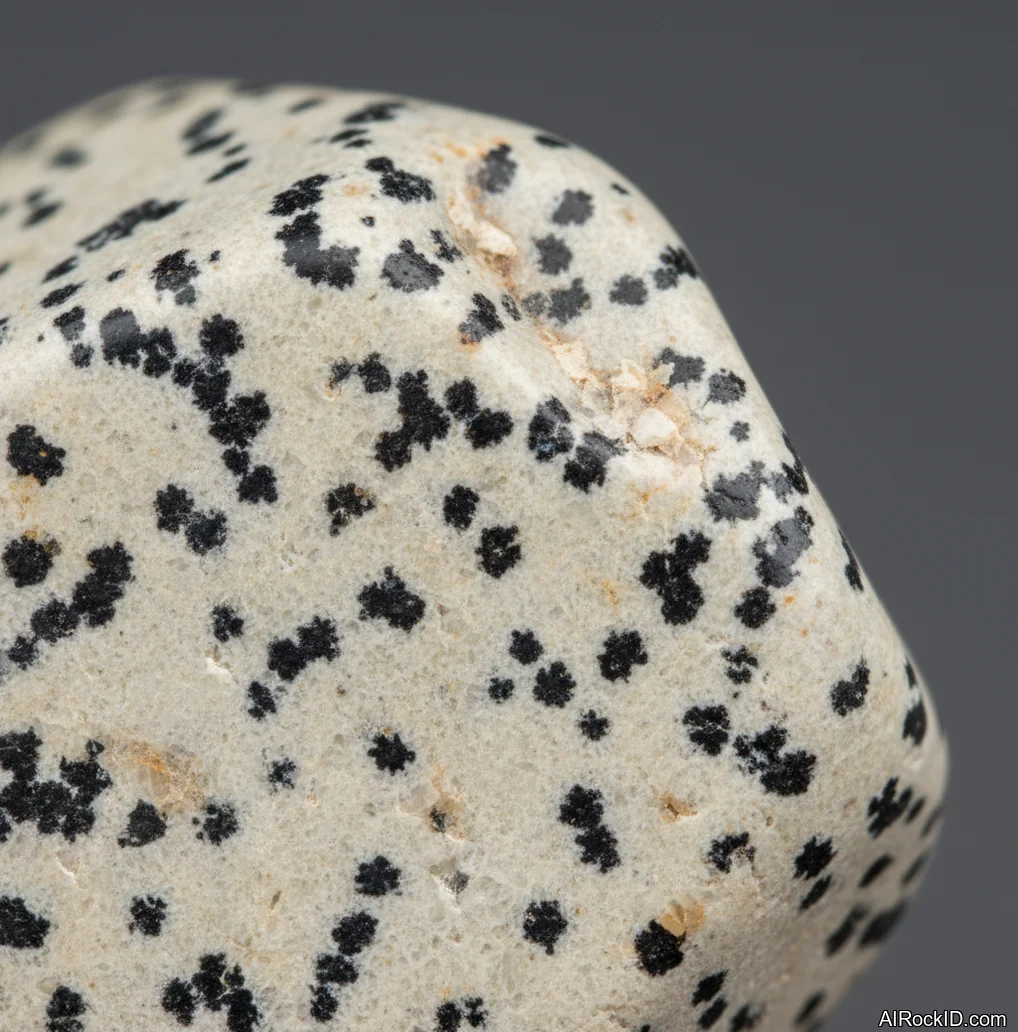
Guinea Fowl Jasper is an opaque, spotted type of jasper (microcrystalline quartz) with a pattern that honestly looks a lot like the speckled feathers on a guinea fowl.
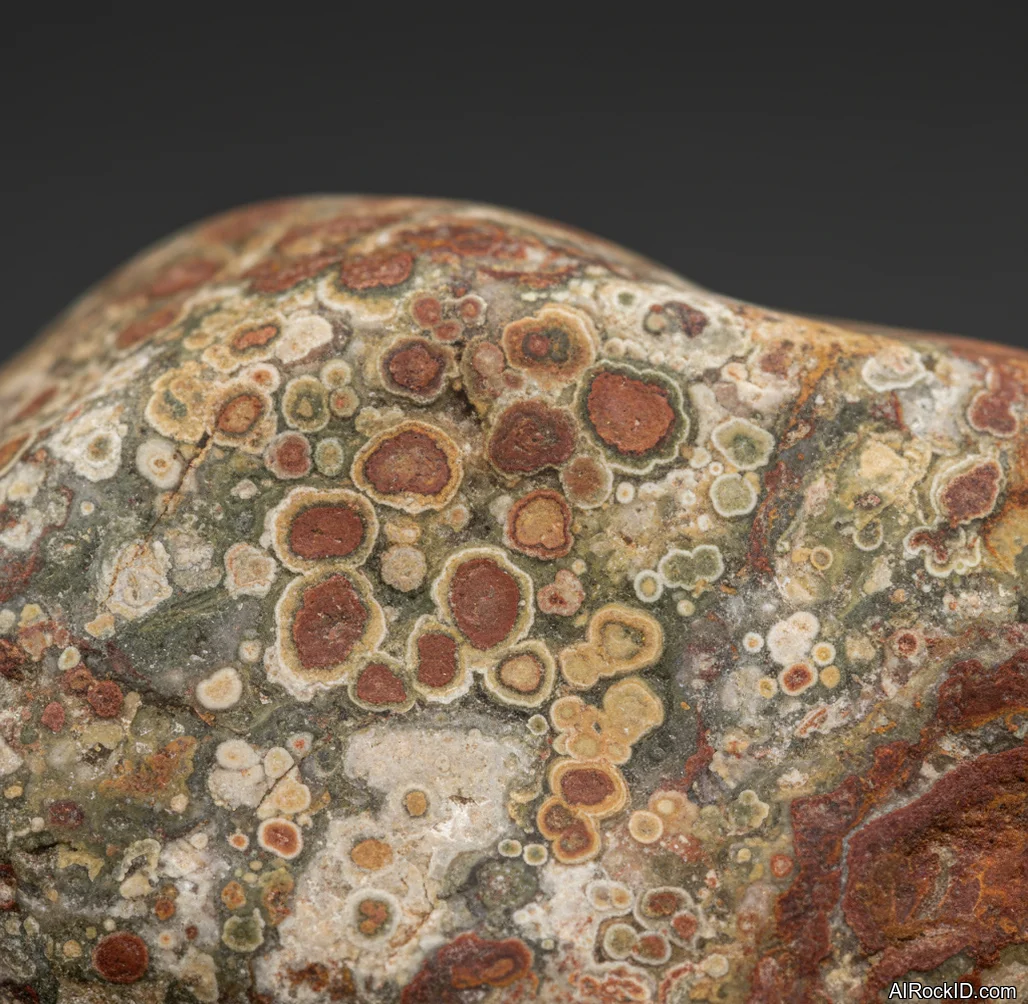
Grab a tumbled piece and two things hit you fast. It’s heavier than it looks for its size. And it stays cool in your palm in that very quartz-y way, even after you’ve been holding it for a bit. Most of what I’ve run into at shows has a warm cream, tan, or sandy gray base, with peppery brown to near-black dots. Sometimes those dots bunch up into little rosettes that read like tiny eyes when you tilt the stone (you know the look).
Look, under a bright light the polish can get pretty glassy. But it still feels earthy. It’s not a “sparkle” stone. It’s a pattern stone, the kind you keep flipping around because every face has a slightly different scatter of spots.
Origin & History
Most dealers call it “Guinea Fowl Jasper” as a trade name. It’s basically lifted straight from the bird comparison, and it’s not some formal geologic term you’ll find in the old-school mineral writeups.
Thing is, in the shop world those names tend to stick once a lapidary supplier starts shipping the same material over and over and the pattern is easy to pitch to a customer in two words. Simple sells.
I’ve seen it sitting in trays next to other picture jaspers and spotted jaspers with a handful of different labels, and that’s where people get turned around. The name is about what it looks like, not one universally agreed source location or a first “official” description like you’d get with a newly approved mineral species.
Where Is Guinea Fowl Jasper Found?
Most Guinea Fowl Jasper on the market is sold as African or Madagascar jasper material, with exact mine names often not disclosed by suppliers.
Formation
Jasper is basically quartz that grew so fine-grained your eyes can’t pick out the individual crystals, and it’s got enough other material mixed in that it turns opaque. With Guinea Fowl Jasper, those spots usually come from iron and manganese oxides that settled out in little patches while silica-rich fluids worked their way through sediment or volcanic rock.
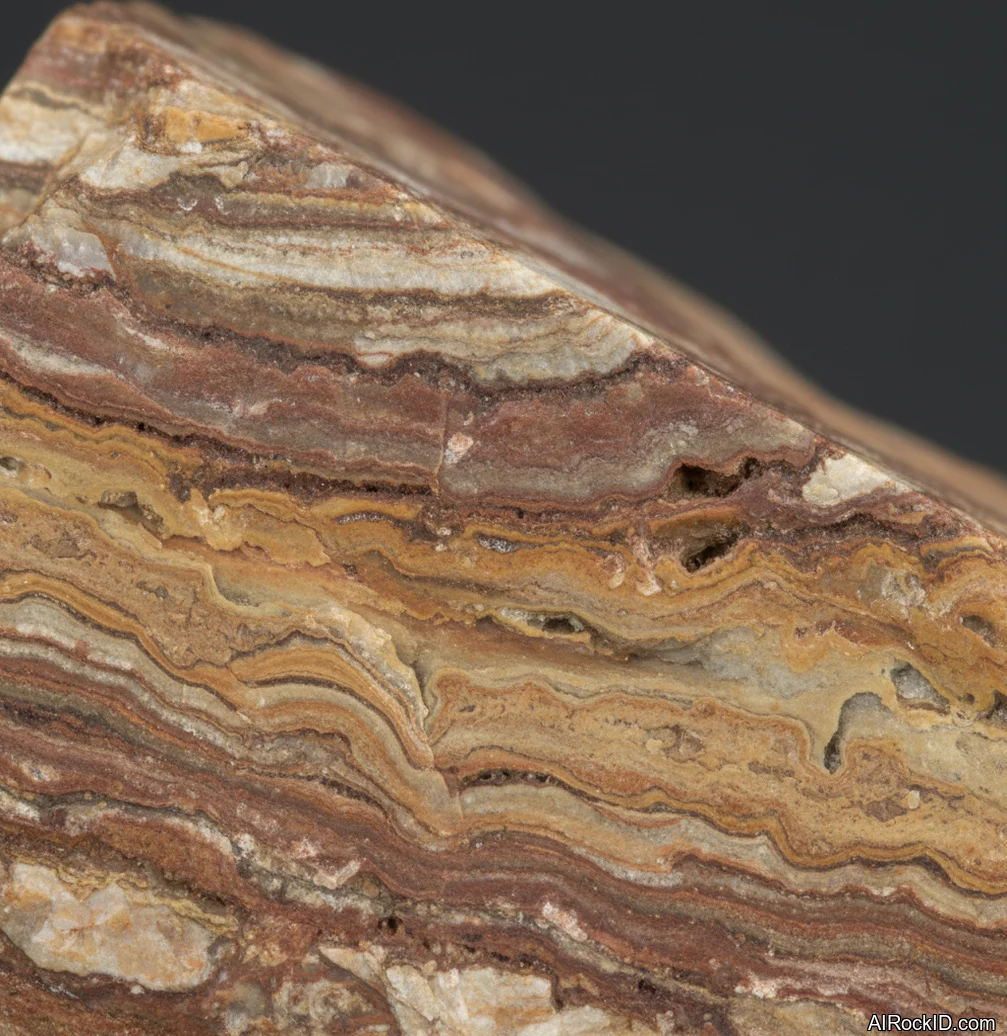
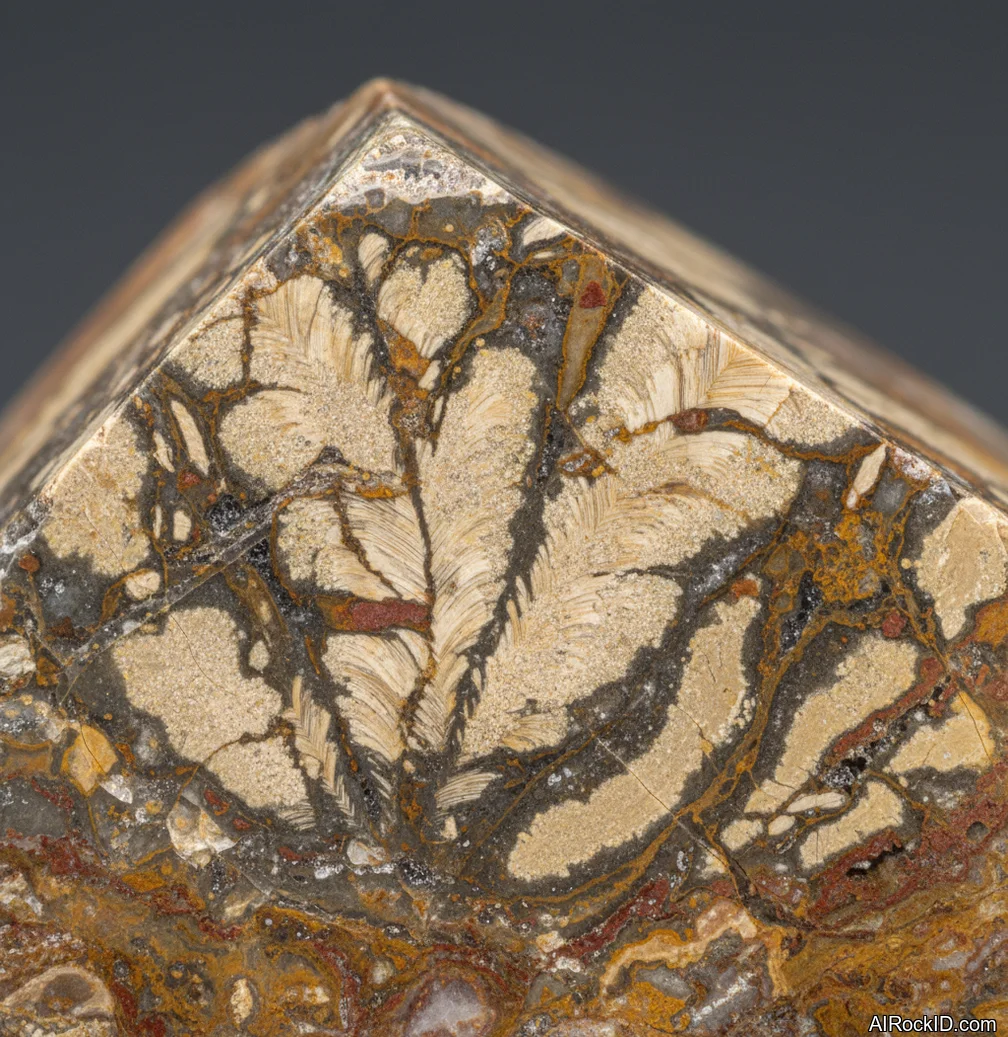
Banded agate tends to stack up in neat, tidy layers. Jasper doesn’t. It can look downright chaotic, and that’s kind of the point. The peppery dots and those orb-like blobs feel like chemistry caught mid-swirling and then locked in place, and when you slice it up you’ll notice the “feather” pattern can change weirdly fast from one slab to the next (you’ll see it the moment you line two cuts side by side).
How to Identify Guinea Fowl Jasper
Color: Typically cream to tan, beige, or sandy gray with dark brown, chocolate, or black speckles and occasional orb-like spots. Some pieces lean slightly reddish if there’s more iron staining.
Luster: Waxy to vitreous when polished, dull to waxy when rough.
If you scratch it with a steel nail, it shouldn’t give much at all, and it’ll scratch glass if you really commit to it. The real test is the texture: genuine jasper feels dense and “tight,” not chalky or porous. And when I’ve handled dyed lookalikes, the dots bleed into micro-cracks or collect around pits, while natural spotting tends to look embedded, not painted on.
Properties of Guinea Fowl Jasper
Physical Properties
| Crystal System | Trigonal |
| Hardness (Mohs) | 6.5-7 (Hard (6-7.5)) |
| Density | 2.58-2.91 g/cm3 |
| Luster | Waxy |
| Diaphaneity | Opaque |
| Fracture | Conchoidal |
| Streak | White |
| Magnetism | Non-magnetic |
| Colors | Cream, Tan, Beige, Sandy gray, Brown, Black |
Chemical Properties
| Classification | Silicates |
| Formula | SiO2 |
| Elements | Si, O |
| Common Impurities | Fe, Mn, Al, Ca |
Optical Properties
| Refractive Index | 1.530-1.543 |
| Birefringence | 0.009 |
| Pleochroism | None |
| Optical Character | Uniaxial |
Guinea Fowl Jasper Health & Safety
As a finished stone, it’s safe to handle and it does fine around water. The one thing you actually need to watch out for? Silica dust, but only if you’re sawing it, grinding it, or dry-sanding it (that’s when you get that fine, floaty powder in the air).
Safety Tips
If you’re doing lapidary work, keep things wet. Run water on the cut, keep some airflow moving through the room, and wear a real respirator that’s actually rated for fine particulate (not just a dusty old shop mask).
Guinea Fowl Jasper Value & Price
Price Range
Rough/Tumbled: $3 - $25 per tumbled stone or palm stone
Cut/Polished: $1 - $6 per carat
Prices bounce around based on how sharp the spots look, how clean the base color stays (no muddy haze), and whether it’s been cut into matched pairs for earrings or finished as a high-gloss display cab you can tilt under a lamp and see it flash.
Durability
Very Durable — Scratch resistance: Excellent, Toughness: Good
It’s stable in normal household conditions, and the polish holds up well, but hard impacts can still chip edges because quartz fractures conchoidally.
How to Care for Guinea Fowl Jasper
Use & Storage
Toss it in a pouch if you’re carrying it with softer stones, since jasper can scuff them up. For display, a little stand keeps polished pieces from rolling and picking up shelf grit.
Cleaning
1) Rinse with lukewarm water. 2) Wash with mild soap using a soft cloth or toothbrush for creases. 3) Rinse again and air-dry or pat dry with a clean towel.
Cleanse & Charge
If you do energetic cleansing, smoke, sound, or a quick rinse works fine. Avoid long salt soaks if the piece has natural pits that can trap residue.
Placement
On a desk it’s great as a fidget stone because the polish is smooth and the pattern gives your eyes something to land on. I like it near other earth-tone jaspers so the spots don’t get visually lost.
Caution
Don’t grab an ultrasonic or steam cleaner if the stone’s already got fractures, little pits, or any kind of glued repair (you can usually spot the glue line if you tilt it under a lamp and it flashes a bit). It can make things worse fast. And if you’re cutting or sanding, don’t breathe the dust. Seriously, keep it out of your lungs.
Works Well With
Guinea Fowl Jasper Meaning & Healing Properties
Next to flashier stones like labradorite, Guinea Fowl Jasper comes off as an everyday kind of rock. When I’m sorting new stock at the table, it’s the one I’ll toss in my pocket without even thinking, mostly because it feels grounding in the most literal sense. Dense. Cool to the touch. Solid, like a smooth little weight sitting against your palm.
In crystal lore, spotted jaspers usually get filed under steadiness, patience, and practical protection. That’s not medical care, and I’m not treating it like a cure for anything. But as a reminder object, it does its job: the speckles are busy enough to yank your attention out of a spiral (you know that feeling?), and the colors don’t wind you up.
But here’s the honest limitation. If you’re waiting for some big dramatic “whoa” the second you pick it up, you might end up disappointed. It’s subtle. The real value is in the pattern and the habit of reaching for it, not some fireworks sensation that hits everyone the same way.
Identify Any Crystal Instantly
Snap a photo and get properties, value, care instructions, and healing meanings in seconds.