Leopard Skin Jasper
What Is Leopard Skin Jasper?
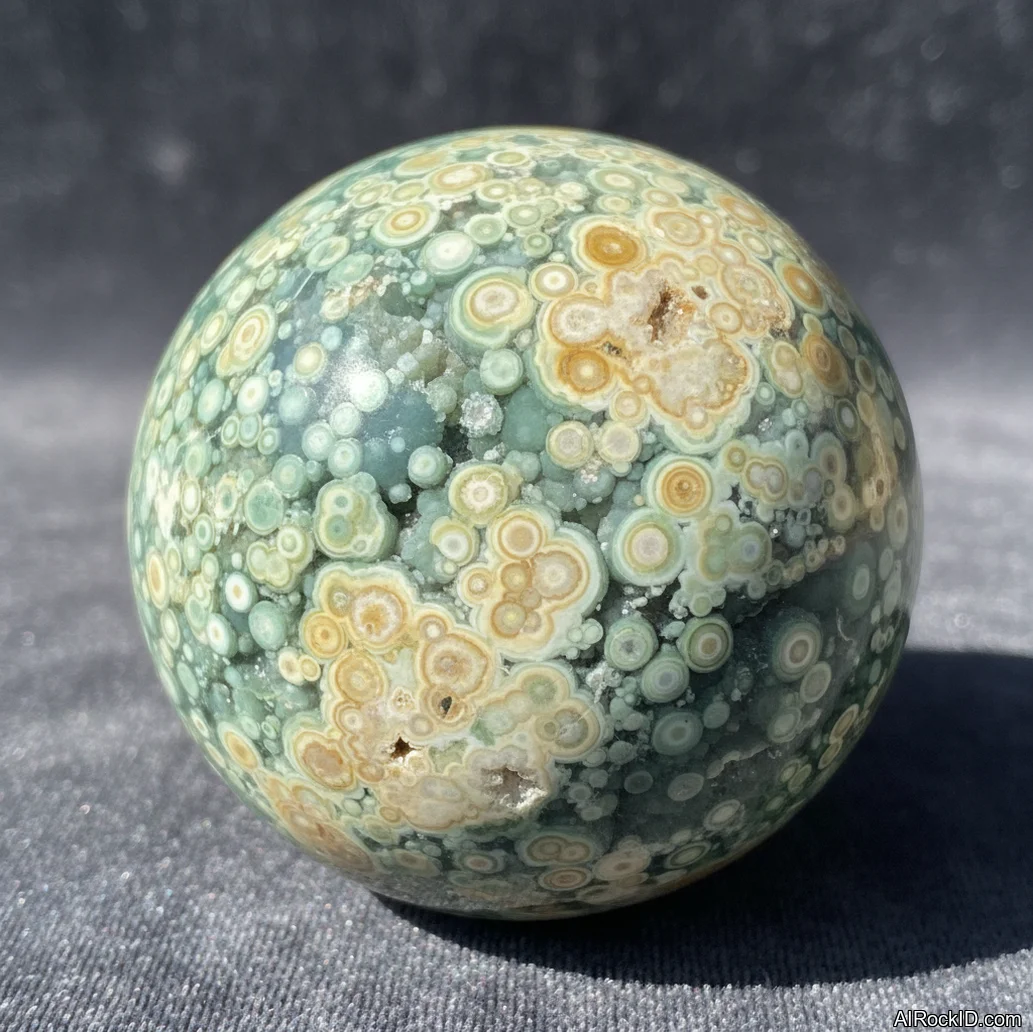
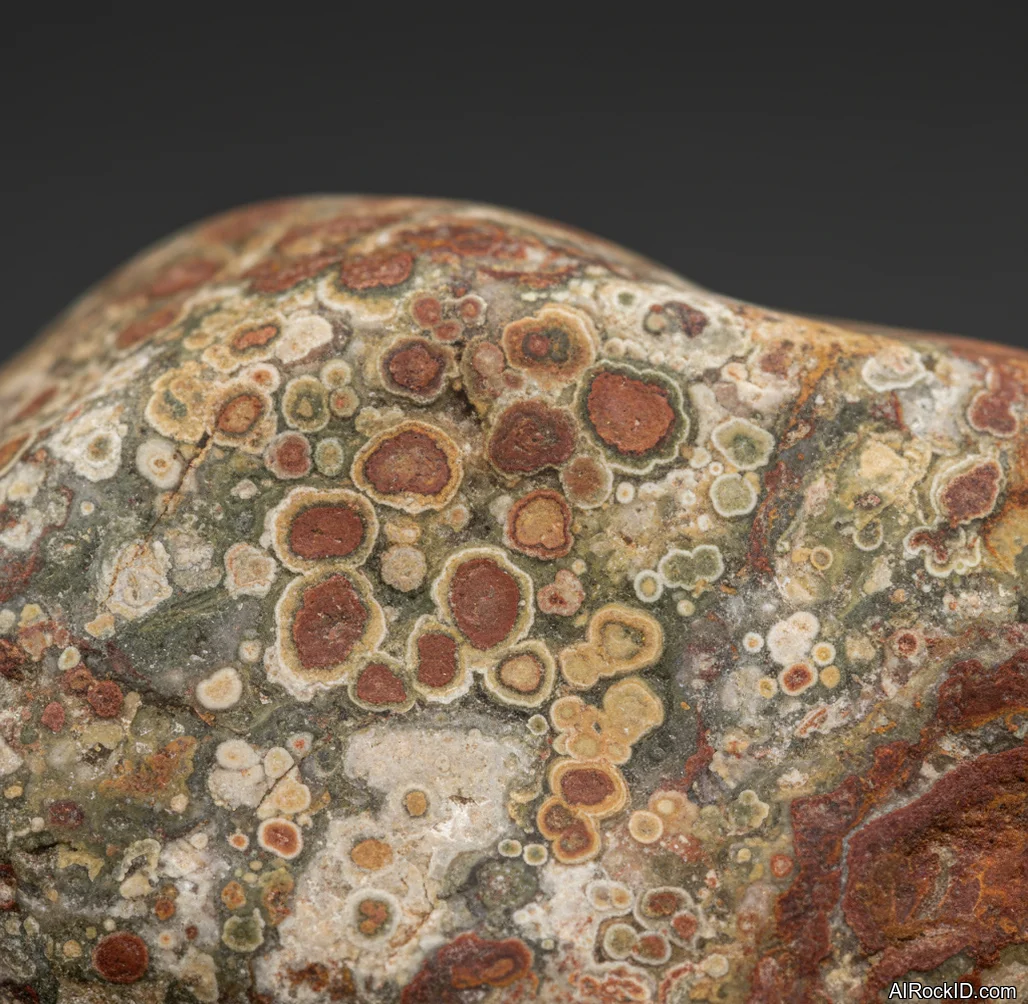
Leopard Skin Jasper is an orbicular jasper, basically a patterned type of microcrystalline quartz (chalcedony) with those round, spotty patches that look a lot like a leopard’s coat.
Pick up a tumbled piece and the first thing you feel is the weight. It’s heavier than it looks. And it’s got that classic quartz vibe, cool against your skin even if it’s been sitting out on the table for a while. The pattern is the whole reason people want it, honestly. Some stones show tight little “freckles.” Others have big rosettes with dark rims. And once in a while you’ll catch those gray-green areas, which is the kind of thing that makes you think about the rhyolite or ash-rich host rock it formed in (you can almost see it).
Thing is, folks glance at it and say “jasper” like that’s one neat, clean mineral. But in your hand it behaves like what it is: chalcedony. It polishes up nicely, cabochon edges stay crisp instead of getting mushy, and the colors usually sit in earth tones. But don’t count on it matching perfectly from batch to batch. Two strands of beads from two different bins can look like completely different stones, and yeah, that’s normal for this material.
Origin & History
Jasper as a name has been around forever in Greek and Latin writing, but “Leopard Skin Jasper” is a newer trade label that grew out of the lapidary and bead world once that orbicular, spotty stuff started showing up in real quantity. You won’t find one clean “first described by” point (like you get with a formally defined mineral species). No single paper. No tidy date.
Most dealers use the name for spot-patterned jasper, especially the material being sold out of Mexico. The “leopard” bit is just pattern talk, the same way you’d hear at a bead booth when someone’s turning strands under the lights and pointing out the spots. It’s not a scientific variety name. And because sellers don’t all draw the same line, some of them slap it on similar spotted rhyolites too, which is where the confusion creeps in.
Where Is Leopard Skin Jasper Found?
Most of the Leopard Skin Jasper on the market is sold as Mexican material, with other spotty jaspers and look-alikes also coming out of places like Madagascar, Brazil, and parts of the western USA.
Formation
Most jasper starts out as silica that gelled up, then hardened later on, usually around volcanic areas or in sedimentary places where silica-rich fluids can actually move through the rock and then lock in place once things cool down.
With Leopard Skin Jasper, the spots are the fun part. Those orbicular patterns can come from repeated pulses of silica mixed with impurities, stacking up over time into concentric rings or these patchy little spheres as the rock silicifies. And yeah, it really does happen in layers, not all at once.
Look closely at a polished slab and you can tell the spots aren’t painted on. They’re baked into the stone, with those soft, slightly fuzzy transitions where iron oxides, clays, and other minerals stained the silica at different stages (you’ll see it especially where the polish catches the light and the color shifts a hair). But it’s still quartz at heart.
Thing is, if you’ve cut a lot of it, you learn fast how unpredictable it can be. The pattern can change mid-slab, and a perfect face can turn busy or muddy just one inch over. Ever had a piece look amazing on the saw, then go weird as soon as you open it up? That’s Leopard Skin Jasper for you.
How to Identify Leopard Skin Jasper
Color: Usually tan, cream, beige, gray, and brown with darker brown or black spot outlines; some pieces lean greenish-gray depending on the host rock. The pattern is typically orbicular or rosette-like rather than banded.
Luster: Waxy to vitreous when polished.
If you scratch it with a steel blade, it won’t give easily, and it should scratch a plain glass bottle with some pressure. The real test is the feel and the polish: good chalcedony stays cool in your palm and takes a glassy shine without looking like plastic. The problem with a lot of “leopard jasper” listings is that some are actually spotted rhyolite; rhyolite tends to look more grainy on a fresh chip, while jasper breaks smoother with a tighter, waxier look.
Properties of Leopard Skin Jasper
Physical Properties
| Crystal System | Trigonal |
| Hardness (Mohs) | 6.5-7 (Hard (6-7.5)) |
| Density | 2.58-2.64 |
| Luster | Waxy |
| Diaphaneity | Opaque |
| Fracture | Conchoidal |
| Streak | White |
| Magnetism | Non-magnetic |
| Colors | Tan, Cream, Beige, Brown, Gray, Black, Greenish-gray |
Chemical Properties
| Classification | Silicates |
| Formula | SiO2 |
| Elements | Si, O |
| Common Impurities | Fe, Mn, Al, Ca |
Optical Properties
| Refractive Index | 1.530-1.543 |
| Birefringence | 0.009 |
| Pleochroism | None |
| Optical Character | Uniaxial |
Leopard Skin Jasper Health & Safety
It’s safe to handle, and it’s fine with brief water contact, like a quick rinse under the tap. But like any silica-rich rock, the real thing to watch out for is the super-fine dust you can kick up if you cut it or grind it.
Safety Tips
If you’re throwing it on the wheel, keep a little water on it (that slick, muddy slip you can feel under your fingers) and wear proper respiratory protection so you don’t end up breathing in silica dust.
Leopard Skin Jasper Value & Price
Price Range
Rough/Tumbled: $3 - $25 per tumbled stone (about 25-40 mm) or $8 - $60 per palm stone
Cut/Polished: $0.50 - $5.00 per carat
Price swings mostly come down to how clear the pattern is, how much the colors pop, and how clean the polish looks when you tilt it under a light. Big, well-matched orbicules on a slab or cab blank usually cost more than the stuff that looks busy and muddy.
Durability
Durable — Scratch resistance: Good, Toughness: Good
It’s basically quartz, so it holds up well in normal wear, but it can chip on sharp edges if you drop a cab or a polished point onto tile.
How to Care for Leopard Skin Jasper
Use & Storage
Store it like you’d store any polished quartz: separate from softer stones so it doesn’t scuff them, and keep sharp-edged pieces from knocking together. I toss palm stones in a small cloth bag and they stay looking new.
Cleaning
1) Rinse with lukewarm water. 2) Use a drop of mild soap and your fingers or a soft toothbrush to lift skin oils from the polish. 3) Rinse again and dry with a soft cloth.
Cleanse & Charge
A quick rinse and a wipe is usually enough for day-to-day use. If you do ritual cleansing, smoke, sound, or leaving it on a shelf away from direct sun are all gentle options.
Placement
It looks best under warm indoor light where the rosettes pop, like on a desk or next to a lamp. If you’re using it as a worry stone, pick one with a smooth dome and no undercut pits.
Caution
Skip harsh chemicals and don’t toss it in an ultrasonic cleaner, especially if the piece has those tiny little pits where gunk loves to hide and get stuck. And if you’re cutting or sanding it, don’t breathe the dust. (Seriously, why risk it?)
Works Well With
Leopard Skin Jasper Meaning & Healing Properties
Most folks who pick up Leopard Skin Jasper are really buying the pattern. That speckled, cat-like spotting grabs you first. Then they end up keeping it close because it sits in your palm with this steady, weighted feel. I’ve sold plenty of palm stones where someone immediately starts rubbing the little spots with their thumb, like they’re following a map (or trying to find a route through it).
In crystal-use circles, people usually connect it with grounding, body awareness, and this calm, stubborn kind of persistence. Not “instant peace.” More like what happens after you’ve finally cleared off your desk, wiped the dust off, and your mind quits ricocheting for a minute. But look, it’s still a rock. If you’re dealing with anxiety, pain, or anything medical, treat it like a personal object you like having around, not a treatment plan.
One practical thing I keep noticing: the pattern is easy to lock onto without totally spacing out. Count the orbs. Trace the rings. Then switch to a different cluster when your mind wanders. It’s basically a built-in fidget. But some pieces have porous spots or rough patches, and those can feel kind of scratchy as a worry stone, so I always tell people to pick one in person if they can.
Identify Any Crystal Instantly
Snap a photo and get properties, value, care instructions, and healing meanings in seconds.