Heliodor
What Is Heliodor?
Heliodor is the yellow to golden variety of beryl (Be3Al2Si6O18), and it gets that color mostly from iron.
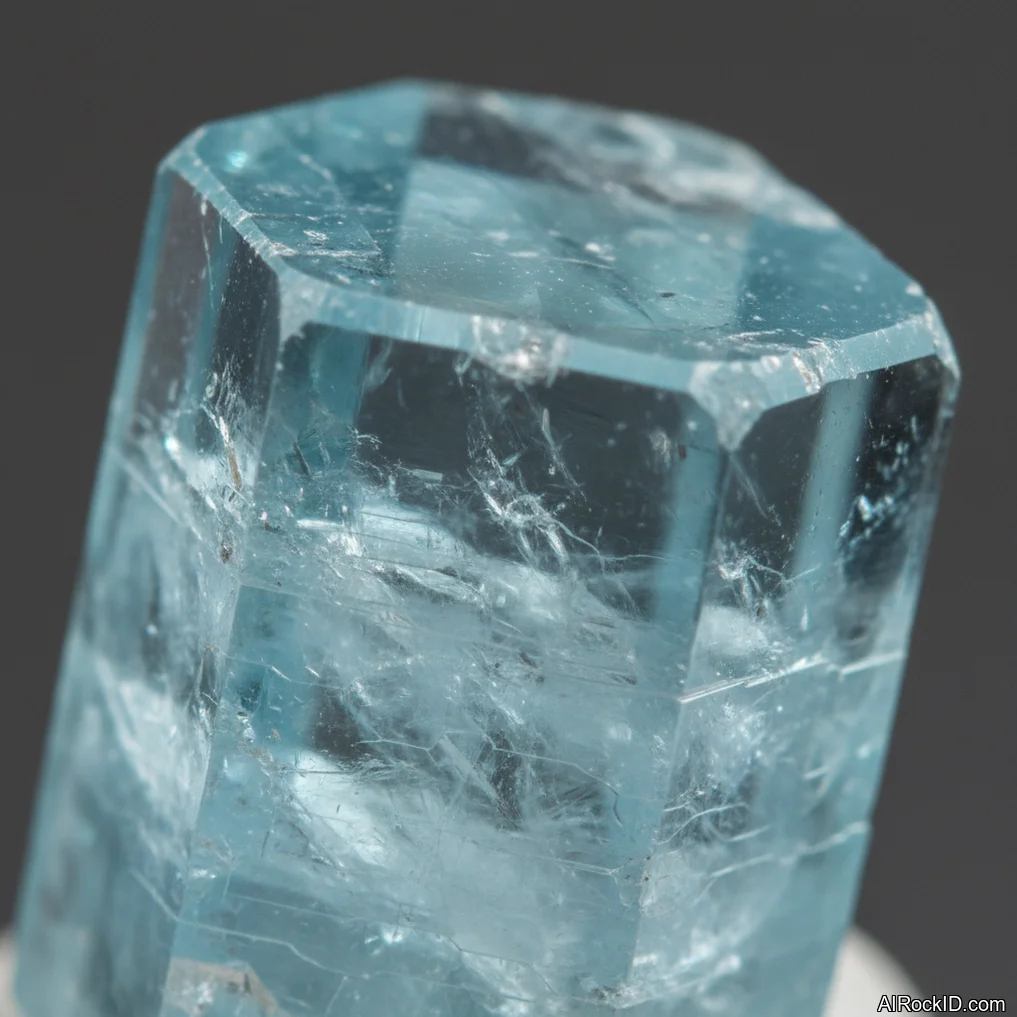
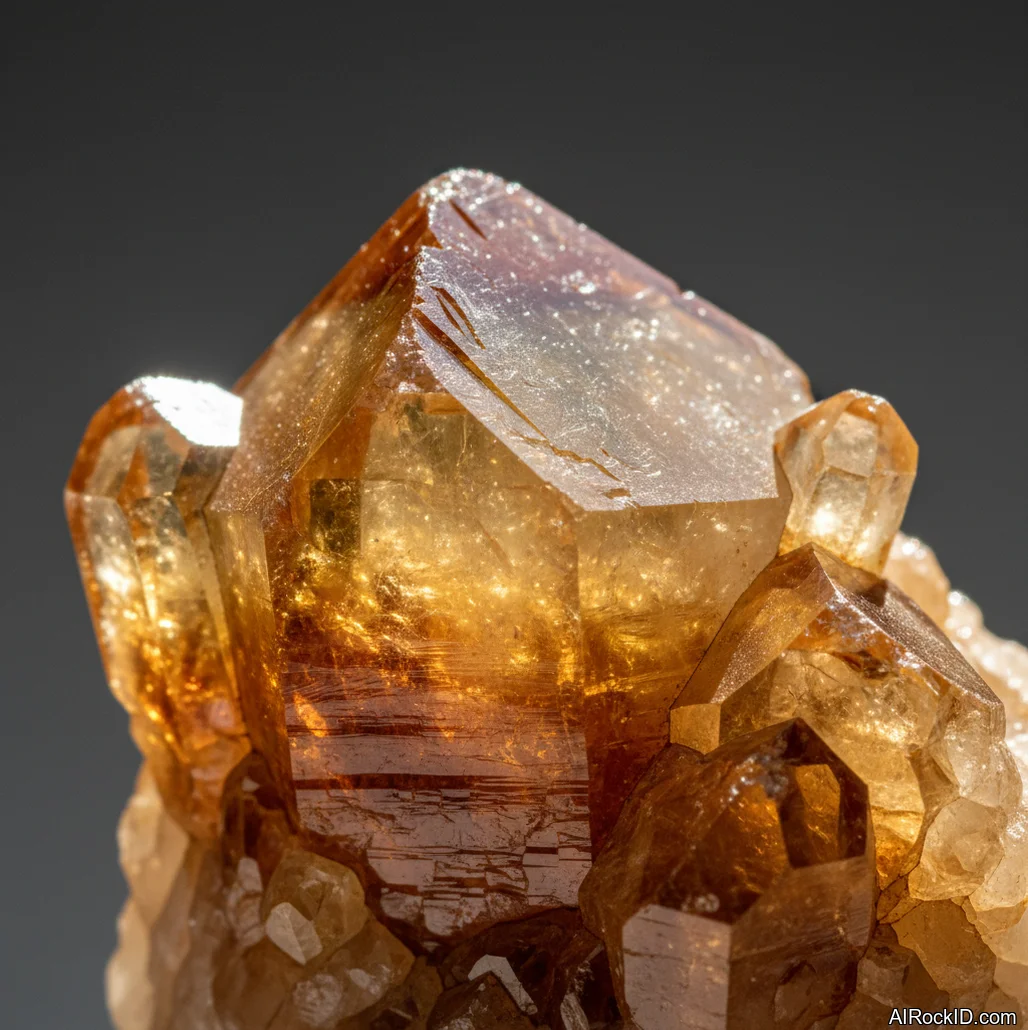
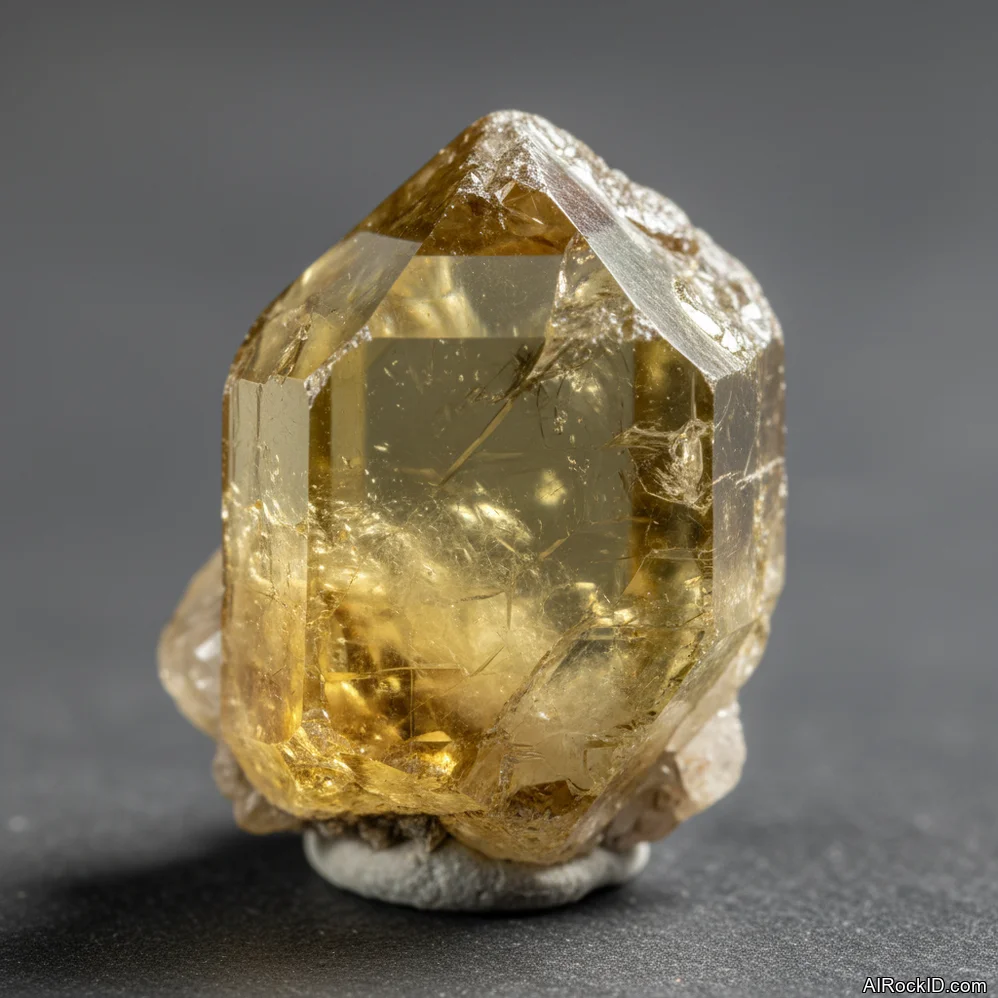
Pick up a clean heliodor crystal and a couple things hit you fast. It feels crisp and glassy in your fingers, and the color’s in the stone, not sitting on top like something that’s been dyed. A really good one has that sunlit glow that slides from lemon to honey when you tip it under a desk lamp (I’ve done the little tilt-test more times than I can count).
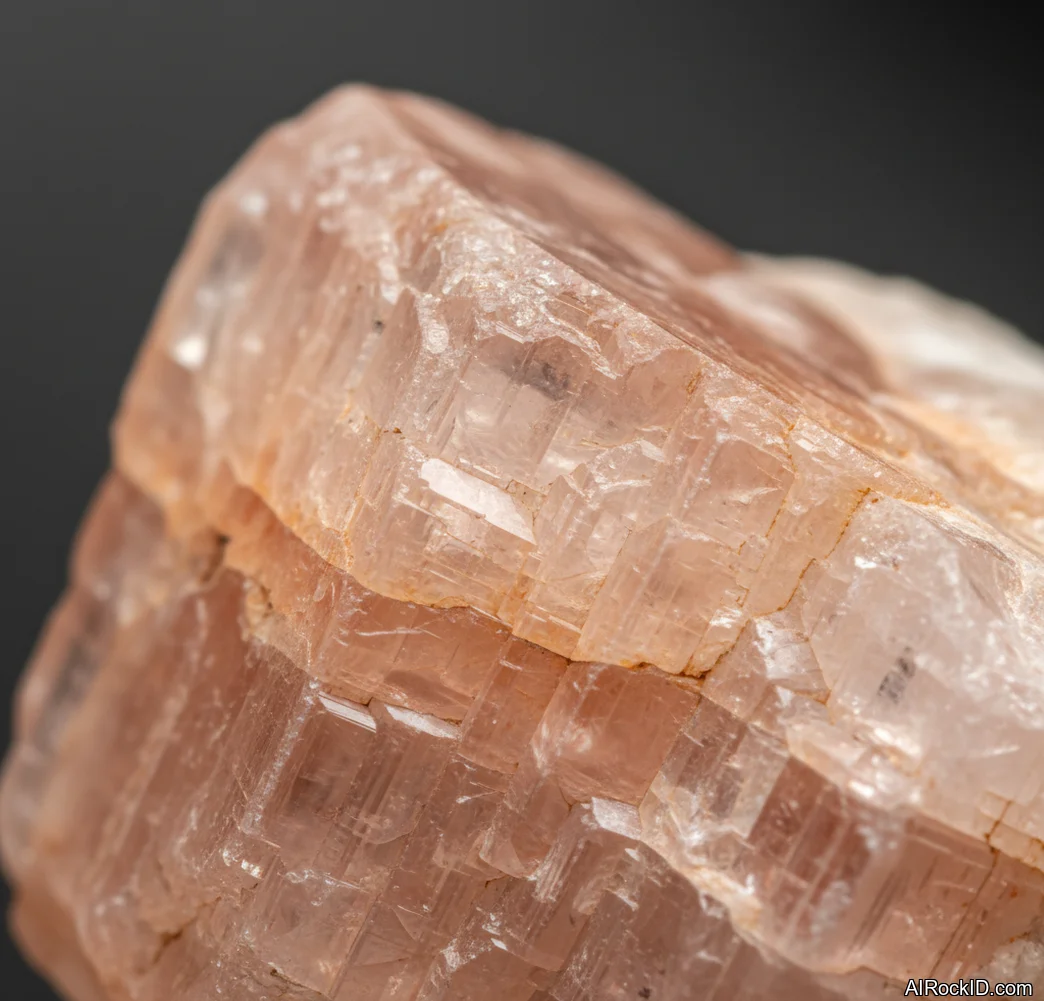
Look along the sides and you’ll usually catch those long, straight growth lines running up the prism faces. Classic beryl stuff. But don’t go in expecting every piece to be perfectly gemmy, because most heliodor I’ve seen dumped into show boxes has a few internal feathers or a milky zone. Normal. And honestly, if you’re buying it as a specimen instead of a faceted stone, that kind of thing doesn’t ruin it.
Origin & History
Germany gets the credit for the name. Back in 1910, mineralogist Max Bauer started calling it “heliodor,” pulling from the Greek helios (sun) and doron (gift), so basically “gift of the sun.” And yeah, once you’ve actually seen that warm, honey-gold color in daylight, the label feels almost too perfect.
Thing is, people still bicker about where heliodor ends and plain old yellow beryl begins. In the trade, “heliodor” usually gets slapped on the prettier golden stones, often the ones that look cleaner when you tilt them and check for haze or obvious inclusions. But scientifically, it’s all beryl, with iron causing the color by acting differently in the crystal lattice.
Where Is Heliodor Found?
Heliodor turns up in granitic pegmatites and related deposits worldwide. The pieces collectors chase most often come out of pegmatite districts in Brazil, Namibia, and parts of Eastern Europe.
Formation
Heliodor pretty much gets born the same way any other beryl does. You’re looking for a pegmatite that’s already stocked with beryllium, then a late-stage melt or fluid phase where the crystals have space and time to grow, slow and fat. That’s why beryl so often shows up as those crisp hexagonal prisms, with the flat faces that catch the light like little panes when you turn one under a lamp.
Iron is what tweaks the color knob. Get a bit of Fe2+ and Fe3+ into the structure and beryl starts sliding into yellow and gold. But thing is, pegmatites don’t behave nicely in the real world. One pocket will spit out aquamarine, the next gives you pale yellow beryl, and then a single heliodor crystal shows up with greenish zoning in the same vug. I’ve opened flats of mixed beryl at shows where the “yellow beryl” suddenly throws a blue flash on one end the moment you roll it between your fingers. How’re you supposed to call that clean and simple?
How to Identify Heliodor
Color: Yellow beryl ranges from pale lemon to deep golden yellow, sometimes with a slight greenish tint or color zoning along the length of the crystal.
Luster: Vitreous, like clean window glass.
If you scratch it with a steel knife, you won’t get far, but it will scratch glass easily. Pick up a crystal and look for the beryl habit: a hexagonal prism with flat, reflective faces and fine vertical striations. Cheap versions in souvenir bins are often dyed quartz or glass; those usually feel warmer to the touch and the color looks too even, with no zoning or internal “life.”
Properties of Heliodor
Physical Properties
| Crystal System | Hexagonal |
| Hardness (Mohs) | 7.5-8 (Very Hard (7.5-10)) |
| Density | 2.63-2.80 g/cm3 |
| Luster | Vitreous |
| Diaphaneity | Transparent to translucent |
| Fracture | Conchoidal |
| Streak | White |
| Magnetism | Non-magnetic |
| Colors | Pale yellow, Lemon yellow, Golden yellow, Yellow-green |
Chemical Properties
| Classification | Silicates |
| Formula | Be3Al2Si6O18 |
| Elements | Be, Al, Si, O |
| Common Impurities | Fe, Mn, Cr, V |
Optical Properties
| Refractive Index | 1.577-1.583 |
| Birefringence | 0.005-0.009 |
| Pleochroism | Weak |
| Optical Character | Uniaxial |
Heliodor Health & Safety
Heliodor is usually safe to handle and keep on display. If you’re cutting or grinding beryl, though, use the same standard lapidary precautions you’d use in any shop, because the dust gets everywhere (it clings to your fingers and even the back of your hand).
Safety Tips
If you’re doing lapidary work, keep a steady drip of water going, make sure you’ve got real ventilation (like a fan actually pulling air away from your face), and wear a respirator rated for fine dust. And don’t dry-grind beryl.
Heliodor Value & Price
Price Range
Rough/Tumbled: $15 - $300 per specimen
Cut/Polished: $20 - $250 per carat
Color, clarity, and size are what really move the needle here, and if you’re buying a specimen, those clean, sharp terminations matter a ton (chips on the tips stand out right away under a desk lamp). Deep gold pieces with good transparency get expensive fast, but pale yellow rough is still pretty easy on the wallet.
Durability
Durable — Scratch resistance: Excellent, Toughness: Good
Heliodor is stable for normal wear and display, but it can chip if it takes a sharp hit on an edge or termination.
How to Care for Heliodor
Use & Storage
Store heliodor so terminations don’t knock into harder stones like topaz or corundum. I keep mine in a perky box with foam because those sharp edges love to find each other in a drawer.
Cleaning
1) Rinse with lukewarm water and a drop of mild dish soap. 2) Use a soft toothbrush to work around striations and any pocket clay. 3) Rinse well and pat dry, then let it air-dry before putting it back in a box.
Cleanse & Charge
If you do energetic cleansing, a quick rinse and a night on a shelf away from direct sun is plenty. Don’t cook it on a windowsill for weeks just because it’s “sun colored.”
Placement
Set it where you can catch the color shift in changing light, like near a lamp but not in harsh, constant sun. A dark base makes pale stones look way more golden.
Caution
If the stone’s got fractures or big inclusions you can actually see when you tilt it under a light, don’t put it in an ultrasonic cleaner. And skip steam cleaning too. Don’t drop it (seriously, one little bounce off a sink edge is all it takes). Store it separately, not loose in a pile with other crystals, unless you want a bunch of tiny scratches.
Works Well With
Heliodor Meaning & Healing Properties
People grab heliodor when they want that “sun in your pocket” feeling. Same here. In my own little stash, it’s the one I reach for when the day’s gone gray and I need something bright that still feels crisp and mineral, not candy-sweet. The color looks warm. But the stone stays weirdly cool in your hand, even after you’ve been holding it, and that contrast is half the charm.
Most dealers I’ve met talk about it like it’s tied to confidence and personal power. I get the logic. It’s beryl, so it has that clean, organized vibe, and the yellow gives it a bit of a shove forward. But I’m not going to sell it as medicine. If you’re using it for mood or focus, treat it like an attention tool. Set it on your desk. Pick it up for a minute. Turn it and watch how the light catches (especially along the edges), then see what shifts in you. Anything? Maybe. Maybe not.
But here’s the sticking point: a lot of “heliodor” online is just pale yellow beryl, or heated material with that too-perfect color that screams photo filter. Real stones usually have something going on. Zoning. Tiny needle-like inclusions. One face that looks a little scuffed or just isn’t camera-ready when you tilt it. I honestly prefer that (why pretend it’s flawless?). It feels like it came out of a pocket in the ground, not off an assembly line.
And yeah, if you’re sensitive to bright stones, heliodor can feel a little too “on” at first. Pair it with something grounding like smoky quartz and it stops feeling so buzzy.
Identify Any Crystal Instantly
Snap a photo and get properties, value, care instructions, and healing meanings in seconds.