Himekawa Yakuseki
What Is Himekawa Yakuseki?
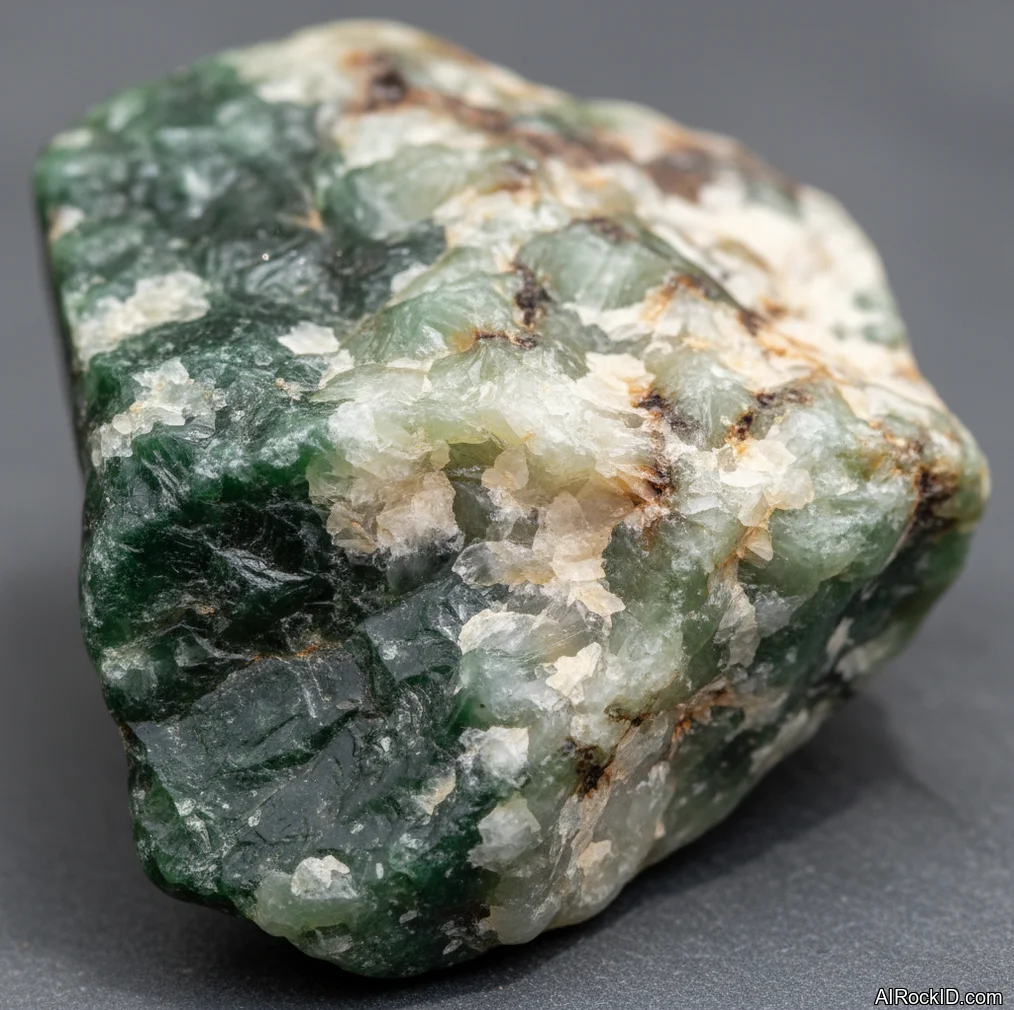
Himekawa Yakuseki is jadeite jade from around the Himekawa River in Niigata, Japan. Most of the stuff I’ve had in my hands came as river-worn cobbles, so what hits you first isn’t sparkle, it’s the feel: a tight, sugary grain under that smooth “river skin” that’s almost greasy (in a good way). No sharp edges. Just rounded, worn-down stone.
Pick up a decent cobble and, thing is, you notice the weight before anything else. It’s heavier than it looks. And it stays cool to the touch even after you’ve been holding it for a minute, like it never quite warms up. Color tends to run milky white, gray-white, pale celery green, and every now and then you’ll get darker green seams or those little rusty freckles where iron staining worked its way into tiny cracks. At first glance it can pass as “just another white rock.” But tilt it under a strong light and that soft, waxy glow shows up, and it’s hard to fake. Really hard.
Most of what collectors see is tumbled, sliced, or polished into small cabochons. Raw, bouldery pieces are out there, but clean faces are rare because it’s tough material, and it usually turns up as rounded river stones instead of pretty crystal shapes.
Origin & History
Himekawa Yakuseki is part of Japan’s jade story, tied to Itoigawa and the Himekawa River on the Japan Sea side. In Japan, “yakuseki” is a word people use for stones that get turned into amulets and ornaments, and if you’ve ever browsed dealer tables, you’ve probably seen the same material labeled more bluntly as “Japanese jade.”
Jade from that area has been used in Japan since prehistoric times, especially for beads and those magatama ornaments with the comma shape. These days, mineral ID work draws cleaner lines between true jadeite, nephrite, and the serpentines that can look close enough in hand to fool you. But collectors still use the name in a pretty practical way. If it’s confirmed jadeite from that river system, folks call it Himekawa Yakuseki, and they take it seriously.
Where Is Himekawa Yakuseki Found?
It’s a locality name for Japanese jadeite found as river cobbles and boulders in the Himekawa River drainage near Itoigawa in Niigata.
Formation
Out in the field, you’re not out there chasing sparkly little crystal pockets with perfect terminations. You’re reading a metamorphic story in the rock in front of you. Jadeite shows up under high-pressure, relatively low-temperature conditions, the kind of setup you get in subduction zones where oceanic crust is being shoved down and squeezed hard until it changes into something new.
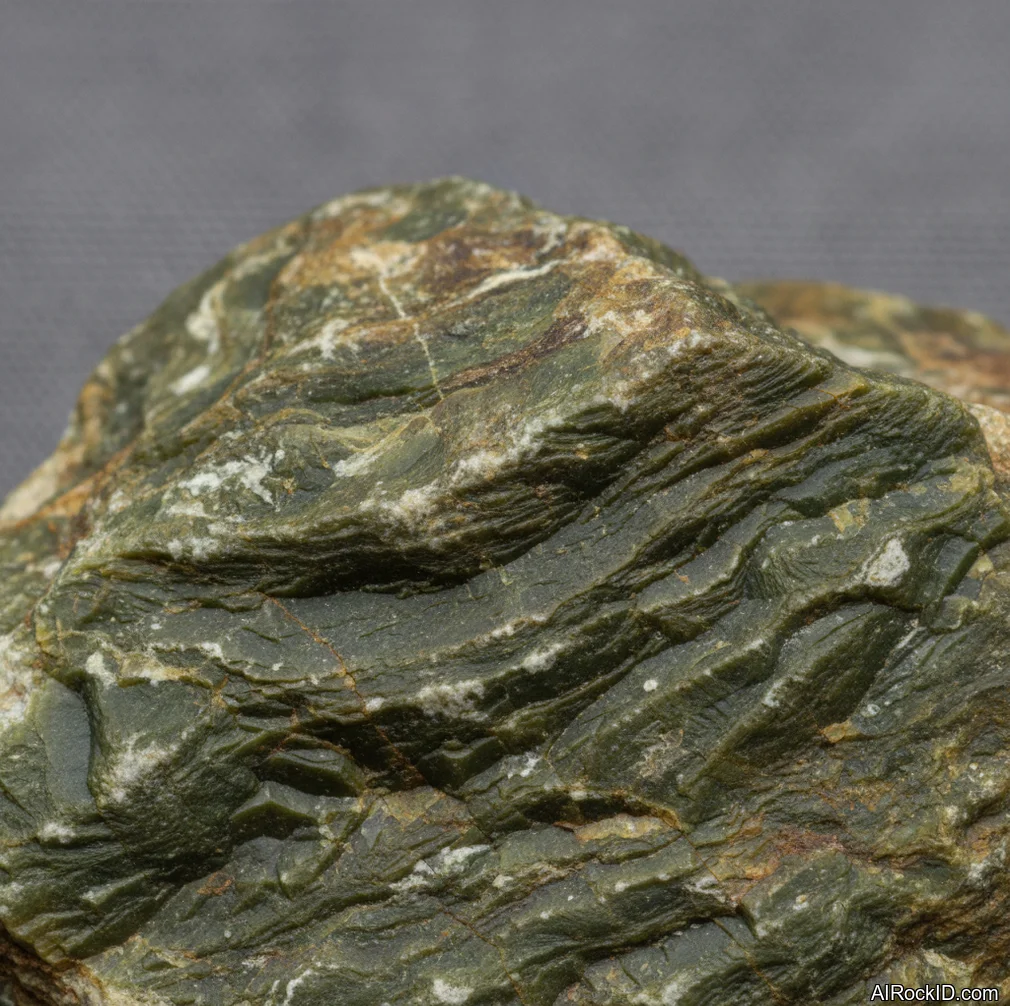
The rough you actually pick up is usually massive and fine-grained. No flashy crystals. And most of the time it isn’t “pure” anyway, it’s mixed in with other material like omphacite, albite, or amphiboles, depending on what that particular rock did and where it sat in the system. That blend matters more than people think. It shifts the green around, changes the translucency, and it even affects how “waxy” the surface looks after polishing, like when a cutter takes it up into a dome and you can feel that smooth, almost greasy drag under your fingertips.
The headache with internet listings is that “Japanese jade” gets tossed around for basically any green cobble that came out of Japan. Real Himekawa material has that dense jadeite feel, and it’s tougher than most look-alikes once you actually try to work it. You notice it fast. Why? Because it doesn’t behave the way the imposters do when you cut or grind it.
How to Identify Himekawa Yakuseki
Color: Most pieces are milky white to pale green, sometimes mottled, with occasional darker green streaks or patches. You’ll also see gray-white material and iron-stained tan or rusty spots along fractures.
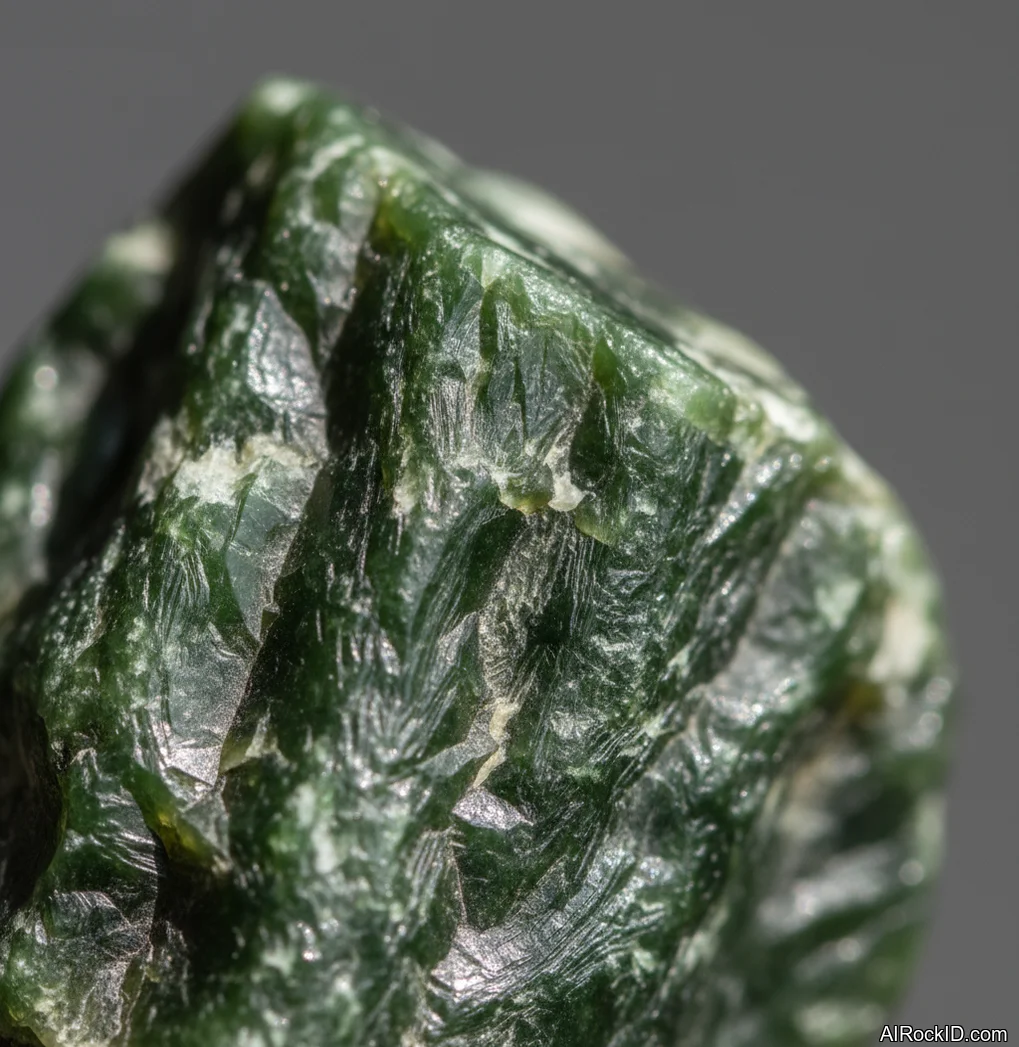
Luster: Waxy to vitreous when polished, more dull to greasy on water-worn natural surfaces.
Look closely at the grain: good jadeite shows a tight, interlocking “sugary” texture rather than obvious layers or sparkly mica. If you hold a thin edge up to a flashlight, better pieces get a soft glow instead of going dead opaque. Pick up a few similar-sized rocks at a show and compare weights. Jadeite tends to feel a touch heavier than serpentine and a lot tougher in the hand, and the surface usually stays cool. But don’t trust color alone, because dyed material exists and some pale jadeite looks boring until it’s cut.
Properties of Himekawa Yakuseki
Physical Properties
| Crystal System | Monoclinic |
| Hardness (Mohs) | 6.5-7 (Hard (6-7.5)) |
| Density | 3.30-3.38 |
| Luster | Waxy |
| Diaphaneity | Translucent to opaque |
| Fracture | Uneven |
| Streak | White |
| Magnetism | Non-magnetic |
| Colors | White, Gray, Pale green, Green, Cream, Tan |
Chemical Properties
| Classification | Silicates |
| Formula | NaAlSi2O6 |
| Elements | Na, Al, Si, O |
| Common Impurities | Fe, Cr, Ca, Mg |
Optical Properties
| Refractive Index | 1.66-1.68 |
| Birefringence | 0.013 |
| Pleochroism | None |
| Optical Character | Biaxial |
Himekawa Yakuseki Health & Safety
Solid jadeite’s fine to handle, and it’s fine around water in normal day-to-day use. But if you’re cutting it or grinding it, that’s when you’ve gotta be careful, because the dust you kick up (that pale, gritty powder that clings to your fingers and shows up on everything) is bad news for your lungs.
Safety Tips
If you’re going to shape it, do it wet and wear a real respirator that’s rated for fine particulates. The cheap paper mask won’t cut it.
Himekawa Yakuseki Value & Price
Price Range
Rough/Tumbled: $30 - $400 per piece
Cut/Polished: $15 - $120 per carat
Price bounces around based on translucency, how even the color looks, and whether the source is genuinely documented as coming from the Himekawa/Itoigawa area. And if it’s got a high polish, that clean, glassy texture you can feel when you run a fingernail across it (no chalky drag), plus a believable chain of custody, the number climbs fast.
Durability
Durable — Scratch resistance: Good, Toughness: Excellent
It’s very tough in daily wear, but a hard knock can still chip edges on thin cabs and carvings.
How to Care for Himekawa Yakuseki
Use & Storage
Store it in a pouch or a divided box so it doesn’t bang against quartz or corundum. I keep polished jadeite away from diamond jewelry because tiny chips happen when hard stuff kisses edges.
Cleaning
1) Rinse with lukewarm water. 2) Wash with mild soap and a soft toothbrush for crevices. 3) Rinse again and dry with a soft cloth.
Cleanse & Charge
If you do energetic cleaning, running water and a quick wipe are plenty. I avoid salt bowls for carved pieces just because salt grit can scratch a good polish over time.
Placement
On a desk or shelf is fine, but I wouldn’t leave the best pale green pieces in direct sun all day because surface oils and dust bake on and dull the look. A spot with steady light lets the waxy glow show.
Caution
Skip harsh cleaners. Don’t toss it in an ultrasonic, and keep it away from high heat too, because that combo can mess things up fast. And don’t just take every “Himekawa” listing at face value as jadeite. If it actually matters to you, buy from a seller who can prove the ID with testing (not just a nice photo and a promise).
Works Well With
Himekawa Yakuseki Meaning & Healing Properties
Quiet stone. That’s what it feels like in my hand.
When I’m holding a cool, dense Himekawa cobble, it’s got this steady, no-drama weight to it, like a worry stone that doesn’t go slick and warm after ten seconds. It stays a little stubborn. Cold longer. Almost like it’s refusing to hurry up.
People connect jadeite with protection, long-term luck, and keeping your head on straight, and yeah, that matches how I reach for it. Not for big “energy” moments. More for the everyday stuff. Staying patient. Not biting someone’s head off. Actually finishing what you started, even when you’d rather scroll and bail.
But I’ll say the obvious part out loud because it matters: none of that is medical care. If you’re anxious or you’re not sleeping, use the stone as a reminder to slow down, take a breath, and still deal with the real-world stuff that helps. Therapy, sleep habits, whatever you actually need. The rock doesn’t replace that.
And here’s the collector reality check. Some sellers talk like Japanese jadeite automatically means top gem quality. It doesn’t. A lot of it is gorgeous in this natural, honest way, but it’s still mostly white and opaque. The value and the vibe come from the texture, the toughness, and that Japan locality story, not from getting neon-green translucency every single time.
Identify Any Crystal Instantly
Snap a photo and get properties, value, care instructions, and healing meanings in seconds.