Iowaite
What Is Iowaite?
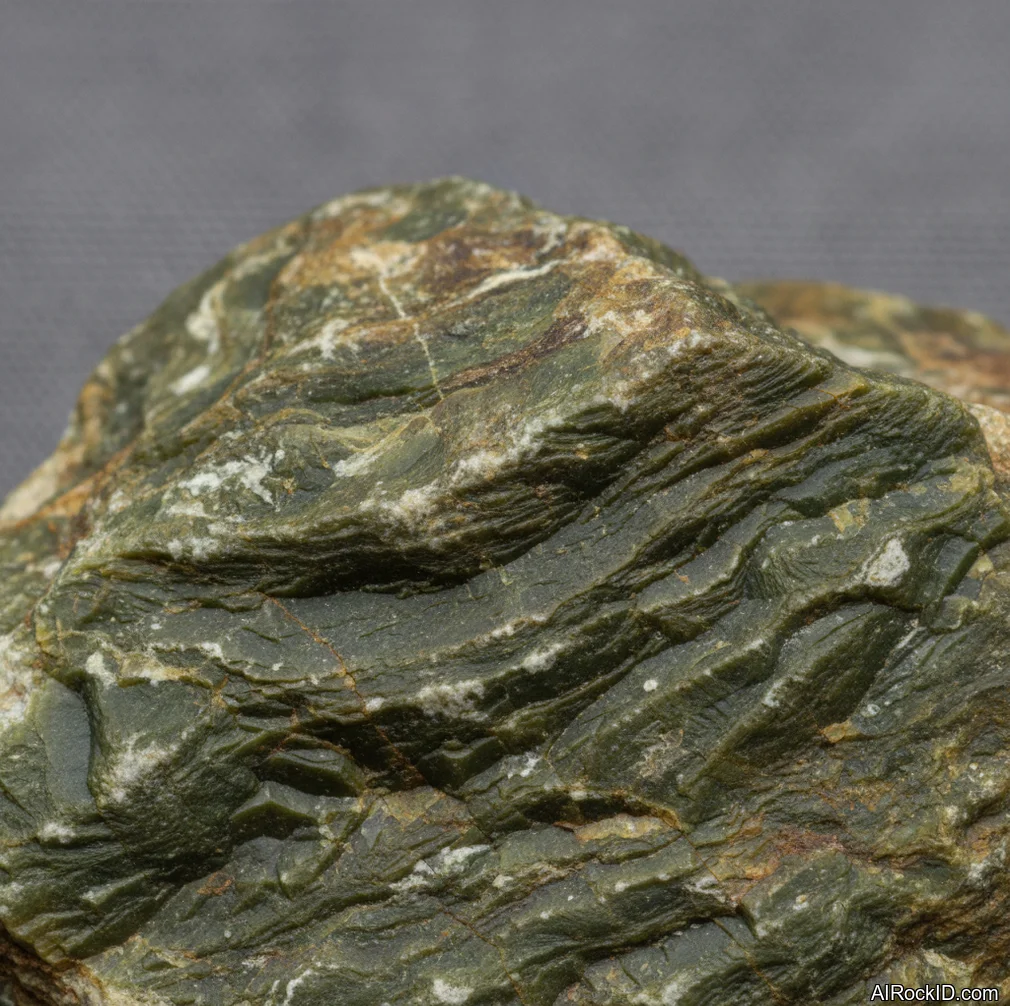
Iowaite’s a pretty rare mineral: green, chloride-bearing, and a layered double hydroxide in the hydrotalcite supergroup. Most of the time you’re not staring at big, standalone crystals either. You’re looking at thin, platy material sitting on serpentine or some other altered ultramafic rock.
Pick up a specimen and the first thing that hits you is how much it acts like flaky mica, even though it isn’t mica. It wants to smear. It’ll shed tiny plates if you get too brave with a fingernail and press in. And the color can mess with you. Under shop lights it can look like a dull olive, but tip it a little and you catch this slightly waxy, micaceous flash that just screams “layered,” you know?
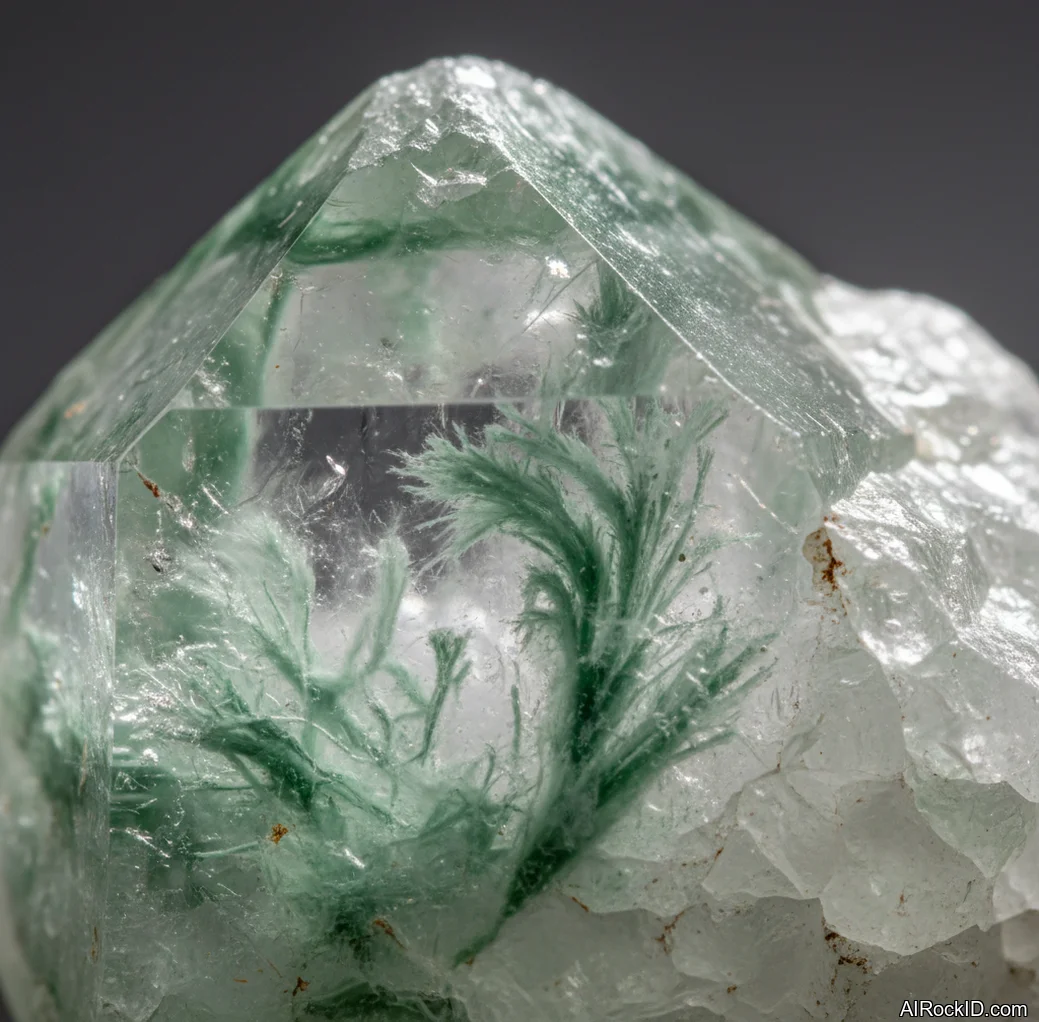
But here’s the catch. A lot of green, platy alteration minerals end up tossed in the same bin at shows, and “iowaite” is one of those labels people use kind of loosely. If something’s tagged iowaite and it’s hard, chunky, and full of sparkly crystal faces, I get skeptical fast. Real iowaite feels delicate, and it usually shows up as coatings, aggregates, or soft plates, not sharp prismatic crystals.
Origin & History
Iowaite got its first write-up in 1961, based on material from Iowa, USA, and the name’s literally just a nod to the state where the type locality sits. The original description pegged it to altered ultramafic settings, the kind where magnesium-rich fluids move through and chlorine gets mixed into the chemistry.
And from a collector’s point of view, it never became one of those “old European” minerals with dusty museum labels and centuries of stories attached. It’s a newer mineralogy name that shows up after somebody actually runs the tests on those green alteration crusts (the slightly waxy, sometimes crumbly coatings you scrape off a rock with a fingernail) and figures out it’s not just “chlorite” or “serpentine” like everyone says at first.
Where Is Iowaite Found?
It turns up in altered ultramafic rocks and serpentinites in a few scattered localities, usually as coatings and platy aggregates rather than big crystals.
Formation
Most iowaite turns up in low-temperature alteration zones where ultramafic rocks are getting hydrated and chemically reworked. Think serpentinization neighborhoods. Magnesium is everywhere, and you’ve got fluids threading through tiny cracks and polished-looking shear zones, doing their slow, persistent work.
And when you actually look at how it sits on the matrix, it clicks. It usually shows up as thin plates and crusts, like it precipitated or sort of reorganized right along the rock surfaces as the chemistry changed (sometimes right at the edge of a fracture). Chloride is part of the recipe. That’s why iowaite is such a handy mineralogical marker. You don’t get chloride in every alteration suite, so if it’s there, it’s basically waving a flag about what the fluids were like. What else would explain it?
How to Identify Iowaite
Color: Usually pale to medium green, sometimes olive-green, and it can look gray-green when it’s thin or dusty. In thicker patches it can read more saturated, but it’s rarely a bright “gem green.”
Luster: Pearly to waxy with a micaceous sheen on platy surfaces.
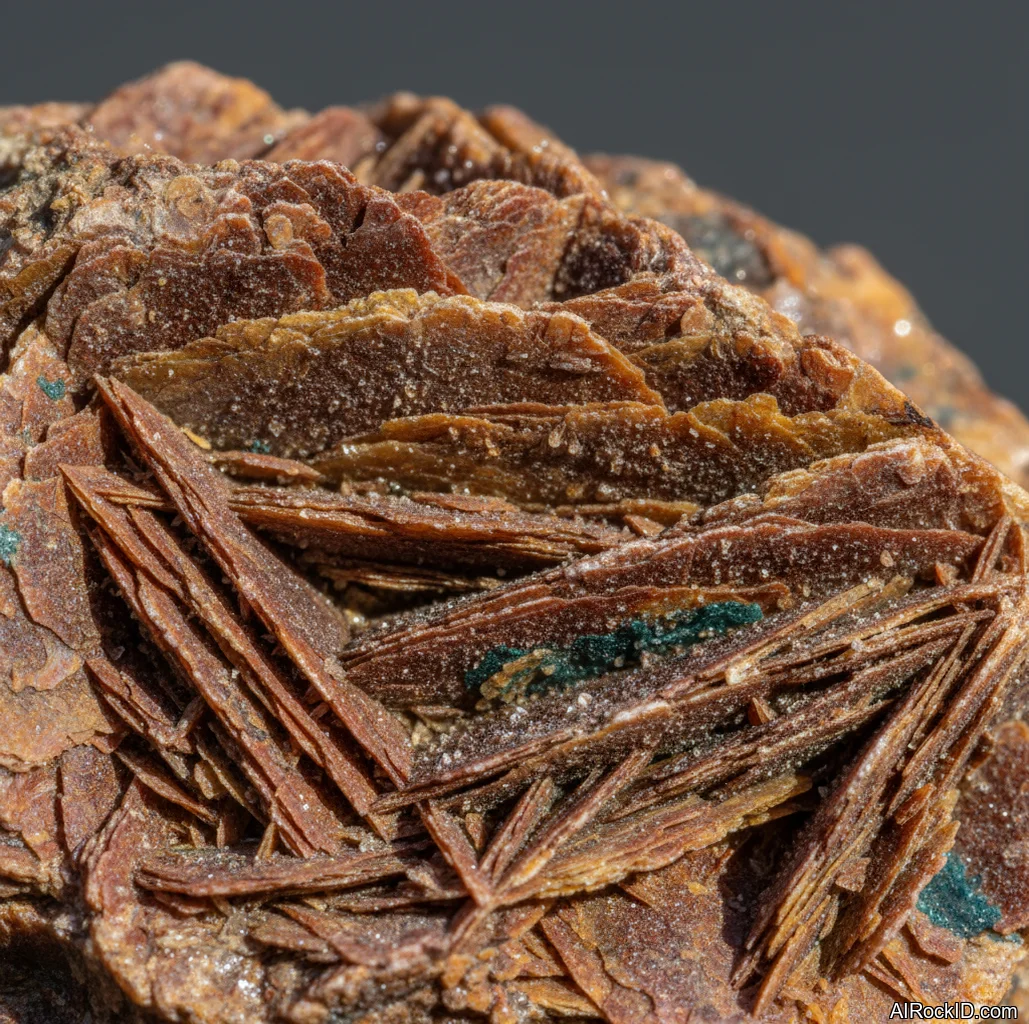
Pick up a piece and lightly drag a fingernail across an edge. If it’s iowaite, it tends to feel soft and a bit flaky, not crisp and glassy. The real test is magnification: you’ll often see tiny plates stacked or layered, like a soft mica book that never got the memo to form clean books. And if a seller is calling any green coating “iowaite,” ask if it was actually identified, because visually it can overlap with chlorite, serpentine, and other hydrotalcite-group minerals.
Properties of Iowaite
Physical Properties
| Crystal System | Trigonal |
| Hardness (Mohs) | 1.5-2 (Very Soft (1-2)) |
| Density | 2.06-2.10 g/cm3 |
| Luster | Pearly |
| Diaphaneity | Translucent |
| Fracture | Uneven |
| Streak | white to pale greenish white |
| Magnetism | Non-magnetic |
| Colors | pale green, olive green, gray-green, greenish white |
Chemical Properties
| Classification | Hydroxides (layered double hydroxide) |
| Formula | Mg6Fe3+2(OH)16Cl2·4H2O |
| Elements | Mg, Fe, O, H, Cl |
| Common Impurities | Al, Ni, Mn |
Optical Properties
| Refractive Index | 1.540-1.560 |
| Birefringence | 0.020 |
| Pleochroism | Weak |
| Optical Character | Uniaxial |
Iowaite Health & Safety
It’s fine to handle, but it’s soft enough that if you drag it across something rough you’ll raise a little grit (you can feel that faint sandy drag under your fingertips). So yeah, stick to the usual rock-shop common sense: don’t inhale the dust.
Safety Tips
If you’re trimming matrix or brushing off crusts, keep it a little damp, then wash your hands right after. Don’t grind it up dry.
Iowaite Value & Price
Price Range
Rough/Tumbled: $25 - $150 per specimen
Price usually follows how confident the label is, how tight the locality info gets, and how clean that platy green stuff looks sitting on the matrix. And if the contrast is really showy and the ID feels solid, the number can jump quick, even when the specimen’s tiny.
Durability
Fragile — Scratch resistance: Poor, Toughness: Poor
Soft platy material can shed or scuff easily, and repeated handling will dull the sheen.
How to Care for Iowaite
Use & Storage
Store it in a box or perky case where it won’t rub against harder specimens. A little padding matters with iowaite because the surface scuffs so easily.
Cleaning
1) Rinse briefly with cool water to remove loose dust. 2) Use a very soft brush or a blower bulb, not a stiff toothbrush. 3) Pat dry and let it air-dry fully before boxing it up.
Cleanse & Charge
If you do metaphysical cleansing, keep it simple: smoke, sound, or a quick pass over a selenite plate. Skip salt so you don’t end up with crusty residue in the plates.
Placement
It’s happiest on a shelf where it won’t get handled every day. If you display it, keep it away from direct sun and from spots where people will pick it up and thumb the surface.
Caution
Don’t put it in an ultrasonic cleaner. And skip acids or anything harsh. Handle it like it’s got a soft, micaceous coating, because in your hand that’s basically exactly what it feels like.
Works Well With
Iowaite Meaning & Healing Properties
People who end up loving iowaite tend to be the same people who geek out over serpentinite minerals, altered-rock textures, and that whole “earthy lab specimen” vibe. When I’ve worked with it in my own practice, it comes across quiet and steady. Not flashy. It’s the stone I’ll park next to my notebook when I’m trying to map out a plan, because it keeps me from ricocheting all over the place.
Pick up a piece on a stressful day and you’ll see what I mean. It feels light for its size compared to a lot of dark ultramafic matrix, and those soft plates have this calming, almost powdery look even before you touch them (like a faint, matte dusting). But look, I’m not going to sugarcoat it: it’s fragile, and that fragility changes how you use it. I don’t toss iowaite in a pocket. I set it down. Let it stay put. And honestly, that ends up being the whole point.
And none of this is medical advice. It’s not a substitute for real care. I treat it like a focus aid, a little nudge to slow down, that’s it. If you want something for daily carry, grab a tougher green stone, and keep iowaite for a shelf or desk where it won’t get wrecked. Why tempt fate?
Identify Any Crystal Instantly
Snap a photo and get properties, value, care instructions, and healing meanings in seconds.