Japan Law Twin
What Is Japan Law Twin?
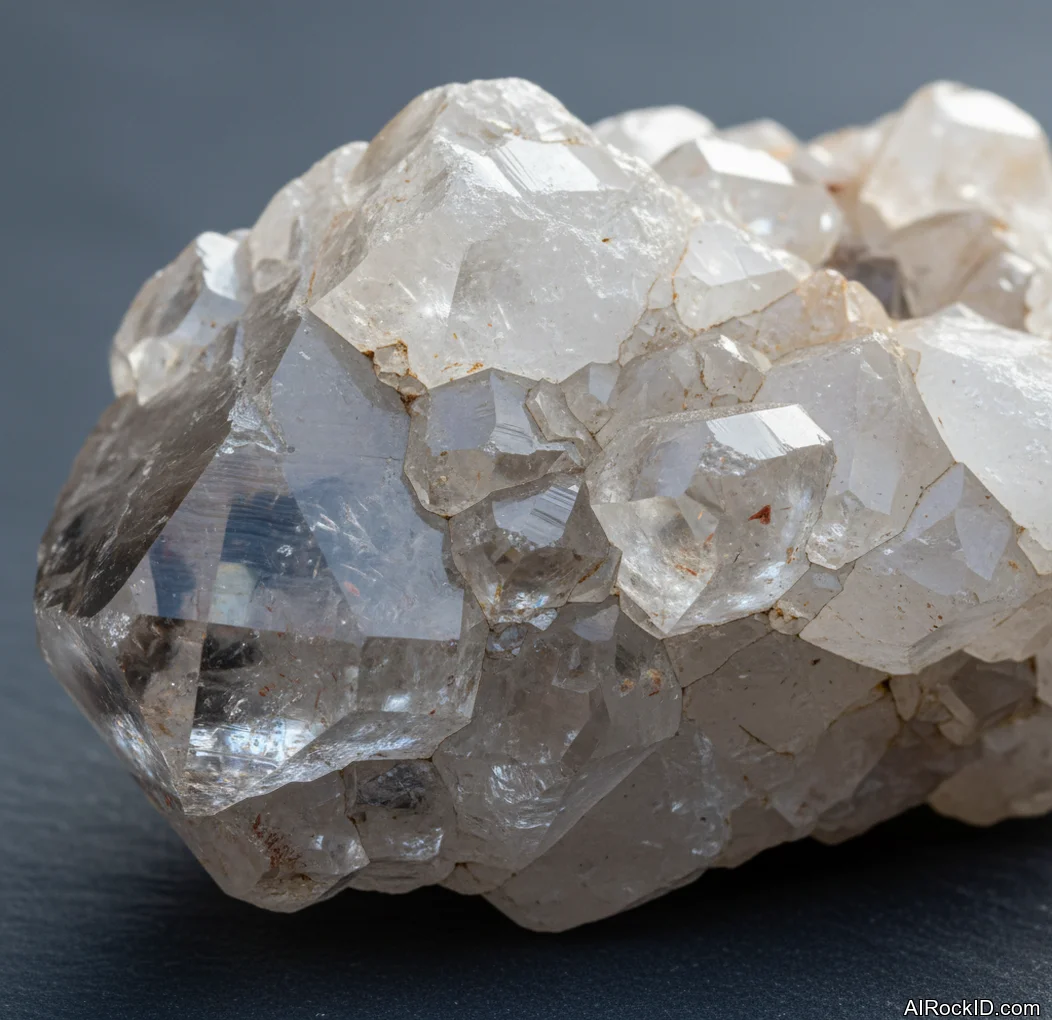
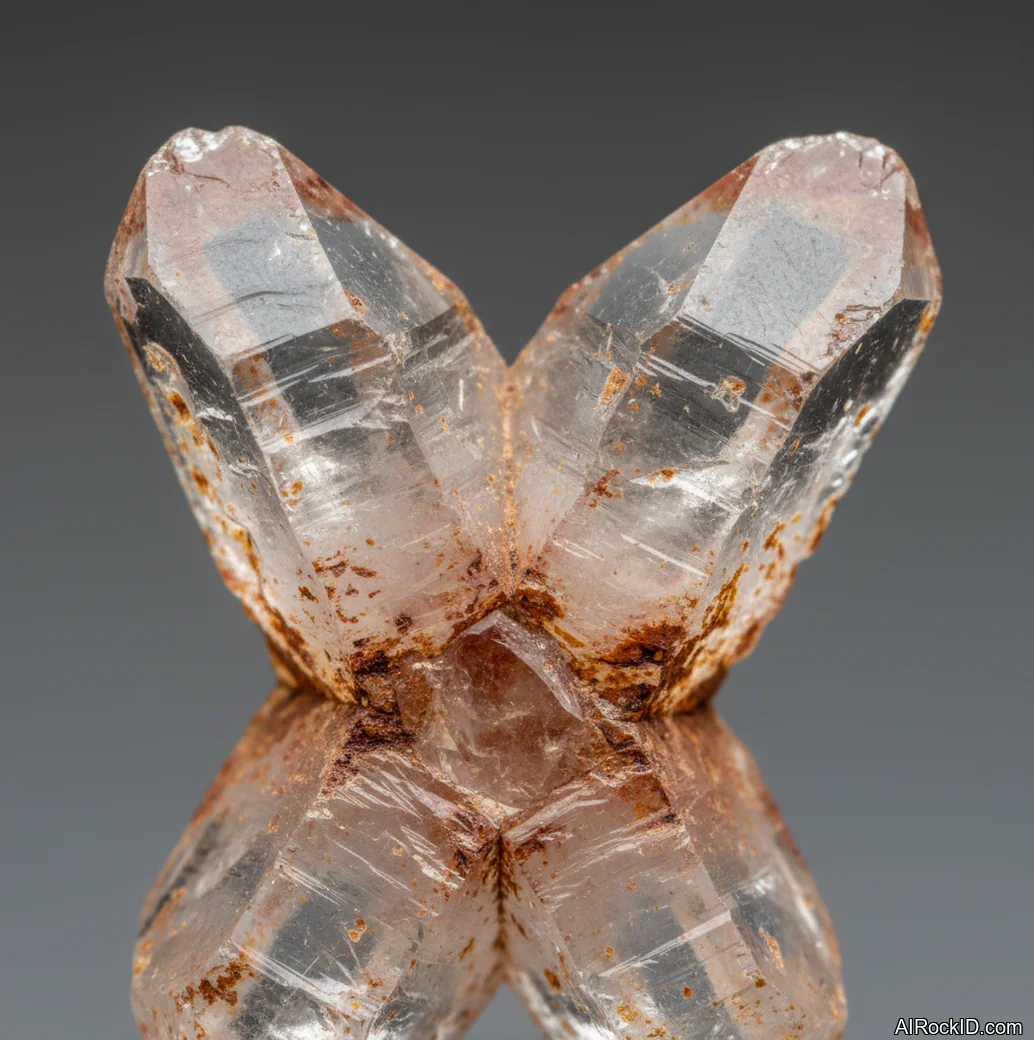
A Japan Law Twin is a pair of quartz crystals that grew together into a clean V shape because of a specific twinning pattern in the quartz lattice.
Thing is, when you pick up a good one, you feel that “two crystals, one piece” idea instantly. It’s got a certain heft, and the surfaces feel glassy but not slippery like polished stuff. This isn’t two random points glued on. The join is a flat contact plane, and the two halves mirror each other at a crisp angle that honestly looks almost engineered when you tilt it.
At first glance, people call them “little quartz hearts.” But in your hand? More like a quartz boomerang. The best ones have sharp edges, a tight, symmetrical V, and if you roll it under a lamp you’ll watch the reflections sweep across both faces in sync, then snap and break right at that twin line (so satisfying to see, right?).
Origin & History
The name traces back to classic specimens found in Japan. Early mineralogy books described and drew this quartz twinning style as a recognizable growth “law,” basically a rule the crystals follow.
But these days, most dealers toss “Japan Law Twin” around as a trade name for that V-shaped contact twin look, even if the piece actually came out of Brazil, the Alps, Russia, or the US. And yeah, the tagging gets sloppy at shows. I’ve watched people slap “Japan twin” on a regular quartz cluster where two points just happen to lean into each other (usually with a bit of grime sitting in the crease), but the real deal has an actual twin relationship and a crisp, clean contact.
Where Is Japan Law Twin Found?
Japan Law twins turn up in hydrothermal quartz localities worldwide, with classic references to Japan and strong collector material from Alpine-type pockets and pegmatitic or vein quartz districts.
Formation
Quartz grows in open space, and that’s when the weird, fun habits start showing up.
A Japan Law twin happens when two quartz crystals start up together and keep the same orientation as they grow, sharing a flat contact plane. They’re not just jammed side by side in a cluster, they’re actually “stuck” to each other in a consistent way.
Look right into that V and you’re basically seeing a growth screw-up that got locked in early, then it just kept stacking on itself layer after layer. Thing is, you run into these a lot in pockety spots where the conditions change on you, like Alpine fissures or vugs in quartz veins. That open pocket is the whole reason the crystals can spread out and form proper faces instead of turning into one solid, chunky mass (the kind that just looks like a lumpy block when you pick it up).
But online listings muddy the water. They’ll slap “Japan twin” on any V-shaped pair. In the ground, real ones usually have matching proportions and a cleaner, face-to-face fit, while random intergrowths tend to look sloppy, with the contact line uneven or sort of stepped.
How to Identify Japan Law Twin
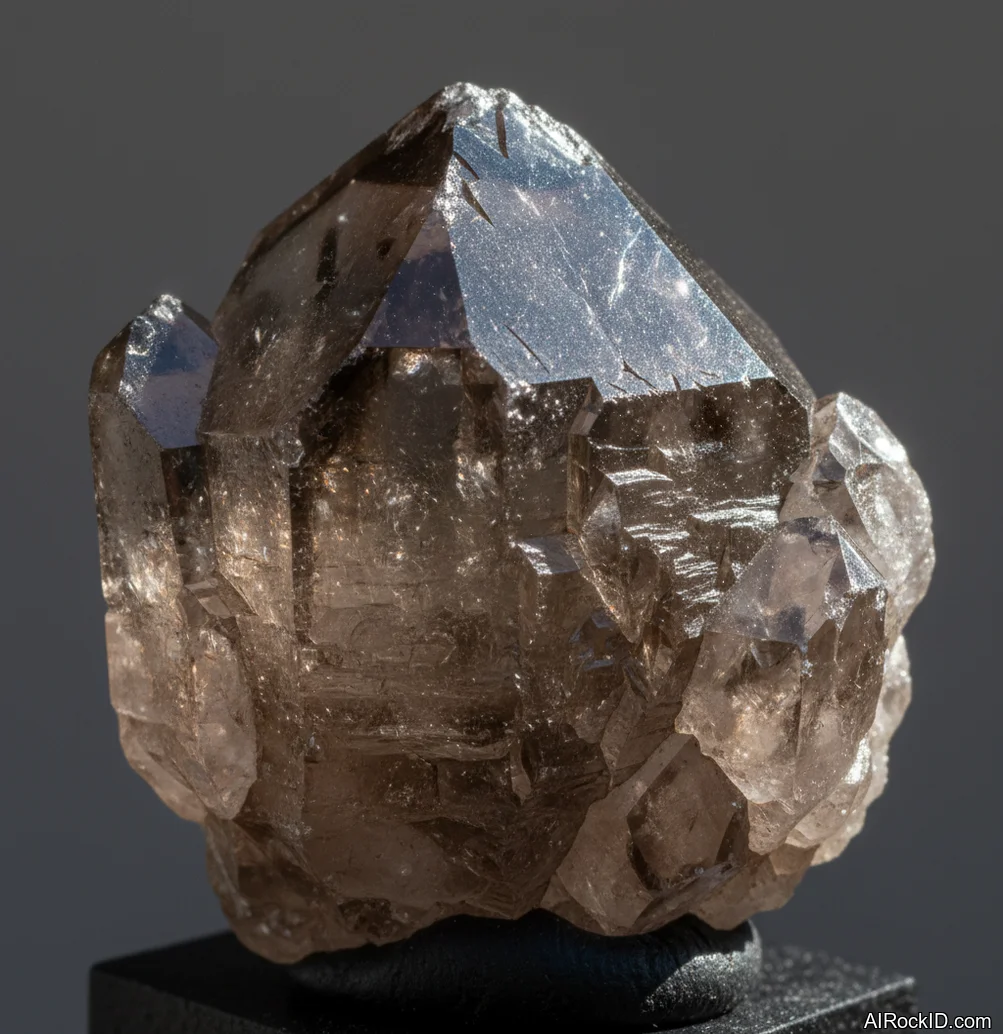
Color: Most are clear to milky, but you’ll also see smoky, chlorite-dusted, or iron-stained pieces. The color usually isn’t the point, the geometry is.
Luster: Vitreous luster on fresh, unetched faces, with a glassy flash that breaks at the twin boundary.
Pick up the piece and rotate it under one overhead light. A true Japan Law twin tends to “mirror” its reflections across both halves, and the join looks like a single flat plane rather than a lumpy seam. If you run a fingernail along the contact, it often feels like one continuous edge on good specimens, not two points glued together. But don’t trust symmetry alone, because some clusters just grow in a cute V without being a real twin.
Properties of Japan Law Twin
Physical Properties
| Crystal System | Trigonal |
| Hardness (Mohs) | 7 (Hard (6-7.5)) |
| Density | 2.65 g/cm3 |
| Luster | Vitreous |
| Diaphaneity | Transparent to translucent |
| Fracture | Conchoidal |
| Streak | White |
| Magnetism | Non-magnetic |
| Colors | Colorless, White, Smoky brown, Gray, Yellow-brown, Green (chlorite inclusions) |
Chemical Properties
| Classification | Silicates |
| Formula | SiO2 |
| Elements | Si, O |
| Common Impurities | Al, Fe, Ti, Li |
Optical Properties
| Refractive Index | 1.544-1.553 |
| Birefringence | 0.009 |
| Pleochroism | None |
| Optical Character | Uniaxial |
Japan Law Twin Health & Safety
Japan Law Twin is quartz (SiO2), so it’s generally safe to handle. But if you’re cutting or grinding it, don’t let it turn into that super-fine powdery dust that hangs in the air and gets everywhere (you can feel it in your throat).
Safety Tips
If you’re doing lapidary work, stick to wet cutting and wear the right respirator so you’re not breathing in silica dust. Dry cutting kicks up this nasty, fine powder that hangs in the air and gets everywhere, including your lungs.
Japan Law Twin Value & Price
Price Range
Rough/Tumbled: $15 - $250 per specimen
Clean, sharp V-shaped geometry and terminations that haven’t been dinged up will jack the price up in a hurry. Big, well-balanced twins with clear quartz and only a tiny bit of edge bruising, if any, are the ones that get snapped up first at shows.
Durability
Durable — Scratch resistance: Excellent, Toughness: Good
Quartz is chemically stable for normal handling, but the thin outer edges on twins chip easier than people expect.
How to Care for Japan Law Twin
Use & Storage
Store it so the V edges don’t bang into harder pieces. I keep twins in small flats with foam or a folded microfiber cloth.
Cleaning
1) Rinse with lukewarm water and a drop of mild dish soap. 2) Use a soft toothbrush to work around the twin contact and any little crevices. 3) Rinse well and air-dry, or pat dry with a lint-free cloth.
Cleanse & Charge
If you do the metaphysical care routine, smoke cleansing or a quick rinse works fine for quartz. I’d skip harsh salt scrubs because they can grind grit into the faces.
Placement
Set it where side light hits the faces, not dead overhead. A windowsill works for the look, but I prefer indirect light so iron staining and included coatings don’t fade or dry out.
Caution
Don’t just chuck it in your pocket or drop it in a jar with your other crystals. Those sharp twin edges chip stupidly fast, and once you spot a little bruise on the corner, you’ll notice it every single time you look at it.
Works Well With
Japan Law Twin Meaning & Healing Properties
In the crystal world, Japan Law twins get brought up a lot for “pair” stuff: balance, agreement, seeing two sides at the same time. And yeah, I get it. When you’ve actually got one in your hand, your attention keeps hopping from the left half to the right half, like your brain wants to line them up and judge the differences.
I use mine in a pretty no-nonsense way. If I’m journaling or stuck on a decision, I’ll park a Japan twin on the desk as a little physical nudge to slow down and look at both options. It’s not mystical for me. It’s tactile. Cold quartz against your fingertips, those crisp edges and that sharp geometry, no fluff (and you can feel how the faces catch on your skin if you turn it).
But look, I’m going to say the quiet part out loud: it’s still quartz. If someone’s pitching it like it’ll fix your relationship or cure anxiety, that’s sales talk. What it can do is give you a focus object with a built-in “two things at once” shape, and that’s genuinely useful if you already like working that way. Right?
Identify Any Crystal Instantly
Snap a photo and get properties, value, care instructions, and healing meanings in seconds.