Lizardite
What Is Lizardite?
Lizardite is a magnesium-rich serpentine mineral with the formula Mg3Si2O5(OH)4. It forms as a sheet silicate when ultramafic rocks hydrate.
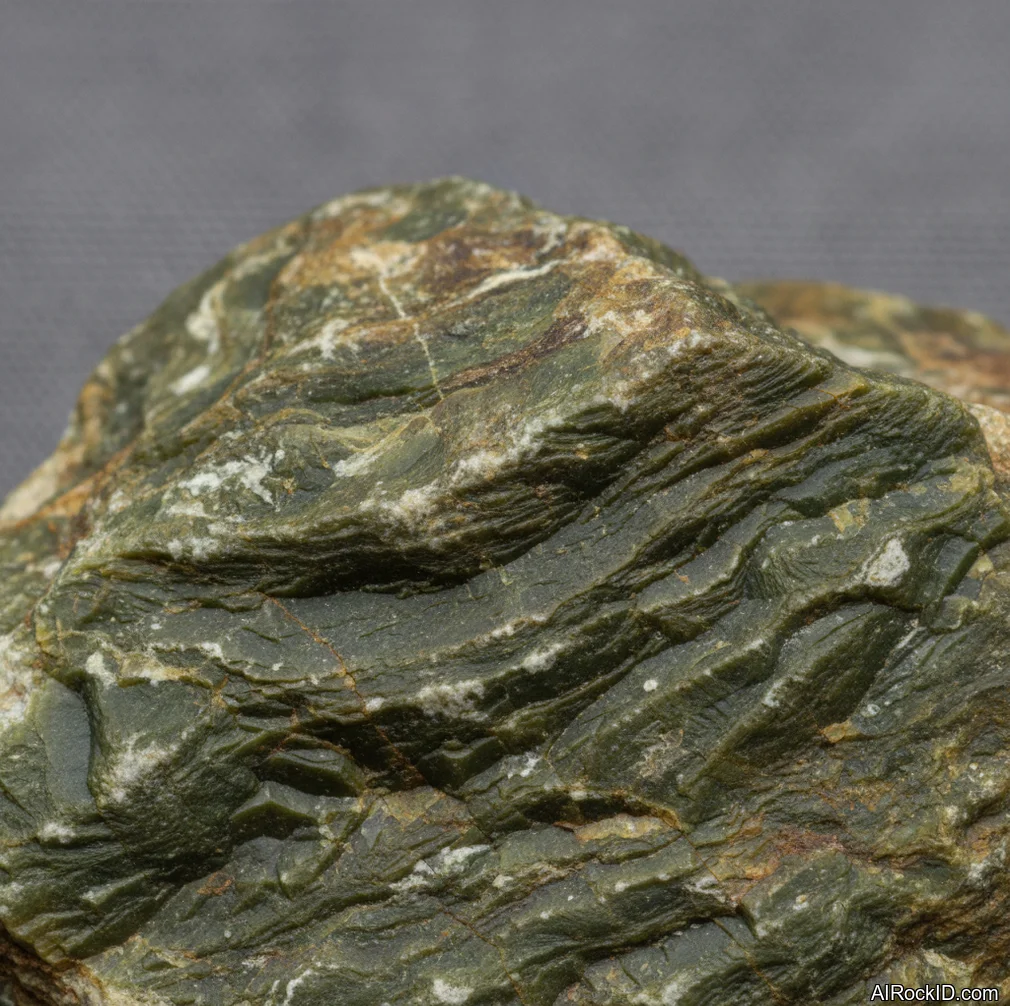
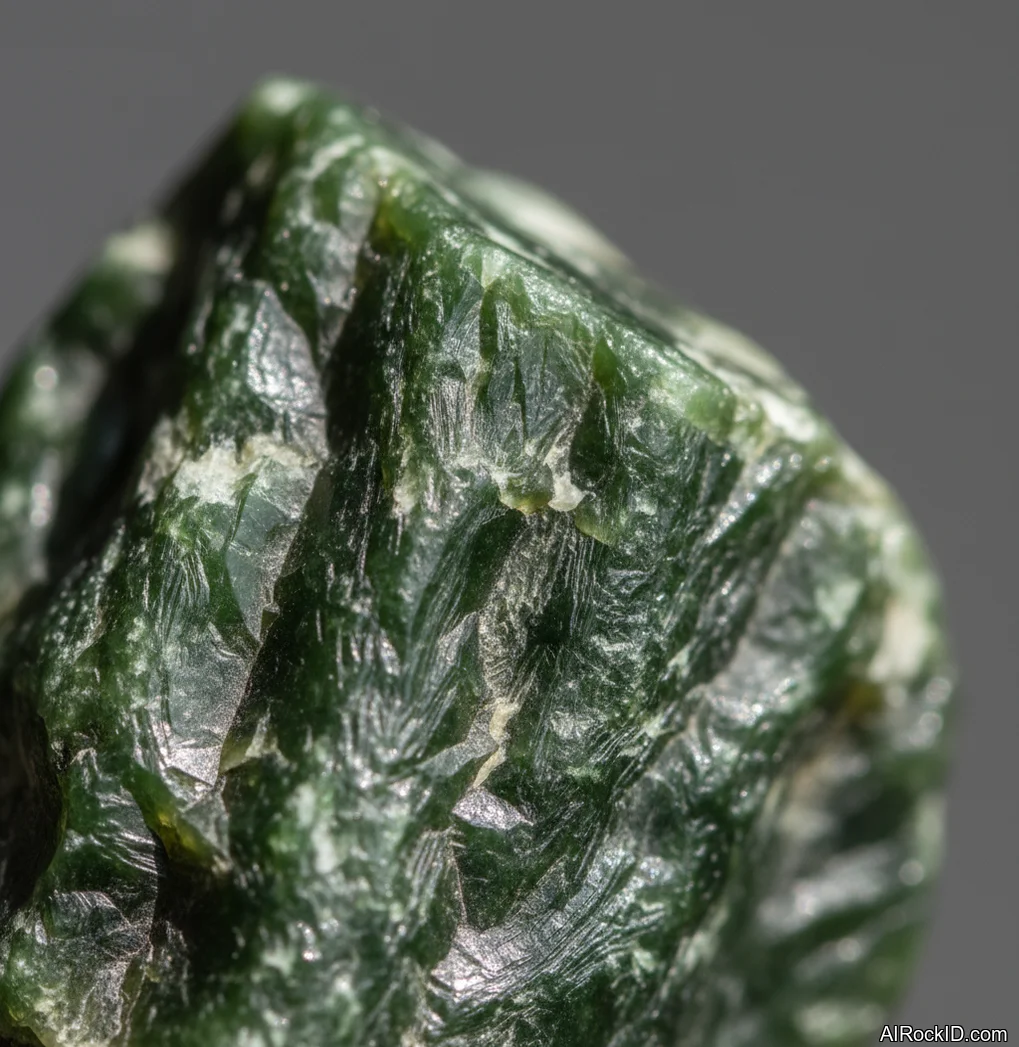
Pick up a chunky piece and you’ll notice it immediately. Slick. Almost soapy. Like that worn bar of soap you find by a creek, with the corners rounded off and a weird little sheen where it’s been rubbed. It also feels a bit lighter than you’d guess for something that looks dark green, and the surface usually reads waxy, not glassy.
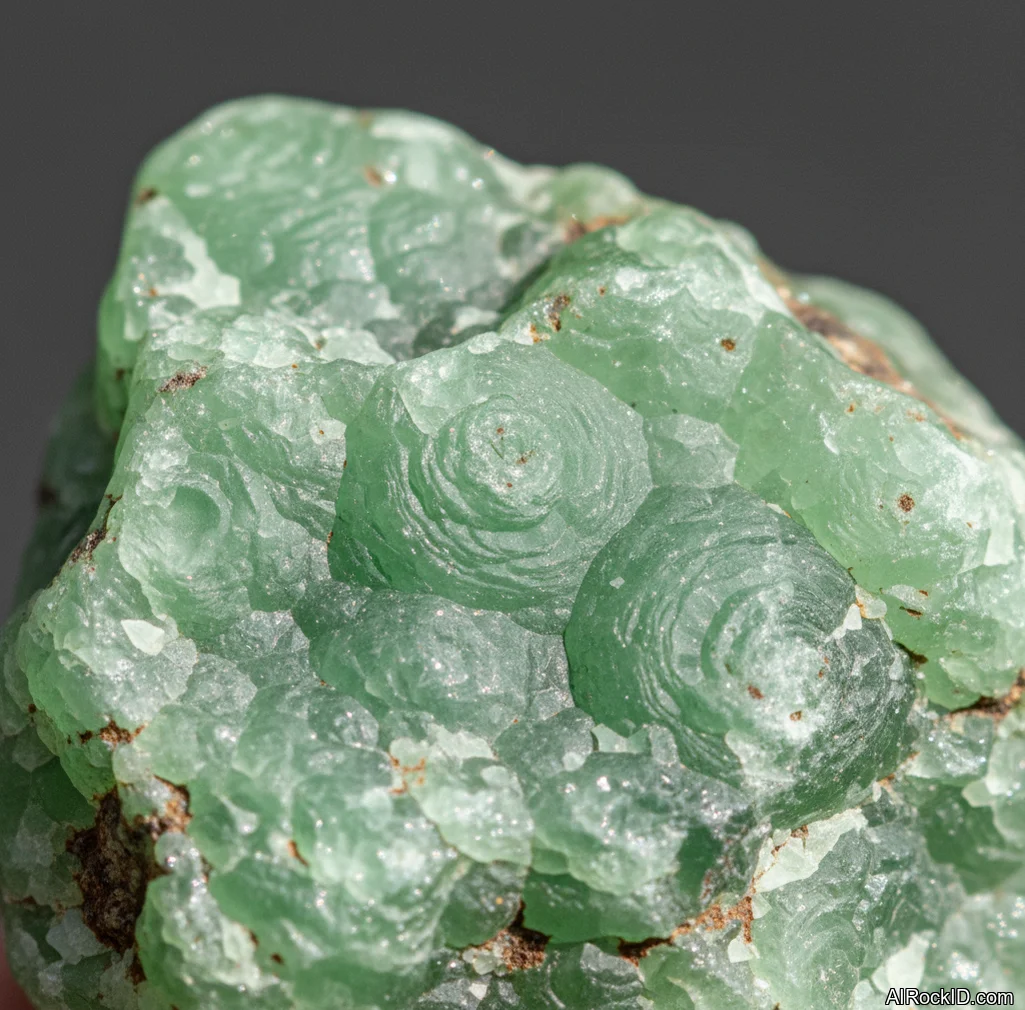
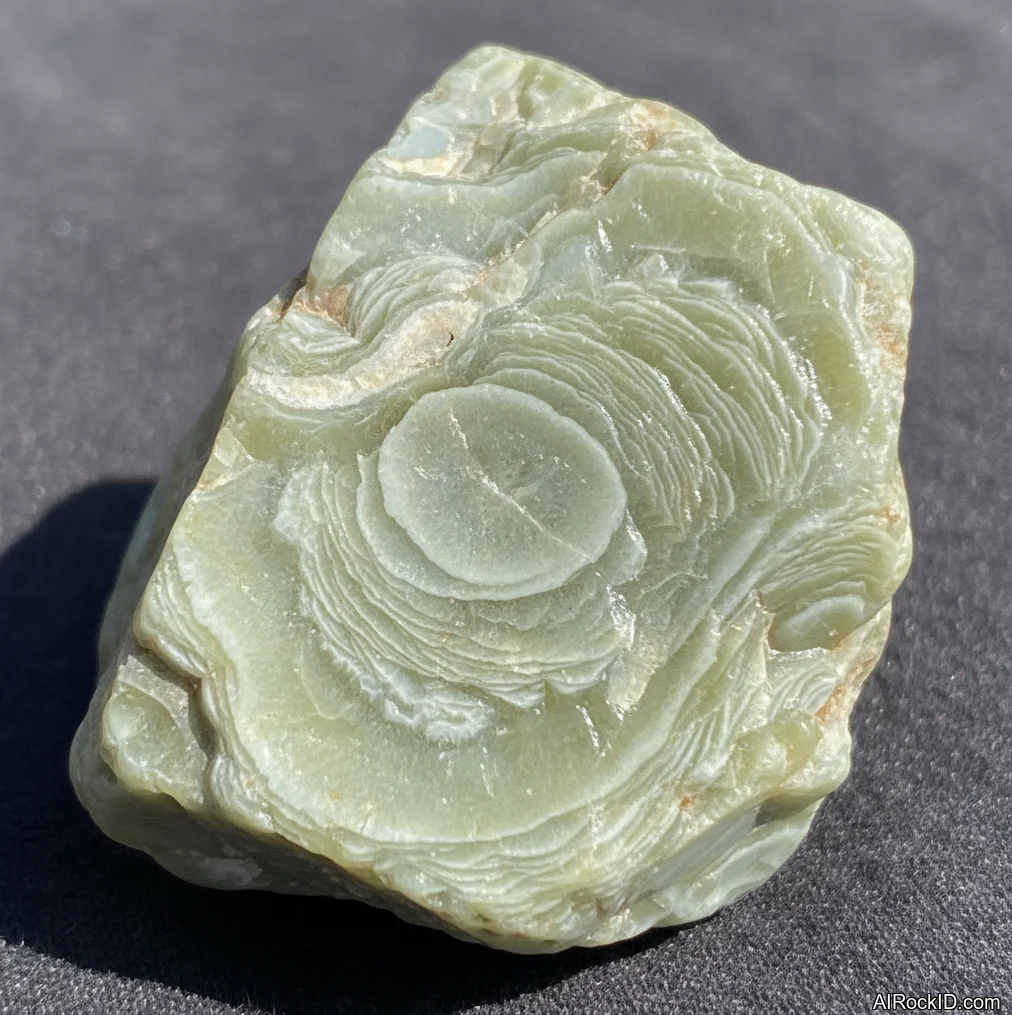
The color’s all over the place (and, honestly, most shop tags don’t bother saying that). You can see pale pistachio tones, or it can go into a deeper moss green, and it’s common to spot creamy veins where other serpentine minerals or carbonates cut through.
People mix it up with jade at first glance, and yeah, I get it, especially once it’s polished. But lizardite gives itself away pretty fast. It warms up in your hand quicker than true jade, a steel point bites into it more easily, and if you’ve carried a tumbled piece in your pocket for a month, the edges tend to dull and scuff instead of staying sharp. Why? It’s just softer in real life use.
Origin & History
“Lizardite” gets its name from the Lizard Peninsula in Cornwall, England. That’s the spot where serpentinized ultramafic rocks are famous and have been studied to death.
The mineral itself didn’t get separated out until the 20th century. And yeah, that was when mineralogists finally sorted the serpentine group into lizardite, antigorite, and chrysotile, using structure and habit to tell them apart.
Most older rock and gem books just shrug and print “serpentine,” full stop. You’ll still see that on plenty of dealer tags. But handle a few pieces side by side and the difference stops being academic. Lizardite is usually the smooth, platy, fine-grained material that takes a really nice polish (you can feel it get slick under your thumb), while antigorite tends to be tougher and can look more splintery.
Where Is Lizardite Found?
Lizardite shows up anywhere ultramafic rocks have been serpentinized, so you’ll see it in ophiolite belts, mountain belts, and old oceanic crust sections exposed on land.
Formation
Most lizardite forms when peridotite and dunite get invaded by water, usually during tectonic action that cracks the rock and keeps fluids moving. That hydration reaction swaps out olivine and pyroxene for serpentine minerals, and lizardite is a common end result when conditions favor its sheet-like structure.
Look, if you stare at a hand sample of serpentinite long enough, the whole process feels like it’s sitting there in plain sight. Green matrix. Pale veins. And those little slick planes that flash when you tilt the rock under a shop lamp. I’ve split field pieces where the inside popped out a brighter apple green than the weathered rind, and there was that faint earthy smell you only notice right after you crack open hydrated rock (kind of like damp soil, but sharper).
How to Identify Lizardite
Color: Usually medium to light green, sometimes yellow-green, with common white to cream veining; darker olive material happens too. Polished pieces can look more even in color, but raw material often shows mottling.
Luster: Waxy to slightly greasy, sometimes dull on rough surfaces and more satin-like when polished.
If you scratch it with a steel nail, it’ll usually mark, and that’s the quickest reality check when someone’s trying to sell it as “jade.” The real test is feel: lizardite often has that smooth, soapy glide on the fingers, especially on a worn surface. Compared to nephrite or jadeite, it bruises and scuffs easier, so a pocket stone will show little flat spots and dulling pretty fast.
Properties of Lizardite
Physical Properties
| Crystal System | Trigonal |
| Hardness (Mohs) | 2.5-3.5 (Soft (2-4)) |
| Density | 2.55-2.65 |
| Luster | Waxy |
| Diaphaneity | Translucent to opaque |
| Fracture | Uneven |
| Streak | white |
| Magnetism | Non-magnetic |
| Colors | light green, yellow-green, olive green, gray-green, white, cream |
Chemical Properties
| Classification | Silicates |
| Formula | Mg3Si2O5(OH)4 |
| Elements | Mg, Si, O, H |
| Common Impurities | Fe, Ni, Cr, Al |
Optical Properties
| Refractive Index | 1.560-1.571 |
| Birefringence | 0.003-0.006 |
| Pleochroism | Weak |
| Optical Character | Uniaxial |
Lizardite Health & Safety
Handling it is usually safe, and a quick splash of water isn’t a big deal. Thing is, the real worry is the dust, especially if you’re cutting or sanding serpentine you can’t ID for sure (like when it’s a mixed-lot batch from a bunch of localities).
Safety Tips
If you’re going to do lapidary work on it, handle it like any other fine silicate dust hazard. Wet-cut it so you’re not kicking up a cloud, keep the airflow moving with decent ventilation, and wear a real particulate-rated respirator (not just a floppy dust mask).
Lizardite Value & Price
Price Range
Rough/Tumbled: $3 - $40 per piece
Cut/Polished: $1 - $8 per carat
Most of the price jumpiness comes down to color, how clean the material is, and whether it’s a well-cut cab that’s been polished properly (you can usually feel it with a fingernail if the finish is even a little off). Bright, even green with hardly any veining tends to move quicker. But those big display chunks with the wild, cool patterning can go for more anyway, just because they look great sitting on a shelf.
Durability
Nondurable — Scratch resistance: Poor, Toughness: Fair
It’s stable in normal room conditions, but it scratches and bruises easily, so it doesn’t hold up like tougher green stones.
How to Care for Lizardite
Use & Storage
Store it where it won’t rub against quartz, garnet, or even harder tumbled stones, because it’ll pick up scratches fast. A small pouch or separate box compartment keeps the waxy polish looking nice.
Cleaning
1) Rinse quickly in lukewarm water with a drop of mild soap. 2) Wipe with a soft cloth or a baby toothbrush for creases and veins. 3) Rinse and dry fully, and don’t leave it soaking for hours.
Cleanse & Charge
For a gentle reset, I stick it on a windowsill for indirect light or set it on a slab of selenite for a bit. Skip harsh salt soaks because there’s no upside and you can dull the surface over time.
Placement
It looks best where side light can hit the surface and bring out that oily sheen, like on a desk or a bookshelf. Keep it out of high-traffic spots if it’s polished, since one bump can leave a white scuff.
Caution
Skip ultrasonic cleaners and steam cleaning. And don’t toss it in a pocket with harder stones rattling around, because at 2.5 to 3.5 on the Mohs scale it’s going to get scratched, no question. If you pick up “jade” jewelry that’s cheap and you can mark it with a fingernail, just assume it’s serpentine. Treat it like the softer stone it is.
Works Well With
Lizardite Meaning & Healing Properties
In crystal circles, lizardite usually lands under the bigger “serpentine” umbrella. The vibe people put on it is calm, steady, very earth-forward. I don’t treat it like some rocket-fuel stone. It’s the kind of thing you park next to your keyboard when you’re tense and you want your shoulders to unclench.
Grab a polished palm stone and run your thumb over it for a minute. Seriously. That slightly slick, almost soapy feel is a huge part of why people like it, and it’s also why it shows up in meditation or grounding routines. But there’s a catch. It’s soft, so if you use it as a worry stone every day, it’ll start looking roughed up pretty quickly, with little scuffs where your thumb keeps circling. Some people call that “energy shifting.” I call it plain wear.
If you’re folding it into a self-care or spiritual routine, think of it as a supportive habit, not a fix for a medical issue. I’ve seen people get good results pairing it with breathwork or journaling because it’s quiet and doesn’t pull your attention all over the place. And if you’re picky about textures, you’ll probably notice lizardite feels more buttery in the hand than most green stones, which makes it more likely you’ll actually use it (instead of forgetting it in a drawer).
Identify Any Crystal Instantly
Snap a photo and get properties, value, care instructions, and healing meanings in seconds.