Mango Quartz
What Is Mango Quartz?
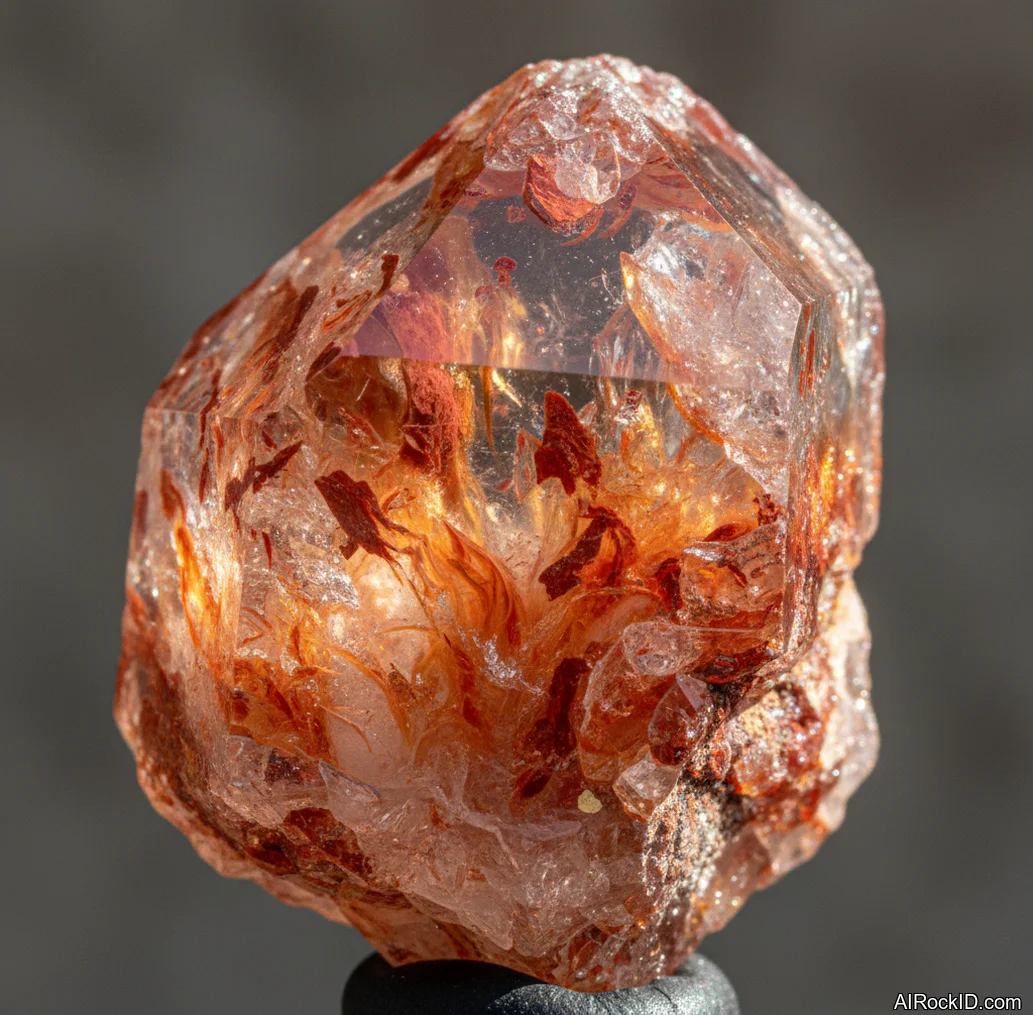
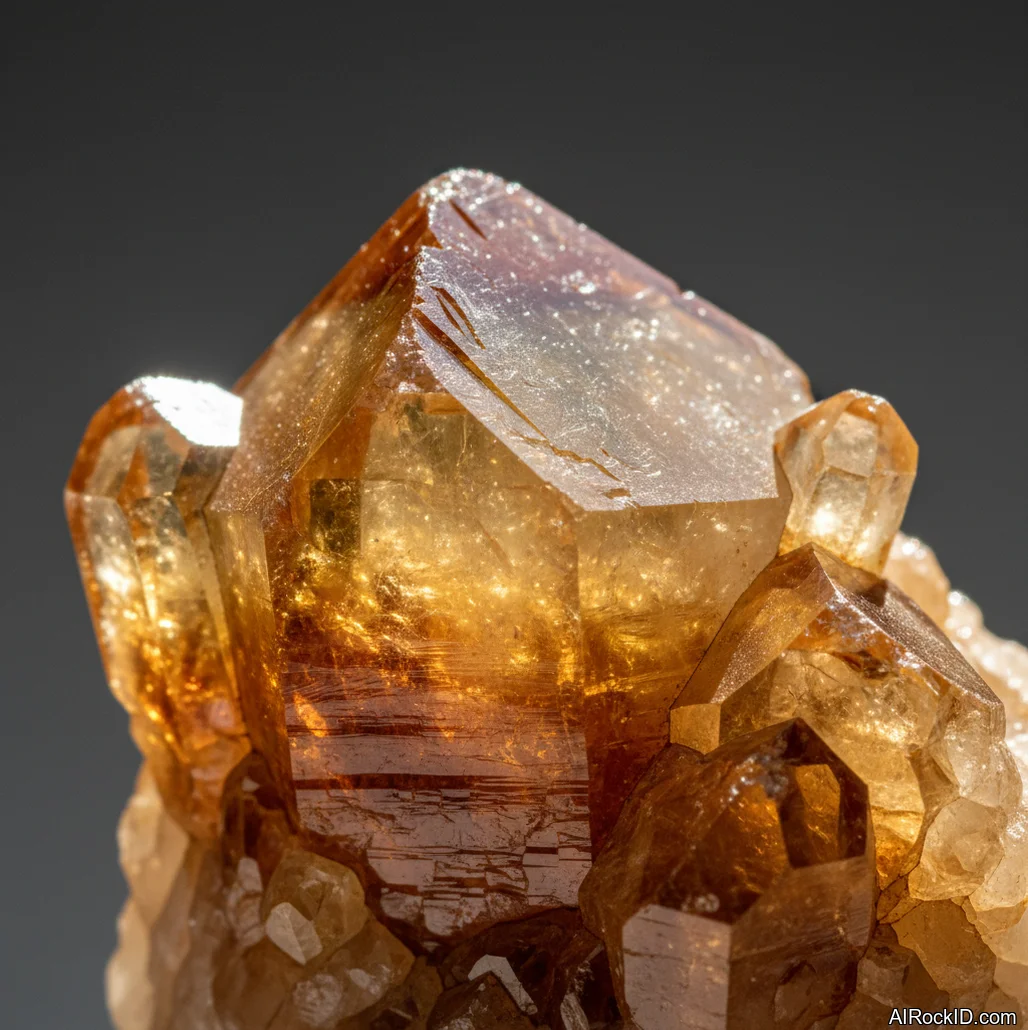
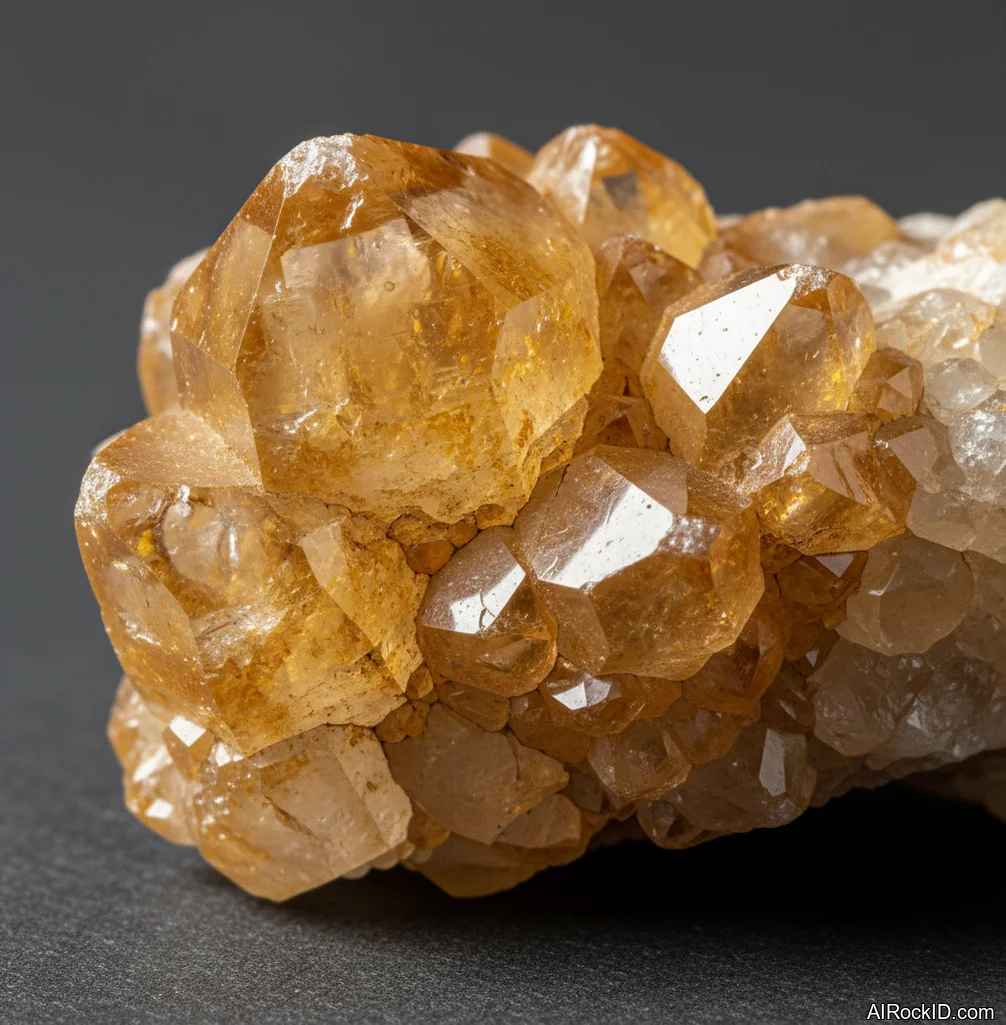
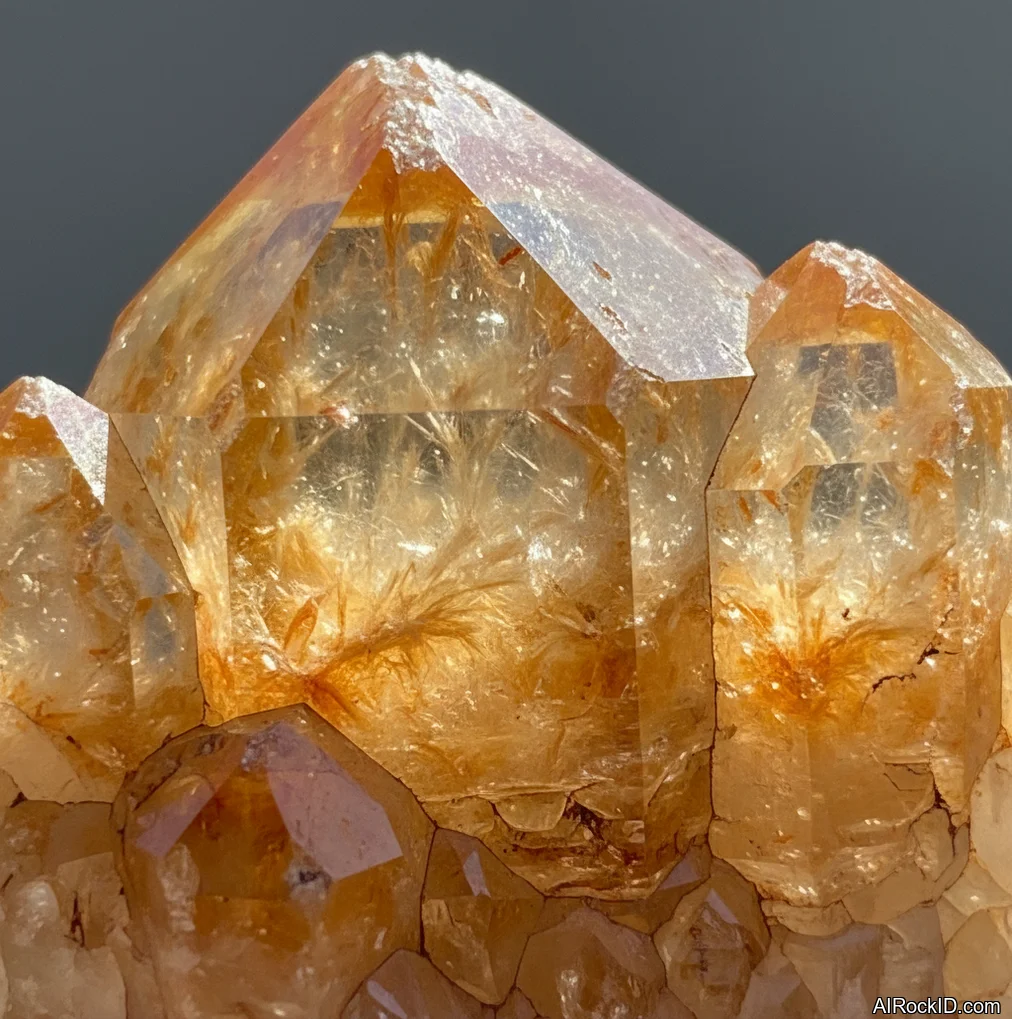
Mango Quartz is a trade name for clear to milky quartz that ends up yellow to orange because of iron oxides, usually limonite/goethite or hematite. Those iron oxides show up as staining, coatings, or inclusions.
Pick up a piece and you’ll notice the usual quartz heft and that cool, glassy feel right away. The color typically doesn’t look “painted on” like a dye job. It hangs out in wispy clouds, in thin skins along fractures, or as rusty freckles sitting just under the surface. I’ve handled plenty of tumbled mango quartz where the orange collects in little crescent bands that trace healed cracks, and once you spot that, you start seeing the same look across different sellers.
People mix it up with citrine at first. But it doesn’t read the same. Citrine usually looks like clear yellow light running through the whole stone, while mango quartz often feels like quartz that took a dip in iron-rich mud and held onto a bit of it (why else would it look so localized?). And yeah, some pieces out there are heavily treated or just flat-out mislabeled. The best check is how the color acts in the light, and whether it’s concentrated along growth lines and fractures instead of being evenly saturated.
Origin & History
Most dealers call it “Mango Quartz,” and that’s really just a modern market label, not some officially defined mineral variety. It’s been popping up over the last couple decades, right around the time that yellow-orange color started selling consistently in metaphysical shops and at gem shows.
The mineral underneath it all is plain quartz, which science has been describing since the early days of mineralogy. Even the name “quartz” traces back to the German “Quarz.” The “mango” bit is straight marketing shorthand for that warm yellow-orange tone, and it ends up overlapping with older trade names like hematoid quartz and golden healer. And that’s where the confusion kicks in, because sellers don’t always separate true inclusions (like hematite plates) from simple iron staining.
Where Is Mango Quartz Found?
Most mango quartz on the retail market is sourced from Brazil and Madagascar, with smaller amounts turning up anywhere quartz grows in iron-rich environments.
Formation
Quartz starts out when silica-heavy fluids cool down and crystallize in open spots like veins, fractures, or little pockets in the rock. With mango quartz, the whole trick is the order of events. First the quartz grows. Later on, iron-bearing fluids sneak through and leave their mark, staining existing cracks, coating the crystal faces, or dropping iron oxides as tiny inclusions.
If you’ve got a raw piece in your hand and tilt it under decent light, you can sometimes see the sequence plain as day: a clear quartz center, then a thin orange “skin” on the outside, then little iron threads riding a fracture that eventually healed back up. But it’s not always that neat. A lot of it comes out of the ground as chunky vein quartz, then gets tossed into a tumbler, and that tumbling can kind of smear the color (visually, anyway) so it reads more even than it really is.
How to Identify Mango Quartz
Color: Yellow to golden-orange to orange-brown color caused by iron oxides, often concentrated in clouds, bands, fracture lines, or surface coatings rather than evenly throughout.
Luster: Vitreous luster, like clean glass, even when the color is muddy or included.
Pick up two pieces under the same light and tilt them. Natural iron staining usually shifts from translucent glow to patchy haze as you rotate it, instead of staying perfectly even from every angle. If you scratch it with a steel nail, it won’t budge, but it’ll scratch a cheap glass bottle easily. And watch for dye: dyed quartz can feel “too perfect” in color, with bright orange pooling in pits and drill holes, especially on beads.
Properties of Mango Quartz
Physical Properties
| Crystal System | Trigonal |
| Hardness (Mohs) | 7 (Hard (6-7.5)) |
| Density | 2.65 g/cm3 |
| Luster | Vitreous |
| Diaphaneity | Transparent to translucent |
| Fracture | Conchoidal |
| Streak | White |
| Magnetism | Non-magnetic |
| Colors | yellow, golden yellow, orange, orange-brown, brown, clear, white |
Chemical Properties
| Classification | Silicates |
| Formula | SiO2 |
| Elements | Si, O |
| Common Impurities | Fe, Al, Ti |
Optical Properties
| Refractive Index | 1.544-1.553 |
| Birefringence | 0.009 |
| Pleochroism | None |
| Optical Character | Uniaxial |
Mango Quartz Health & Safety
Mango quartz is usually safe to pick up and keep on a shelf. But if you’re cutting it or grinding it, treat it like any other quartz: the usual precautions apply.
Safety Tips
If you’re going to lapidary it, keep a steady trickle of water on it and put on a real respirator, because breathing in silica dust is no joke.
Mango Quartz Value & Price
Price Range
Rough/Tumbled: $5 - $80 per piece
Cut/Polished: $2 - $15 per carat
Prices jump when the color’s stacked in a way that actually catches your eye, the quartz is nice and clear when you hold it up to the light, or the crystal ends in a clean, natural point with no weird chips on the tip. But plain tumbled stones? Those stay cheap. And the heavily included brown stuff (the kind that looks muddy once you get it under a lamp) usually gets dumped into bulk lots.
Durability
Durable — Scratch resistance: Excellent, Toughness: Good
Quartz is stable for everyday handling, but iron-oxide coatings can scuff or dull if they’re thin and you knock the piece around with harder stones.
How to Care for Mango Quartz
Use & Storage
Store it in a soft pouch or wrapped in cloth if you’ve got a thin iron-stained surface you don’t want scratched. If it’s a tumbled piece, a bowl is fine, just don’t mix it with corundum or diamond.
Cleaning
1) Rinse with lukewarm water and a drop of mild dish soap. 2) Use a soft toothbrush to get into pits and healed fractures. 3) Rinse well and pat dry; don’t bake it in the sun to “dry faster.”
Cleanse & Charge
Rinse and dry is usually enough for routine cleansing. If you do moonlight, keep it out of a hot windowsill because constant sun can make some iron-stained surfaces look flatter over time.
Placement
On a shelf with indirect light, it shows its color best without glare. I like putting it near a lamp with a warm bulb because the orange reads more natural than under harsh blue LEDs.
Caution
Skip harsh acids and rust removers. They can bite into the surface and mess with the iron-oxide staining that gives the stone that mango color (the kind that looks a little sunburnt when you tilt it under a lamp). And don’t toss coated or heavily fractured pieces in an ultrasonic cleaner, either. It’ll rattle those cracks and coatings the same way it does with soft glue lines.
Works Well With
Mango Quartz Meaning & Healing Properties
Plain clear quartz is clean and bright, but mango quartz is the one people grab when they want something warmer, more “daytime.” In crystal circles, it gets linked to motivation, confidence, and that little nudge to get moving when you’re stuck in your own head. I’ve watched customers reach for it when they want something upbeat but not flashy, and honestly the color does a lot of the heavy lifting.
But I’m quick to hit the brakes on medical claims. Most folks use it like a reminder stone: a pocket piece, something to hold while journaling, or while doing breathwork. That’s it. If you’re buying it for energy work, pick a piece you actually want to touch. Some iron-stained quartz has this gritty feel, or tiny little pits that snag at your fingertips (especially along the edges), and if it bugs you in your hand you just won’t reach for it.
One more real-world thing: the market naming is messy. One seller will call a brownish, iron-stained quartz “mango” because it sells, and another seller will only use that name for the bright yellow-orange stuff. So if you’re trying to match a set or replace a lost piece, bring the original with you. I’ve tried to color-match mango quartz pairs at shows, and it’s harder than people expect once you’re standing under mixed lighting. Why is the lighting always weird at those tables?
Identify Any Crystal Instantly
Snap a photo and get properties, value, care instructions, and healing meanings in seconds.