Miriam Stone Calligraphy Stone
What Is Miriam Stone Calligraphy Stone?
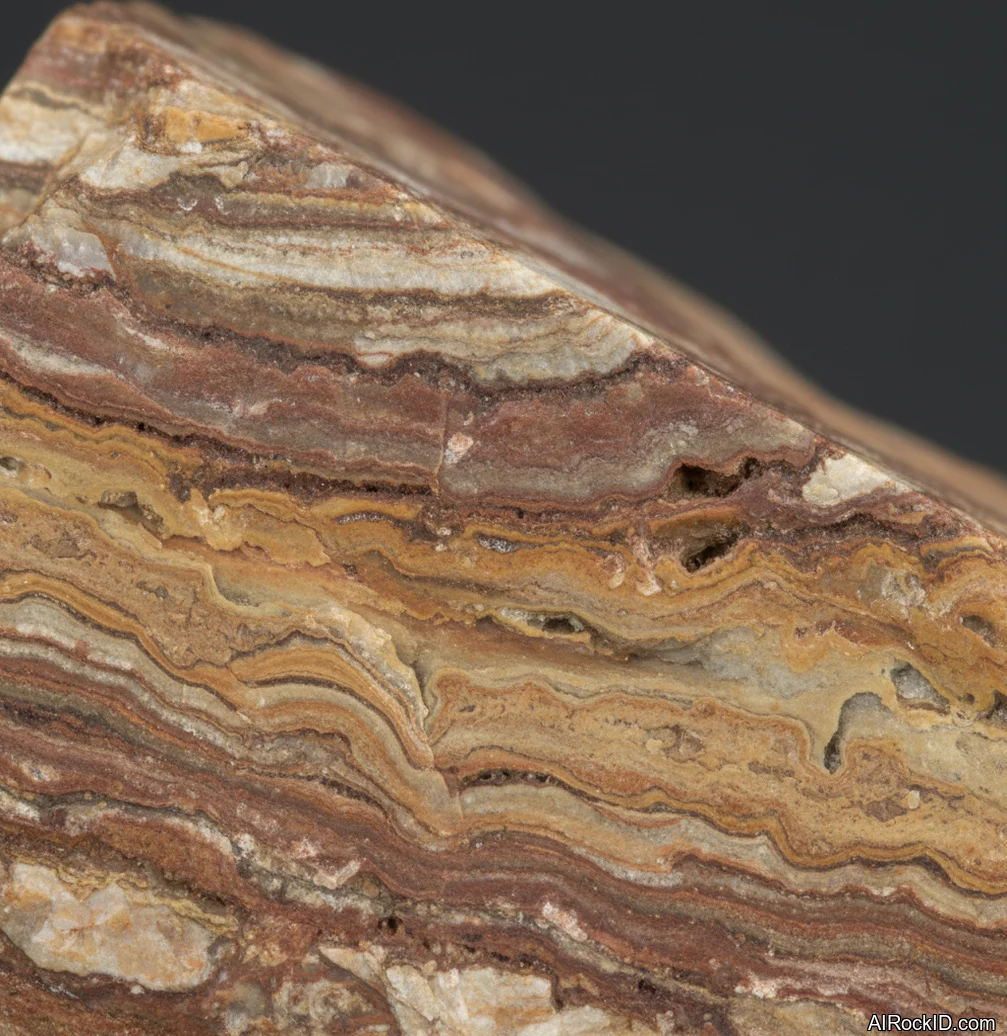
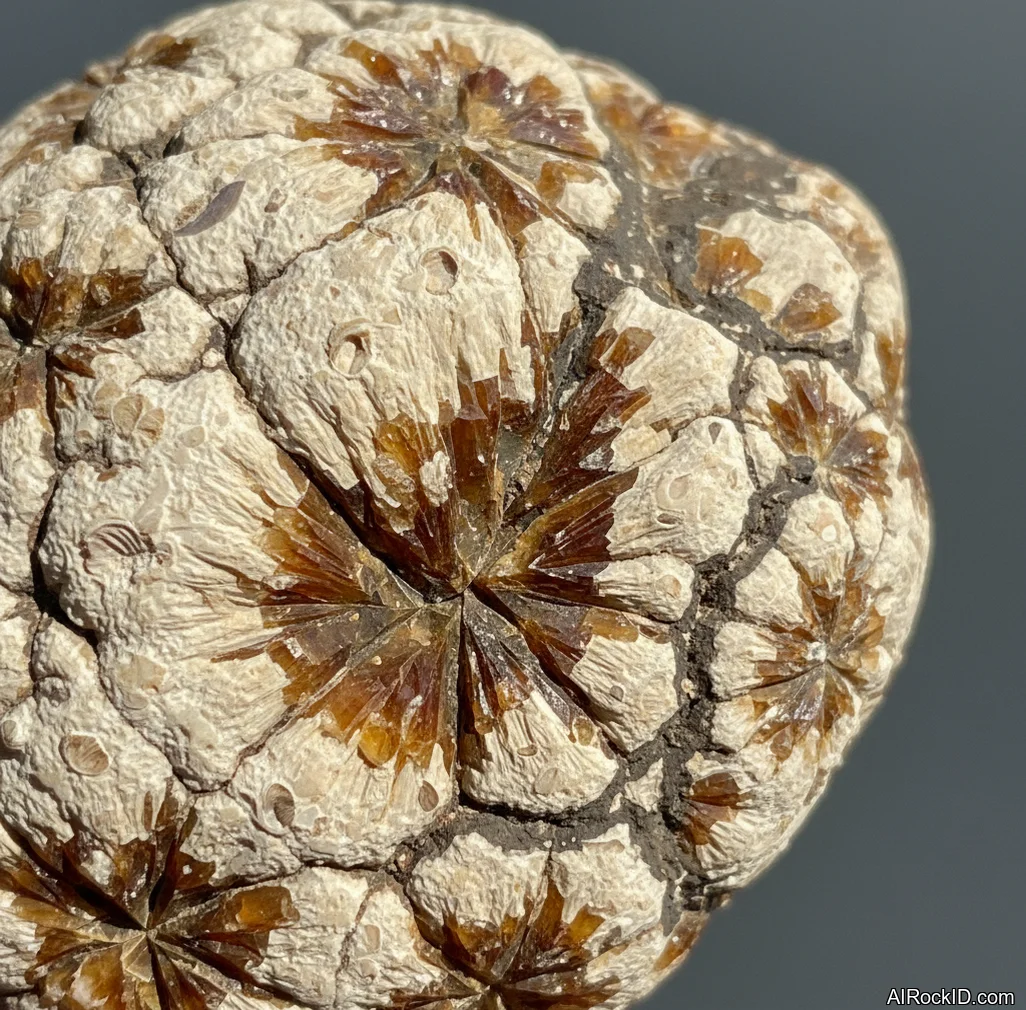
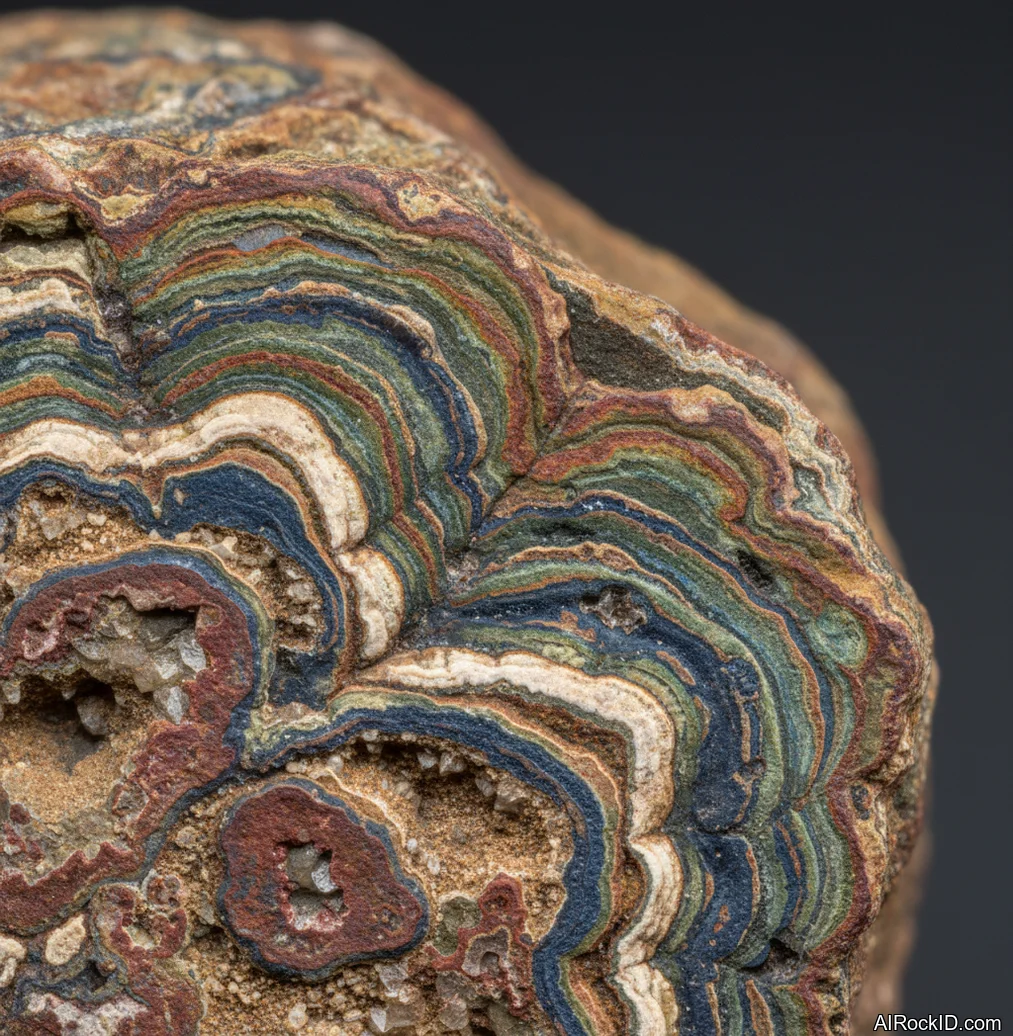
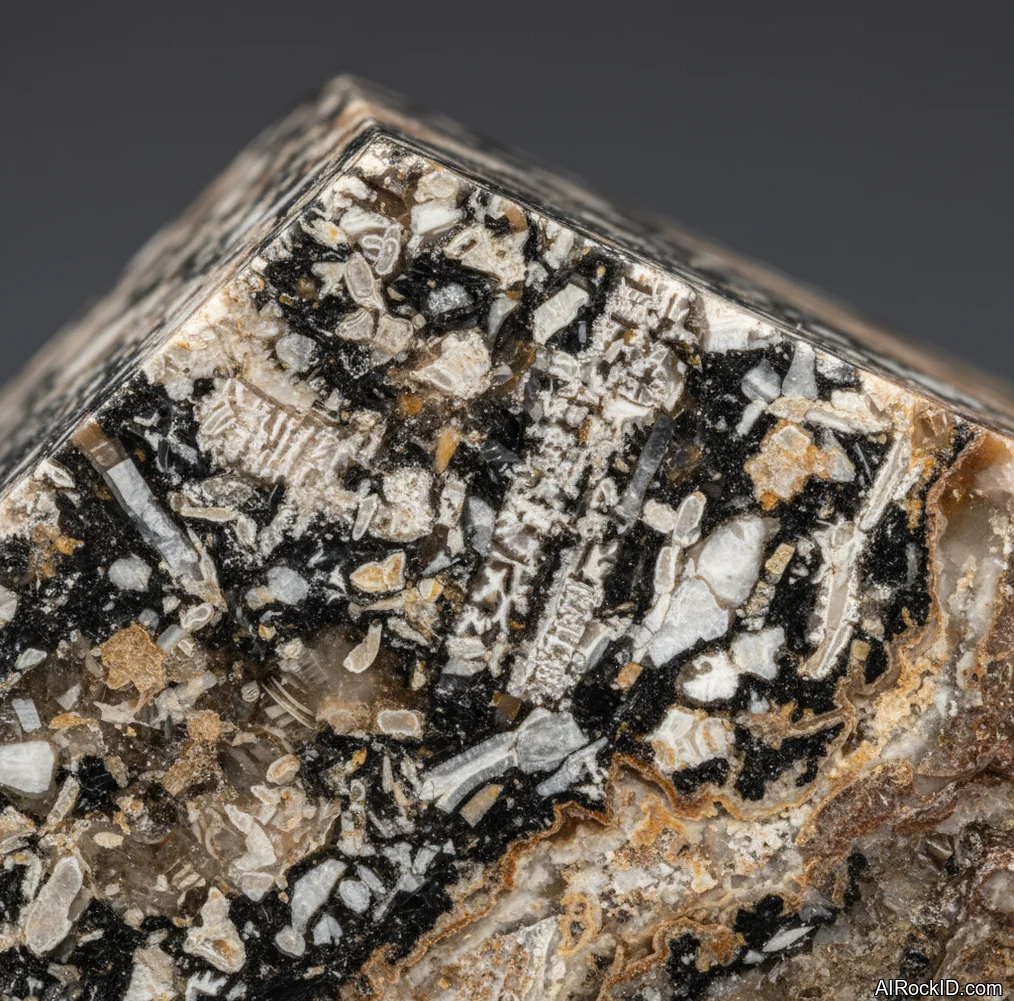
Miriam Stone Calligraphy Stone is a Moroccan fossil limestone or dolostone that’ll take a polish, and once it’s buffed up you get these tan, cream, and brown marks that honestly look like somebody scribbled cursive across it.
Pick up a palm stone and the first thing you’ll clock is the temperature. It’s cooler than wood. And it’s heavier than it looks, which tracks for carbonate rocks. The “letters” aren’t ink, obviously. They’re little fossil shell bits plus thin streaks of iron staining, and because the slab gets cut at weird angles, the polish turns those bits into loops and strokes.
People sell it as jasper constantly at first glance, but it doesn’t act like jasper once it’s in your hand. It feels a little softer. And the edges on a polished piece can go dull faster if you toss it loose in a pocket with keys (been there). Still, when it’s polished well, it’s slick. Almost buttery. And the patterning is the whole hook, right? That’s why folks end up grabbing another one.
Origin & History
Most dealers will tell you the trade name “Mariam” (or “Miriam Stone”) comes from a local Moroccan name tied to Mary, meaning Miriam or Maryam, and the name stuck once those polished palm stones started getting shipped out to mineral and metaphysical shops. And “Calligraphy Stone” is just the plain, descriptive nickname, because the fossil bits really do look like Arabic script when a slab gets cut at the right angle and you catch those ink-like streaks across the face.
Geology-wise, this isn’t some newly defined mineral species with one official “first described by” moment in a paper. It’s a patterned rock material, kind of like how “Picture Jasper” is a material name. You’ll also see it sold as “Elephant Skin Jasper,” which is a marketing label, not a lab classification.
Where Is Miriam Stone Calligraphy Stone Found?
Nearly all material on the market is exported from Morocco and sold with broad Sahara or Western Sahara trade localities rather than precise mine names.
Formation
Look at the pattern long enough and you can almost “read” it, like the rock’s trying to say something back. It’s a sedimentary carbonate rock that started out as lime mud mixed with shell debris on an ancient seafloor, then got compacted and cemented as the layers piled up and time did its slow, crushing thing. The “writing” is really just fossil fragments, tiny burrows, and those streaky mineral stains that ended up frozen in place once the soft sediment turned to stone.
But it isn’t always pure limestone. Some batches act more like dolostone on the shop bench (you notice it when it grinds a little differently and the slurry looks a bit finer), and you’ll also see iron oxide staining that drives the browns darker. And when lapidaries cut it into cabochons or palm stones, the saw blade slices through fossils at random angles, so the cross-sections suddenly look like little strokes and curves. That’s when the script-like effect really jumps out.
How to Identify Miriam Stone Calligraphy Stone
Color: Base color runs cream to tan, with brown to dark brown “ink” strokes and loops that mimic handwriting. Some pieces lean more yellow-beige, and some get a grayish cast depending on the carbonate mix.
Luster: Polished pieces have a waxy to sub-vitreous shine, while rough surfaces look dull and chalky.
If you scratch it with a steel nail, it can mark more easily than true jasper would. The real test is a tiny drop of dilute acid on an unpolished spot: carbonate material will fizz (don’t do this on a finished face you care about). And in the hand, it has that carbonate “feel”, a little softer and less glassy than quartz-based jaspers.
Properties of Miriam Stone Calligraphy Stone
Physical Properties
| Crystal System | Trigonal |
| Hardness (Mohs) | 3 (Soft (2-4)) |
| Density | 2.71 g/cm3 |
| Luster | Waxy |
| Diaphaneity | Opaque |
| Fracture | Uneven |
| Streak | white |
| Magnetism | Non-magnetic |
| Colors | cream, tan, beige, brown, dark brown |
Chemical Properties
| Classification | Carbonates |
| Formula | CaCO3 (dominant; may include dolomite CaMg(CO3)2 in some material) |
| Elements | Ca, C, O |
| Common Impurities | Mg, Fe, Mn, Si |
Optical Properties
| Refractive Index | 1.49-1.66 |
| Birefringence | 0.172 |
| Pleochroism | None |
| Optical Character | Uniaxial |
Miriam Stone Calligraphy Stone Health & Safety
It’s usually fine to handle and keep in the house. But if you ever grind or sand it, don’t breathe in the dust, same as you’d treat any other stone.
Safety Tips
If you need to cut it or shape it, keep a steady trickle of water on the cut, make sure you’ve got good ventilation (like a fan pulling air out), and wear a real dust mask or a respirator that actually seals to your face.
Miriam Stone Calligraphy Stone Value & Price
Price Range
Rough/Tumbled: $5 - $40 per piece
Price mostly comes down to how crisp the pattern is and how much the marks actually read like letters on the best-looking face. A big palm stone with clean edges and high-contrast “script” will run higher than a little tumbled piece where the pattern’s muddy and kind of disappears unless you tilt it under the light.
Durability
Moderate — Scratch resistance: Fair, Toughness: Fair
It’s stable as a display stone, but the polish can scuff and the surface can etch if it’s exposed to acids or harsh cleaners.
How to Care for Miriam Stone Calligraphy Stone
Use & Storage
Keep it in a pouch or a separate compartment if you carry it, because harder stones can scuff the polish. For display, a stable shelf away from kitchen splashes is enough.
Cleaning
1) Rinse with lukewarm water. 2) Use a drop of mild soap and your fingers or a soft cloth to wipe the surface. 3) Rinse again and pat dry; don’t soak it in acidic cleaners.
Cleanse & Charge
If you do energetic cleansing, stick to gentle methods like smoke, sound, or a quick rinse and dry. Avoid saltwater and vinegar style “cleanses” because carbonate stones can etch.
Placement
Looks best where side light rakes across the surface and makes the script pop, like near a lamp. I keep mine on a wood stand so the tan tones don’t get lost on a beige shelf.
Caution
Don’t hit it with acids, heavy-duty bathroom cleaners, or an ultrasonic cleaner. Carbonate stone is touchy, and you can end up with a dull spot or tiny etched marks (the kind you only notice once the light catches it). And don’t treat it like jasper for hard, rough wear either. It’s softer than quartz, so it just won’t take the same abuse.
Works Well With
Miriam Stone Calligraphy Stone Meaning & Healing Properties
Most people grab Miriam Stone when they want something that feels steady, but not like a paperweight. It has this warm, sandy tone that looks quiet on a desk, and the little “writing” pattern kind of tugs your eyes into slowing down and actually looking. I’ve seen customers pick one up, flip it over a couple times, rub a thumb across the smoother spots, and their breathing shifts before they even realize it. Not medicine. Just a tactile thing doing what tactile things do.
If you use stones while you meditate, this one works nicely next to journaling. Your eyes can follow the lines the way they’d follow handwriting on a page, which helps when your brain wants to ricochet everywhere. But look, there’s a catch. People sometimes expect the markings to mean something, like it’s a real message you’re supposed to decode. It isn’t. It’s random fossil and mineral geometry. And if your piece doesn’t “read” like script to you, it’s not going to magically become your favorite because a tag calls it calligraphy.
I think of it as a practical, steady stone for daily routines. Set it by your notebook, your keyboard, or wherever you want a small nudge to slow down and lock in. And if you’re sensitive to texture and temperature, you’ll notice it warms up in your palm pretty fast compared to quartz, which usually stays cool for longer. Why does that matter? It just changes the feel of the moment.
Identify Any Crystal Instantly
Snap a photo and get properties, value, care instructions, and healing meanings in seconds.