Mordenite
What Is Mordenite?
Mordenite is a zeolite-group tectosilicate mineral with the formula (Na2,Ca,K2)Al2Si10O24·7H2O, and it commonly shows up as fibrous to needle-like crystals in volcanic rocks.
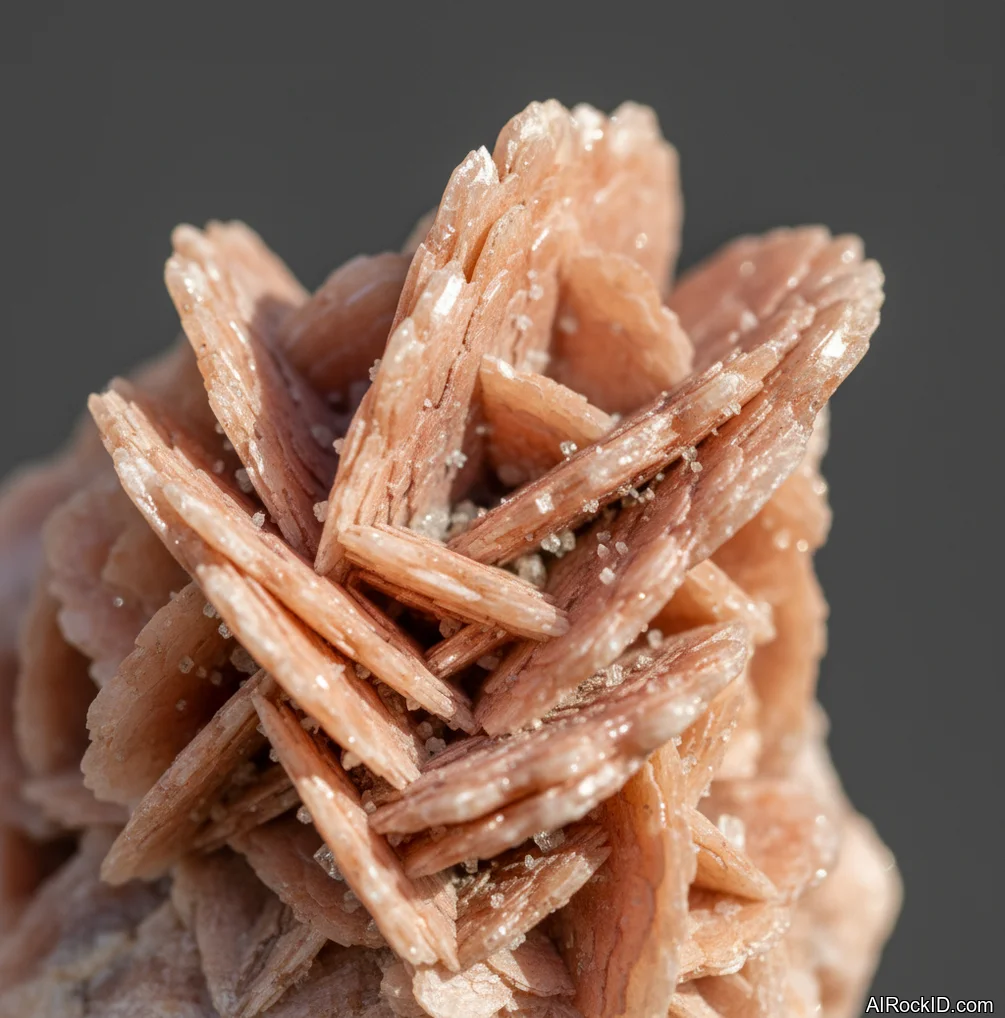
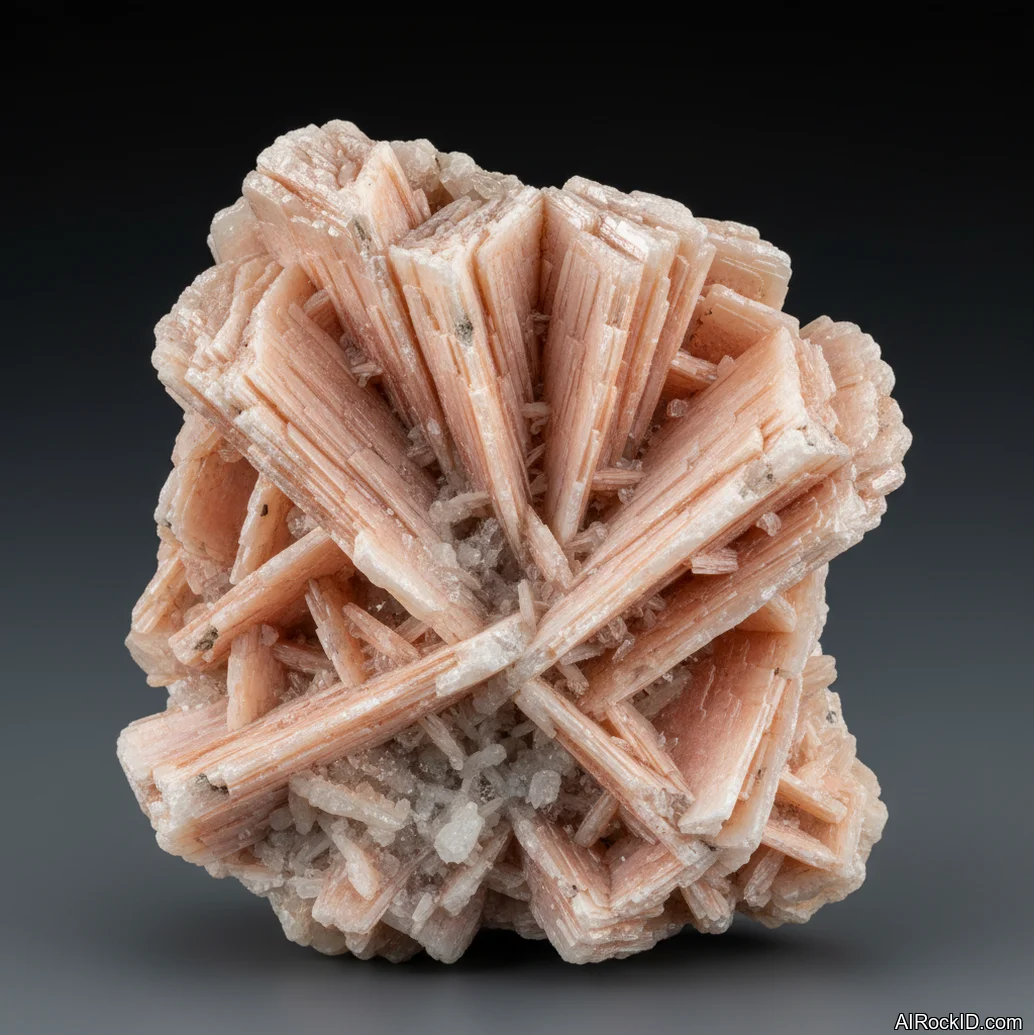
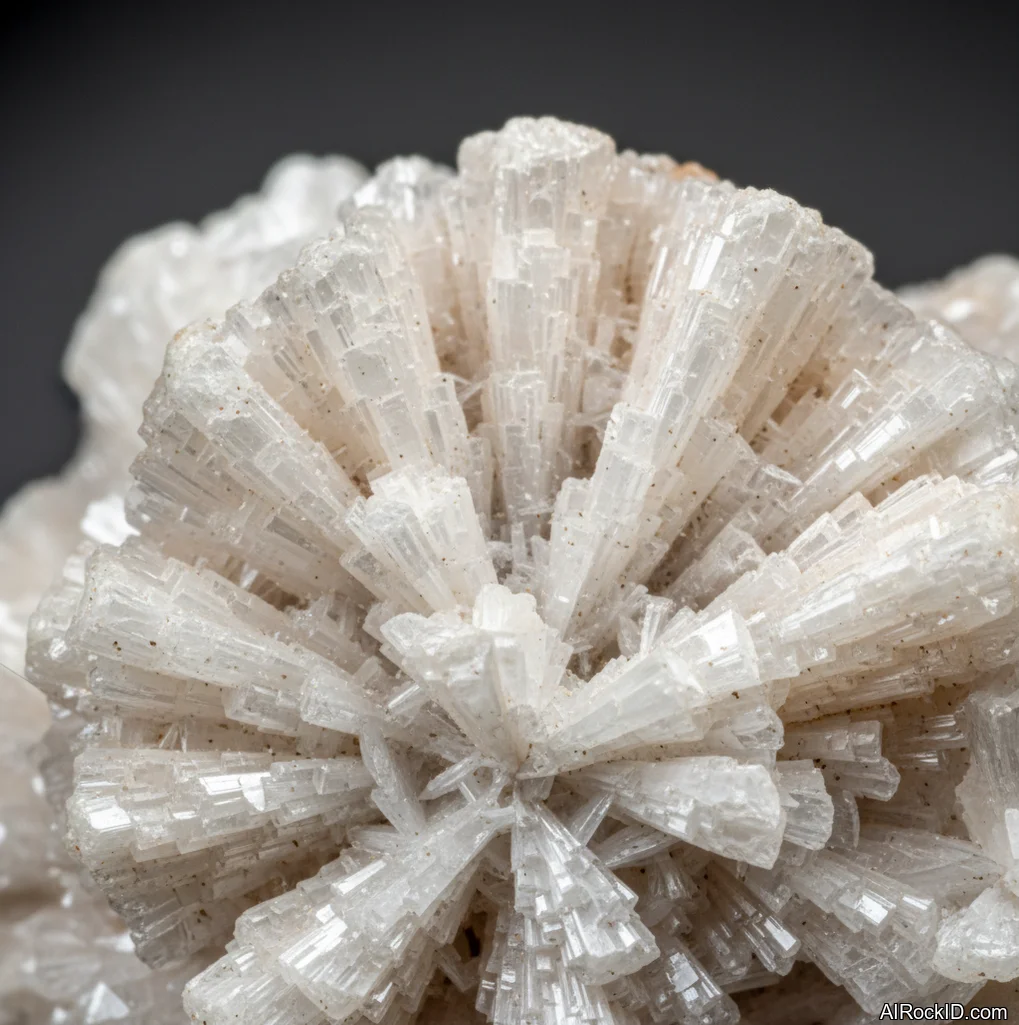
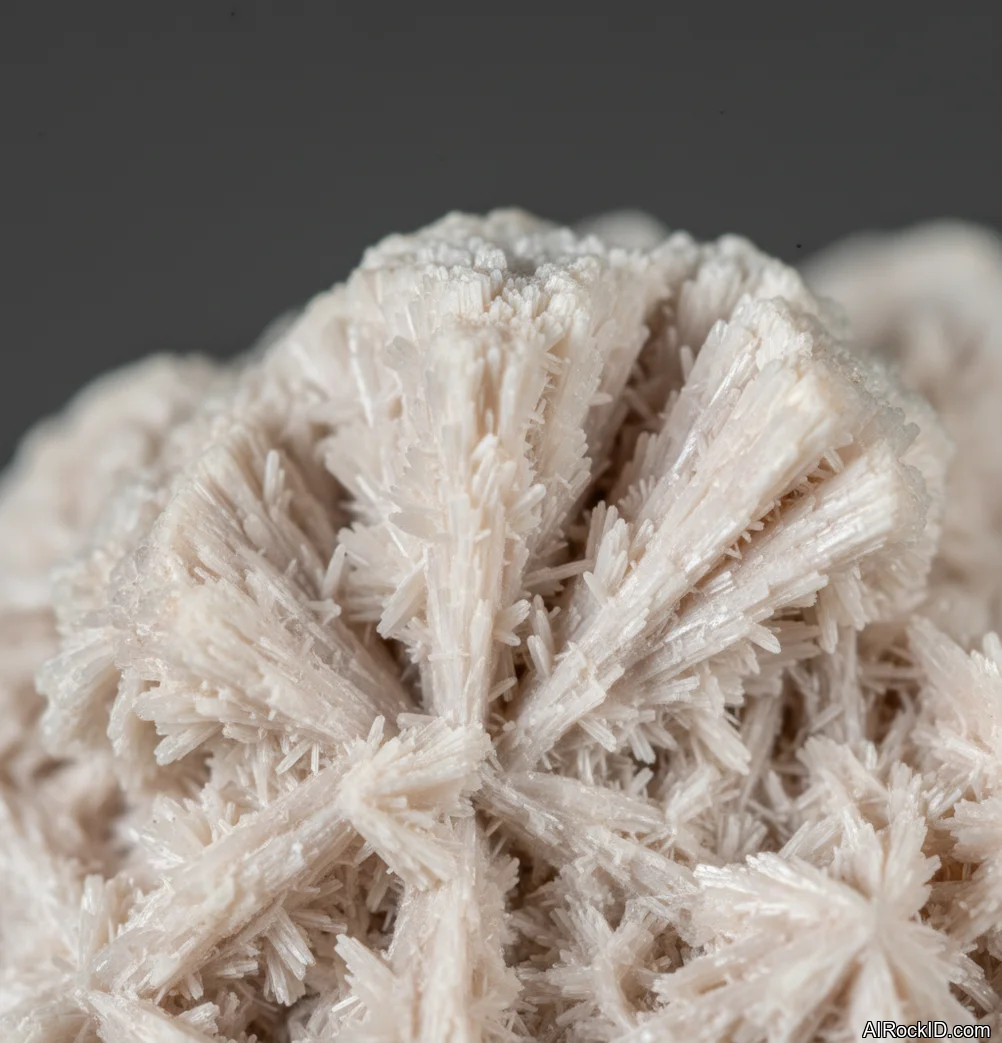
Pick up a solid specimen and, honestly, the first thing that hits you is how weirdly light it feels for its size. A lot of pieces are snowy-white sprays perched on dark basalt, and when they’re sitting in a dealer’s tray they can pass for little tufts of cotton. But it’s stone. Not fluff. Angle it under a lamp and you’ll catch that soft, silky flash running along the fibers, then it snaps back to dull the second you shift your wrist.
Look, people mix it up with other white zeolites all the time, especially scolecite or natrolite. The crystal habit overlaps, and some sellers (yeah, even at shows) don’t label things very carefully. And I’ve had customers ask if it’s asbestos because it’s fibrous. It isn’t. Still, I handle any fibrous mineral like it could shed dust, because who wants that in their lungs?
Origin & History
Mordenite got its first real write-up in 1864, when Henry How, a Canadian chemist and geologist, described it from material collected near the community of Morden in Nova Scotia, Canada. The name comes straight from that spot, which is how a lot of zeolites got tagged back then.
Thing is, if you read the older papers, mordenite shows up right in that early rush of zeolite descriptions, when everyone was trying to figure out what was actually a separate species and what was just a messy mix of minerals. And out in the field or walking around a show, you’ll still hear people say “zeolite” like it’s one big bucket term. But mordenite isn’t just “some zeolite.” It stands on its own as a defined species, with a very specific framework structure and a specific water content.
Where Is Mordenite Found?
It turns up worldwide in altered volcanic rocks, especially basalt flows and tuffs. India’s Deccan Traps are a big source of showy collector pieces.
Formation
Most mordenite shows up after the lava’s already cooled and turned solid, when low-temperature fluids start messing with the volcanic rock. Picture basalt full of little cavities and hairline fractures where water can sneak through, leach a bit of silica and alumina, then drop zeolites back out once the chemistry shifts.
If you stare at the vugs long enough, the order of events is right there. I’ve cracked open pockets where the heulandite is chunky and obviously came first, and then there’s this later, finer mordenite coating on top that looks like a thin frost on the older crystal faces (the kind that dulls the shine a little). And you’ll often catch it sharing the same cavity with stilbite, calcite, quartz, sometimes more than one at once. Thing is, the rock is basically a tiny chemical lab that kept running for thousands of years.
How to Identify Mordenite
Color: Most mordenite is white, off-white, cream, or very pale gray, sometimes with a slight yellow tint from iron staining on the matrix. Rare pieces look tan or buff when the fibers are packed tight.
Luster: Silky to dull, especially on fibrous sprays.
Pick up the specimen and feel the heft. Mordenite usually feels surprisingly light compared to quartzy look-alikes. Look for the “cottony” fibrous sprays or fine needles in vugs, and check if it’s associated with other basalt cavity minerals like stilbite or heulandite. The real test is a gentle scratch check: at Mohs 3 to 4 it won’t behave like quartz, and you can often mark it with a copper coin or steel point if you’re careful and choose an inconspicuous spot.
Properties of Mordenite
Physical Properties
| Crystal System | Orthorhombic |
| Hardness (Mohs) | 3-4 (Soft (2-4)) |
| Density | 2.06-2.18 g/cm3 |
| Luster | Silky |
| Diaphaneity | Translucent |
| Fracture | Splintery |
| Streak | White |
| Magnetism | Non-magnetic |
| Colors | White, Cream, Pale gray, Buff, Pale yellow |
Chemical Properties
| Classification | Silicates (tectosilicate, zeolite group) |
| Formula | (Na2,Ca,K2)Al2Si10O24·7H2O |
| Elements | Na, Ca, K, Al, Si, O, H |
| Common Impurities | Fe, Mg |
Optical Properties
| Refractive Index | 1.466-1.473 |
| Birefringence | 0.007 |
| Pleochroism | None |
| Optical Character | Biaxial |
Mordenite Health & Safety
Mordenite isn’t considered toxic, and it’s generally safe to handle. But it’s still a fibrous mineral, so treat it with a little respect. Don’t grind it or sand it, and try not to kick up dust (that fine, dry powder that sticks to your fingers and hangs in the air). Why make a mess you can breathe in?
Safety Tips
If it needs cleaning, skip the brush. Use a little water and some gentle airflow instead, like a soft puff you can feel on your fingertips. And if you’re ever going to work a specimen mechanically, put on a dust mask. Dust gets everywhere, and you don’t want that in your lungs, do you?
Mordenite Value & Price
Price Range
Rough/Tumbled: $10 - $120 per specimen
Price jumps around depending on what people are used to buying and how the piece actually looks in your hand. Those clean, snowy sprays perched on a dark, contrasting matrix move quick, especially when the white crystals are sharp and the rock behind them reads almost black. But if it’s a crumbly cluster with busted tips, little bruises, or just a thin crust that feels kind of chalky when you tap it, it’ll go for cheap, even if the tag’s bragging about some fancy locality.
Durability
Fragile — Scratch resistance: Poor, Toughness: Poor
It’s stable on a shelf, but the fibers bruise and shed if you bump them or scrub too hard.
How to Care for Mordenite
Use & Storage
Store it in a box or on a stable shelf where it won’t get bumped, because the sprays chip easily. I keep my best mordenite in a perky box with padding so the fibers don’t rub the lid.
Cleaning
1) Rinse briefly with lukewarm water to float off loose dirt. 2) Use a soft bulb blower or gentle air to push water out of the vugs. 3) Let it air-dry fully, and skip hard brushing.
Cleanse & Charge
If you do energy-style cleansing, keep it simple: smoke, sound, or a short moonlight sit works without stressing the fibers. I avoid long sun sessions because pale minerals can look dingy if they pick up surface grime and you don’t notice until later.
Placement
Best placement is somewhere calm and low-traffic, like a desk corner or a shelf away from swinging doors. If you display it under strong light, angle it so the silky sheen shows without needing to handle it.
Caution
Don’t use ultrasonic cleaners or steam cleaners, and stay away from harsh acids. They can loosen delicate growth and even etch nearby minerals like calcite (I’ve seen that dull, slightly chalky bite it leaves behind). And skip the aggressive scrubbing too, because mordenite can splinter right along the fibers.
Works Well With
Mordenite Meaning & Healing Properties
Next to the flashy gems people love to photograph, mordenite is pretty quiet. When I’ve put it into meditation setups, it reads to me as a “clear the clutter” stone, and honestly it’s mostly because of how it looks: airy, open, like white breath caught on black rock. That look kind of does the heavy lifting.
Pick up a little cluster and you’ll notice it doesn’t have that cold, glassy feel quartz points have. It’s softer. And if the fibers are exposed, the tips can feel almost chalky, which changes how you want to touch it (or not touch it). I usually treat it like a background stone on the table, not something I’m constantly flipping around in my hands.
But keep it real. Any wellness angle here is personal practice, not medicine. If you want a practical way to use it, I like it as a “reset” object: set it near your notes or workspace, and when you catch yourself spiraling, just look at the fine structure and take one slow breath. That’s it. Simple.
Thing is, zeolites in general are fragile. So if your practice involves lots of handling, you’re better off pairing mordenite with a tougher anchor stone and letting the mordenite sit safely nearby.
Identify Any Crystal Instantly
Snap a photo and get properties, value, care instructions, and healing meanings in seconds.