Mugglestone
What Is Mugglestone?
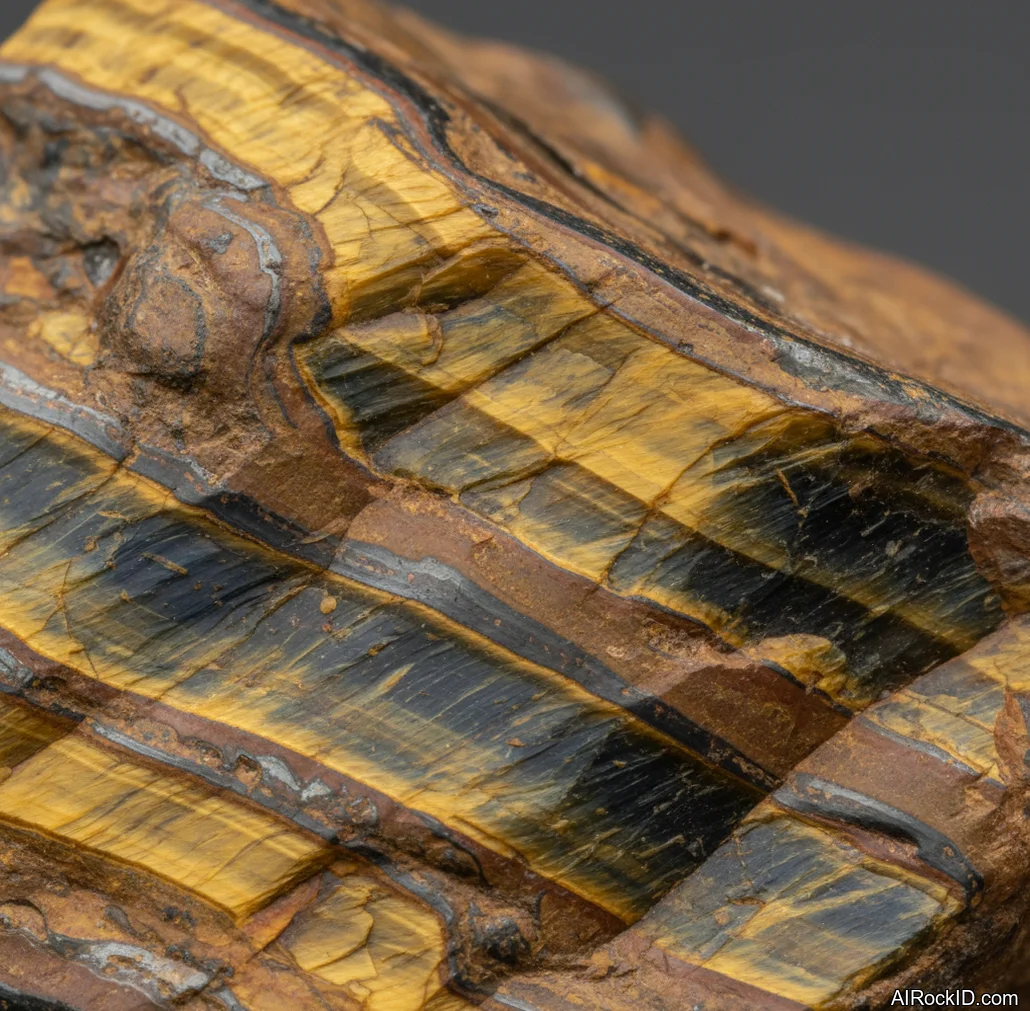
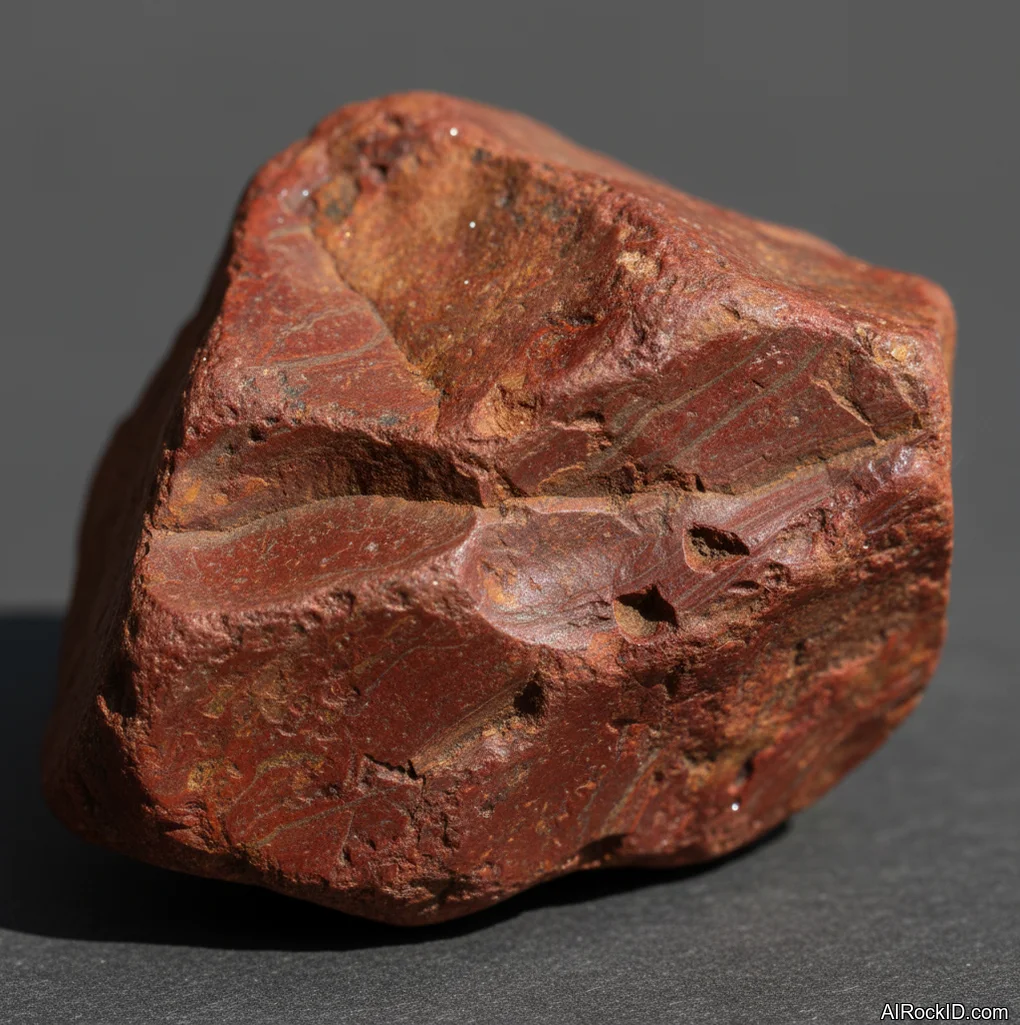
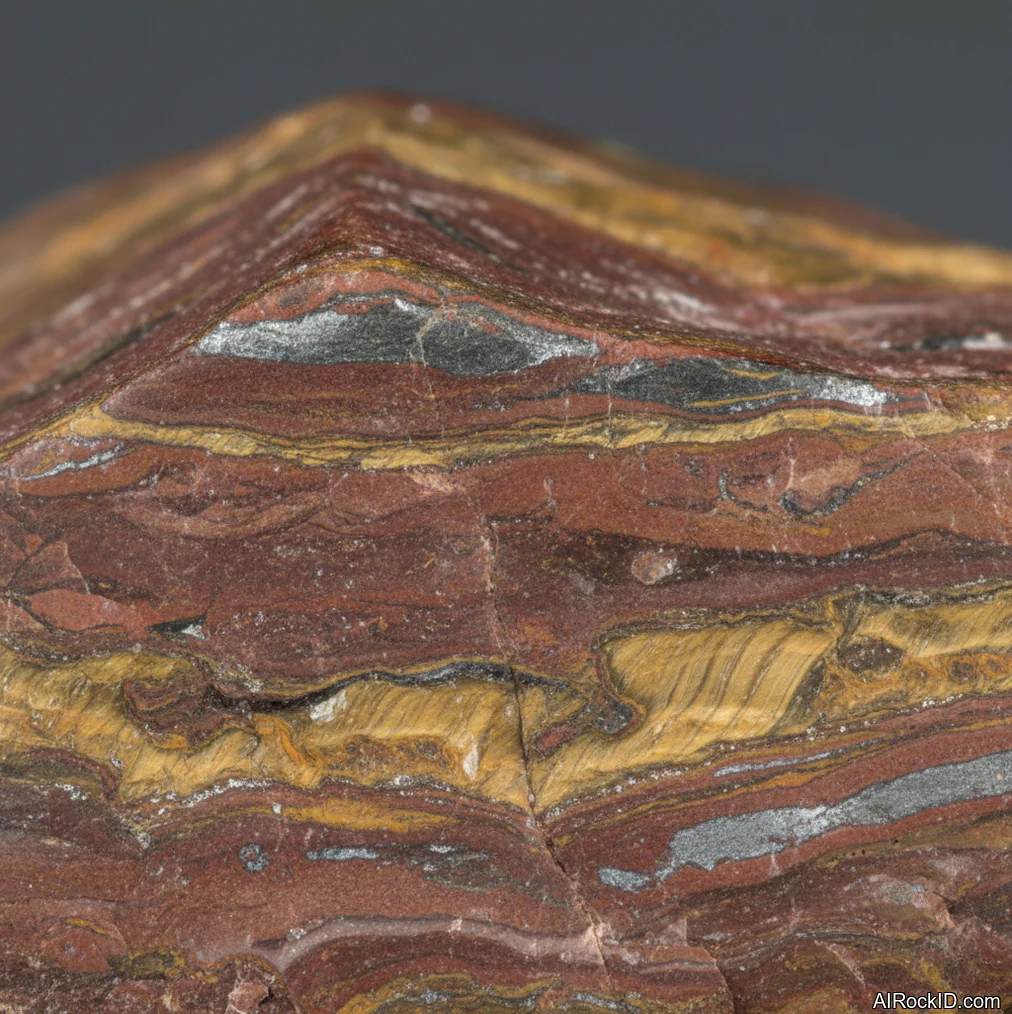
Mugglestone is a banded iron-formation rock made of jasper, hematite, and tiger’s eye (quartz). When it’s polished, it comes up as this brown, red, gold blend, and every so often you’ll catch a silky flash.
Grab a tumbled piece and the first thing you clock is the heft. It’s got that hematite-like weight, but it looks warmer in your hand, with brick-red jasper bands slicing through the darker iron. Tip it under a lamp and the tiger’s eye layers might flare into a skinny bright stripe, then disappear the second you nudge the angle. Weirdly satisfying, right? And some pieces hardly flash at all. That’s normal.
Thing is, a lot of what’s sold as Mugglestone is really “tiger iron” with a different tag on it, so don’t stress the name too much.
Most of what you see for sale is already polished, because the rough can look pretty plain until somebody cuts into it. And if you’ve ever rubbed your thumb over a well-made cabochon, you can feel it: the quartz bands take a slightly different polish than the jasper and the iron layers (just a tiny change in slickness). Subtle. But it’s there.
Origin & History
Mugglestone’s a trade name, not a formally defined mineral species, and it overlaps a lot with the lapidary name tiger iron. You’ll see “Mugglestone” pop up way more in modern rock and crystal shops than in older mineralogy books, and that’s usually the giveaway: you’re looking at a rock mix, not one single mineral.
Thing is, the etymology’s kind of murky because sellers don’t use the word the same way. In shops and at shows, I’ve heard it applied to banded material that feels noticeably heavier in your hand than typical tiger’s eye, with a more iron-rich look and those really obvious red jasper stripes (the kind that jump out once it’s been polished smooth). And historically, the ingredients are what matter: iron-rich banded rocks and silicified layers that were cut and polished as decorative stone long before “Mugglestone” ever got slapped on as a label.
Where Is Mugglestone Found?
Most Mugglestone on the market traces back to banded iron formation regions, especially Western Australia and South Africa. Smaller amounts of similar material are sold from other iron-rich terrains where jasper, hematite, and quartz occur together.
Formation
Look at a good slab up close and it’s basically a geologic layer cake. The “iron” bit comes from old iron-rich sediments that settled out in bands, then later got changed and hardened. After that, silica worked its way through those layers and turned some of it into jasper (microcrystalline quartz) and other parts into quartz-heavy bands.
And the tiger’s eye part comes from fibrous material that got swapped out for silica while keeping the original fiber structure (kind of like a mold). That leftover fiber pattern is what gives you chatoyancy when you cut it the right way. That’s why orientation matters so much. Cut it wrong and the face just looks flat. Cut it so the fibers run the right direction and you get that cat’s-eye sheen rolling across in ribbons, even though the rest of the rock still reads pretty earthy.
How to Identify Mugglestone
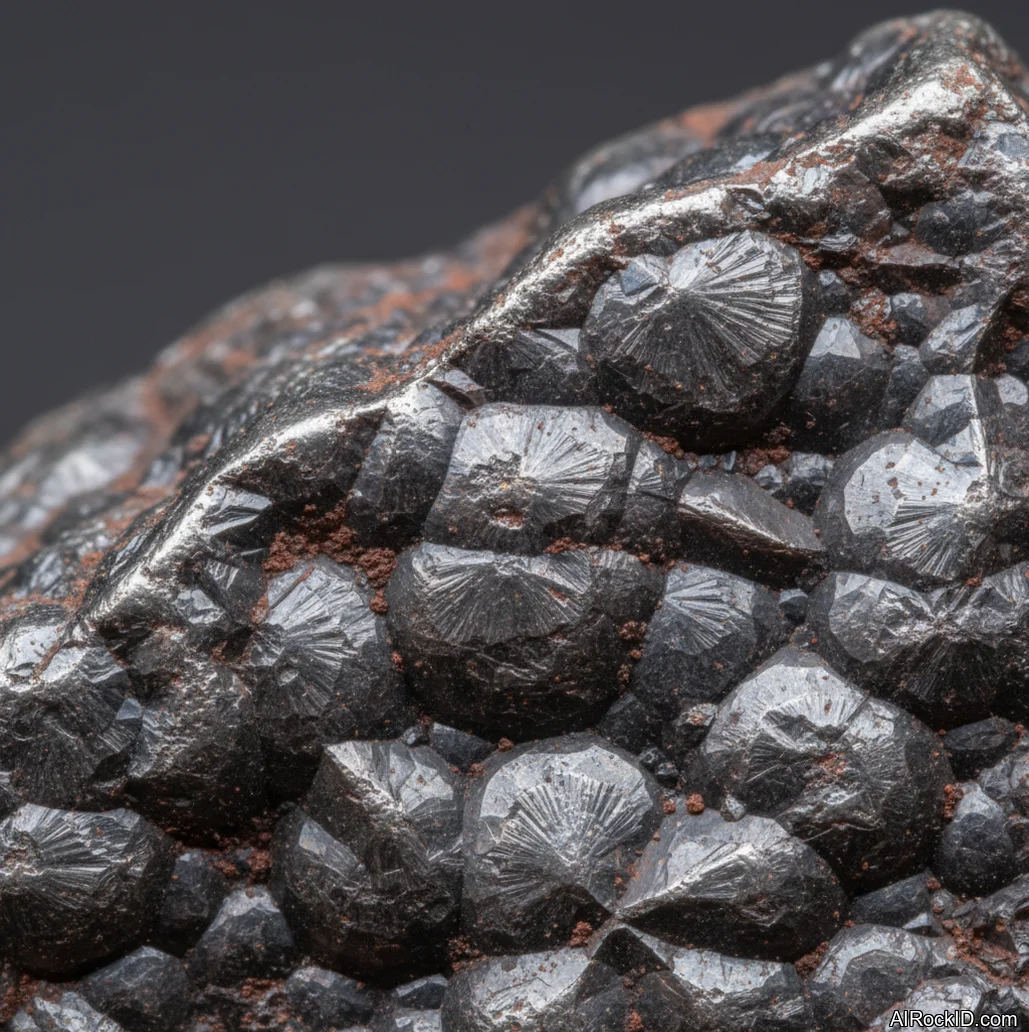
Color: Most Mugglestone shows a mix of brick red to reddish-brown jasper, dark gray to black hematite bands, and golden brown tiger’s eye streaks. The pattern is usually banded or swirled, not spotty like leopard jasper.
Luster: Polished surfaces range from vitreous to silky, with the silky look concentrated in the tiger’s eye layers.
Pick up a piece and compare it to plain tiger’s eye. Mugglestone usually feels heavier for its size because of the hematite. The real test is a strong light and a slow tilt: the chatoyant bands should flash in a narrow strip instead of just looking shiny everywhere. If the pattern looks printed or the shine is too uniform, it’s often dyed glass or a resin block with glittery filler.
Properties of Mugglestone
Physical Properties
| Crystal System | Amorphous |
| Hardness (Mohs) | 6.5-7 (Hard (6-7.5)) |
| Density | 2.8-3.3 |
| Luster | Vitreous |
| Diaphaneity | Opaque |
| Fracture | Conchoidal |
| Streak | white to reddish-brown |
| Magnetism | Non-magnetic |
| Colors | reddish-brown, brick red, golden brown, dark gray, black |
Chemical Properties
| Classification | Silicates (with iron oxides present) |
| Formula | SiO2 + Fe2O3 (rock mixture; no single formula) |
| Elements | Si, O, Fe |
| Common Impurities | Al, Mn |
Optical Properties
| Refractive Index | 1.54-1.55 |
| Birefringence | None |
| Pleochroism | None |
| Optical Character | Isotropic |
Mugglestone Health & Safety
Handling it and getting it wet are usually fine. But if you cut it or sand it, you can kick up silica dust, the same kind of gritty, dry stuff you see hanging in the air near a saw blade or stuck to your fingertips. So work it the way you’d work jasper or agate.
Safety Tips
If you’re wet-cutting or wet-sanding, put on a properly fitted respirator that’s rated for fine particulates. And when you’re done, wipe up the slurry (that gray, gritty muck) instead of sweeping up dry dust.
Mugglestone Value & Price
Price Range
Rough/Tumbled: $5 - $40 per piece
Cut/Polished: $2 - $12 per carat
Prices jump when the chatoyancy is strong and clean, with crisp banding, and you really notice it most in well-cut cabs you can tip under a light and watch the stripe snap across the dome. But if it looks dull, with muddy brown bands that kind of blur together, it’s cheap. Even if the seller’s trying to talk it up.
Durability
Durable — Scratch resistance: Good, Toughness: Good
It’s generally stable in normal home conditions, but sharp blows can chip edges the way jasper and quartz do.
How to Care for Mugglestone
Use & Storage
Store it like you’d store jasper or tiger’s eye: in a pouch or a divided box so it doesn’t rub softer stones. Polished pieces can pick up tiny scratches if they bang around together.
Cleaning
1) Rinse with lukewarm water and a drop of mild soap. 2) Use a soft toothbrush to get into grooves or drill holes. 3) Rinse again and dry with a microfiber cloth.
Cleanse & Charge
If you do energy-style cleansing, running water, smoke, or a night on a windowsill works fine. But don’t leave it in harsh sun for weeks if you care about the surface looking its best.
Placement
I like it on a desk or by the door because it’s tough and doesn’t mind being handled. And it looks better under a directional lamp where the tiger’s eye bands can actually flash.
Caution
Don’t breathe in the dust when you’re cutting or sanding. That stuff gets everywhere, too, like you’ll feel it on your tongue if you’re not careful. And I steer clear of ultrasonic cleaners, because they can sometimes turn up tiny fractures in banded material. So yeah, I just skip them.
Works Well With
Mugglestone Meaning & Healing Properties
Mugglestone comes off like a classic “grounding” stone right away, and yeah, that’s what most folks reach for it to do. A lot of that is simply the hand-feel. It’s heavy. It’s solid. I’ve put one in a customer’s palm at the shop and watched their whole posture change, because they stop fidgeting and start slowly rolling it around to catch that quick little flash when the light hits.
Next to plain tiger’s eye, Mugglestone reads more earthy and less showy, even when the chatoyancy is really good. Thing is, that blend of red jasper with iron-rich layers gets used for steadiness, momentum, and that practical kind of confidence where you actually finish the task instead of talking about it (you know the difference). But let’s keep our feet on the ground here: any “effects” are personal and based on tradition, not medical.
And here’s the annoying part about Mugglestone in the metaphysical market. People hype it up like it’s rare or some hidden secret. It’s not. It’s a straightforward, tough lapidary rock. If you want it as a touchstone for focus, great. But if you’re dealing with anxiety or health stuff, treat it like a comfort object alongside real support, not a replacement.
Identify Any Crystal Instantly
Snap a photo and get properties, value, care instructions, and healing meanings in seconds.