Orange Kyanite
What Is Orange Kyanite?
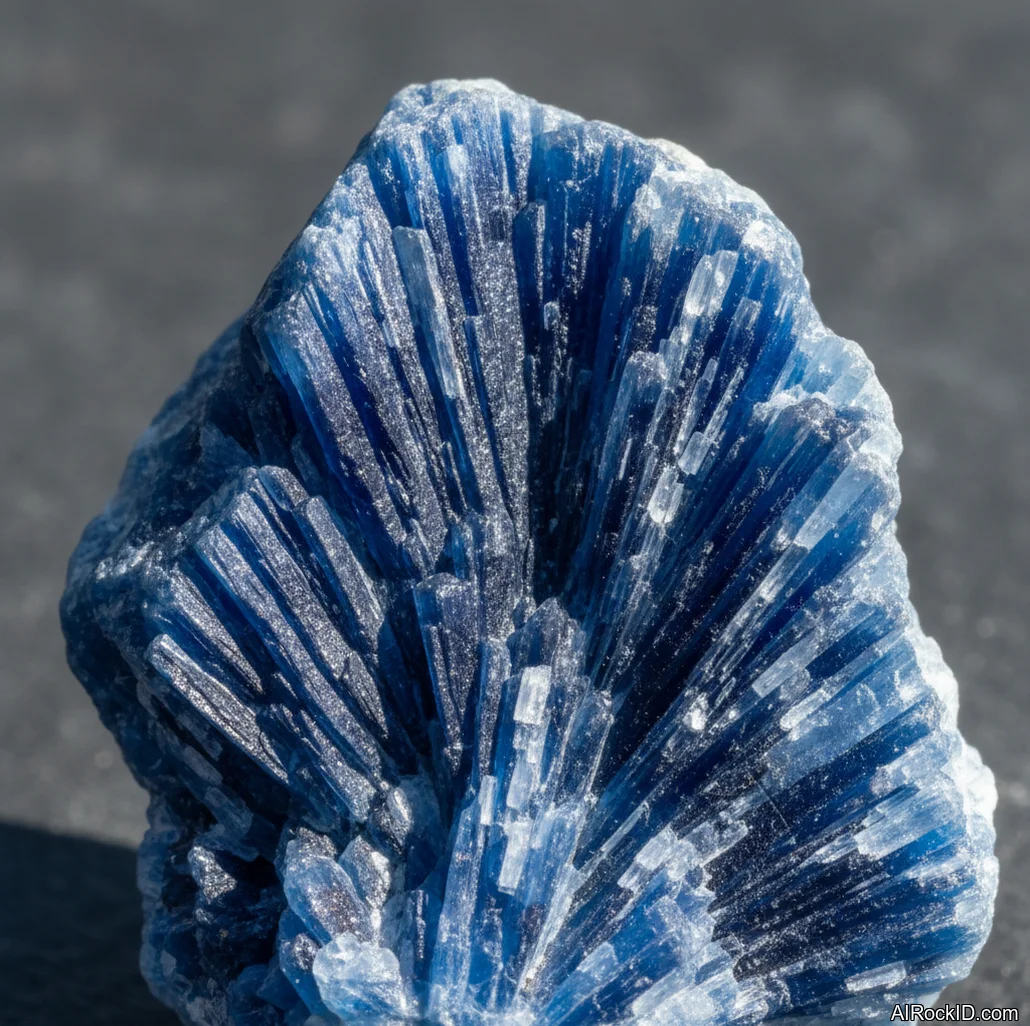
Orange Kyanite is just kyanite (Al2SiO5) that happens to come in orange, and you usually see it as those bladed crystals sitting in metamorphic rocks.
Pick up one of the blades and you notice the shape immediately. It feels like a little mineral knife. Flat, a bit sharp along the edges. And the surface has that odd slick-then-grabby thing going on when you drag a fingernail down the length versus across it (you can literally feel the difference).
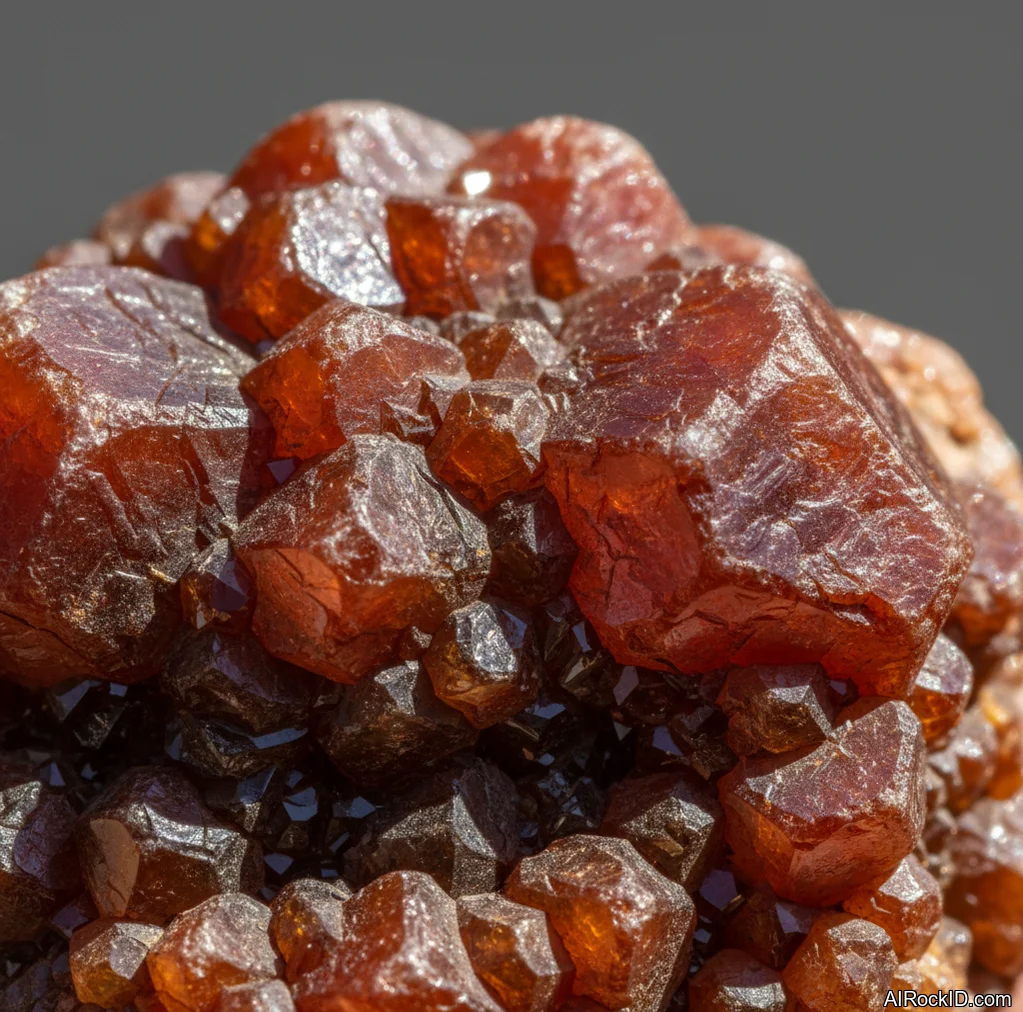
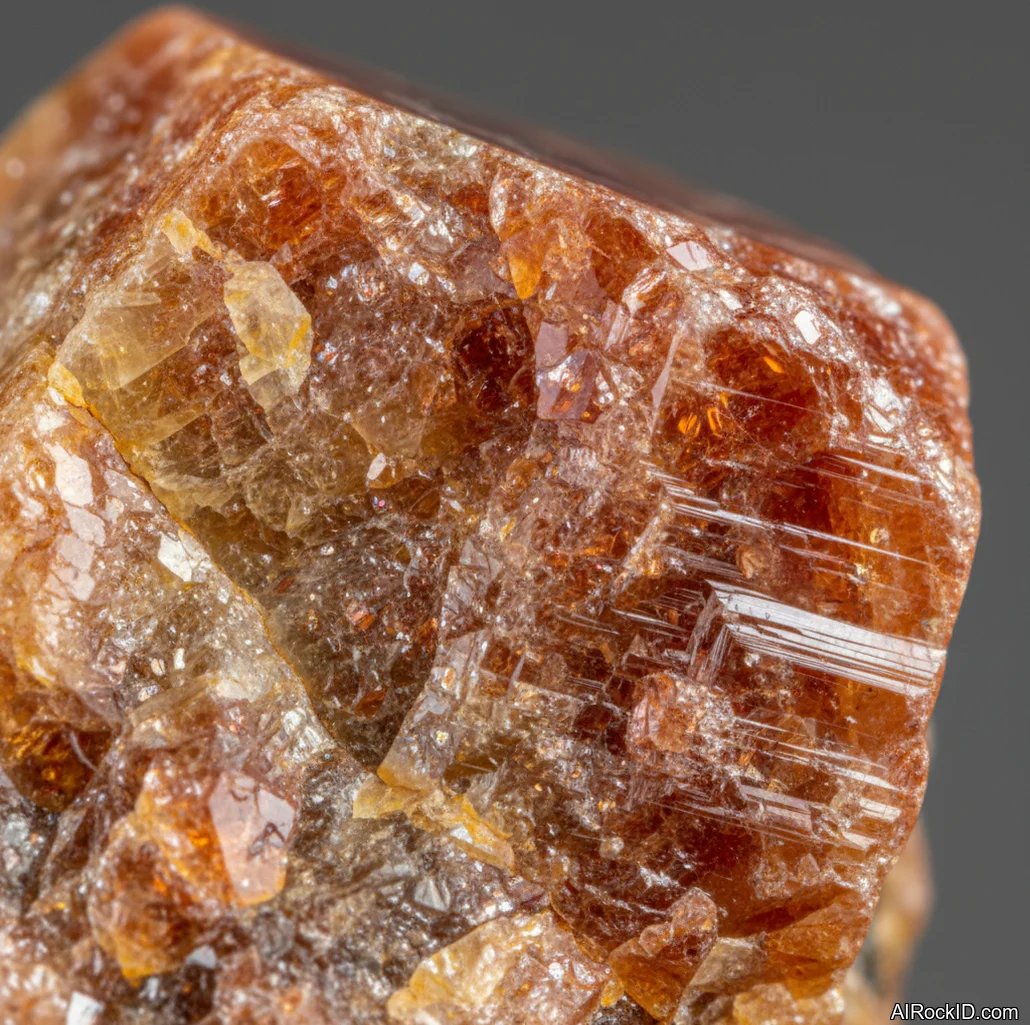
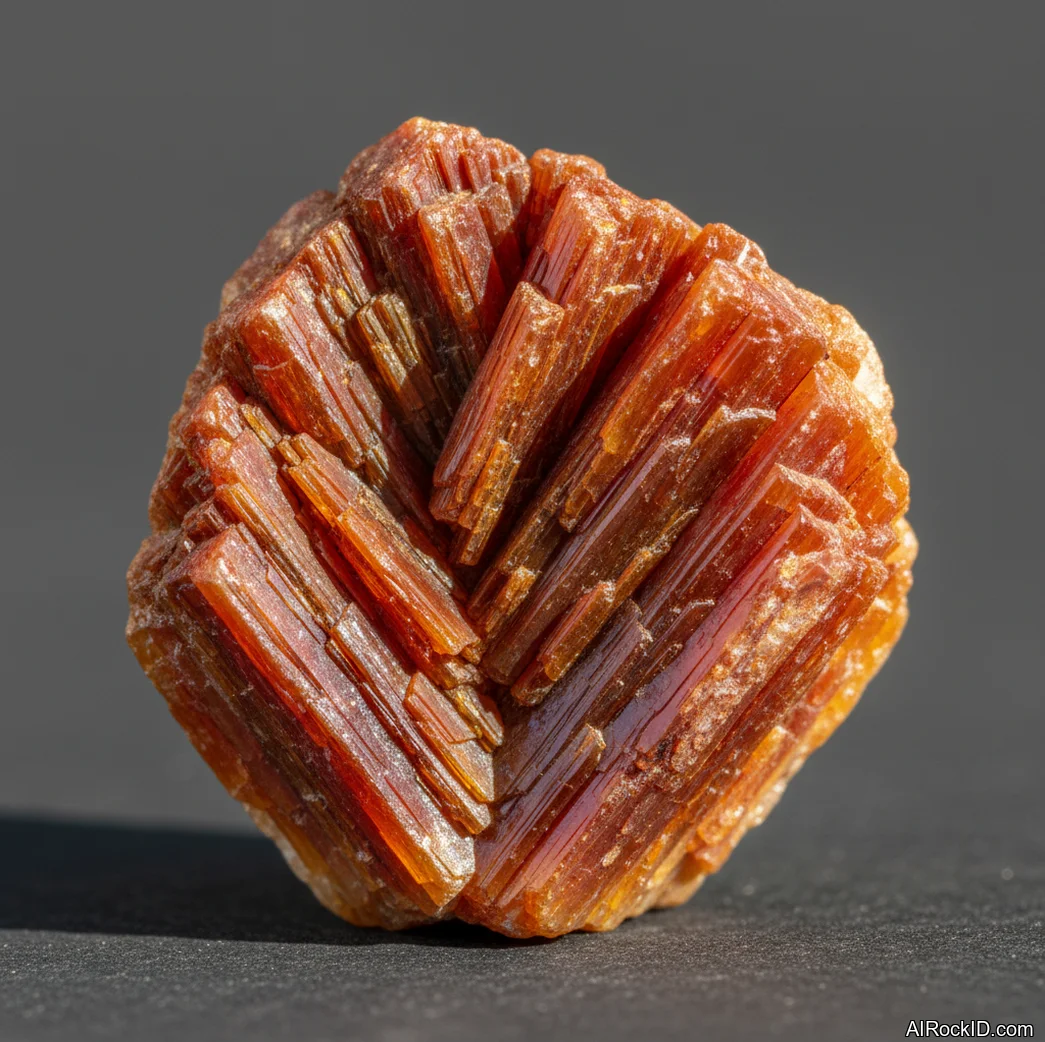
The color isn’t always straight-up pumpkin, either. A lot of pieces land somewhere between honey and cinnamon, and some have paler patches that flash almost champagne when the light catches them.
If you turn it in your hand, you’ll see the classic kyanite trick that made it famous in the first place. The color changes with the angle. One tilt looks warmer and deeper, then you rotate it and it goes lighter, kind of washed out, because it’s strongly pleochroic. And, like all kyanite, the hardness is weirdly directional, which matters more than you’d think when someone buys a raw blade to use in jewelry.
Origin & History
Kyanite got officially described as a mineral species back in the late 1700s, and its name comes from the Greek “kyanos,” which means deep blue. Kind of a weird fit when you’ve got an orange piece in your hand (especially one with that rusty, cinnamon-looking sheen in the light), but it’s still the exact same species.
But “orange kyanite” as a trade name is a much more recent thing. Most dealers use it just to separate the manganese-colored material from the classic blue blades, and it really took off once more of it started coming out of Tanzania (plus a few other metamorphic belts) and began showing up regularly on the gem show circuit.
Where Is Orange Kyanite Found?
Most orange material on the retail market is associated with East African metamorphic rocks, especially Tanzania. Kyanite as a species also occurs in classic metamorphic areas like Brazil and the Appalachian region of the USA.
Formation
Orange kyanite shows up during regional metamorphism, when aluminum-rich sediments get heated up and squeezed hard under high pressure. It’s basically a pressure-and-temperature flag mineral. If you see kyanite, you know the rock reached conditions that aren’t the same as andalusite or sillimanite, even though all three have the exact same Al2SiO5 chemistry.
So why the orange? Most of the time, it’s tied to manganese sitting in the crystal structure. Out in the field it commonly hangs out with quartz, mica, garnet, plus other metamorphic companions. And some specimens have those parallel bladed crystals that flare out like a little spray or fan, the kind you can feel with a fingertip because the blades have that lined-up, ribbed texture. Those clusters usually form in spots where the crystals had enough breathing room to grow along foliation planes.
How to Identify Orange Kyanite
Color: Orange kyanite ranges from pale peach to deep burnt orange, often with lighter streaks or zoning along the blade. It can look more golden under warm indoor bulbs and more tan in daylight.
Luster: It’s typically pearly to vitreous, with a silky flash on fibrous faces.
If you scratch it with a steel pin, try two directions: along the length of the blade and across it. One direction feels noticeably softer, and that directional hardness is a big kyanite tell. Also tilt it under a single light source and watch the color shift because strong pleochroism shows up even without fancy equipment.
Properties of Orange Kyanite
Physical Properties
| Crystal System | Triclinic |
| Hardness (Mohs) | 4.5-5 parallel to the length; 6.5-7 across the length (Hard (6-7.5)) |
| Density | 3.53-3.67 g/cm3 |
| Luster | Pearly |
| Diaphaneity | Transparent to translucent |
| Fracture | Splintery |
| Streak | White |
| Magnetism | Non-magnetic |
| Colors | Orange, Peach, Honey, Cinnamon, Yellow-orange, Tan |
Chemical Properties
| Classification | Silicates |
| Formula | Al2SiO5 |
| Elements | Al, Si, O |
| Common Impurities | Mn, Fe, Ti |
Optical Properties
| Refractive Index | 1.712-1.734 |
| Birefringence | 0.012-0.018 |
| Pleochroism | Strong |
| Optical Character | Biaxial |
Orange Kyanite Health & Safety
Orange kyanite is usually safe to handle, and it isn’t considered toxic. The real issue is physical: if a blade chips or breaks, you can end up with sharp edges and tiny splinters that’ll bite into your skin (and they’re annoyingly hard to spot at first).
Safety Tips
If you’re going to trim or grind it, put on safety glasses and a dust mask. And keep it wet while you work so the dust and tiny particles don’t go flying everywhere.
Orange Kyanite Value & Price
Price Range
Rough/Tumbled: $8 - $60 per piece
Cut/Polished: $15 - $80 per carat
Price shoots up when the orange is clean and really saturated, and the blades are still intact and sharp (the kind that’ll snag a fingernail if you’re not careful). Big clusters with that neat, parallel growth pattern get priced higher. But the crumbly chunks sitting in mica stay cheap, especially when they flake apart in your fingers and leave that dusty, glittery grit behind.
Durability
Moderate — Scratch resistance: Fair, Toughness: Poor
It’s stable in normal household conditions, but the blades chip easily and cleavage can turn a small knock into a flake-off.
How to Care for Orange Kyanite
Use & Storage
Store it wrapped or in a compartmented box so the blades don’t rattle against harder stones. And keep clusters where they won’t get bumped, because the tips snap faster than you’d think.
Cleaning
1) Rinse briefly in lukewarm water with a drop of mild soap. 2) Use a soft toothbrush to lift dirt from between blades without prying. 3) Pat dry and let it air-dry fully before putting it back in a closed container.
Cleanse & Charge
For a metaphysical reset, use smoke, sound, or a quick pass over selenite. If you use water, keep it short and dry it well so moisture doesn’t sit in cracks or matrix.
Placement
Set it where side light can hit the faces, because that’s when the pearly flash shows. I keep mine on a lower shelf, not a windowsill, since blades and bright sun plus dust is a recipe for little chips.
Caution
Skip ultrasonic cleaners and steam. Seriously, don’t. And don’t just toss it loose in a pocket or bag where it can rattle around with keys or coins. Thing is, with rings you’ve really got to watch it, because the main issue with kyanite isn’t just hardness, it’s toughness (that’s what bites you).
Works Well With
Orange Kyanite Meaning & Healing Properties
Orange kyanite has this immediate “energy and motivation” vibe, and yeah, that’s exactly how a lot of people reach for it. When I’m sorting trays at a show and my head’s all over the place, I’ll pick up a blade for a minute, feel those thin ridges under my thumb, and lock in on one simple task. No fireworks. Just… movement. Getting unstuck.
Compared to blue kyanite, the orange material seems to hit lower in the body in most people’s practice, more gut than throat. I’ve found it works nicely with journaling or planning since it steadies your mood while you’re figuring out what’s actually doable (and what’s just wishful thinking). But don’t mix that up with medical care. If you’re dealing with anxiety or burnout, crystals are a side tool, not the main tool.
Thing is, the marketplace gets weird about orange kyanite. Some sellers talk like it’s indestructible because “kyanite doesn’t hold negative energy.” Even if you’re into that idea, the actual stone still chips if you drop it. I’ve literally watched a pretty fan cluster lose two tips just from being set down a little too hard on a glass counter. It made that sharp little click, and that was that.
Identify Any Crystal Instantly
Snap a photo and get properties, value, care instructions, and healing meanings in seconds.