Orchid Calcite
What Is Orchid Calcite?
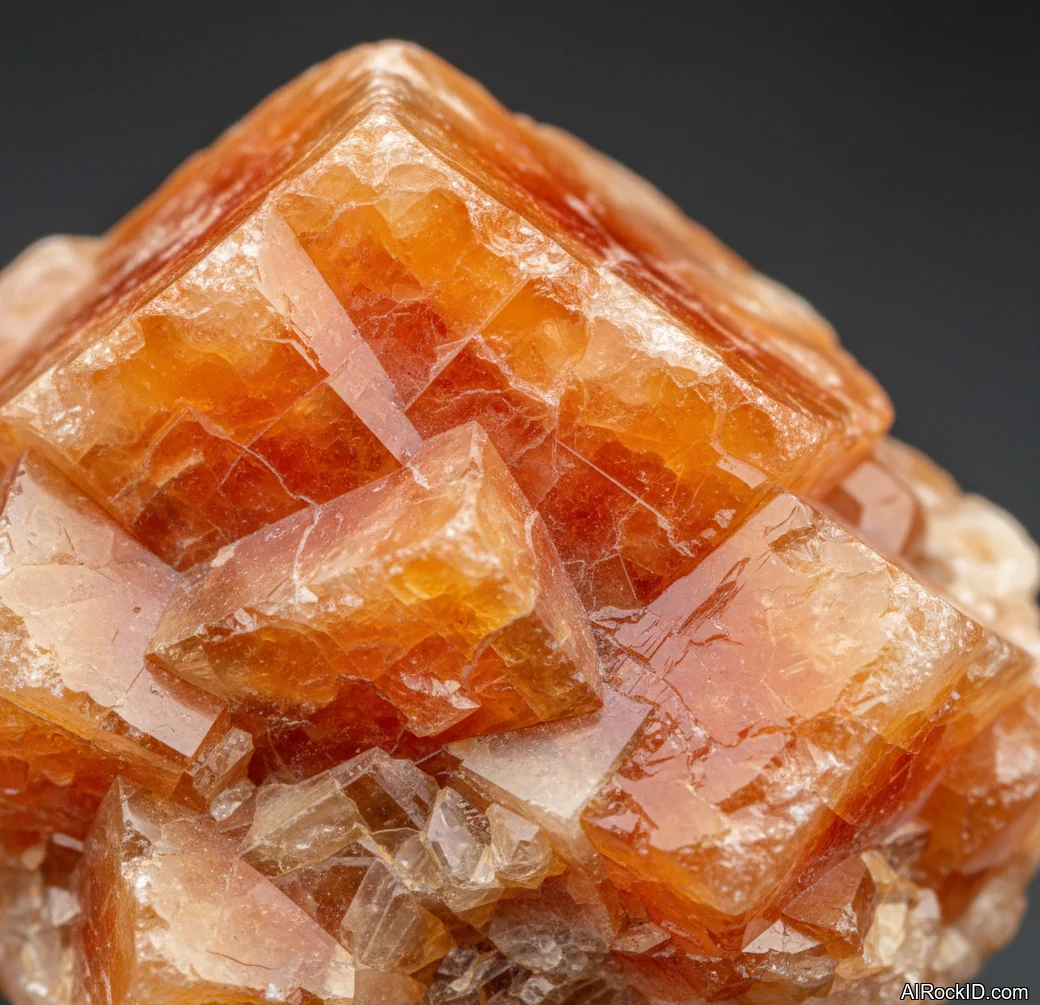
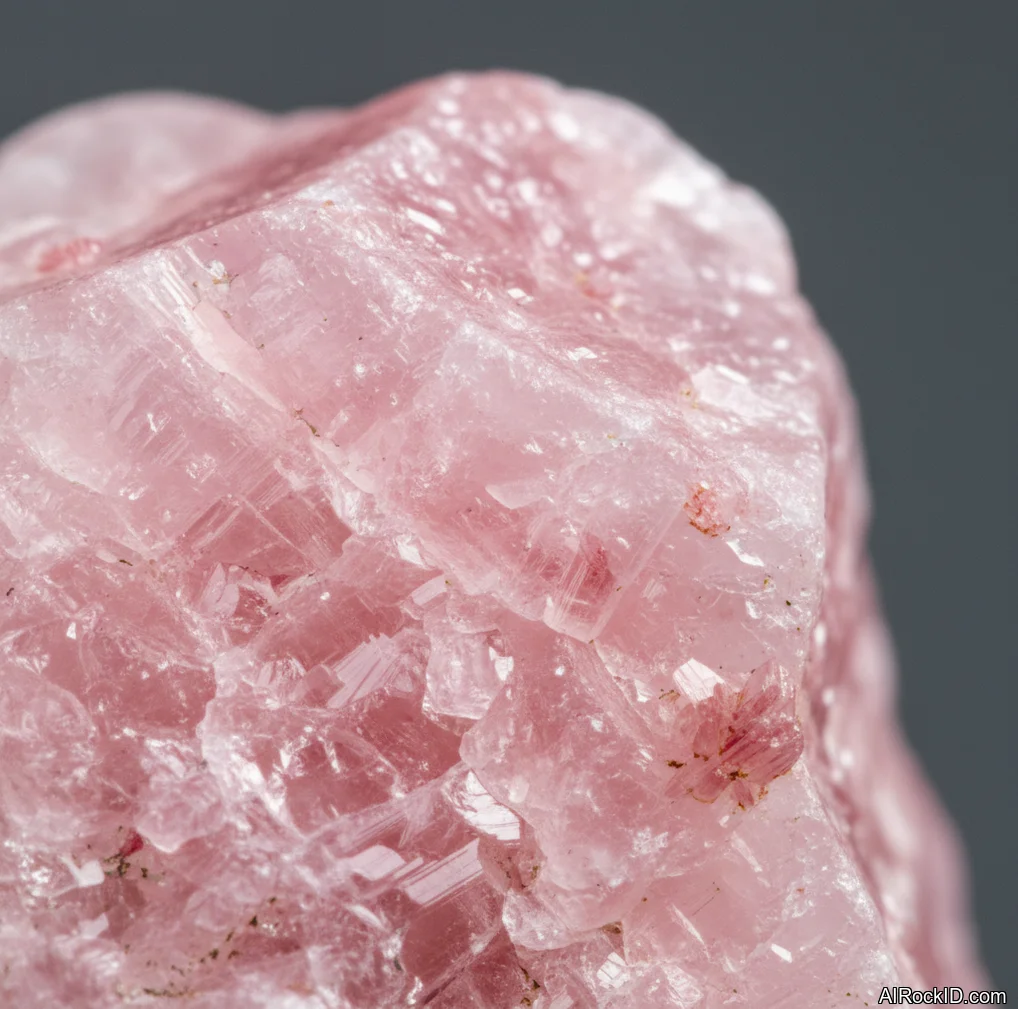
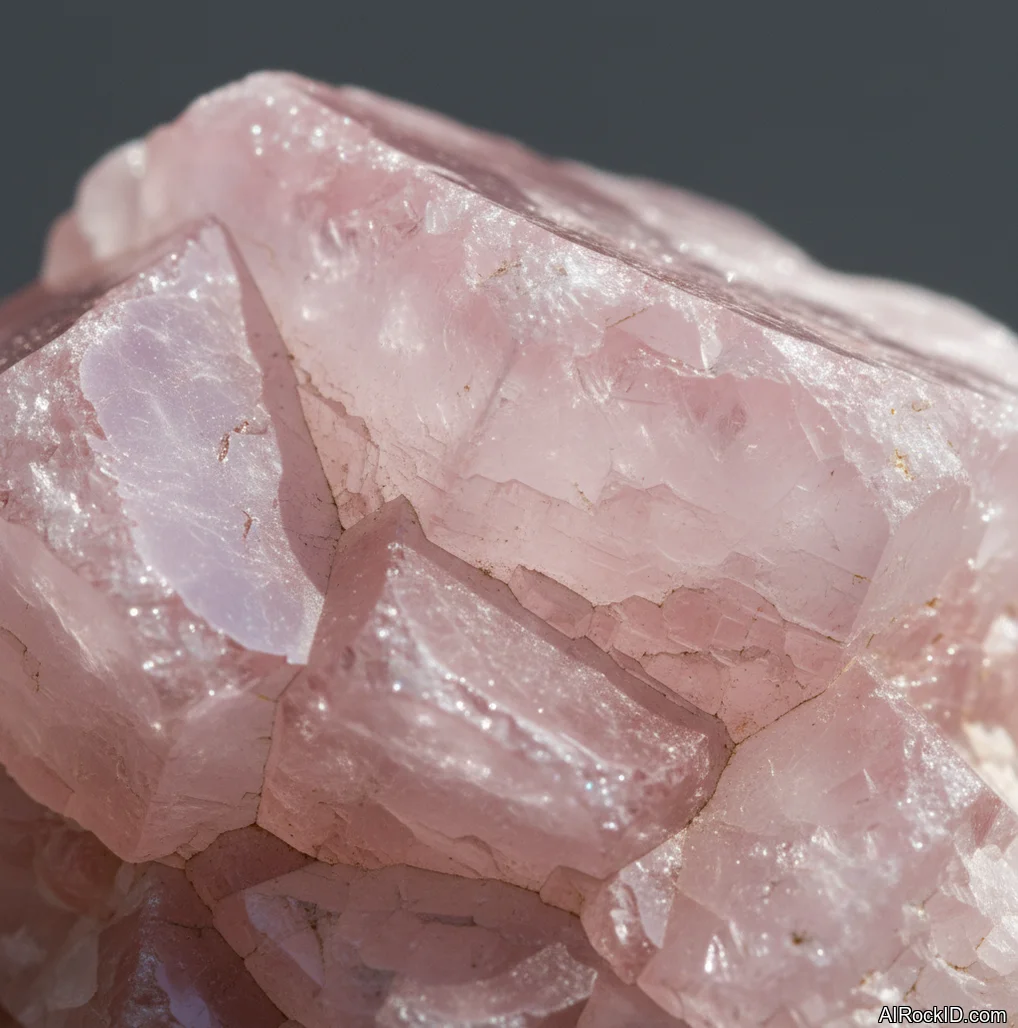
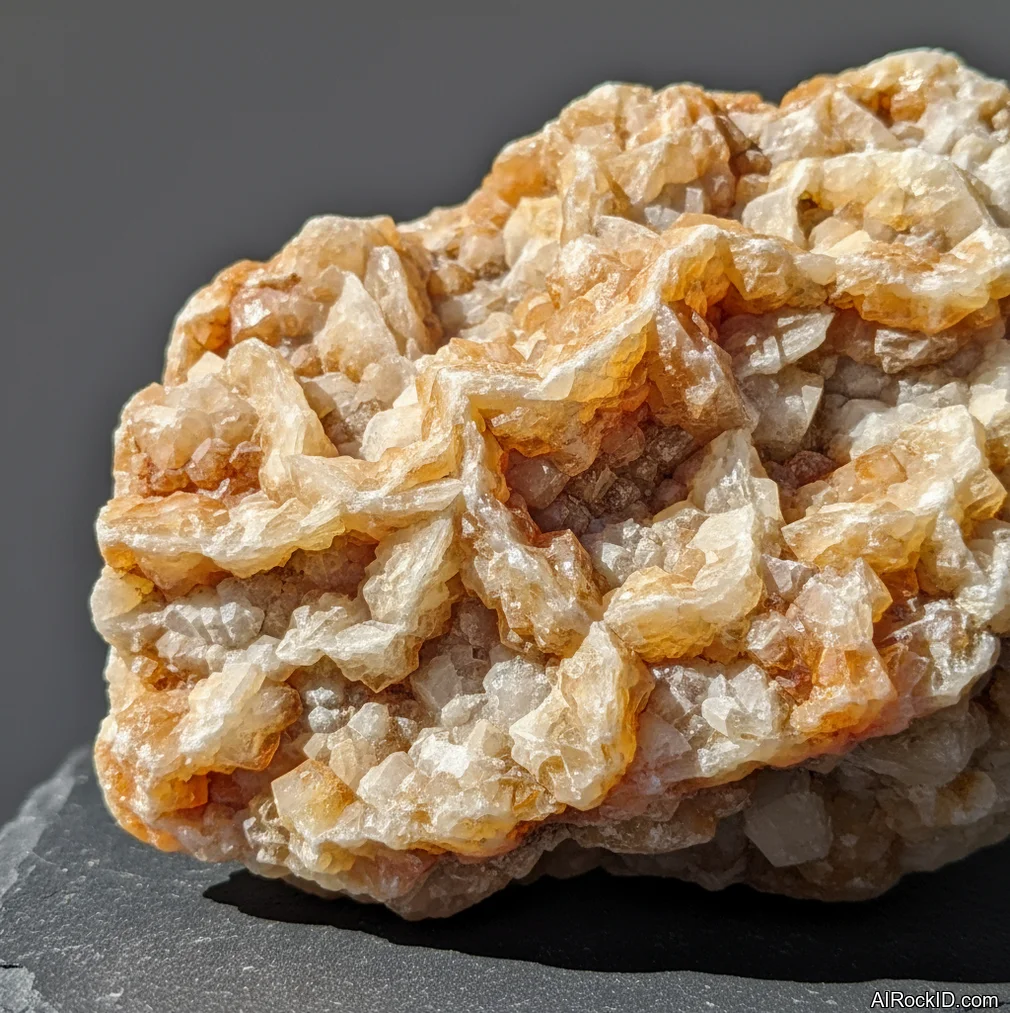
Orchid Calcite is just a trade name for banded calcite with soft orchid-pink, peach, and creamy white layers, and sometimes there’s manganese in there that kicks the pink up a notch.
Pick up a chunk and you’ll feel it right away: it’s heavier than it looks. Calcite has that dense, cool-in-the-hand thing, and Orchid Calcite usually shows up as chunky masses with those smooth, curved break surfaces where it didn’t cleave cleanly (you can almost feel the rounded edges with your thumb).
At first it might pass for “just another pink stone.” But look, the tell is what happens near a lamp. Hold it up and the layers kind of glow from inside, like the light’s caught between sheets. Tilt it and you’ll get these flat cleavage flashes, little mirror-like planes, and then they’re gone the second you shift the angle. How many stones do that?
Origin & History
“Orchid Calcite” isn’t an official mineral name. It’s a sales label that started floating around in the last couple decades, when dealers began sorting out the softer pink to peach, banded calcites from plain orange calcite and from that brighter, hot-pink manganoan stuff.
Calcite itself has the long paper trail. The name goes back to the Latin “calx,” meaning lime, and it got standardized early on in mineralogy, with the classic optical studies and cleavage descriptions coming out of European mineral science in the 18th and 19th centuries. The “Orchid” bit is just color marketing. But the material? Still real, straightforward calcite.
Where Is Orchid Calcite Found?
Most Orchid Calcite on the retail market is sourced from Mexico, with similar pink-peach banded calcite also turning up in Peru and Brazil in smaller amounts.
Formation
Most pieces start out in a pretty unglamorous way: calcium-rich water sneaking through cracks, little cavities, or straight through limestone, then leaving calcite behind when the conditions shift. Temperature changes, CO2 levels wobble, the chemistry tweaks a bit, and the calcite stacks up layer by layer, like a drip you’d hear in a cave that never seems to stop.
Look at the banding up close and you can almost track the pulses of fluid, like someone kept turning a faucet on and off. The pale cream bands are usually the “cleaner” calcite. And the warmer peach to pink tones come from trace elements, commonly manganese for pink and sometimes iron for those warmer orange notes. In some deposits it shows up in veins; in others it’s cave-style flowstone material that later gets cut into slabs, hearts, towers, and all the usual shop shapes.
How to Identify Orchid Calcite
Color: Orchid Calcite runs from creamy white to peach and orchid-pink, usually in soft bands or clouds rather than a single flat color. The color tends to look gentle and milky, not neon.
Luster: Glassy to pearly, especially on fresh cleavage faces.
If you scratch it with a copper coin, it’ll mark pretty easily, and a steel nail will bite in fast. The real test is cleavage: break a small edge and you’ll often get flat planes instead of a jagged quartz-style fracture. And if you’ve handled a lot of polished stones, calcite has that slightly “grabby” feel on a fresh edge, like it wants to catch your skin because it’s so soft.
Properties of Orchid Calcite
Physical Properties
| Crystal System | Trigonal |
| Hardness (Mohs) | 3 (Soft (2-4)) |
| Density | 2.71 g/cm3 |
| Luster | Vitreous |
| Diaphaneity | Transparent to translucent |
| Fracture | Uneven |
| Streak | White |
| Magnetism | Non-magnetic |
| Colors | Orchid pink, Peach, Orange, Cream, White |
Chemical Properties
| Classification | Carbonates |
| Formula | CaCO3 |
| Elements | Ca, C, O |
| Common Impurities | Mn, Fe, Mg |
Optical Properties
| Refractive Index | 1.486-1.658 |
| Birefringence | 0.172 |
| Pleochroism | None |
| Optical Character | Uniaxial |
Orchid Calcite Health & Safety
Orchid Calcite isn’t toxic, so it’s safe to handle with bare hands. Just use normal common sense, though. If you’re cutting or grinding calcite and you kick up that fine chalky dust (the kind that clings to your fingers), that’s when you’ll want to be more careful.
Safety Tips
If you’re going to lapidary it, put on a real respirator and run water the whole time to knock the dust down. Calcite turns into this nasty, chalky sludge that splatters, dries in a crust, and somehow ends up everywhere anyway (seriously, everywhere).
Orchid Calcite Value & Price
Price Range
Rough/Tumbled: $8 - $60 per piece
Price mostly comes down to color and banding first, then size and how clean the polish is. Those clear, translucent layers where the pink and peach split in a sharp line (the kind you can see even before it’s buffed out) go for more than the chalky chunks that look kind of flat and washed out.
Durability
Nondurable — Scratch resistance: Poor, Toughness: Fair
It’s stable in normal indoor conditions, but it scratches fast and the cleavage means it can chip if it gets knocked around.
How to Care for Orchid Calcite
Use & Storage
Keep it away from harder stones in the same bowl or pocket. I store calcite wrapped or in a little box because one rub against quartz will haze the polish.
Cleaning
1) Rinse quickly with lukewarm water. 2) Use a soft cloth or a very soft toothbrush with a drop of mild soap. 3) Rinse and pat dry, then air-dry fully before putting it back on a shelf.
Cleanse & Charge
Skip salt water. Use smoke, sound, or just set it on a dry shelf overnight since calcite is soft and the polish can dull with rough handling.
Placement
Put it somewhere it won’t get bumped, like a bedside shelf or a display cabinet. If sunlight hits it, it’s usually fine, but the polish will look better longer if it’s not baking in a hot window.
Caution
Don’t use acids or vinegar-based cleaners on it. Calcite will literally fizz when it hits that stuff, and you’ll end up with etched, dull spots you can feel with a fingernail. And skip ultrasonic cleaners and steam. The heat and vibration can mess with it fast. Also, don’t just toss it into a pouch with quartz, topaz, or any other hard stones. One little rub in your bag and you’ll see those tiny scratch lines (the kind that catch the light at a weird angle).
Works Well With
Orchid Calcite Meaning & Healing Properties
Next to a bunch of flashier stones, Orchid Calcite is pretty quiet. That’s the point, honestly. In my shop, I see people reach for it when they want something soft-looking that doesn’t read “sharp” the way a high-gloss quartz point can.
Grab a polished tower and slide your thumb over the bands. You can feel those little shifts where one layer meets the next, even with that glassy shine on top. And that touchy, almost grippy feel is why I see folks use it as a grounding fidget during breath work or journaling, not so much as a set-it-on-a-shelf-and-never-touch-it piece.
Metaphysically, it usually gets linked to calming, emotional balance, and a gentler kind of self-kindness. But thing is, it’s still calcite, and calcite is soft. It’ll scratch if you treat it rough (I’ve watched the surface pick up little scuffs just from being bumped around in a tray). So I think of it as a supportive tool for your space or your routine, not something you toss in a pocket with your keys and expect to stay pristine. And none of that is medical care. It’s just how people tend to use it, and how it actually behaves when you’re handling it day to day.
Identify Any Crystal Instantly
Snap a photo and get properties, value, care instructions, and healing meanings in seconds.