Plum Blossom Jasper
What Is Plum Blossom Jasper?
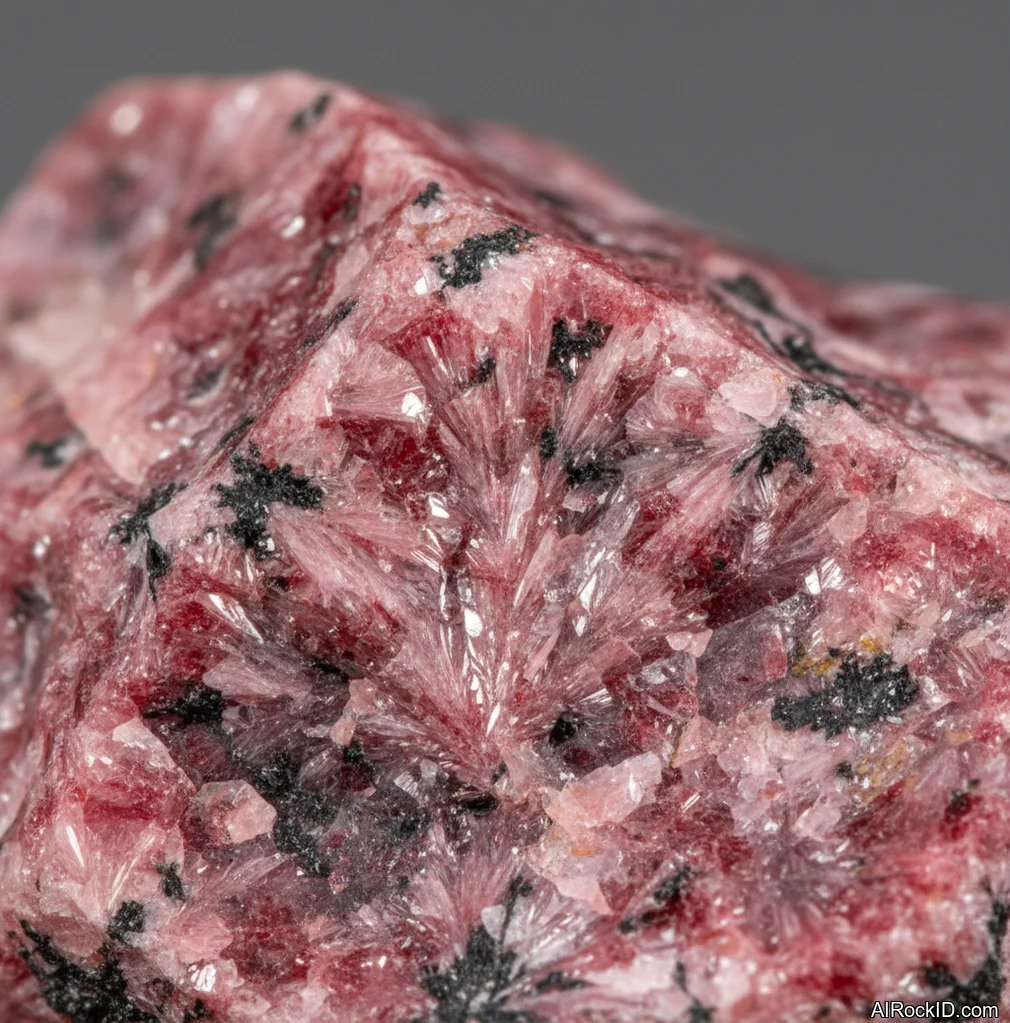
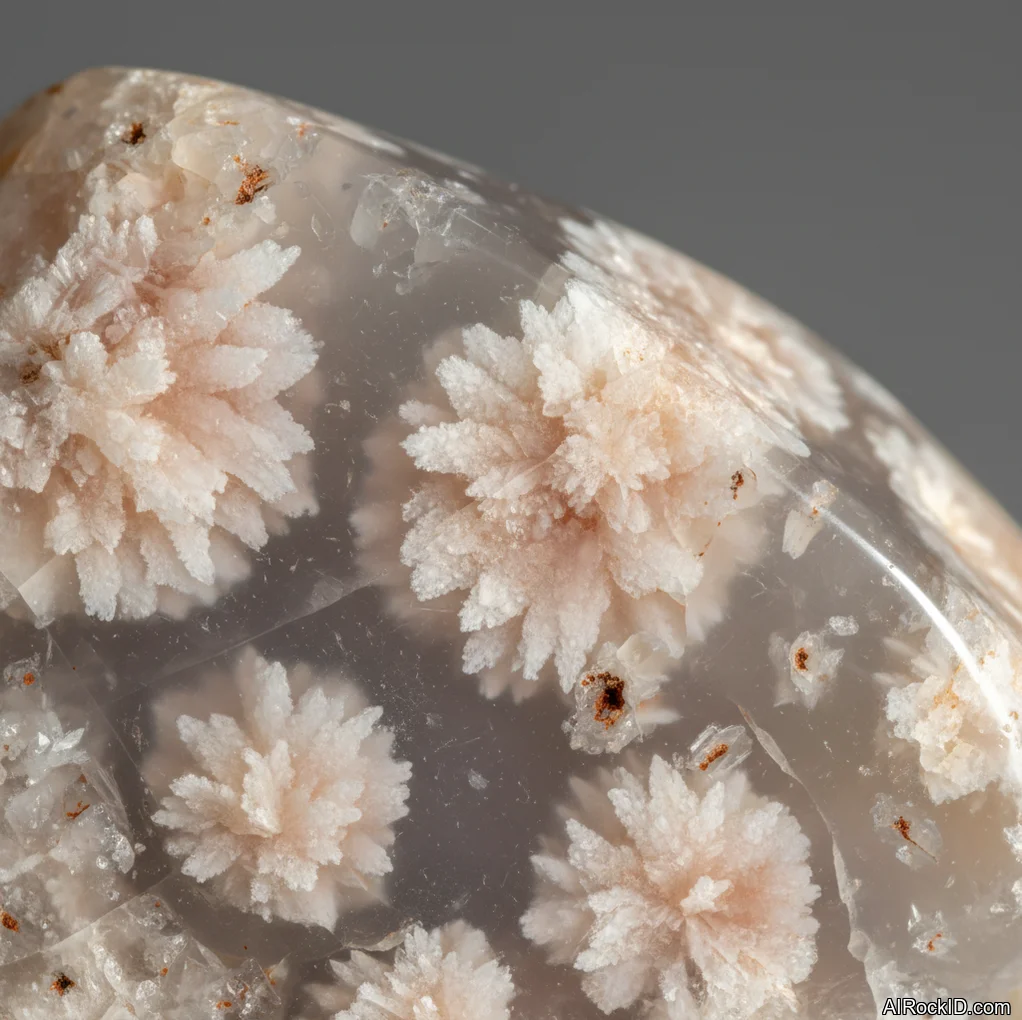
Plum Blossom Jasper is an opaque, microcrystalline quartz (jasper) with those rounded, flower-ish spots that really do look like tiny blooms scattered across a gray, cream, or tan base.
Hold a palm stone and you feel it immediately. It’s that smooth, slightly waxy jasper polish, and it stays cool in your hand for a bit before your skin heat finally catches up. The pattern is why anyone buys it, honestly. The pink-to-burgundy “blossoms” usually have soft, blurry edges, and sometimes there’s a darker dot right in the middle, like somebody pressed a little ink stamp into the stone.
Most of what you’ll run into for sale are tumbled stones, hearts, spheres, plus cabochons. And yeah, the same material can get tagged with five different names depending on whose booth you’re standing at (go figure). If the “flowers” look like they were painted on, or the color is screaming hot magenta with zero natural variation, I start asking questions.
Origin & History
“Plum Blossom Jasper” is just a trade name, not an officially defined mineral species, so there isn’t one clean “discovery” moment like you get when a new mineral is formally described in a journal. The name caught on with dealers because, once you’ve seen a well-cut piece with a high polish, those little orbicular spots really do look like plum blossoms.
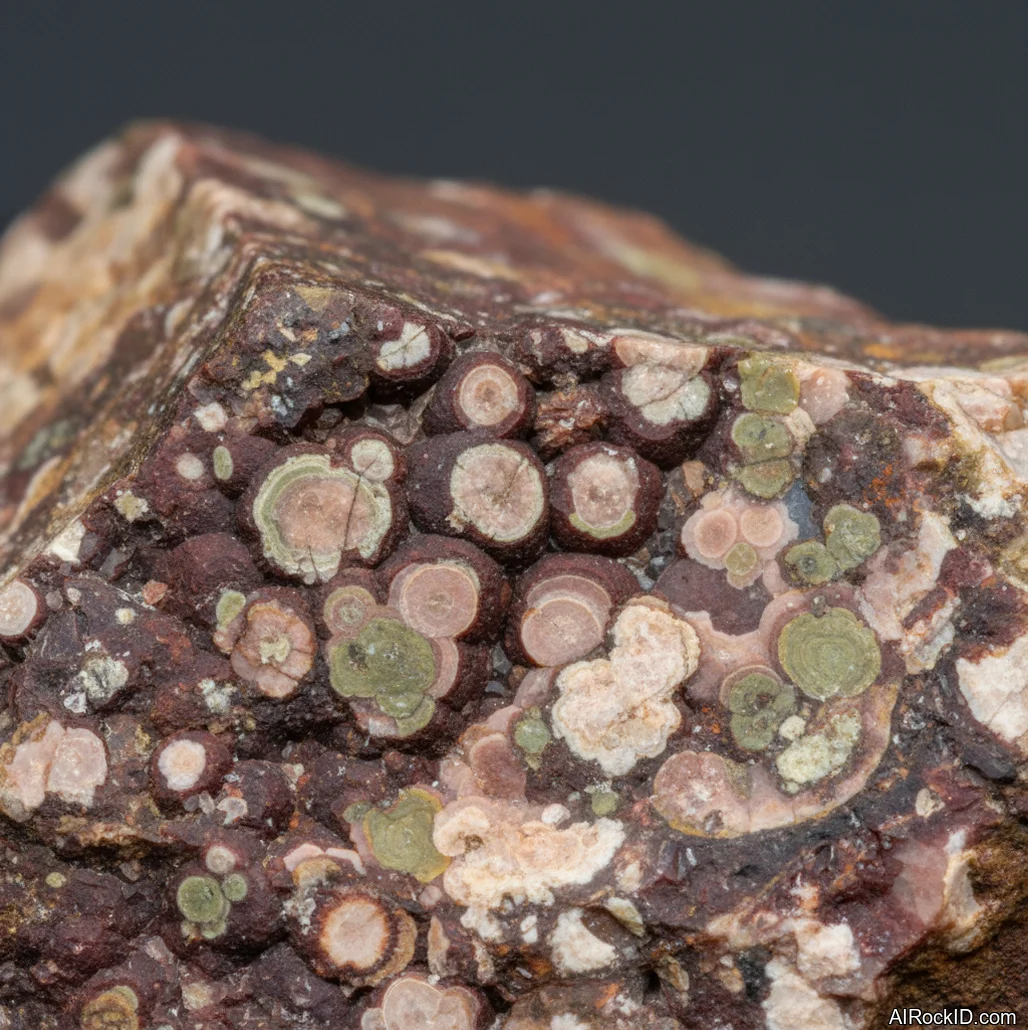
The “jasper” part is the older term. “Jasper” comes down through Latin and Greek (iaspis) and has been used for a long time to describe patterned, opaque quartz. And in today’s market, Plum Blossom Jasper tends to get lumped in with other orbicular jaspers and even some rhyolite lookalikes, which is honestly where a lot of the naming confusion creeps in.
Where Is Plum Blossom Jasper Found?
On the market it’s most often sold without tight locality info, but dealers commonly attribute similar orbicular jasper material to Brazil and parts of the western USA. Pieces labeled with a specific mine are the exception, not the rule.
Formation
Picture silica-heavy rock pulling itself together, but not neatly. Jasper forms when microcrystalline quartz (chalcedony and quartz) squeezes into open spaces, replaces older material, or traps silica gel that later hardens up into stone.
The “blossoms” people talk about are usually orbicular structures. Those can grow from rhythmic precipitation of silica mixed with iron and manganese oxides, or they can start at little nucleation points and build outward in rings, one round after another.
Look, if you take a cut face and tilt it under strong light, you’ll sometimes notice the flowers aren’t just paint on the surface. The pattern keeps going into the stone. But it won’t always be a perfect circle, and that weirdness is the giveaway. Nature did it, not a factory.
And some pieces have tiny seams or those healed fractures you can catch with your fingernail or see as hairline lines across the polish (almost like faint stitching). That happens because jasper often forms where the rock cracks, then gets re-cemented, then cracks again. Repeated cracking and re-cementing.
How to Identify Plum Blossom Jasper
Color: Base colors run gray, cream, tan, or muted brown, with flower-like orbs in pink, red, burgundy, or brownish-purple. The “blossoms” can be sparse or packed, and sometimes fade into one another.
Luster: Polished pieces have a waxy to vitreous luster.
Pick up a real piece and it feels dense for its size, like most quartz-based jaspers do. If you scratch it with a steel nail, it shouldn’t take the scratch easily, but it will scratch glass without much drama. The problem with some dyed lookalikes is the color collects in tiny cracks and pits, so use a loupe and check the edges and drill holes for concentrated color.
Properties of Plum Blossom Jasper
Physical Properties
| Crystal System | Trigonal |
| Hardness (Mohs) | 6.5-7 (Hard (6-7.5)) |
| Density | 2.58-2.91 |
| Luster | Waxy |
| Diaphaneity | Opaque |
| Fracture | Conchoidal |
| Streak | White |
| Magnetism | Non-magnetic |
| Colors | Gray, Cream, Tan, Brown, Pink, Red, Burgundy, Purple |
Chemical Properties
| Classification | Silicates |
| Formula | SiO2 |
| Elements | Si, O |
| Common Impurities | Fe, Mn, Al, Ca |
Optical Properties
| Refractive Index | 1.53-1.54 |
| Birefringence | None |
| Pleochroism | None |
| Optical Character | Uniaxial |
Plum Blossom Jasper Health & Safety
Plum Blossom Jasper is usually fine to handle, and it doesn’t have any issues with water for normal, everyday use. But if you’re cutting it or grinding it, that’s when you’ve got to watch out. The real problem is the super-fine silica dust, especially when it’s dry and hangs in the air, because you don’t want to breathe that stuff in.
Safety Tips
If you’re shaping it, keep it wet, get some real airflow moving (a box fan in a window helps), and wear a proper respirator that’s actually rated for silica dust.
Plum Blossom Jasper Value & Price
Price Range
Rough/Tumbled: $5 - $60 per piece
Cut/Polished: $1 - $8 per carat
Thing is, price usually follows the pattern first. The crisp, well-spaced blossoms with strong contrast are the ones that move quickest. Size counts too. But I’ve watched small cabs go for more than big tumbles when the “flowers” look clean and natural (not smeared or muddy).
Durability
Durable — Scratch resistance: Good, Toughness: Good
It holds polish well and doesn’t mind normal handling, but sharp impacts can chip edges like any quartz-rich jasper.
How to Care for Plum Blossom Jasper
Use & Storage
Keep it in a pouch or a divided box if it’s polished, because jasper will still scuff other polished stones over time. And if it’s a thin cab, don’t let it rattle around with harder stuff like corundum.
Cleaning
1) Rinse with lukewarm water and a drop of mild soap. 2) Use a soft toothbrush to get into pits or around drill holes. 3) Rinse again and dry with a soft cloth.
Cleanse & Charge
If you do energetic cleansing, a quick rinse and a dry wipe works fine, or set it on a piece of selenite. Avoid salt soaks if the piece has cracks or vugs that can trap residue.
Placement
I like it where you’ll actually see the pattern, like a desk stone or a shelf at eye level. Direct sun won’t usually wreck jasper fast, but I still don’t leave my best pieces baking on a windowsill for months.
Caution
Don’t hit fractured pieces with harsh cleaners or toss them in an ultrasonic machine. And if you’re cutting or sanding, don’t breathe in the dust (it’s the kind that hangs in the air and ends up in your throat).
Works Well With
Plum Blossom Jasper Meaning & Healing Properties
Most people grab Plum Blossom Jasper when they want something steady and friendly, not high voltage. In my own stash, it’s the stone I’ll slide across the counter to someone who can’t stop fidgeting with their keys. Smooth in that comforting way. The polish has just enough drag that your thumb stays put, and those little “blossoms” give your eyes a place to rest.
Collectors and metaphysical folks usually tie jaspers to grounding and everyday stamina. I get it. The vibe people talk about feels more like a slow exhale than some dramatic mood flip. But it’s still a rock, not a prescription. If anxiety or sleep problems are seriously messing with your life, that’s a doctor conversation. Not a crystal one.
And here’s the straight collector note: some sellers talk like every piece is rare, sacred, mined under a full moon, blessed by somebody’s uncle. It isn’t. Most Plum Blossom Jasper you see is common lapidary material, and that’s totally fine. The real value is finding a piece where the “blooms” look natural and balanced, and you actually like looking at it. That’s the whole point, right?
Identify Any Crystal Instantly
Snap a photo and get properties, value, care instructions, and healing meanings in seconds.