Rhyolite
What Is Rhyolite?
Rhyolite is a fine-grained, silica-rich volcanic rock that forms when high-silica lava cools fast at or near Earth’s surface.
Pick up a polished chunk and, honestly, the first thing you clock is the feel. Slick. Almost glass-smooth in spots. But it’s not just plain obsidian, because you get that peppery, speckled look right away, like someone flicked dark grit through it. And in your hand it can feel weirdly “busy,” too, with tiny bumps and little eye-shaped spots where spherulites or lithophysae are sitting under the polish (you can catch them with a fingernail if you drag it across).
I’ve bought slabs that looked kind of flat and boring on the table. Then I took them outside and, in real daylight, they popped into this map-like mess of mossy greens, tans, a few charcoal freckles, the whole deal. Funny how that happens, right?
But here’s the thing: rhyolite is a rock, not one single mineral, so it’s all over the place. One piece can be tough and glassy. The next has a weathered edge that’s a little crumbly if you rub it between your fingers. So if you’re expecting the consistent “crystal” behavior you get from quartz, you’re going to get confused fast.
Origin & History
The word “rhyolite” showed up in 1860, coined by the German geologist Ferdinand von Richthofen. He lifted it from the Greek “rhýax,” which means a stream or a lava flow, and yeah, that tracks once you’ve actually stood on a rhyolite dome and felt how steep and chunky it is under your boots (or crossed an ash-flow tuff that crunches a little when it’s dry).
Thing is, for a long time people cared way more about the glassy stuff tied to rhyolitic eruptions than they did about the label “rhyolite.” Obsidian and perlite were the big deal. They got knapped, traded, and turned into sharp cutting edges in a bunch of places, and only later did rhyolite, as a mapped rock type, really start to matter with modern petrology and field geology.
Where Is Rhyolite Found?
Rhyolite shows up in continental volcanic fields and calderas where silica-rich magma erupts, especially in the western USA, Mexico, Iceland, Italy, and New Zealand.
Formation
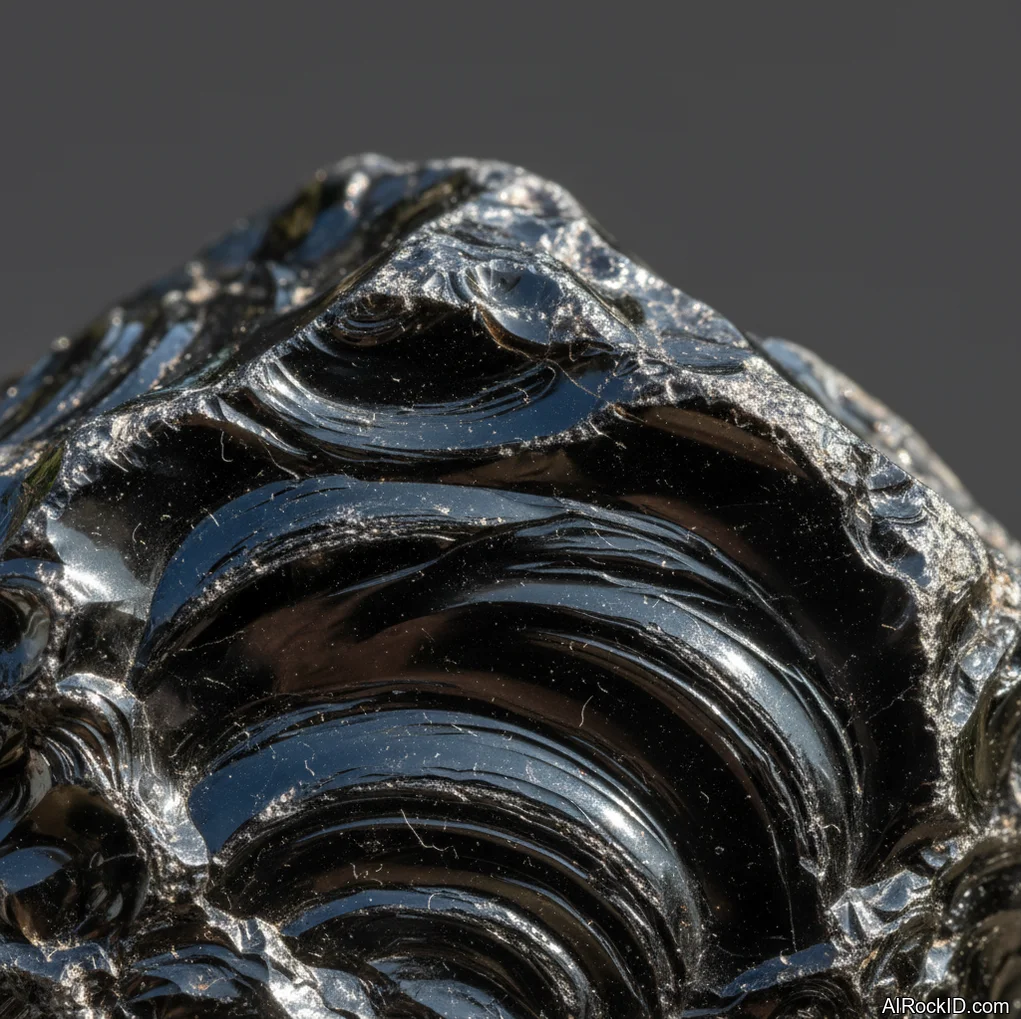
Hot, sticky, silica-rich magma just doesn’t move like basalt. It’s stubborn. Instead of pouring out in a smooth river, it either blows up violently or kind of slumps out as a thick dome, then it chills so fast the crystals don’t get much chance to grow, which is why you end up with that fine-grained groundmass. And if it cools even faster than that, you start drifting into volcanic-glass textures, plus you can get flow banding that honestly looks like somebody pulled warm taffy and left those stretched streaks behind.
Look closer at a lot of the “pretty” rhyolite and you’ll notice spherulites, those little radiating blobs of quartz and feldspar that pop up during cooling and devitrification. In a hand sample, they can read as dots, little eyes, or soft rings (the kind you only really notice once you tilt the rock in the light). But here’s the twist: some stuff sold in shops as rhyolite is actually rhyolitic tuff or welded ash flow with flattened pumice bits, so the patterns can be coming from how it erupted just as much as from the chemistry.
How to Identify Rhyolite
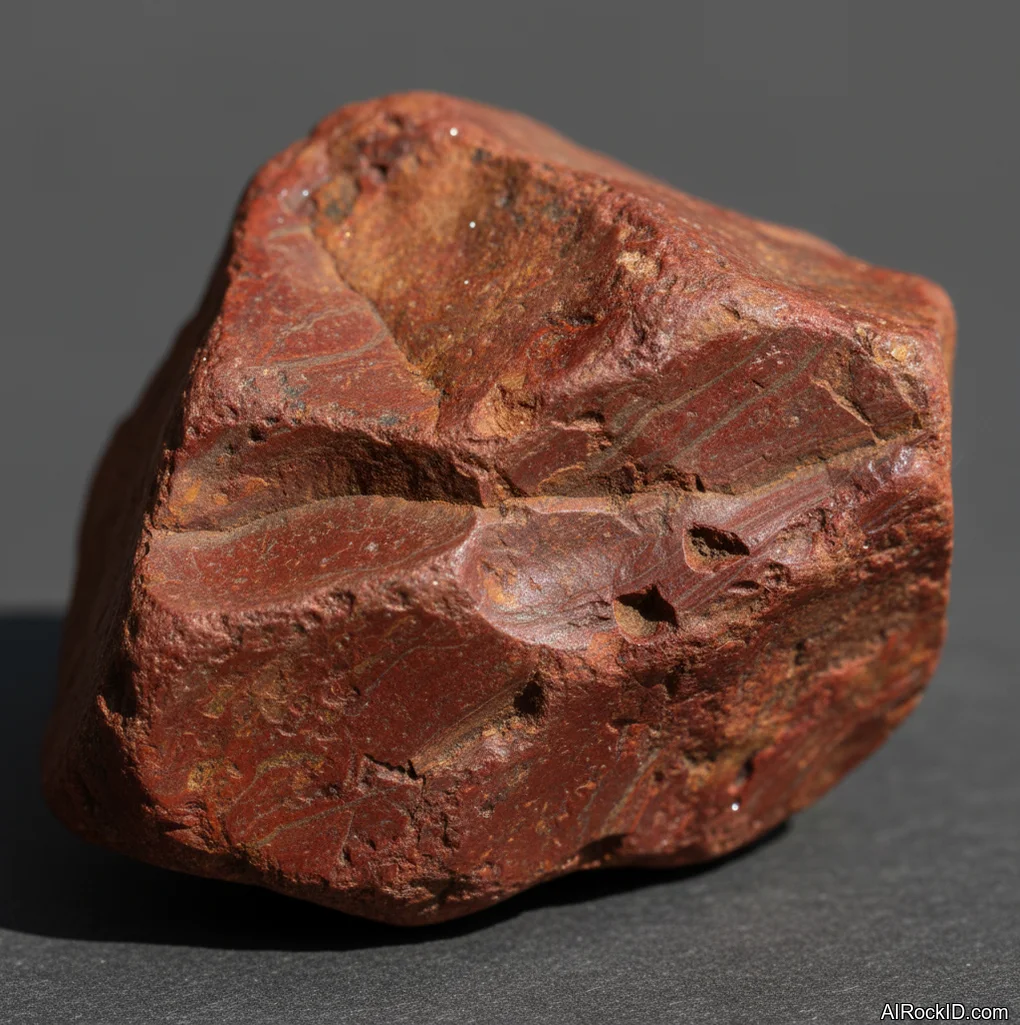
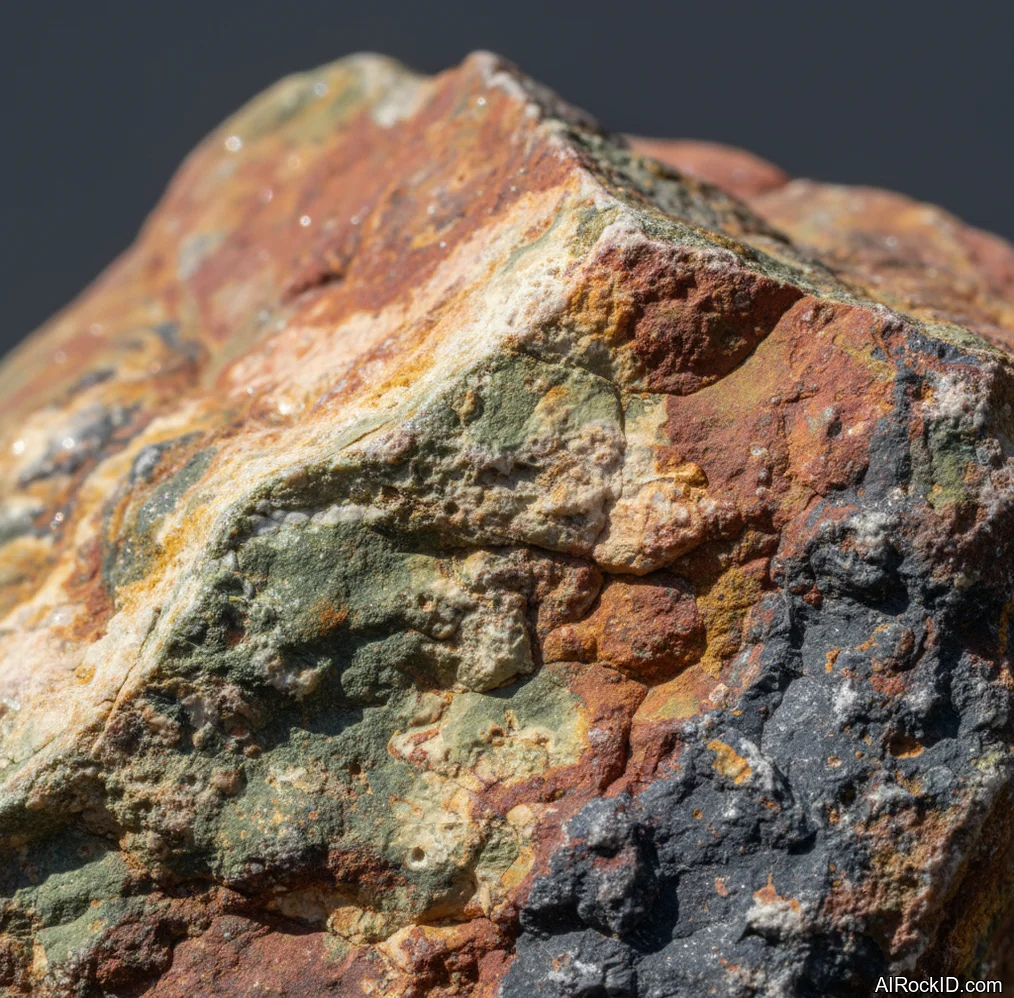
Color: Rhyolite commonly runs light gray, pink, tan, or buff, and it can carry green, cream, and black mottling when it has spherulites, iron staining, or mixed volcanic fragments. Patterns can be banded, spotted, or brecciated depending on how it cooled and fractured.
Luster: Most rhyolite has a dull to vitreous luster, with a glassier shine where it’s more silica-rich or takes a high polish.
Pick up a piece and tilt it under a strong light. If you see tiny sparkly points (quartz/feldspar phenocrysts) floating in a finer background, you’re in the right neighborhood. If you scratch it with a steel nail and it barely marks, that’s consistent with the silica content, but don’t expect it to behave exactly like a quartz crystal because it’s a mixed rock. The real test is the texture: flow banding, spherulites, and that “fine-grained but not waxy” feel are classic, while true jasper tends to look more uniform and microcrystalline.
Properties of Rhyolite
Physical Properties
| Crystal System | Amorphous |
| Hardness (Mohs) | 6-7 (Hard (6-7.5)) |
| Density | 2.4-2.7 g/cm3 |
| Luster | Dull |
| Diaphaneity | Opaque |
| Fracture | Conchoidal |
| Streak | white |
| Magnetism | Non-magnetic |
| Colors | light gray, pink, tan, cream, green, brown, black |
Chemical Properties
| Classification | Silicates |
| Formula | Variable (rock; commonly dominated by SiO2 with alkali feldspar and quartz) |
| Elements | Si, O, Al, K, Na, Ca, Fe, Mg |
| Common Impurities | Fe, Mn, Ti |
Optical Properties
| Refractive Index | 1.48-1.54 |
| Birefringence | None |
| Pleochroism | None |
| Optical Character | Isotropic |
Rhyolite Health & Safety
Rhyolite’s fine to handle with bare hands. But once you start cutting it, grinding it, or dry sanding it, you can kick up silica dust. Don’t breathe that stuff in. Any silica-rich rock can throw the same kind of dust into the air, so treat it like a real hazard.
Safety Tips
Use water when you’re cutting or sanding (it keeps the dust from getting airborne). And wear a properly fitted respirator rated for fine particulates, the kind that seals around your nose and cheeks instead of gapping when you move your jaw. When it’s time to clean up, don’t sweep, that just kicks everything back into the air. Use wet methods instead, like wiping with a damp rag or mopping.
Rhyolite Value & Price
Price Range
Rough/Tumbled: $3 - $25 per tumbled stone or small palm stone; $20 - $120 per polished slab or display piece
Cut/Polished: $1 - $8 per carat
Price usually comes down to a few very real, in-the-hand things: how crisp the pattern reads, how clean the polish actually looks under a hard light, and whether the stone’s a stable, solid chunk or that more porous tuff that can undercut and leave little pits once you try to polish it.
Durability
Moderate — Scratch resistance: Good, Toughness: Fair
It’s usually stable for normal handling, but some porous or fractured material can chip on edges and won’t take abuse like agate.
How to Care for Rhyolite
Use & Storage
Store it like you would jasper or quartz: separate from softer stones so it doesn’t scratch them, and pad the edges if it’s a slab. If the piece has natural fractures, don’t let it clack around in a bowl.
Cleaning
1) Rinse with lukewarm water to remove grit. 2) Wash with a drop of mild soap and a soft brush, especially in pits or vugs. 3) Rinse well and dry completely with a towel before putting it back on a shelf.
Cleanse & Charge
If you do energetic cleaning, smoke, sound, or a quick rinse and dry are simple options. I avoid long salt soaks because some rhyolite has tiny pores that hold residue.
Placement
A windowsill is fine for display, but I like a spot with side light so the banding and spherulites pop. On a desk, it’s a good “fidget stone” since it stays cool in the palm for a while.
Caution
Don’t breathe in the dust when you’re cutting or sanding. It gets everywhere, sticks to your nose, and you’ll taste it later. So use wet cutting or wet sanding, and wear proper respiratory protection. And skip the harsh acids and gritty abrasive cleaners. They can knock the shine down fast, and they’ll make any softer spots stand out like a sore thumb.
Works Well With
Rhyolite Meaning & Healing Properties
In the crystal scene, people usually frame rhyolite as this steady, practical stone. And I get it. It really does feel like “ground” under your hand, especially that mottled green-and-tan stuff sold as rainforest rhyolite. After you’ve handled a bunch of super glossy, flashy pieces that practically glare under a lamp, rhyolite is a nice change of pace. It’s quiet.
Grab a palm stone and you can literally feel the texture shifts even through the polish. One patch feels glassier, another goes a little matte, and your thumb bumps into those tiny orbs without you even looking. That hands-on, sensory thing is a big reason people reach for it when they’re meditating or trying to focus. You’re not floating off somewhere. You’re paying attention to what’s right there.
But look, I’m going to be blunt: sellers slap the word “jasper” on rhyolite all the time, and then the metaphysical claims slide right into the usual jasper script. Rhyolite can overlap in vibe if that’s your thing, sure, but it’s not automatically the same material. And none of this is medical. If you’re stressed, anxious, or not sleeping, crystals can feel comforting (kind of like a worry stone), but they’re not a treatment plan.
Identify Any Crystal Instantly
Snap a photo and get properties, value, care instructions, and healing meanings in seconds.