Shattuckite
What Is Shattuckite?
Shattuckite is a hydrated copper silicate mineral, and it shows up in that blue to blue-green range in the oxidized zones of copper deposits.
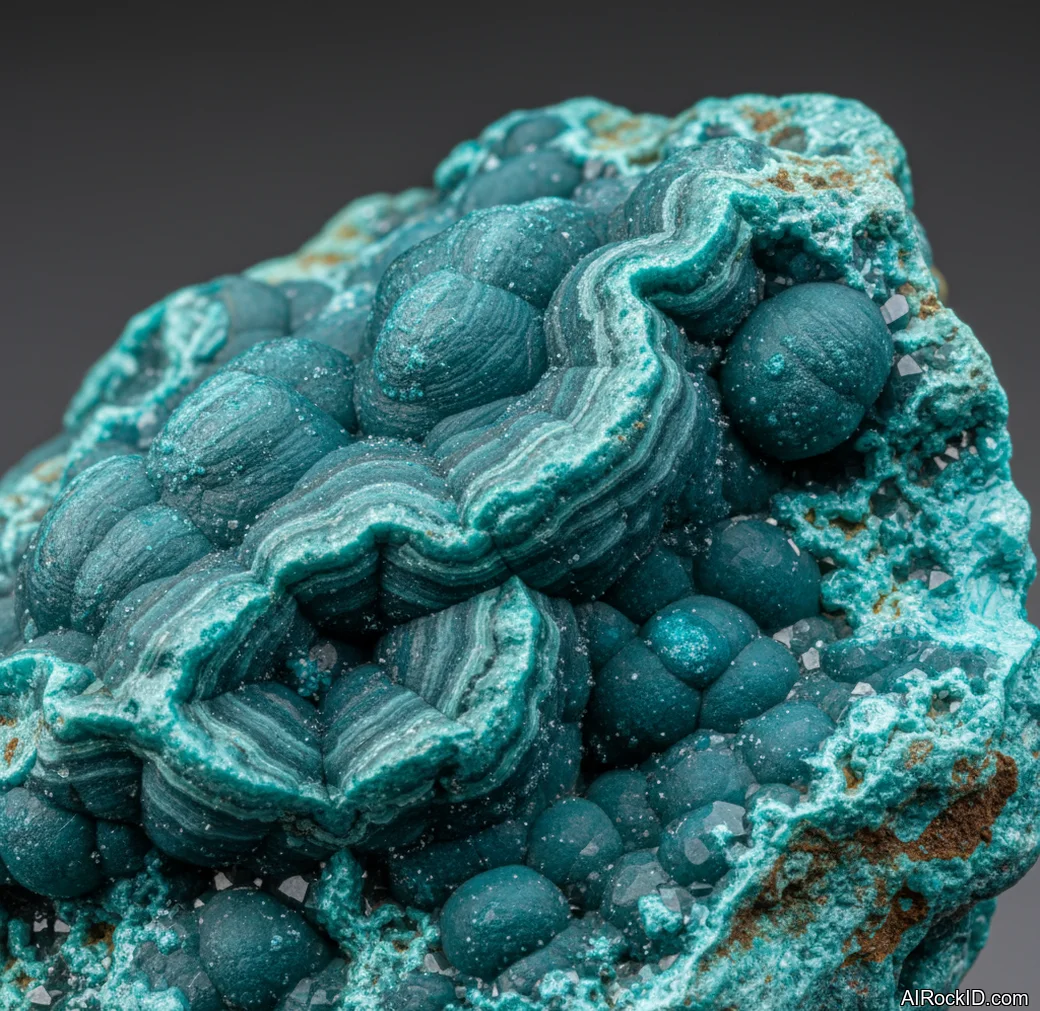
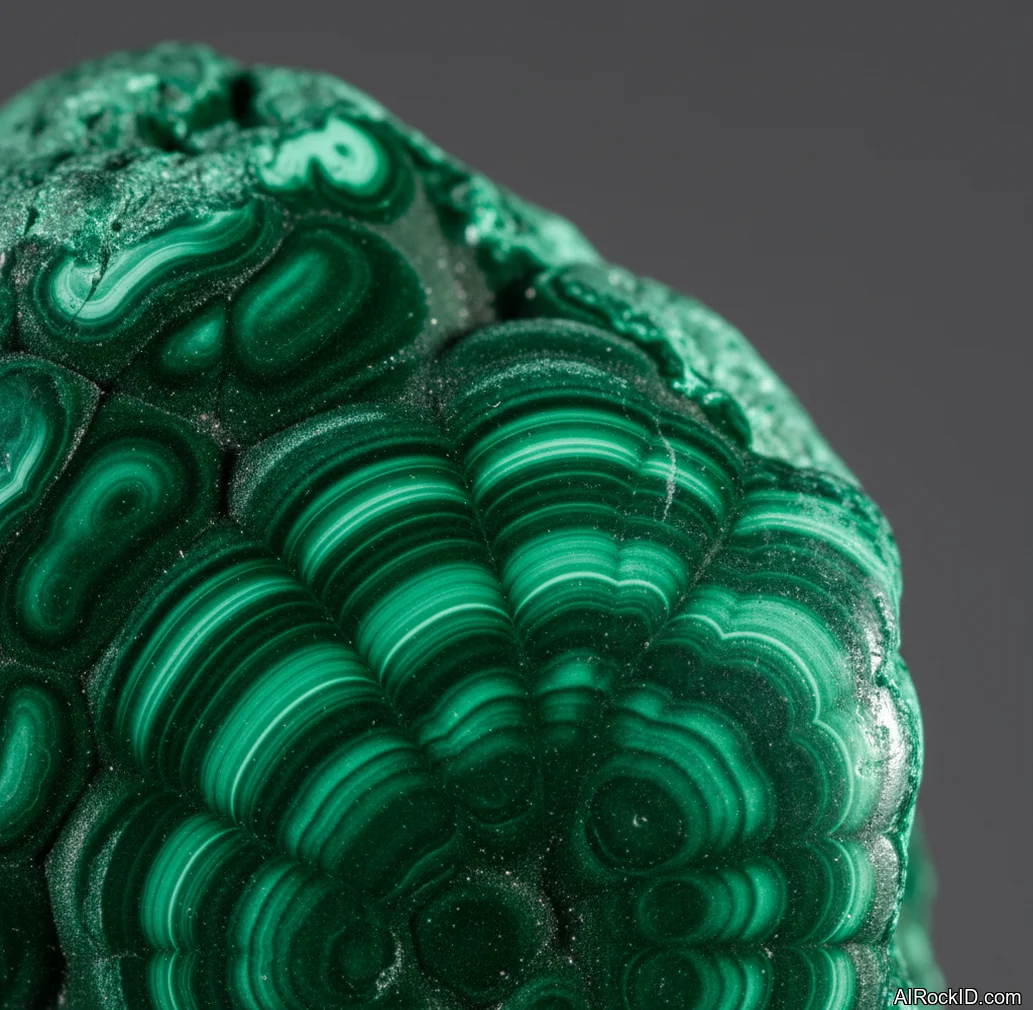
Grab a decent chunk in your hand and you’ll feel it right away: it has that heavy, gritty “real mineral” vibe, not a slick, glassy crystal feel. It’s usually massive or fibrous, not the kind of thing with pretty terminated points. The best pieces look like someone spilled denim-blue paint and it just soaked into the rock, and then you’ll spot little swirly transitions where it fades into chrysocolla or suddenly flashes green where malachite is mixed in.
People confuse it with chrysocolla constantly, and yeah, that makes sense. But shattuckite usually reads sharper and more inky, especially when it’s sitting in quartz. Tip a polished face under a bright light and shattuckite often holds onto that saturated blue instead of washing out into the softer, kind of “gel” blue that a lot of chrysocolla gives you.
Origin & History
Arizona is where the name story kicks off. Shattuckite was first described in 1915 by Waldemar T. Schaller, who was studying material from the Shattuck Mine in Bisbee, Arizona. The mine had the name first, and the mineral got tagged after it.
And if you’ve ever handled pieces from old Bisbee copper country, you know it’s a parade of blue and green copper minerals, sometimes in the same crumbly seam with that chalky dust that gets on your fingertips. So shattuckite getting pinned down as its own species was a real moment for collectors and for mineral ID. A lot of the early specimens were mixed material (you can see it where colors grade into each other), and that confusion still hangs around at shows today.
Where Is Shattuckite Found?
Most shattuckite comes from oxidized copper deposits, with Namibia and the southwestern USA being the names you’ll hear most often at mineral shows.
Formation
Raw material out of copper districts usually grows shattuckite pretty late, after the main sulfides have already started to fall apart. You’re basically staring at the weathering zone. Copper gets picked up and moved along by oxygenated groundwater, silica’s hanging around, and if the chemistry lines up just right you wind up with these hydrated copper silicates.
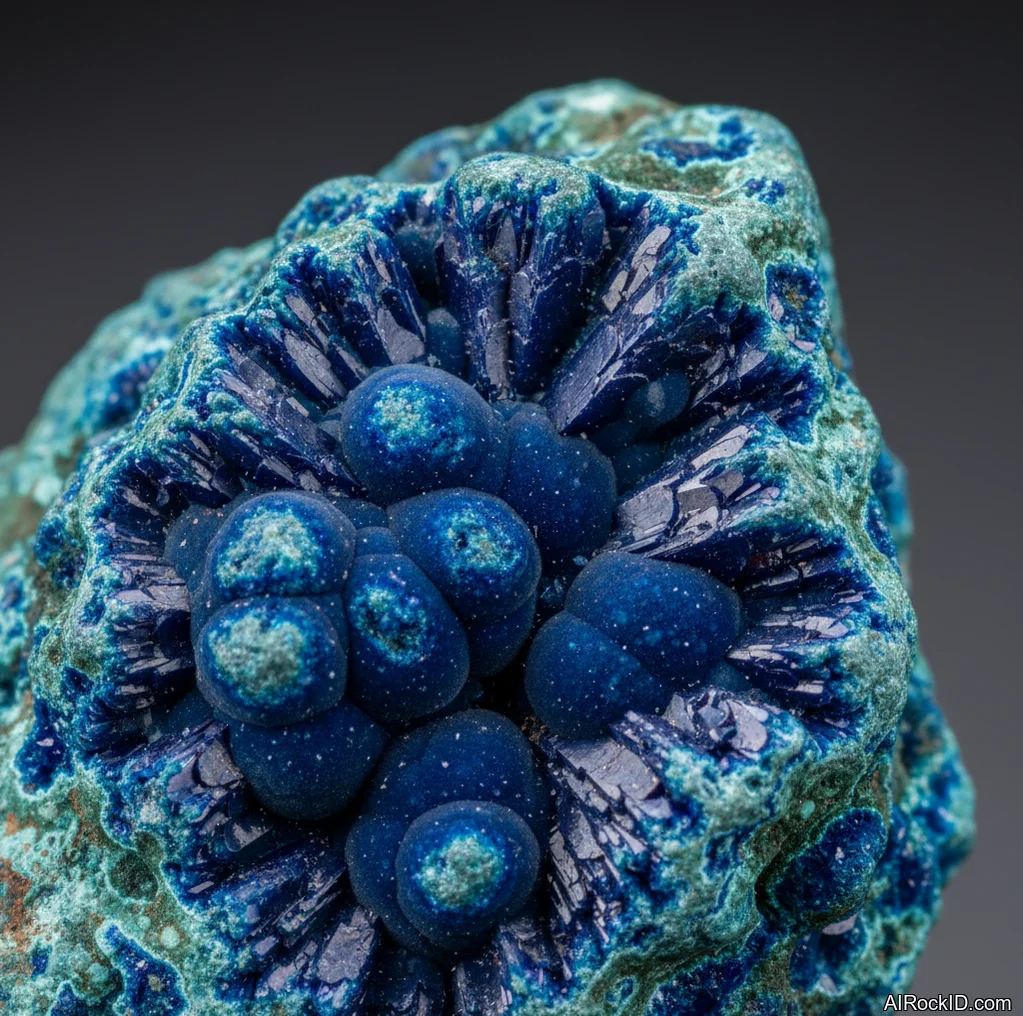
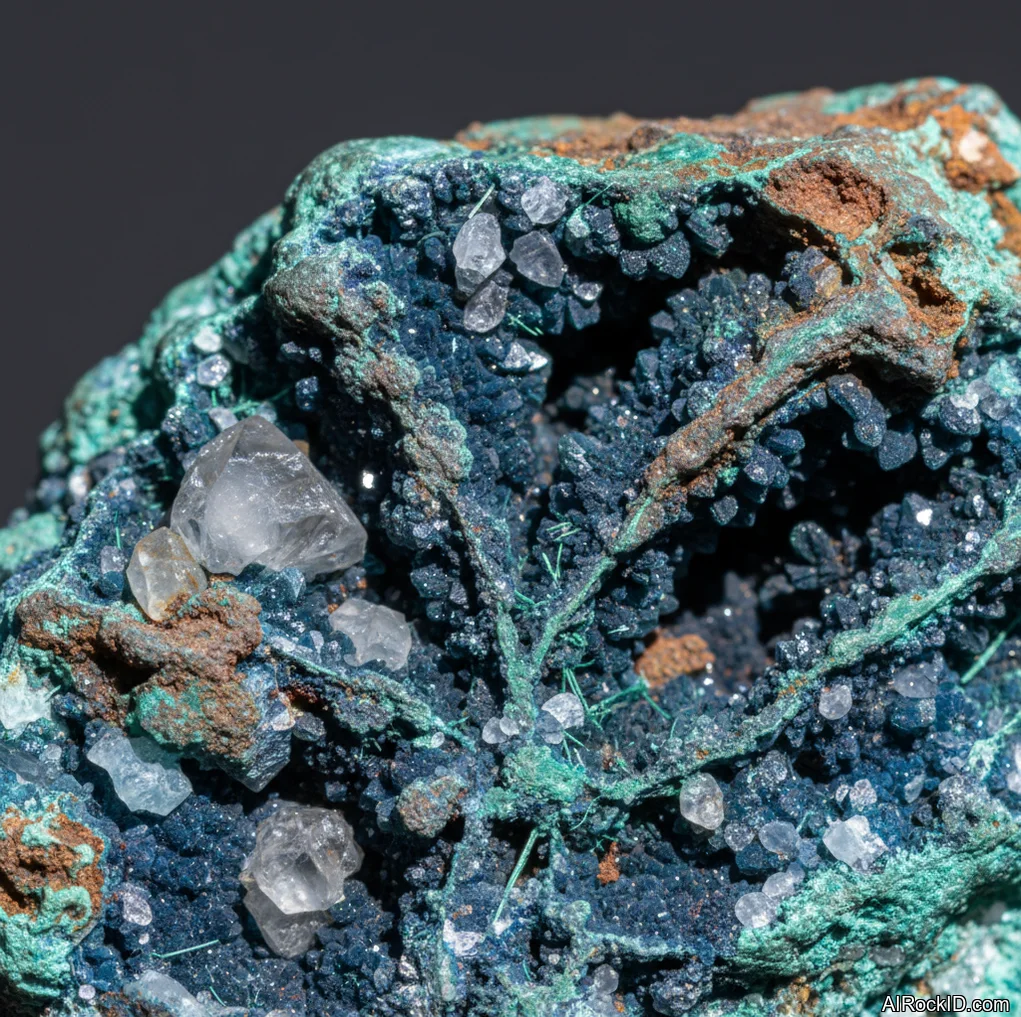
Look, check what it’s sitting against and the whole sequence starts to make sense. Shattuckite most often turns up with quartz, malachite, chrysocolla, azurite, and sometimes tenorite. In some pockets it’s all mashed together in a tight intergrowth (the kind where you can’t really tease one mineral off cleanly with a fingernail), which is why dealers throw around tags like “shattuckite chrysocolla” or “shattuckite in quartz.” But those labels are a mixed bag. They can be dead accurate, or they can be pure marketing, depending on who’s selling it.
How to Identify Shattuckite
Color: Typically deep blue, blue-green, or teal, often with lighter streaking or patchy transitions into green malachite or softer blue chrysocolla.
Luster: Vitreous to silky on fresh or fibrous surfaces, often waxy when massive and polished.
Pick up a few pieces side by side if you can. Shattuckite usually reads as a stronger, inkier blue than chrysocolla, especially on a clean polished face. If you scratch it with a copper coin, many pieces won’t mark easily, but a steel nail can bite it, which fits that Mohs 3.5 to 4 feel. And if you’ve handled a lot of dyed “blue quartz,” the real test is temperature and texture: real shattuckite-in-matrix stays cool and has that slightly grabby, mineral feel instead of slick glass.
Properties of Shattuckite
Physical Properties
| Crystal System | Orthorhombic |
| Hardness (Mohs) | 3.5-4 (Soft (2-4)) |
| Density | 3.80-4.10 g/cm3 |
| Luster | Vitreous |
| Diaphaneity | Opaque |
| Fracture | Uneven |
| Streak | light blue |
| Magnetism | Non-magnetic |
| Colors | deep blue, blue-green, teal, cyan, greenish blue |
Chemical Properties
| Classification | Silicates (phyllosilicate) |
| Formula | Cu5(SiO3)4(OH)2 |
| Elements | Cu, Si, O, H |
| Common Impurities | Fe, Mn, Al |
Optical Properties
| Refractive Index | 1.760-1.800 |
| Birefringence | 0.030 |
| Pleochroism | Strong |
| Optical Character | Biaxial |
Shattuckite Health & Safety
It’s fine to handle and put on display. But don’t grind it, saw it, or sand it while it’s dry, because that kicks up copper-bearing dust, and that’s a hazard you can easily avoid.
Safety Tips
If you need to cut or shape it, stick to wet methods, make sure you’ve got good ventilation, and wear a proper respirator rated for fine particulates. And after you’re done working rough, wash your hands.
Shattuckite Value & Price
Price Range
Rough/Tumbled: $15 - $250 per piece
Cut/Polished: $10 - $60 per carat
Price jumps around depending on how saturated the color is, how much quartz is actually in the piece, and if it’s a clean, solid blue or that mixed copper-silicate breccia look. Big polished slabs with strong, consistent patterning cost more (the kind that feels glassy-smooth under your fingertips), and high-grade “in quartz” cab material goes for more too. Crumbly rough? That’s the cheaper end of the pile.
Durability
Nondurable — Scratch resistance: Fair, Toughness: Fair
It’s stable on a shelf, but the softer copper-silicate areas can chip and bruise if it rattles around with harder stones.
How to Care for Shattuckite
Use & Storage
Keep it in a padded box or a pocketed display tray so it doesn’t get knocked by quartz, topaz, or anything else harder. I wrap rough pieces because the edges like to flake if they bang together.
Cleaning
1) Rinse quickly with lukewarm water and a drop of mild soap. 2) Use a soft toothbrush only on the quartz or sturdy matrix, not on crumbly blue areas. 3) Pat dry and let it air dry fully before storing.
Cleanse & Charge
For a metaphysical reset, stick to gentle options like smoke, sound, or resting it on clean quartz. Avoid salt piles if the specimen has porous areas that can trap residue.
Placement
A stable shelf is best, away from the edge where it can take a fall. If it’s a polished slab, I like it upright so the blue doesn’t get hidden by glare.
Caution
Skip harsh cleaners. Don’t toss it in an ultrasonic machine, and don’t hit it with steam either. And if there’s any soft chrysocolla mixed into the piece, handle it like it’s softer than the Mohs number makes it sound. (Because in real life, it kind of is.)
Works Well With
Shattuckite Meaning & Healing Properties
Compared to a lot of blue stones, shattuckite just hits different in your hand. It has this “electric ink” look, like somebody dragged a fountain pen through cobalt paint. Hard to describe, but you know it when you see it. When I’m sorting trays after a show, under those awful buzzing fluorescent lights that make everything look washed out, shattuckite still looks loud. I’ll grab it, set it down, then grab it again.
In crystal culture, people tie it to clear speech, honesty, and that slightly itchy kind of self-audit where you’re forced to admit what you actually think. And look, I’m going to be blunt: it’s not medicine. If you’re dealing with anxiety, sleep problems, or anything physical, go to the real-world tools first. I treat stones like shattuckite as a focus object. A reminder you can literally hold in your palm (warm from your hand after a minute, slick if it’s well-polished).
The headache with shattuckite in the metaphysical market is mislabeling. A lot of “shattuckite” out there is really chrysocolla-heavy material, or it’s some mixed copper-silicate rock that photographs great but doesn’t actually match the name. If you’re buying for symbolism, maybe that doesn’t matter. But if you’re buying because you want actual shattuckite, yeah, it matters. And if you do meditate with it, I’d rather use a polished palm stone than sleep with a rough piece under a pillow, because those rough edges can be weirdly sharp. Also crumbly. Nobody wants to wake up with little blue grit in their sheets, right?
Identify Any Crystal Instantly
Snap a photo and get properties, value, care instructions, and healing meanings in seconds.