Strawberry Onyx
What Is Strawberry Onyx?
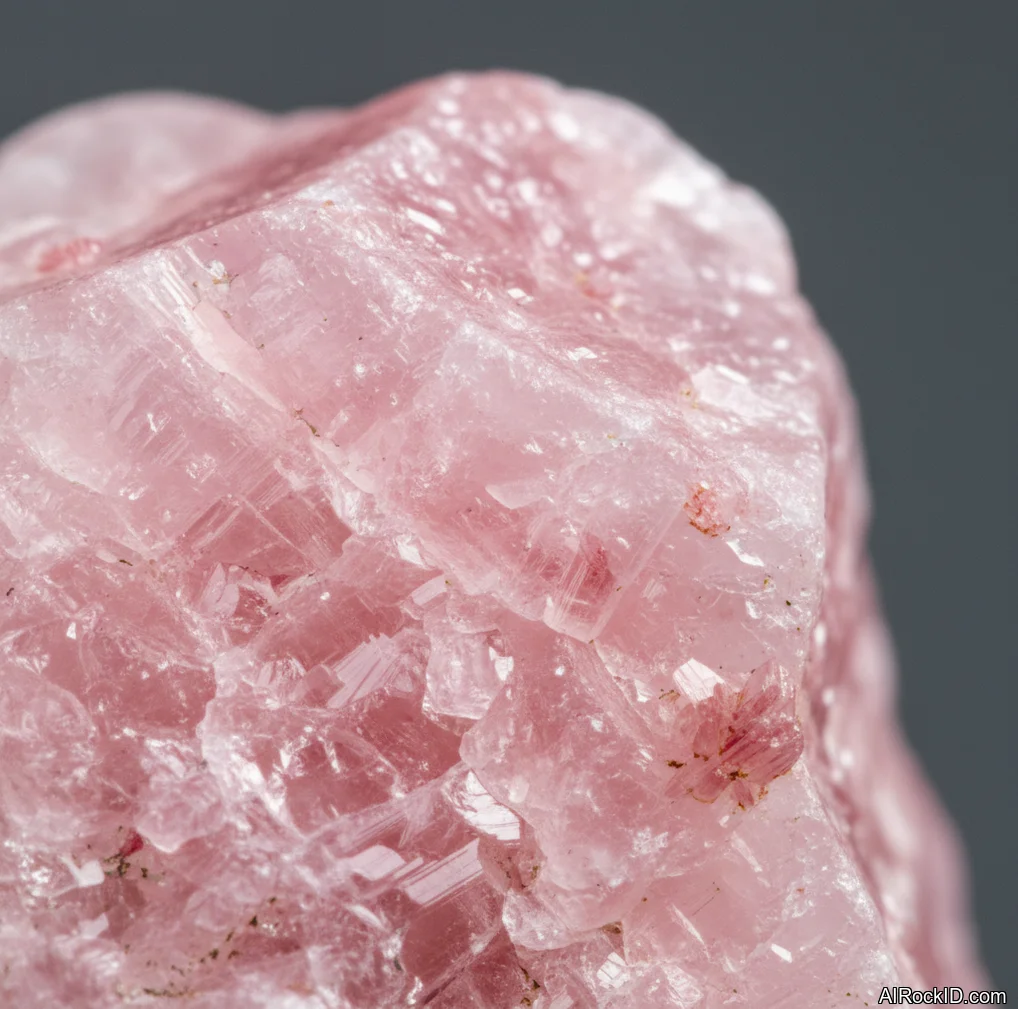
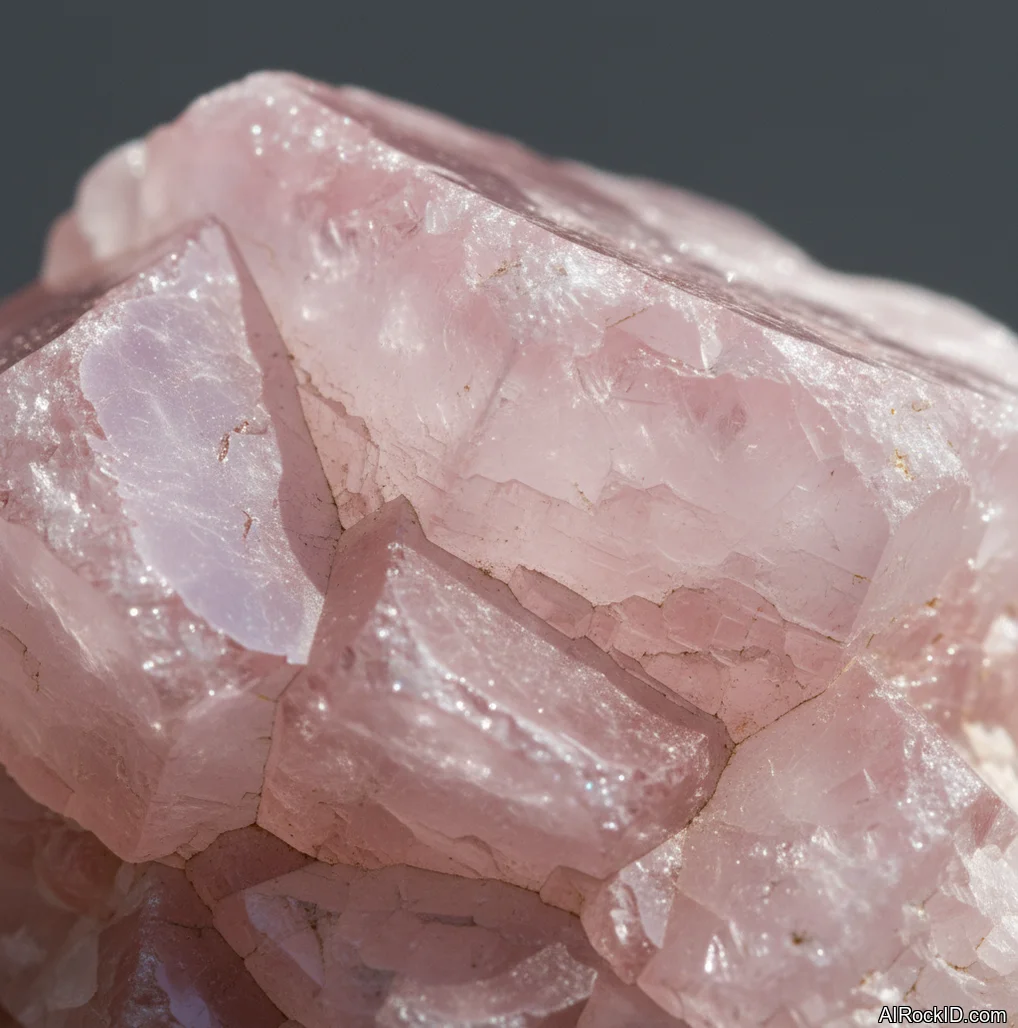
Strawberry Onyx is a pink-to-red, banded variety of calcite (calcium carbonate) that gets sold all over the gem trade as “onyx.”
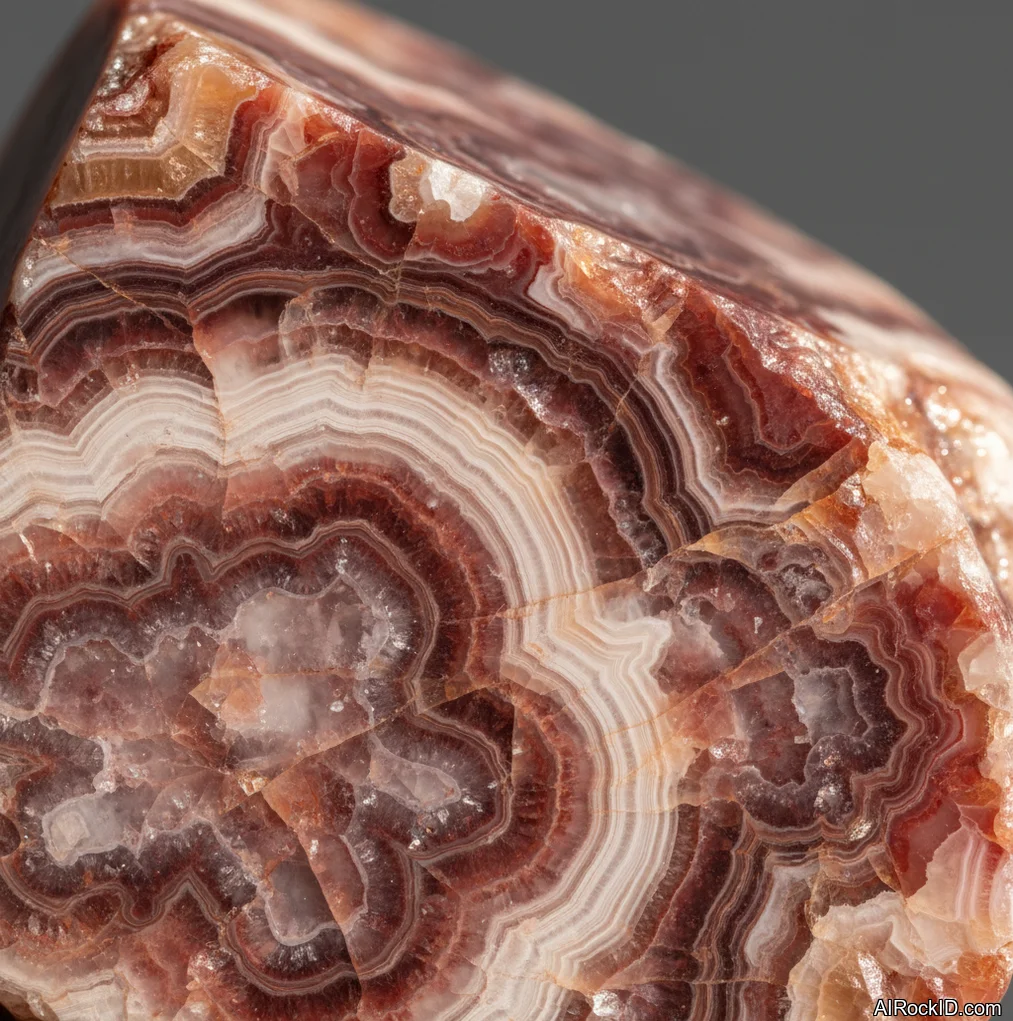
Pick up a palm stone and you’ll clock it fast. It’s softer, kind of chalky compared to agate-onyx, and it warms up in your hand way quicker. And the color’s almost never just one flat pink. You’ll see creamy bands, then salmon bands, then those strawberry streaks that look like somebody pulled a paintbrush through wet paint.
People glance at it and expect it to act like real onyx, the chalcedony kind. But it doesn’t. Strawberry Onyx can take a really pretty polish, sure, but it’ll scratch if you drop it in a pocket with your keys. I’ve also watched the banding go from subtle to loud just by tipping it under a lamp. Thing is, the calcite layers can glow a bit from inside when the piece is thin enough.
Origin & History
“Onyx” is an old word, and in mineral-collector speak it usually means banded chalcedony. But the market muddies it up. For well over a century, people have been selling banded calcite and aragonite as “onyx marble” or “Mexican onyx,” mostly because it’s banded to the eye and it carves like butter (you can feel how soft it is the second a tool bites in).
“Strawberry Onyx” is a newer shop label, not a formally described mineral variety. Dealers started using it for that pink to red banded calcite that looks like strawberry swirl. And you’ll hear the name at gem shows way more than you’ll ever find it in older mineral books, which is usually the giveaway: it’s trade language, not a strict geological term.
Where Is Strawberry Onyx Found?
Most Strawberry Onyx on the retail market is banded calcite quarried as decorative stone in Mexico and Pakistan, with smaller amounts from the USA and other carbonate deposits worldwide.
Formation
Look at the banding for a second and it clicks. This stuff forms when calcium carbonate drops out of water, one thin layer at a time, usually in caves, in fractures, or around spring-fed flows where the water chemistry won’t sit still.
One week the water’s hauling a bit more iron, so you get those warmer reds. Then things run cleaner for a while and the next layers come in milky white. Simple as that.
Compared to agate, it forms fast. No need for deep geologic time or silica-rich fluids. You just need carbonate-rich water and an open spot where it can build up.
And since it’s calcite, not quartz, you’ll often catch a faint internal “glow” if you put a flashlight right up to a thin edge (you can actually see the light bloom along the banding). But there’s a tradeoff. Calcite is easygoing when you’re carving or polishing it, and pretty unforgiving if you toss it in a pocket. Scratches happen. Fast.
How to Identify Strawberry Onyx
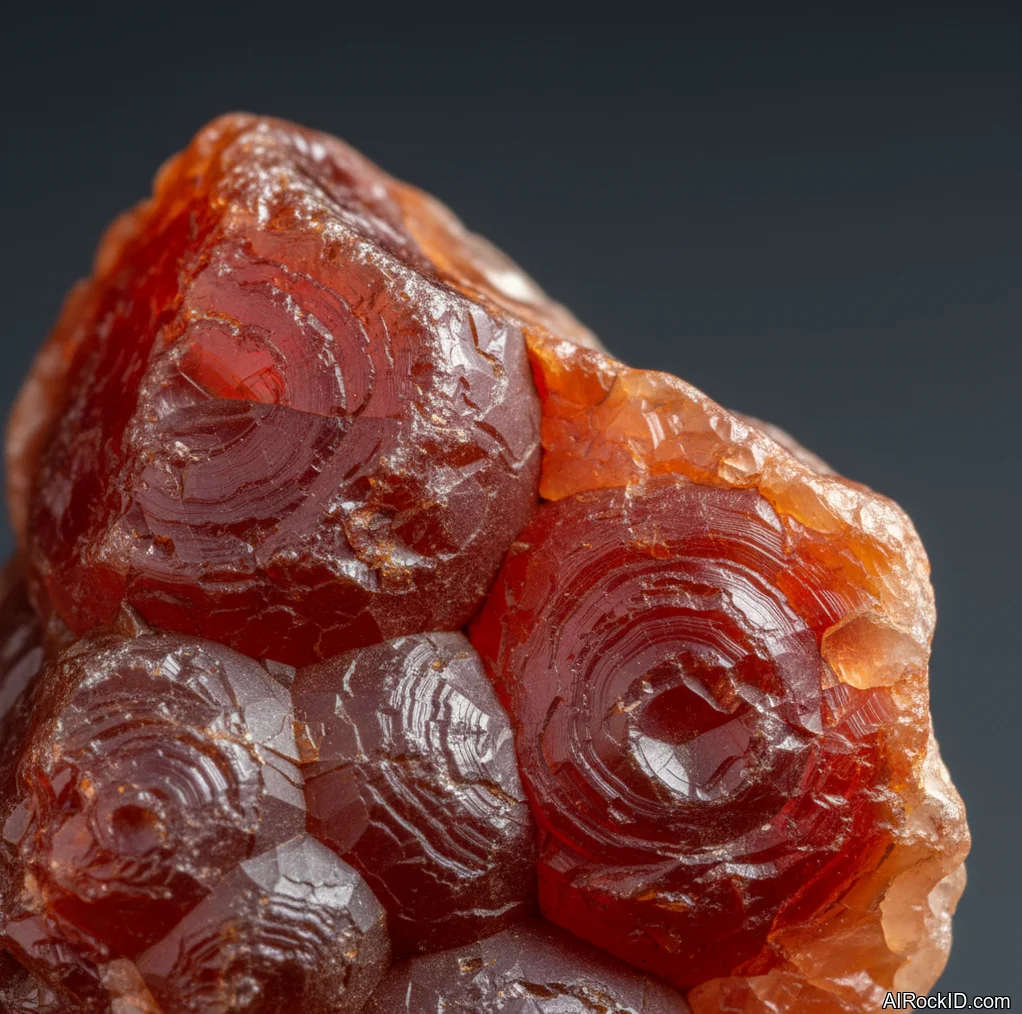
Color: Usually cream to pink with salmon, rose, and red banding; some pieces show honey or tan zones mixed in. The pattern is commonly wavy or cloud-banded rather than crisp, parallel stripes.
Luster: Polished pieces range from waxy to vitreous, with a softer shine than quartz onyx.
If you scratch it with a copper coin, it’ll often leave a mark, and a steel nail will bite in easily. That’s the quickest reality check because true quartz onyx won’t care about a coin. The real test is a tiny drop of weak acid on an inconspicuous spot; calcite will fizz, chalcedony won’t. And in hand, Strawberry Onyx feels a touch “soapy” on a fresh cut face, while quartz onyx feels glassier and stays cooler longer.
Properties of Strawberry Onyx
Physical Properties
| Crystal System | Trigonal |
| Hardness (Mohs) | 3 (Soft (2-4)) |
| Density | 2.71 g/cm3 |
| Luster | Vitreous |
| Diaphaneity | Translucent |
| Fracture | Conchoidal |
| Streak | White |
| Magnetism | Non-magnetic |
| Colors | Pink, Red, Cream, White, Tan, Honey |
Chemical Properties
| Classification | Carbonates |
| Formula | CaCO3 |
| Elements | Ca, C, O |
| Common Impurities | Fe, Mn |
Optical Properties
| Refractive Index | 1.486-1.658 |
| Birefringence | 0.172 |
| Pleochroism | None |
| Optical Character | Uniaxial |
Strawberry Onyx Health & Safety
It’s safe to handle and put on display. The only real “risk” is cosmetic: scratches, or that cloudy, frosted-looking acid etching you get when the finish gets nicked. So don’t let the polished surfaces touch vinegar, citrus-based cleaners, or harsh bathroom chemicals (the stuff that stings your nose).
Safety Tips
If you’re going to cut or sand it, put on a dust mask and keep things wet with a little water so the dust doesn’t go everywhere. That fine carbonate dust gets into your nose and throat and it’ll bug you, even though it isn’t toxic.
Strawberry Onyx Value & Price
Price Range
Rough/Tumbled: $8 - $60 per piece
Cut/Polished: $2 - $12 per carat
Price swings mostly come down to color contrast, clean banding, and how sharp the polish looks when you tilt it under a light. Big, thick carvings with only a few fractures usually cost more, since calcite has a bad habit of cracking while you’re cutting it.
Durability
Nondurable — Scratch resistance: Poor, Toughness: Fair
It’s stable in normal indoor conditions, but it scratches easily and can etch or dull if acids or harsh cleaners touch the surface.
How to Care for Strawberry Onyx
Use & Storage
Store it in a soft pouch or a separate compartment so harder stones don’t haze the polish. If you stack bowls or towers, put felt between them.
Cleaning
1) Rinse quickly with lukewarm water and a drop of mild soap. 2) Wipe with a soft microfiber cloth, no scrubbing pads. 3) Dry right away and don’t leave it soaking.
Cleanse & Charge
If you do energetic cleansing, stick to smoke, sound, or a quick pass under running water, then dry it. Avoid salt soaks because they can dull the finish over time.
Placement
I keep Strawberry Onyx on a shelf, not a windowsill, and definitely not where it’ll get bumped. A little desk dish is fine if it’s not sharing space with quartz points.
Caution
Skip acids, vinegar-type cleaners, plus ultrasonic or steam cleaners. And don’t just toss it loose in a pocket or bag next to keys or coins, because Mohs 3 calcite gets scratched ridiculously fast (you’ll see those little scuff lines right away).
Works Well With
Strawberry Onyx Meaning & Healing Properties
In metaphysical shops, Strawberry Onyx usually ends up in the “soft, heart-forward” bin. People grab it when they want comfort that still feels anchored, not spacey. And yeah, I get it. Those pink bands look gentle, and when you actually hold one, it’s got that steady, heavier-than-you-expect feel in your palm.
On a rough day, a polished palm stone does one thing really well: it gives your hands something cool, smooth, and solid to lock onto. Not medical treatment. Just a real sensory reset. Thing is, calcite pieces can get dinged up fast. One drop on tile, a rub against keys, even sliding it around in a bag, and you’ll start seeing little scuffs and scratches (and once the surface loses that slick feel, it’s weirdly less soothing). So I usually tell people to treat it like a “home stone,” not an everyday carry.
If you’re into setting intentions or doing small rituals, Strawberry Onyx often gets used for easing emotional static, softening self-talk, and nudging you back toward a more patient mood. But keep the claims realistic, okay? It’s a pretty chunk of banded calcite, not a replacement for therapy, sleep, or actual support. And honestly, the best “magic” is the routine: sit down, breathe, hold it, and quit scrolling for five minutes. Simple. Effective.
Identify Any Crystal Instantly
Snap a photo and get properties, value, care instructions, and healing meanings in seconds.