Titanium Quartz
What Is Titanium Quartz?
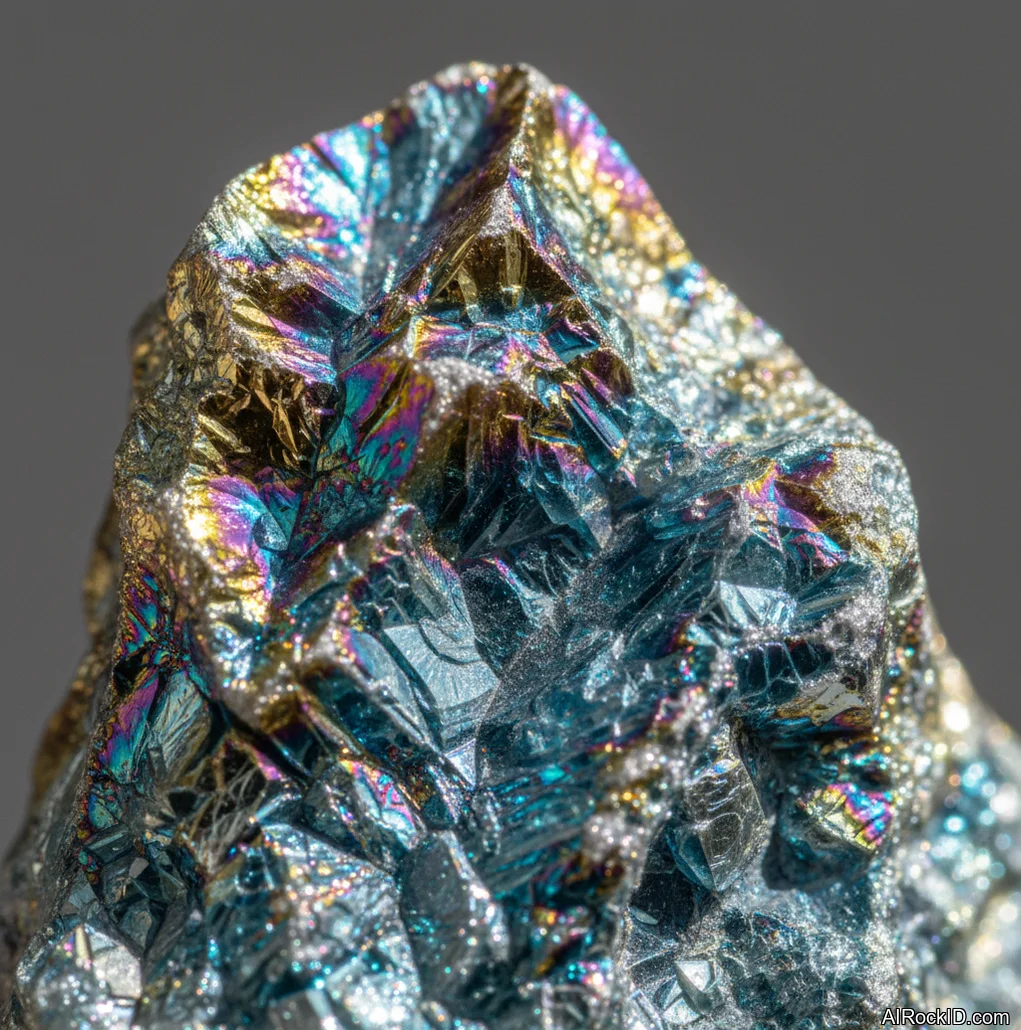
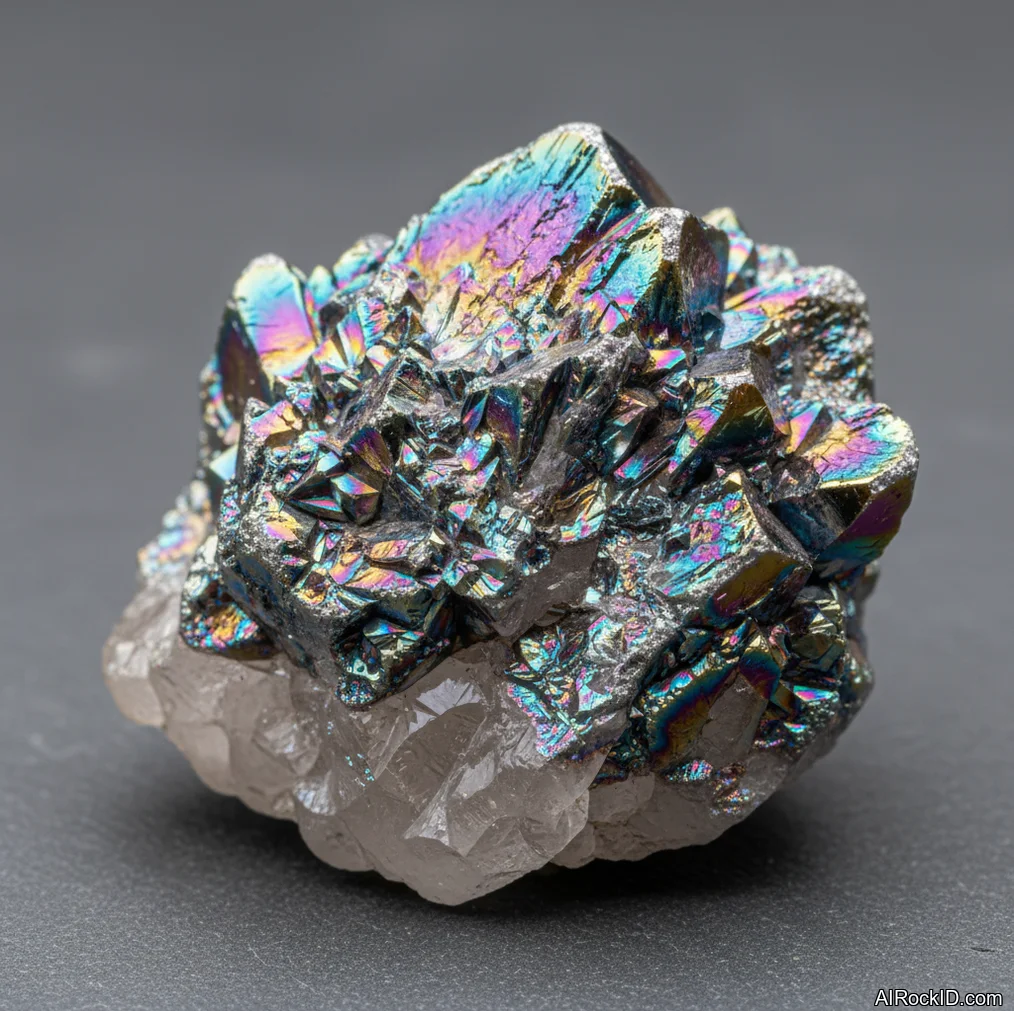
Titanium Quartz is natural quartz that’s been vacuum-coated with a thin layer of titanium (and related oxides), and that’s what gives it that iridescent, metallic rainbow sheen on the outside.
Grab a point in your hand and you notice the temperature first. It stays cool like any quartz. But the outside has this slick, almost glassy-metal “skin” that grabs light the second you tilt it. Under harsh shop LED strips it can look almost electric. Then you carry it over to a window and, weirdly, the colors calm down into softer greens and pinks. The color isn’t sitting inside the crystal the way amethyst purple is. It’s on the surface.
Thing is, the quartz underneath is still just quartz. Plain old quartz. So you’re knowingly buying a treated piece, kind of like picking a plated ring. That’s fine. But it does change what you should expect around price, durability, and what “natural” is supposed to mean in a listing.
Origin & History
Titanium Quartz isn’t some brand-new mineral species with a neat “discovered on this date” moment the way a new copper mineral gets written up in a journal. It’s a trade name that came out of late 20th-century coating tech: vapor deposition in a vacuum chamber, where a thin metal film bonds right onto the quartz surface (the kind of setup with a sealed chamber, a vacuum pump humming away, and that slightly warm, ozone-ish smell when the cycle finishes).
The name’s pretty literal. “Titanium” is the coating material, and “quartz” is the host crystal. And you’ll also see sellers call it “aura quartz,” which is basically the umbrella term for coated quartz, but the titanium ones are the versions with that strong rainbow, oily-metal look.
Where Is Titanium Quartz Found?
The quartz itself comes from common quartz-producing regions (Brazil is the big one). The titanium coating is applied in a lab or workshop, not formed at the mine.
Formation
Quartz starts out the honest way: geology. It grows when silica rich fluids move through cracks and little pockets in rock, then cool down and drop quartz in veins. A lot of those crystals form in pegmatites or in hydrothermal settings. Give them time and slow growth, and you get those clean, sharp points collectors love.
But titanium quartz? That’s made, not mined. People take cleaned quartz points, load them into a vacuum chamber, and lay down a super thin titanium based film right on the surface. That microscopic coating is what kicks off the rainbow interference colors you see when you tilt it under a light.
And you can usually catch the “human-made” part if you look close. In recessed spots, or around little dings and edge chips, the coating can end up thinner, so the color breaks up, goes dull, or turns patchy (kind of like it didn’t quite reach into the tight spots).
How to Identify Titanium Quartz
Color: It ranges from silvery-gold to full rainbow iridescence, usually concentrated on the outer faces while the interior stays clear or milky. Colors shift with viewing angle like an oil slick on water.
Luster: Vitreous quartz luster underneath with an added metallic, mirrorlike sheen on the coated faces.
Look closely at a chipped edge or the base: you’ll often see plain quartz where the coating didn’t reach or where it wore off. The real test is a loupe and a light, because you can see the coating sitting on the surface and pooling a little in tiny growth lines. And if you rub a questionable piece with your thumb, cheap coatings sometimes feel slightly tacky or warm fast, while a good titanium coat feels hard and stays cool like glass.
Properties of Titanium Quartz
Physical Properties
| Crystal System | Trigonal |
| Hardness (Mohs) | 7 (Hard (6-7.5)) |
| Density | 2.65 g/cm3 |
| Luster | Vitreous |
| Diaphaneity | Transparent to translucent |
| Fracture | Conchoidal |
| Streak | White |
| Magnetism | Non-magnetic |
| Colors | clear, white, silver, gold, blue, purple, green, rainbow iridescent |
Chemical Properties
| Classification | Silicates |
| Formula | SiO2 (quartz) + Ti coating (surface treatment) |
| Elements | Si, O, Ti |
| Common Impurities | Fe, Al, Li |
Optical Properties
| Refractive Index | 1.544-1.553 |
| Birefringence | 0.009 |
| Pleochroism | None |
| Optical Character | Uniaxial |
Titanium Quartz Health & Safety
Normal handling is pretty low risk. But don’t grind it or sand it, because that’s when you can kick up that super-fine quartz dust, and breathing it in is the real hazard.
Safety Tips
If you’re cutting or polishing quartz, do it wet and wear a respirator that’s actually rated for silica dust. And when you’re done, wipe up the slurry while it’s still damp, because once that gray paste dries into crusty powder on the bench or floor, you’ll kick it up just walking around.
Titanium Quartz Value & Price
Price Range
Rough/Tumbled: $10 - $150 per piece
Cut/Polished: $5 - $30 per carat
Price jumps around depending on the crystal’s shape and the finish. Clean, terminated points and those clustered “cathedral” chunks usually run higher than a chipped single you can feel snagging on your fingertip. And if the coating’s thick and even with no bare spots peeking through, you’ll pay more. But at the end of the day, it’s still treated quartz.
Durability
Durable — Scratch resistance: Excellent, Toughness: Good
Quartz holds up well in daily handling, but the titanium coating can scratch, scuff, or wear on sharp edges if it rubs against harder items.
How to Care for Titanium Quartz
Use & Storage
Keep it in a soft pouch or separate compartment so the coating doesn’t get rubbed by other stones. I’ve watched points in a mixed bowl get that dull “road rash” on the edges in a couple months.
Cleaning
1) Rinse quickly with lukewarm water and a drop of mild soap. 2) Use a soft toothbrush for crevices, lightly, no scrubbing on sharp ridges. 3) Rinse and pat dry with a microfiber cloth.
Cleanse & Charge
Smoke cleansing, sound, or a quick sit on a selenite plate are common choices; avoid abrasive salt bowls that can scuff the coating. If you use moonlight, bring it back inside after, since outdoor dew can leave spots.
Placement
Set it where it can catch angled light, like a shelf near a lamp, because straight-on light can look flat. But don’t let it grind against ceramics or other points on a windowsill.
Caution
Don’t use ultrasonic or steam cleaners. And skip harsh stuff like bleach or acids. Stay away from abrasive cleaners too, and don’t let it bang around for a long time in a mixed load, because the coating is the weak link.
Works Well With
Titanium Quartz Meaning & Healing Properties
In metaphysical circles, titanium quartz gets treated like the “loud” cousin of regular quartz. It’s still plain quartz underneath, so people lump it in with clarity, focus, and that whole “amplifier” thing. But that flashy coating nudges folks toward using it for motivation and mood, not some quiet, eyes-closed meditation session.
On a stressful day, grabbing a coated point does one simple thing: it steals your attention. That’s the trick, honestly. I’ve watched customers in the shop go from scattered to weirdly locked in just from rolling it between their fingertips and watching the colors pop, then disappear, then pop again as they tilt it under the lights. That’s not medicine. It’s a sensory anchor.
But here’s the downside, out in the open. Some people expect it to feel like natural iridescent stones like labradorite or bornite. It doesn’t. The vibe people describe is more “sparkly and fast,” and if you want grounding, a coated quartz point can feel kind of buzzy compared to smoky quartz or hematite. (And yeah, that catches some people off guard.)
Identify Any Crystal Instantly
Snap a photo and get properties, value, care instructions, and healing meanings in seconds.