Wood Jasper


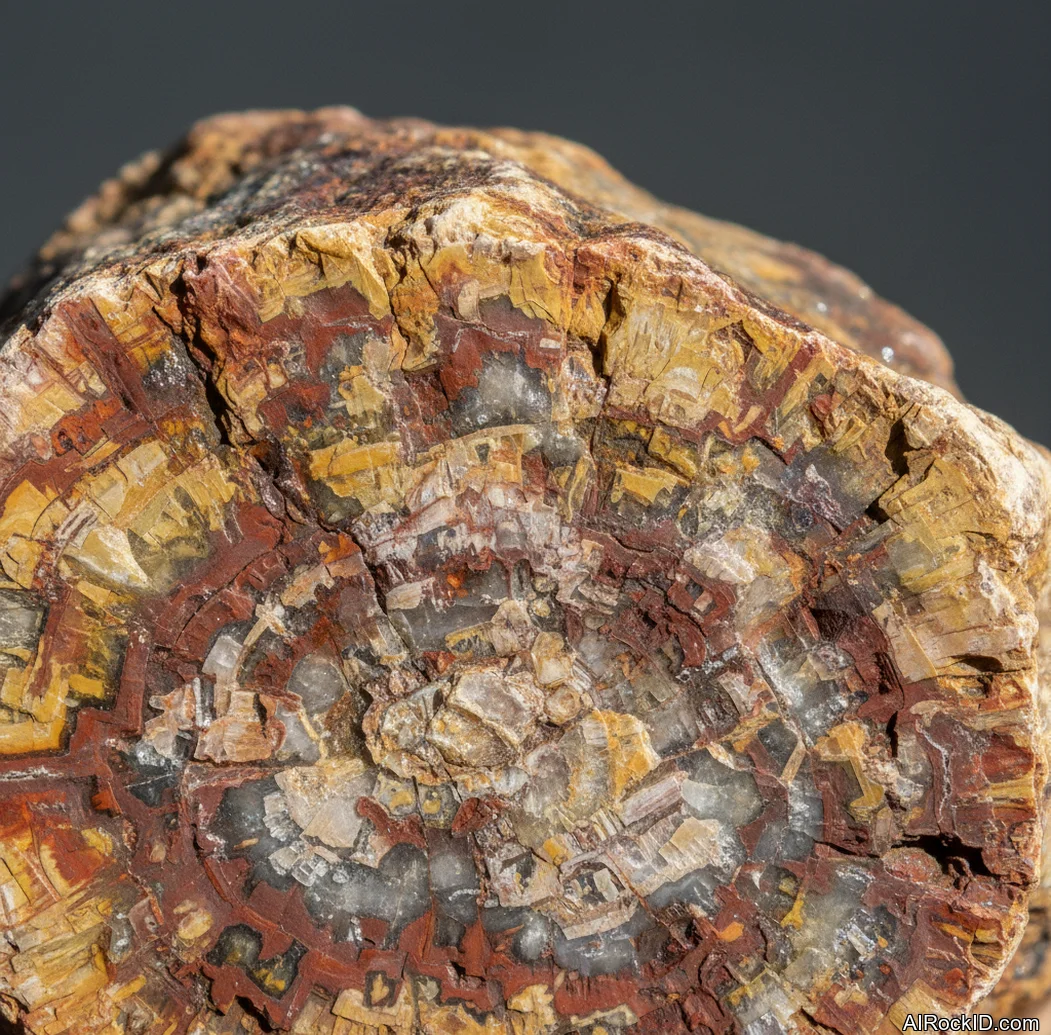
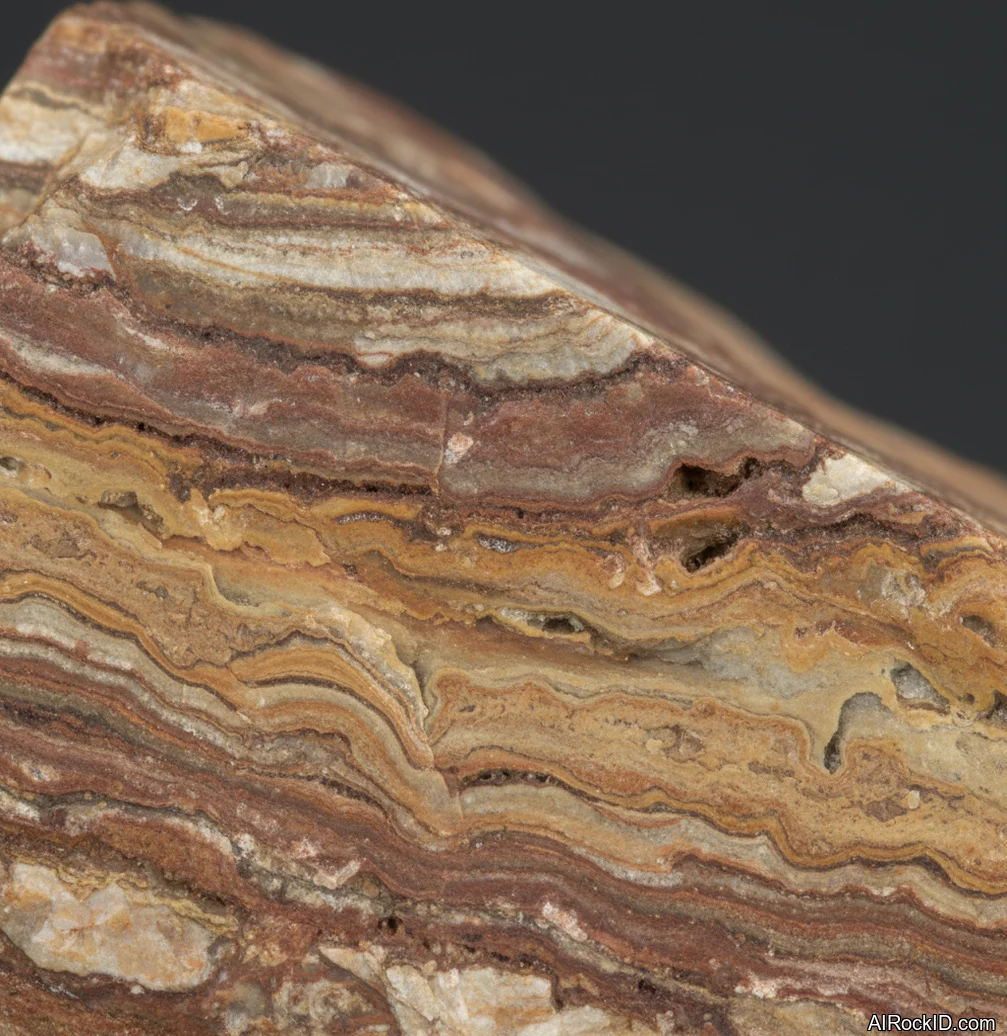
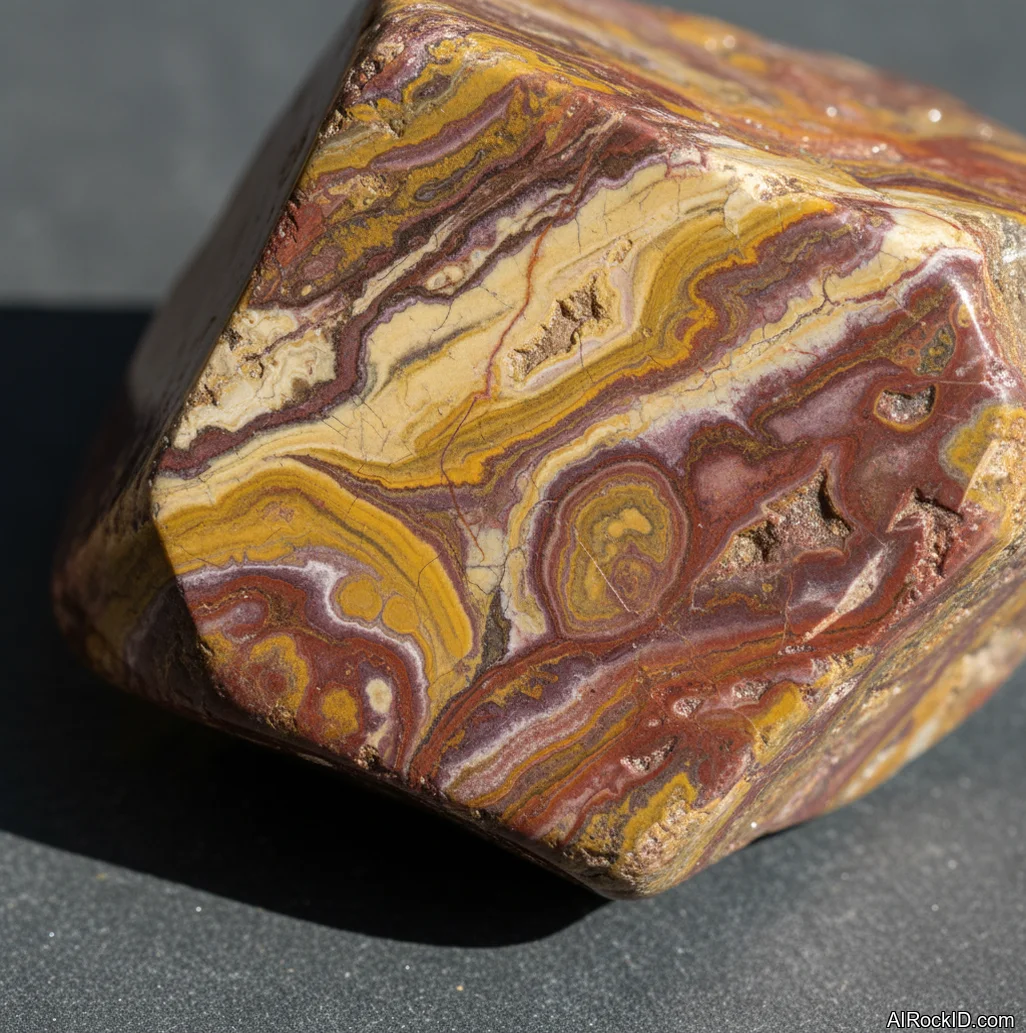
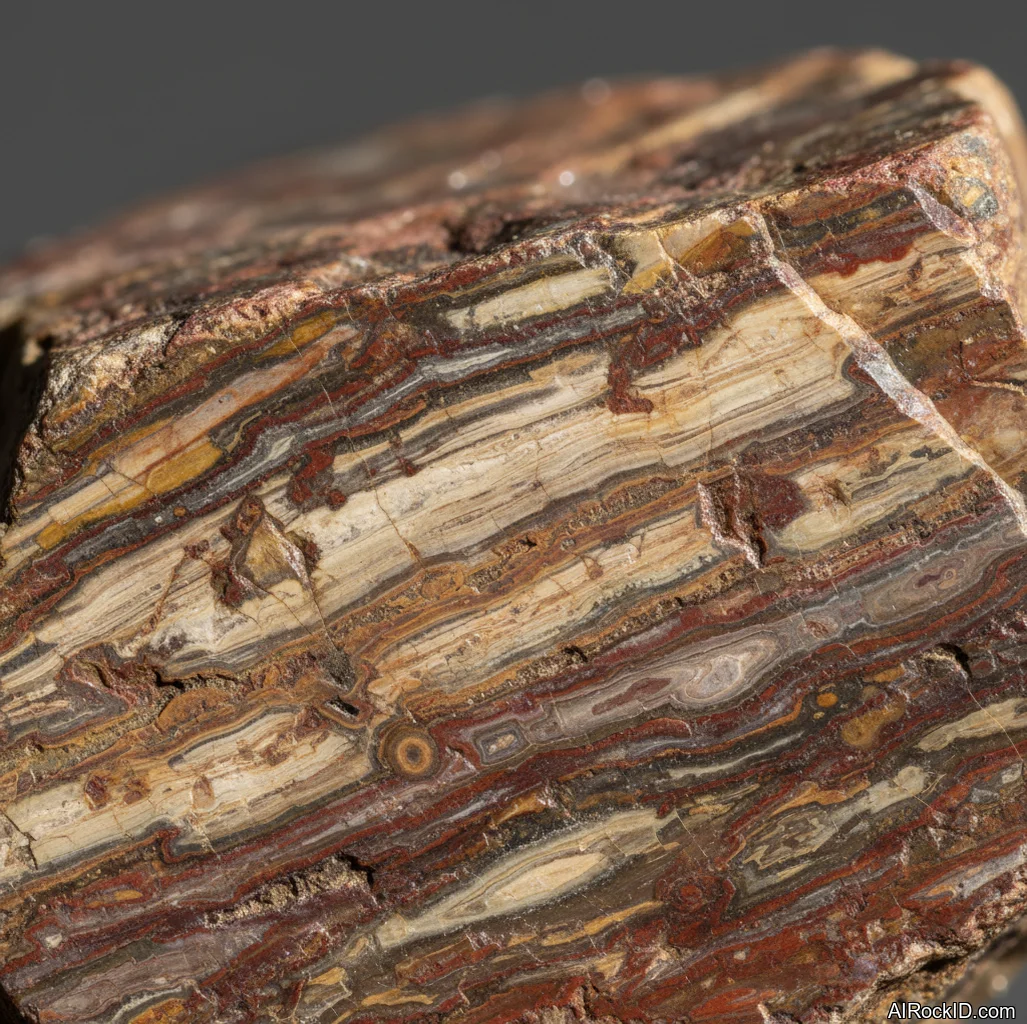
Quick answer: Wood Jasper is an opaque, patterned variety of chalcedony commonly showing brown, tan, cream, red, or black wood-grain-like bands. Many pieces are associated with silicified or petrified wood, but trade names can also be applied to jasper with a woody appearance.
AI Rock ID can help screen Wood Jasper by comparing color, opacity, banding, and texture against known visual patterns. RockIdentifier.io provides crystal and rock reference information, but lab testing may be needed when a specimen’s origin or treatment affects value.
Good fit
- Collectors who like earthy brown, tan, cream, or reddish patterns
- Jewelry wearers who want a durable opaque stone for beads, cabochons, or pendants
- Beginners looking for an affordable jasper with distinctive natural-looking patterning
- Decorative stone buyers who prefer wood-grain or landscape-like designs
Not a good fit
- Buyers seeking a transparent or faceted gemstone
- Collectors who need verified fossil wood provenance without documentation
- People looking for a rare mineral species rather than a common chalcedony material
Most commonly confused with
- Petrified Wood: Petrified wood usually preserves visible wood structure replaced by silica, while Wood Jasper may be a trade name for jasper with wood-like bands.
- Picture Jasper: Picture jasper often has landscape-like scenes and broader scenic patterns rather than tight wood-grain banding.
- Mookaite Jasper: Mookaite typically shows mustard yellow, burgundy, cream, and purple tones from Australia, not necessarily wood-grain texture.
- Agate: Agate is often more translucent with sharper banding, while Wood Jasper is usually opaque.
Wood Jasper Lookalike Comparison
| Stone | Typical Look | Key Difference |
|---|---|---|
| Wood Jasper | Opaque brown, tan, cream, red, or black wood-grain patterns | Jasper/chalcedony appearance; may or may not be true fossil wood |
| Petrified Wood | Silicified fossil wood with growth rings, bark texture, or cellular structure | Often preserves original wood anatomy |
| Picture Jasper | Opaque tan or brown scenic patches and landscape-like designs | More pictorial than linear wood-grain |
| Agate | Banded chalcedony, often translucent at thin edges | Usually shows light transmission and sharper bands |
| Tiger's Eye | Golden to brown silky bands with moving cat's-eye effect | Chatoyancy is the main identifier |
AI identification confidence
AI identification confidence for Wood Jasper is usually moderate when the photo clearly shows opaque chalcedony with wood-grain patterning. Confidence drops when the specimen could be petrified wood, picture jasper, dyed jasper, or a polished decorative stone sold under a broad trade name.
When AI gets it wrong
- A close-up photo hides scale, translucency, or natural surface texture.
- Polishing removes fossil wood surface details that would help separate it from jasper.
- Dyed or resin-treated material has unusually even color or overly vivid contrast.
- Lighting creates false chatoyancy or makes opaque jasper look translucent.
How to Check Wood Jasper Authenticity
Authentic Wood Jasper should feel hard, dense, and cool to the touch, with patterns that continue naturally across curves and edges. Look for uneven, organic banding rather than printed-looking repetition, surface coating, or color pooling in cracks. A steel knife should not easily scratch true jasper, but scratch testing can damage polished pieces and is not recommended for finished jewelry.
Buying Tips for Wood Jasper
When buying Wood Jasper, ask whether the seller means jasper with wood-like patterning or actual silicified wood. Photos should show the front, back, edges, and any drilled areas because dye, filler, or coatings can be easier to see at holes and fractures. For higher-priced pieces, request locality information or documentation if the value depends on being true petrified wood.
Natural Variations in Wood Jasper
Wood Jasper can range from subtle tan and cream grain to high-contrast red, brown, gray, and black patterning. Some pieces show straight linear bands, while others show swirls, knots, or landscape-like patches. Variation is normal because jasper forms through silica-rich fluids and mineral impurities that create different colors and textures.
What Is Wood Jasper?
Wood Jasper is an opaque jasper (microcrystalline quartz) with wood-like grain patterns, and a lot of it comes from silicified or petrified wood.
Pick up a palm stone and you feel it right away. That quartz heft. It’s heavier than it looks for its size, and it stays cool in your hand longer than resin or dyed composites (you can tell after a minute or two, even if the room’s warm). The good ones have grain that actually makes sense. Not just stripes. You’ll see tiny knots, little swirls, and subtle color shifts that read like real growth rings when you tilt it under a lamp.
At first glance, people confuse it with “picture jasper,” and honestly the lapidary market blurs the names all the time. But Wood Jasper usually reads like lumber. Long fibers, parallel lines, that dry, earthy brown palette. And when it’s polished well, it takes a clean shine without going glassy like agate.
Origin & History
The word “jasper” has been around forever. People used it as a catch-all for opaque, patterned silica rocks long before modern mineralogy came along and tightened up what counts as what.
“Wood jasper” isn’t really a formal species name. It’s basically a trade label dealers and cutters use for jasper that either shows a wood-grain look, or comes from petrified wood that’s fully silicified (you know the kind, where a cut face can look like little growth lines frozen in place).
Because of that, most sellers won’t point to one specific “first described by” person for Wood Jasper. It’s not an official mineral name like quartz or feldspar, so there isn’t the same paper trail. And, honestly, the name stuck because it’s just handy. You put a slab in someone’s hand, they tilt it under the light, and they go, “Yep. That looks like wood.”
Where Is Wood Jasper Found?
It shows up anywhere you get silica-rich replacement of wood or jaspery silica in sediments, with a lot of material sold from the western USA and Brazil.
Formation
Look closely at a good piece and you’re basically staring at a fossilization process locked inside quartz. Wood gets buried, groundwater seeps through, and silica replaces the organic stuff cell by cell over a long stretch of time. That’s silicification. When it goes all the way, you wind up with petrified wood that feels like quartz in your hand, the same chilly heft and that glassy “skate” under your fingertips when you rub a polished face.
But “Wood Jasper” in shops can also just be jasper with a wood-grain look, not literal fossil wood at all. Same chemistry, same hardness, totally different backstory. And that’s where the label gets messy, because it can mean either true petrified wood material or jasper that only mimics the pattern. If you’ve cut a few slabs, you start catching it fast. Real petrified wood usually shows structure that actually reads as wood, like ring arcs that curve the right way, plus the occasional knot-like interruption that makes you stop and think, “Yeah, that’s a tree.”
How to Identify Wood Jasper
Color: Most Wood Jasper runs tan, caramel, chocolate brown, and rusty red, usually in streaks or grain-like bands. Some pieces have cream patches or gray silica zones where the replacement wasn’t perfectly uniform.
Luster: Polished pieces show a waxy to vitreous luster, depending on how fine and clean the silica is.
Pick up a piece and feel the temperature. Real jasper stays cool and has that dense quartz feel, while plastic “wood” imitations warm up fast. If you scratch it with a steel nail, it shouldn’t bite easily, and it’ll scratch glass like other quartz-rich jaspers. And check the pattern: dyed material often has color that looks too even, with grain lines that repeat in a weird, printed way.
Common Look-Alikes
Wood Jasper is sometimes confused with these materials:
- Petrified Wood (actual fossil, not jasper)
- Picture Jasper (especially the tan and brown varieties)
- Dyed Agate (with fake wood grain patterns)
- Polished Banded Calcite (sometimes misrepresented as jasper)
- Synthetic 'Wood Jasper' glass
- Heat-treated Jasper with forced grain
Market Cautions & Treatments
When AI Can Get This Wrong
Photo ID trips up a lot on wood jasper versus actual petrified wood—especially when the grain is tight or swirly. AI also confuses it with picture jasper and dyed agate because the grain patterns overlap in flat images. The real test is in-hand: check the heft, look for natural knots or burls, and run a fingernail over the surface—real wood jasper won’t show the glassy drag or plastic tackiness.
Properties of Wood Jasper
Physical Properties
| Crystal System | Trigonal |
| Hardness (Mohs) | 6.5-7 (Hard (6-7.5)) |
| Density | 2.58-2.65 g/cm3 |
| Luster | Waxy |
| Diaphaneity | Opaque |
| Fracture | Conchoidal |
| Streak | White |
| Magnetism | Non-magnetic |
| Colors | Brown, Tan, Beige, Red-brown, Cream, Gray |
Chemical Properties
| Classification | Silicates |
| Formula | SiO2 |
| Elements | Si, O |
| Common Impurities | Fe, Mn, Al, C |
Optical Properties
| Refractive Index | 1.530-1.540 |
| Birefringence | None |
| Pleochroism | None |
| Optical Character | Uniaxial |
Wood Jasper Health & Safety
Solid chunks are fine to pick up and they’re totally fine around water. The only thing to watch out for (same as with other silica rocks) is the dust you can’t see when you cut it or grind it, because that respirable stuff is the real issue.
Safety Tips
If you’re going to saw or sand it, keep things wet, get some real airflow going (open a window and run a fan), and wear a proper respirator that’s actually rated for fine silica dust.
Wood Jasper Value & Price
Price Range
Rough/Tumbled: $3 - $25 per palm stone or small slab
Cut/Polished: $1 - $8 per carat
Prices jump when the grain is tight and looks like real wood, the polish comes out clean and glassy (you can feel it, too, slick with no drag), and the pieces are big without pits or those crumbly, undercut spots that like to snag a fingernail. True petrified wood with clear growth rings and solid color tends to sell faster than generic “wood pattern” jasper.
Durability
Very Durable — Scratch resistance: Excellent, Toughness: Good
It’s stable in normal home conditions and doesn’t mind everyday handling, but a sharp impact can still chip it like any quartz-rich stone.
How to Care for Wood Jasper
Use & Storage
I toss mine in a tray with other jaspers, but I keep high-polish pieces from rubbing against harder points that can dull the shine over time. A small cloth pouch works fine.
Cleaning
1) Rinse with lukewarm water. 2) Use a drop of mild soap and a soft brush if there’s grime in tiny pits. 3) Rinse again and dry with a soft towel.
Cleanse & Charge
If you’re into the metaphysical side, running water and a quick wipe is plenty. I avoid salt bowls just because salt can leave a crust in surface pores.
Placement
On a desk it reads warm and earthy, especially under lamp light where the grain pops. In a window it’s fine, but I don’t leave polished stones where they can heat up and get knocked down.
Caution
Look, don’t breathe in the dust when you’re cutting or grinding. That fine, gritty silica dust gets everywhere (you can feel it on your tongue) and it’s a real hazard. And skip harsh acids or bleach on polished surfaces. They’ll mess up the finish fast.
Works Well With
Wood Jasper Meaning & Healing Properties
Compared to the flashier stones, Wood Jasper is what people grab when they want something steady and plainspoken. In my shop, the ones who keep coming back for it are usually the routine folks. Gardeners. Woodworkers. People who just like doing things with their hands. It’s got that “old board” look, and honestly that visual alone can drop you into a more grounded headspace.
Pick up a polished slice and run your thumb along the grain lines. You’ll feel it. Tiny little rises and dips where the harder and softer silica zones took the polish differently. It’s subtle, but once you notice it, you can’t un-notice it. And that little bit of tactile feedback is a big reason people use it to stay calm or focused in meetings, or when they’re studying and their brain keeps trying to wander.
It’s not magic. It’s a real object. You hold it, you fidget with it, and your attention has somewhere to land.
But if someone’s looking for a big emotional release stone, this usually isn’t the one. Wood Jasper tends to be quiet. I’ve also watched buyers get let down because they expect every piece to look like a perfect plank of wood. Not happening. A lot of rough comes in blotchy, or it’s just plain brown in spots (kind of like a board that’s been sun-faded and stained). So the “healing” angle, if you want to call it that, is more about patience and sticking with the process than some sudden breakthrough.
Common mistakes
- Assuming every stone sold as Wood Jasper is verified petrified wood.
- Using color alone to identify Wood Jasper without checking opacity, hardness, and pattern.
- Confusing tiger's eye with Wood Jasper because both can be brown and banded.
- Assuming bright, uniform color is natural without checking for dye concentration in cracks.
- Expecting two Wood Jasper pieces to match exactly; natural pattern variation is common.
Identify Wood Jasper from a photo
Compare Wood Jasper traits, care tips, value clues, and common lookalikes with a clear photo.